
How to Remove Hard Water Stains From Glass Shower Doors
To remove hard water stains from glass shower doors, begin by identifying the film, then choose the mildest method compatible with the actual glass and any protective coating. Not every cloudy spot is a removable mineral deposit.
When hard water dries, dissolved minerals remain on the glass. Soap, body oils and shampoo can bond with that buildup. Long-term exposure may eventually cause staining or corrosion that a household cleaner cannot reverse.
Start with the gentlest effective cleaning method
First remove soap film, then address mineral scale. Never assume a stronger chemical, razor blade or abrasive pad will improve results. Protective coatings, glass, seals and decorative hardware often have different care requirements.
What is actually on the shower glass?
| What you see | Possible cause | First response |
|---|---|---|
| Light water spots | Recent mineral residue | Mild approved cleaner and microfiber cloth. |
| Chalky white scale | Hard-water mineral deposits | Manufacturer-approved mineral removal. |
| Greasy or smeary haze | Soap scum, body oils | Mild detergent before mineral treatment. |
| Deposits resistant to gentle treatment | Heavier scale, silica or coating issues | Stop escalating cleaners; identify surface and consult care guidance. |
| Persistent cloudy or etched look | Possible surface corrosion | Professional assessment; ordinary cleaning may not restore clarity. |
If the haze almost disappears when the glass is wet but returns when it dries, deposits may still be present. That observation is not a definitive test; the surface may also have coating wear or glass damage. Don’t keep rubbing until the surface scratches.
A small, surface-safe shower-glass kit
Use soft microfiber cloths, a squeegee, warm water and a mild cleaner approved by the enclosure manufacturer. Only add diluted vinegar or another mineral-removal product when the glass and coating instructions specifically allow it. Avoid saturating decorative metalwork and dry hinges and channels afterward.
If you do not know whether the glass has ShowerGuard, HydroClear, EnduroShield or another finish, consult the installer or original invoice if available. A treatment approved for one coating is not automatically safe for another.
How to remove hard water stains from glass shower doors safely
01 · Identify the glass/coating
Look for the shower manufacturer or invoice. Factory-protected glass, hydrophobic aftermarket coatings and ordinary untreated glass may use different cleaners. Start with the manufacturer’s instructions, not an internet hack.
02 · Clean soap and surface grime
Rinse with warm water. Use a nonabrasive cloth and a mild detergent or a cleaner approved for the enclosure. Rinse well so soap does not block a mineral-removal treatment.
03 · Treat mineral deposits only if approved
Some glass manufacturers allow a 50/50 white-vinegar-and-water solution for certain protected products, but that is not permission to use it on all coatings. Apply with a soft cloth according to the manufacturer’s instructions and keep cleaner off incompatible finishes.
04 · Rinse thoroughly and dry
Rinse residue from the glass and adjacent hardware, then dry with a microfiber towel or squeegee. If the spots improve, repeat gently as permitted. If not, reassess the deposit rather than immediately using harsher chemicals.
Never mix cleaners, especially bleach and acid products. Avoid razors, steel wool, abrasive powders and polishing compounds unless the specific glass manufacturer’s care instructions explicitly permit them. Protect hinges, channels, hardware finishes and seals from chemical overspray.
Hard water deposits versus etched shower glass
Cloudiness isn’t always something sitting on top of the glass. Some long-term staining or surface corrosion alters the glass itself. Mineral deposits may come off with approved cleaning, while etched or corroded glass may require specialist evaluation or replacement.
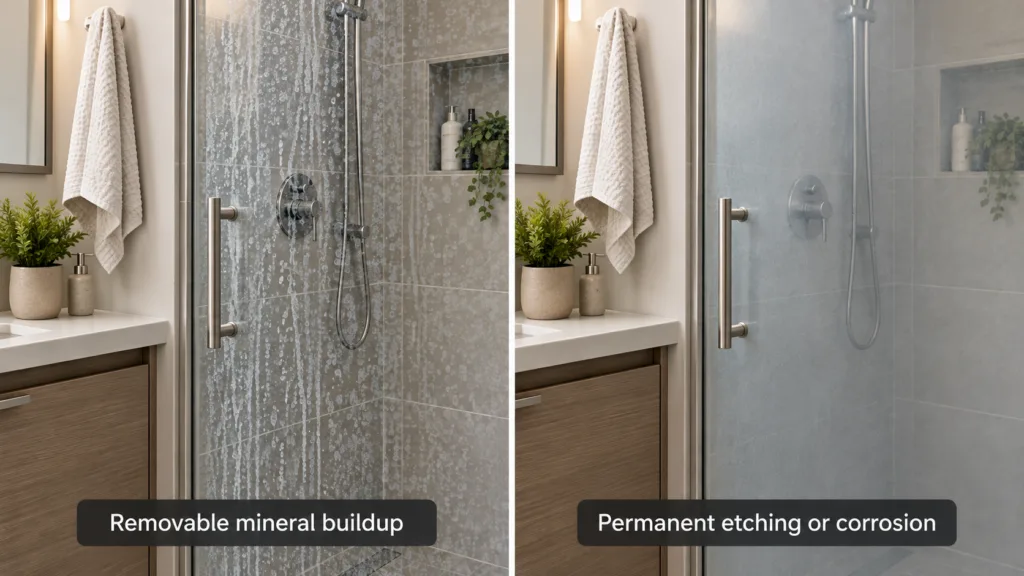
A lack of response to diluted vinegar does not prove that stronger acid is necessary. Deposits can include silica and other materials, and coated glass may react differently. If cautious cleaning isn’t helping, stop and consult the manufacturer or glass-restoration specialist.
Prevent hard water stains from returning
After each shower, use a squeegee or a soft towel to reduce the amount of water evaporating on the glass. Regular gentle cleaning is much easier than dealing with years of thick mineral scale. Some homes with water softeners still get spotting from other dissolved material such as silica.
Factory-treated glass and aftermarket hydrophobic coatings aim to make cleaning easier, but they are not maintenance-free. Follow product-specific instructions.
Keep strong chemical cleaners away from plated, matte black, brushed and specialty metal finishes unless the manufacturer permits them.
Squeegee, dry high-contact corners and remove soap film periodically to reduce deposits before they harden.
Heavy etching, scratches or permanent cloudiness may exceed what routine cleaning can resolve. Consider specialist evaluation.
For cleaning guidance, consult the actual glass manufacturer’s literature. Product-specific care guidance from ShowerGuard is one example, but it should not be generalized to other coatings.
Shower-glass care checklist
Common hard-water stain questions
Can vinegar remove hard water spots on shower glass?
Some glass and coating manufacturers permit diluted vinegar for mineral deposits, but not all. Follow your specific product care instructions.
Why does my shower door look cloudy even after cleaning?
The surface may have stubborn minerals, silica deposits, coating issues or actual corrosion. More scrubbing is not always the solution.
Will a water softener keep glass spotless?
It may reduce common scale, but other dissolved minerals and residue may still leave spots.
Do protective coatings mean no cleaning?
No. They can make routine care easier, but regular squeegeeing and gentle cleaning are still recommended.
Protect the glass first, remove the buildup second
A conservative cleaning method matched to your actual glass gives you the best chance of improving clarity without damaging the enclosure. Persistent etching is not a cleaning failure.