How to Fix a Door That Won’t Latch: Causes & Easy Repairs
Door repair / Troubleshooting
A door that closes but will not click shut usually has one of two problems: the latch misses the strike plate opening, or the latch reaches the opening but cannot extend far enough to catch. Learning how to fix a door that won’t latch starts with identifying which problem you have, not immediately moving the strike plate.
Most minor interior-door latch problems can be diagnosed with a screwdriver and a few minutes of observation. Loose hinges, stripped hinge screws, a shifted door, a tight door stop, or a worn spring latch can all create similar symptoms. The right repair depends on where the latch actually contacts the frame.
How to Fix a Door That Won’t Latch: Diagnose the Cause
Close the door slowly without slamming it. Watch the latch-side edge and listen for the point where the spring latch contacts the strike plate. Look for an uneven gap along the top or latch side of the door. Then open the door and operate the handle several times to see if the latch retracts and springs out freely.
| What you notice | Likely issue | Where to begin |
|---|---|---|
| You must lift the door to make it latch | Door sag or loose hinges | Check the upper hinge and the gap above the door. |
| Latch hits above or below the strike opening | Vertical alignment problem | Inspect hinges before moving the strike. |
| You must push or pull the door firmly | Door stop, weatherstrip, or strike-depth interference | Check where the latch contacts and whether the door closes fully. |
| The handle turns but the latch sticks | Faulty or dirty latch mechanism | Test latch travel with the door open. |
| Door catches but rattles or pops open | Insufficient latch engagement or loose strike | Check latch extension, strike opening, and adjustable tab. |
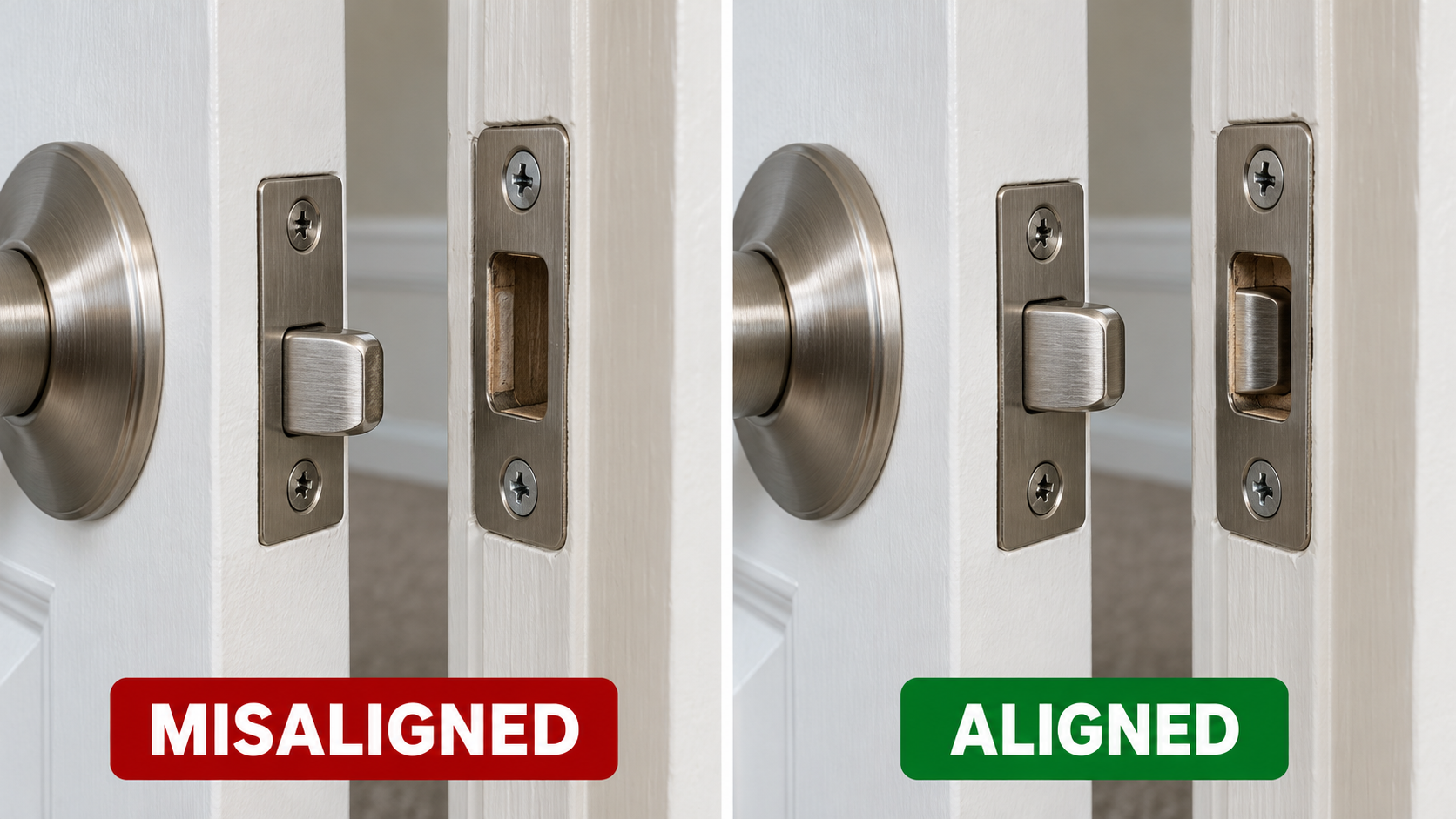
What a Misaligned Latch Looks Like
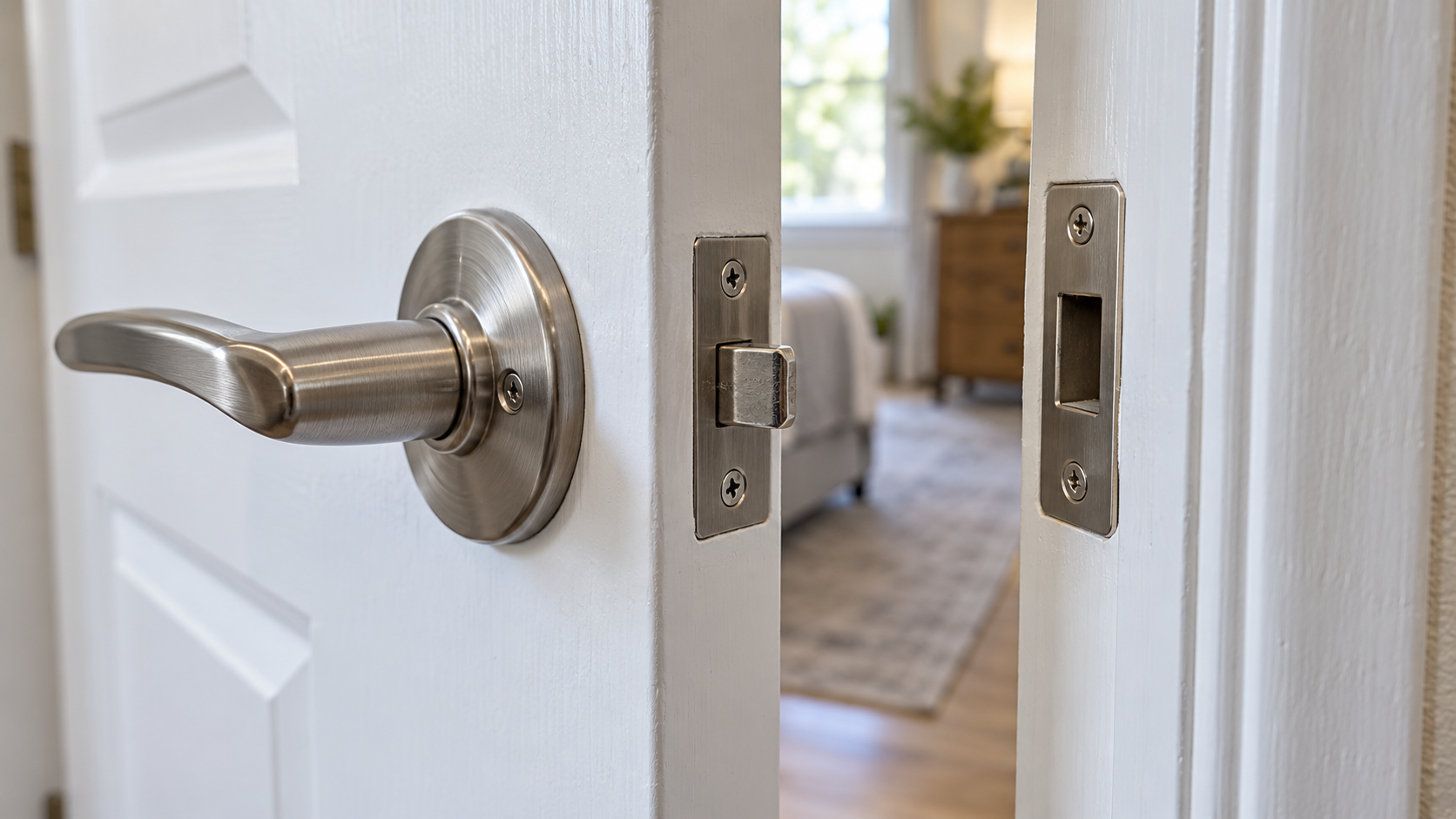
The latch bolt is mounted on the vertical edge of the door. The strike plate is fastened to the adjacent jamb, with a recessed pocket behind its opening. If the bolt arrives too high, too low, or too far toward the face of the jamb, it can hit metal instead of entering that pocket.
Does the door sit square?
Look along the top and latch-side gaps. A noticeably uneven reveal or movement at the top hinge points toward a door-alignment problem.
Does the latch spring out?
With the door open, turn and release the handle. The latch should retract smoothly and return to its extended position without sticking.
Use the results to choose your next step. If the door is sagging, correct its hinges first; otherwise a new strike position may only hide the underlying problem.
Fix a Sagging Door by Tightening the Hinges
A loose upper hinge is one of the first things to check when a door latch no longer catches. As a hinged door sags, its latch-side edge can shift down relative to the strike plate. Tightening loose screws may restore the door’s original position without modifying the jamb.
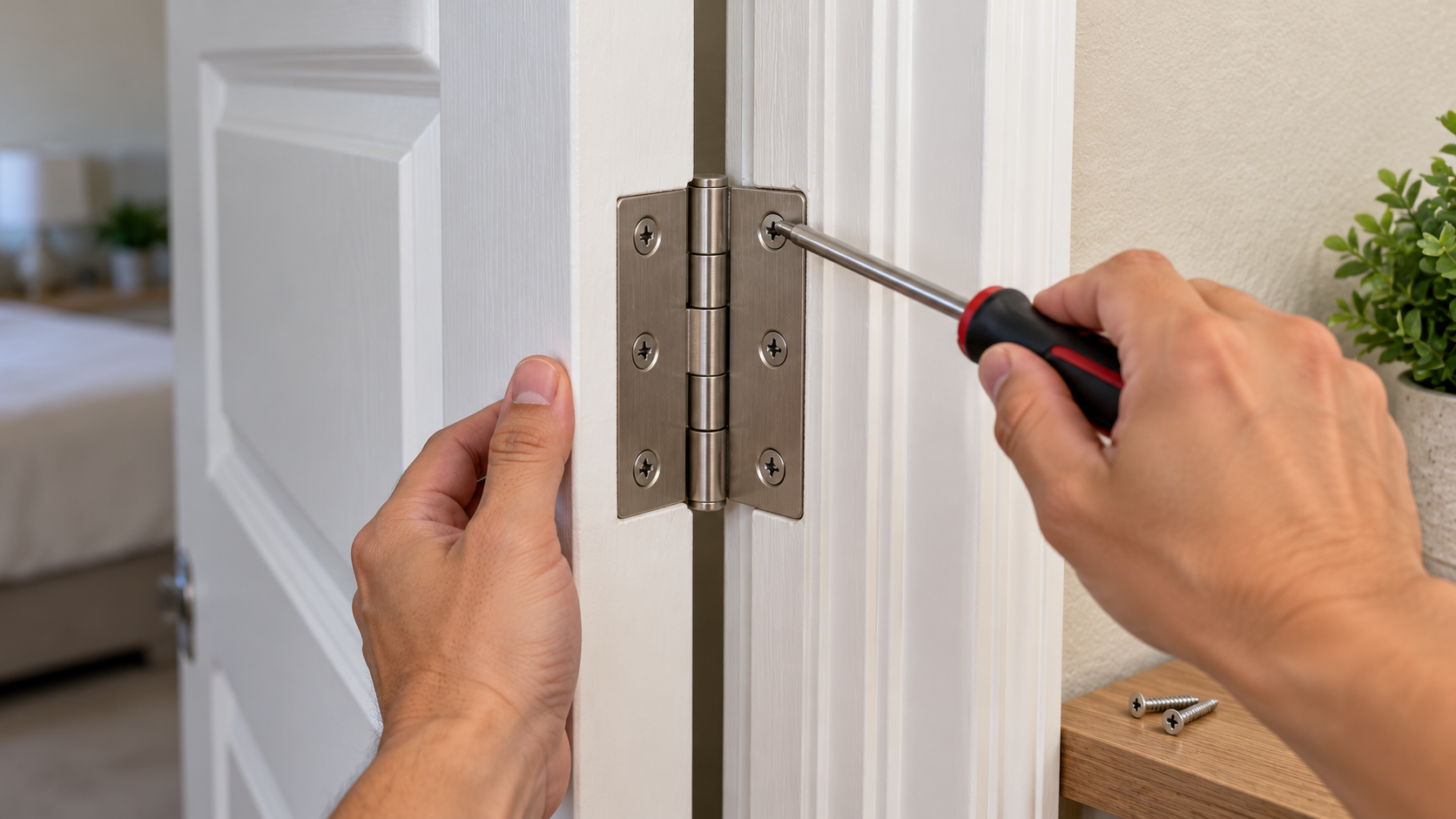
How to tighten the hinge correctly
- Open the door partway and support its weight with a doorstop, shim, or a helper.
- Inspect the top hinge first. Look for a loose hinge leaf, backed-out screws, or movement where the hinge meets the jamb.
- Use a properly fitting screwdriver to snug the screws on both hinge leaves. Do not overtighten and strip the wood.
- Check the middle and lower hinges, then remove the support and test the door.
- Watch the gap above the door and see whether the latch now lines up with the strike opening.
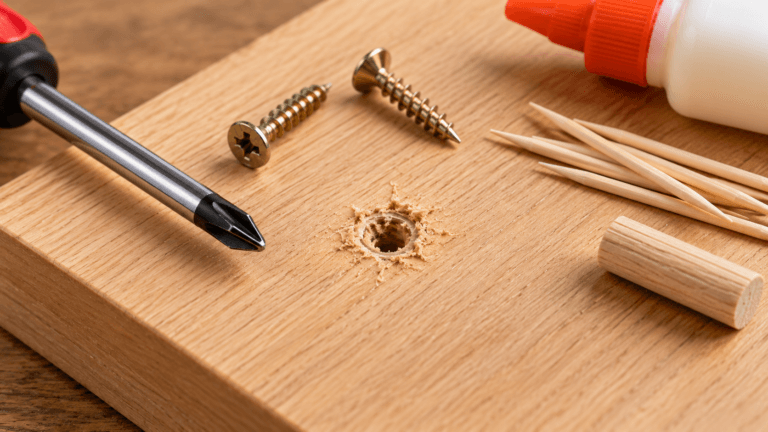
The screw hole may be stripped. Repair the damaged wood rather than forcing the screw. For a detailed comparison of wood plugs, dowels, and other methods, see Builzee’s guide to fixing a stripped screw hole in wood. On a typical wood-framed door, a longer appropriately sized jamb-side screw may reach solid framing, but verify the framing location, screw clearance, and head fit before using one.
For a door that remains out of alignment after its screws are secure, inspect for bent hinge leaves, excessive wear, or a jamb that has moved. Hinge shimming or replacement may be needed. These adjustments should be made carefully because moving one hinge changes the gaps elsewhere.
Mark Where the Latch Hits the Strike Plate
If the hinges are tight and the door appears to hang correctly, find the exact interference point. A small rubbed or shiny area on the strike plate may already show where the latch is hitting. For a clearer mark, use a small amount of removable chalk or another easily cleaned marking material on the end of the latch bolt.
- Open the door and place a light mark on the outer end of the spring latch.
- Retract the latch with the handle, bring the door gently against the jamb, then release it near the strike.
- Open the door and inspect the contact mark. Determine whether the latch hits above, below, or to one side of the opening.
- Wipe the hardware clean before starting the adjustment.
This makes the repair more precise. Never assume the strike needs to move down just because the door will not stay shut. A sagging door often needs hinge correction, while another door may need more clearance toward the face of the jamb.
OPTION 1 A slight rub at the strike opening
For minor interference, a small amount of careful filing on the obstructing edge of the strike opening may be enough. Remove the plate if practical, secure it, and file only the contact point. Remove burrs, reinstall the plate flush, and test after each small adjustment. Wear eye protection when filing metal. Do not remove so much material that the plate loses its ability to retain the latch.
OPTION 2 The entire strike plate is too high or too low
If the latch misses the opening by more than a minor amount, the strike plate may need to be repositioned. Mark the correct latch center, remove the strike, and repair the old screw holes with a suitable wood-plug method if the new holes would overlap. After the repair has set, drill new pilot holes and carefully modify the mortise so the plate sits flush against the jamb. Confirm that the wood pocket behind the strike provides enough clearance for the latch to extend.
OPTION 3 The door closes, but the latch does not reach far enough
Check for paint buildup, a door stop that holds the door too far away, or excessive weatherstrip pressure on an exterior door. Some strike plates also have a small adjustable tab that can fine-tune latch engagement. Bend that tab only slightly and test. Adjusting the tab does not correct a hinge-related height problem.
Check for a Sticking or Worn Spring Latch
Not every door that won’t latch has an alignment issue. A spring latch can become sticky, damaged, or worn so that it fails to extend fully after the handle is released.
Test the mechanism with the door open
- Turn the handle fully and confirm that the latch retracts into the door edge.
- Release the handle. The latch should spring back out immediately and consistently.
- Inspect for a loose latch faceplate, rubbing hardware, paint buildup, or visible damage.
- Tighten loose mounting screws and clean accessible debris. Use only a lubricant recommended by the hardware manufacturer, if one is needed.
- If the latch still binds, fails to spring out, or remains damaged, replace the compatible latch or lockset component.
Make sure a replacement matches the existing door preparation, including backset, latch faceplate shape, and handing if applicable. A standard spring latch is different from a separate deadbolt; the two mechanisms should not be diagnosed or adjusted as though they are the same part.
Common Fixes That Can Make the Problem Worse
The most reliable repair usually preserves the door and frame as much as possible. Avoid taking material off the door edge or relocating hardware before the cause is confirmed.
Moving the strike before fixing loose hinges
If the door keeps settling, a relocated strike may stop working again. Secure and align the door first.
Overtightening hinge screws
Overdriving screws can strip the wood or distort the hinge leaf. The leaves should remain flat in their mortises.
Enlarging the strike opening too much
An oversized opening can allow rattling or weak engagement. Remove only the material actually causing interference.
Forcing or slamming the door
Repeated impact can damage the latch, strike, fasteners, and jamb without correcting the original misalignment.
Final Test: Make Sure the Door Latches Normally
After each repair, cycle the door several times from different opening positions. A successful repair is not just one lucky click. The latch should engage repeatedly without lifting the door, pulling the handle, or pressing hard against the slab.
- Door swings without rubbing the jamb or floor.
- Hinge leaves and screws remain tight.
- Latch lines up with the strike opening.
- Latch springs out freely with the door open.
- Door catches with normal closing pressure.
- Handle retracts the latch without binding.
Get help if the jamb is split, the frame has shifted significantly, the door is badly warped, or hinge and strike adjustments do not hold. Fire-rated or required egress doors need their listed hardware and closing/latching functions maintained; avoid field modifications that could compromise their rating or operation. Exterior security doors and multipoint locks may also need manufacturer-specific adjustments.
Further reading: Schlage’s door alignment and latch troubleshooting guidance and This Old House’s hinge and strike adjustment guidance.