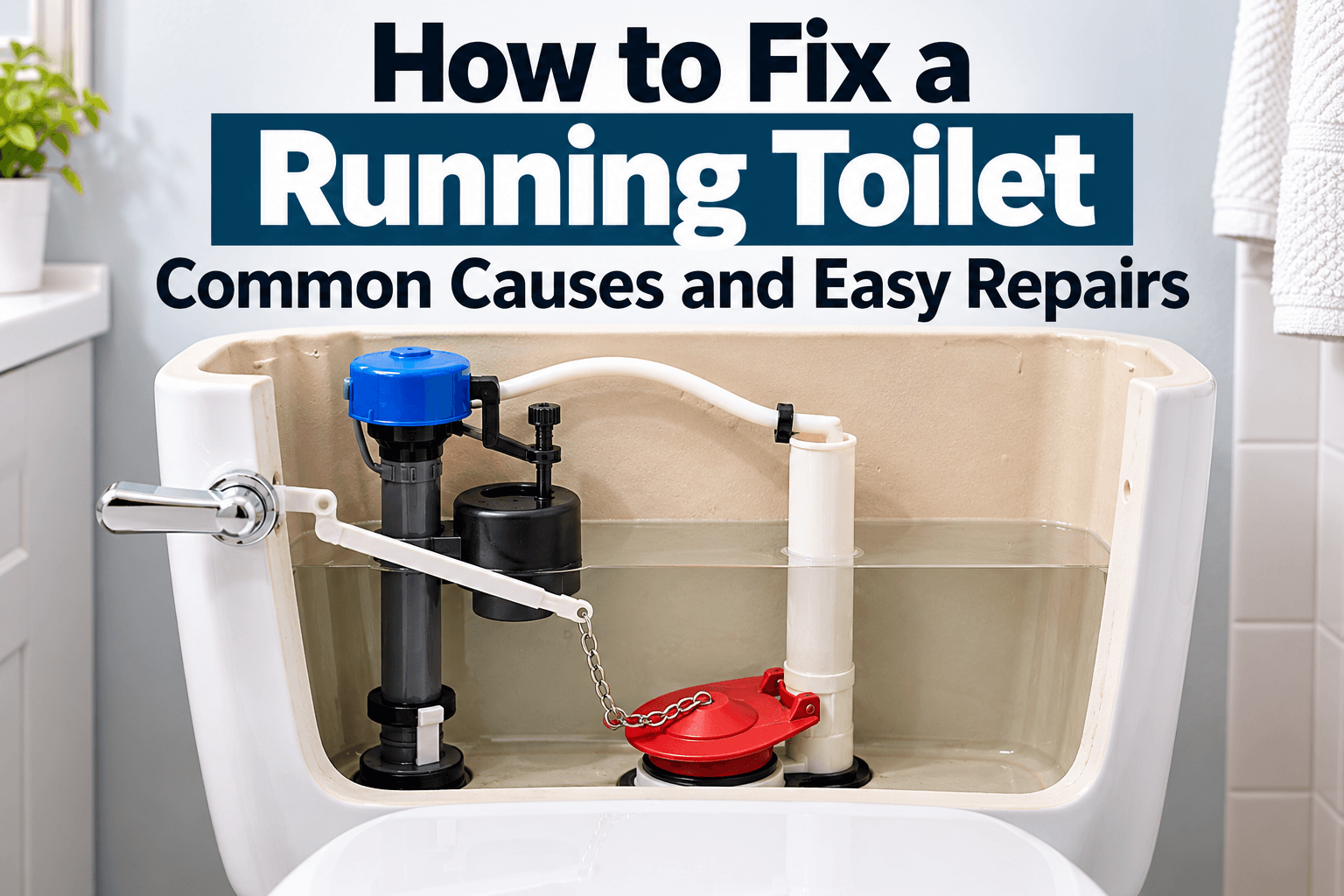
How to Fix a Running Toilet: Common Causes and Easy Repairs
If you want to know how to fix a running toilet, start by opening the tank and watching one flush cycle. Usually the trouble is a flapper that leaks, a chain that holds it open, a float set too high, a fill valve that won’t shut off, or a refill tube in the wrong position.
You don’t have to replace the entire tank mechanism to solve every running toilet. The fastest path is to figure out where water is going, then repair only the part responsible. A toilet that runs constantly, one that refills briefly on its own and one that overflows into the standpipe may need different fixes.
Remove the ceramic lid, place it somewhere safe, flush and observe how the flapper, float and valve move.
Try a flapper press test, lift the float gently, and check whether water reaches the overflow tube.
Clean, adjust or replace the specific part. Refill and test for leaks before closing the tank.
What Does a Running Toilet Sound Like?
After a normal flush, the toilet tank refills, the float rises and the fill valve shuts off. When a toilet keeps running, water is either leaving the tank when it shouldn’t or the supply valve isn’t stopping at the intended level.
| What you notice | Likely starting point | What to look for |
|---|---|---|
| Constant trickling in bowl | Flapper or flush-valve seat | Seepage past the flapper even after it drops closed |
| Water falling into overflow tube | Float or fill valve | Water level too high or fill valve won’t shut off |
| Short refills without a flush | Slow leak, sometimes called ghost flushing | Flapper, chain, valve seat and tank-to-bowl leak |
| Long or inconsistent tank refill | Fill valve or supply restriction | Float movement, sediment, tank level |
| Water around toilet base or supply | External leak, not a routine running-toilet issue | Supply hose, connections, tank bolts and toilet seal |
Start with the symptom. Different noises do not always have the same cause.
Toilet Tank Parts Explained
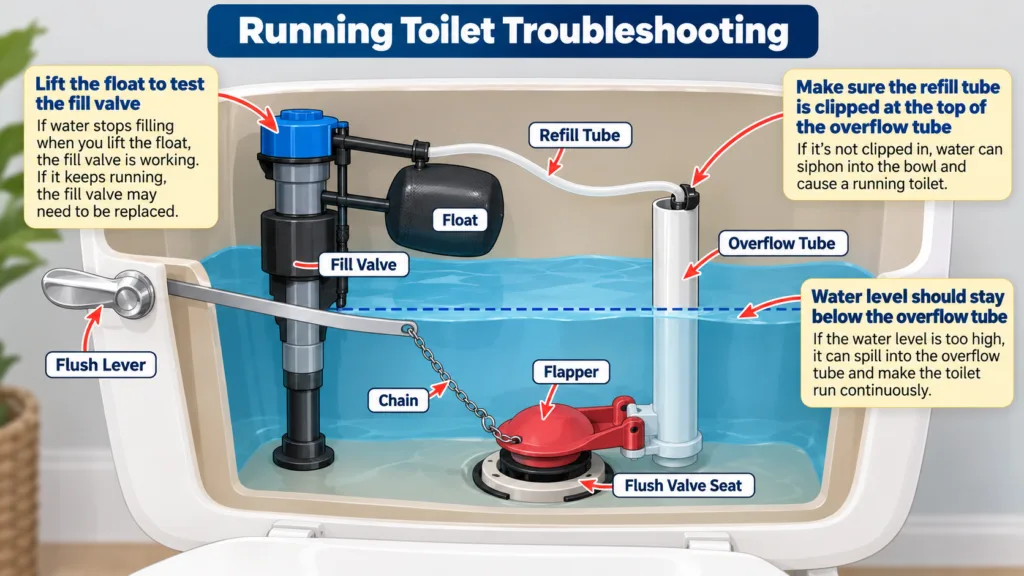
Lift the tank lid with both hands and set it on a protected, stable surface; porcelain lids are heavy and easy to crack. Flush once without touching the mechanism. Notice how the handle pulls the chain, the flapper opens and closes, the float rises, and the fill valve shuts off.
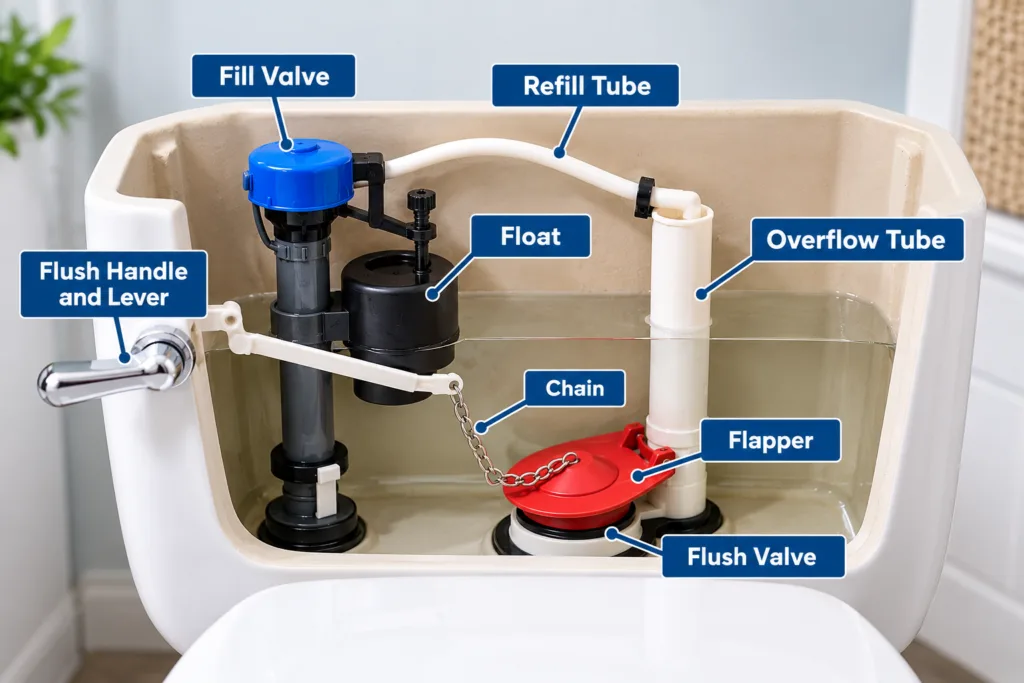
The flapper is the seal at the bottom; the chain lifts it; the fill valve and float control incoming water; the overflow tube helps prevent a tank overflow; and the refill tube directs part of the refill water into the bowl. Some modern toilets use canister-style flush valves instead of a flapper, so follow your model’s instructions.
Five Common Running Toilet Causes and Fixes
The following checks go from simple adjustments to parts that may need replacing. Work slowly so you do not damage plastic fittings or the porcelain tank.
1. Flapper fails to seal
A worn, warped or dirty flapper lets water leak into the bowl. Gently press the closed flapper; if the running stops, inspect its seal and seat.
2. Chain is too tight or tangled
A tight chain can hold the flapper open. An excessively loose chain may catch below it. Leave slight slack with the flapper fully closed.
3. Float sits too high
If water continually spills into the overflow tube, lower the float shutoff setting following the valve design. Flush and recheck.
4. Fill valve keeps admitting water
If the valve still runs when the float reaches its shutoff position, sediment, wear or a failed seal may require cleaning or replacing the valve.
5. Refill tube is misplaced
The small tube should generally be secured at the top of the overflow using its clip, not pushed deeply inside where siphoning can occur.
Three Fast Tests Before Replacing Toilet Parts
Press the flapper
With the tank safely open, push the closed flapper lightly. If the continuous water noise stops, the seal or valve-seat surface deserves a closer look.
Lift the float
Gently raise it to the normal shutoff position. If the water stops, the float may need adjustment. If it keeps flowing, the fill valve may be failing.
Check the overflow level
The normal water surface should stay below the top of the overflow tube, commonly near the marked tank waterline. Follow the manufacturer’s mark.
Do the color test
Add several drops of food coloring to the tank, don’t flush, wait about 15–30 minutes and check the bowl. Color in the bowl indicates leakage past the flush-valve area. Flush afterward.
How to Fix a Running Toilet, Step by Step
Close the water if you will disconnect anything
Find the toilet shutoff valve and turn it gently clockwise. If it cannot close or begins leaking, stop and seek help rather than forcing it.
Clean or replace a leaking flapper
Flush to lower water, unhook the chain and remove the flapper from its mounting points. Clean the seat; fit a compatible replacement, reattach the chain and test several flushes.
Correct chain slack
The chain should allow the flapper to settle flat while lifting it sufficiently when the handle is pressed. Remove tangles and change the chain connection if necessary.
Set the float and waterline
Use the fill valve’s adjustment screw or clip rather than bending parts that are not designed for it. Water should shut off below the overflow opening.
Replace a failed fill valve when required
Shut off supply, empty the tank, place a towel under the connection, disconnect the supply, remove the retaining nut and follow the replacement valve instructions. Restore supply slowly and inspect connections.
Reposition the refill tube and test
Secure the refill tube to its intended clip and position. Flush repeatedly, confirm water stops, and check for drips around supply and tank connections.
Running Toilet vs. Clogged Toilet vs. External Leak
A running toilet usually involves the tank’s fill or flush mechanism. A clogged toilet is a drainage problem in which the bowl rises or empties slowly. Read How to Unclog a Toilet if that describes the symptom instead.
If water leaks onto the floor, shut off the supply promptly. Check the supply tube, tank bolts, flush valve seals, tank-to-bowl joint and base, but do not ignore rocking or cracked porcelain. Water around the base may indicate a separate seal or drain problem. If the shutoff does not work, connections are badly corroded, or several fixtures have issues, a licensed plumber is the safer choice.
Flapper, chain and accessible float adjustments on a toilet with sound fittings and a working shutoff.
Replacing fill valves or parts requiring supply-line disconnection, especially on older plumbing.
Active floor leaks, cracked porcelain, failed shutoff, recurring leaks after repairs or widespread drainage symptoms.
Running Toilet Troubleshooting Checklist
Frequently Asked Questions
Why does my toilet run every few minutes?
A slow leak from tank to bowl can cause the fill valve to turn back on even if nobody flushes. Check flapper condition, chain position and the flush-valve seal, then use a food-coloring test if needed.
Can I fix a running toilet without buying a new valve?
Often yes. Clean the flapper seat, free a tangled chain, adjust the float and confirm the refill tube position before purchasing replacement parts.
Why is water pouring down the overflow tube?
The water level may be too high or the fill valve may fail to shut off. Adjust the float according to the manufacturer; if water still flows after it reaches shutoff, investigate the valve.
Is it safe to leave a toilet running?
A running toilet wastes water and may indicate a failure that worsens. If water is outside the toilet, shut off the supply promptly. If it is only running inside the tank, diagnose it rather than ignoring it.
Diagnose before you replace
Most running toilets trace back to a small number of tank parts. Observe where water goes, start with the flapper and chain, check the float and fill valve, then make the simplest repair that addresses the actual failure. Address external leaks immediately rather than treating them as ordinary running-toilet noise.