How to Stop Condensation on Windows: Causes, Fixes & When to Replace
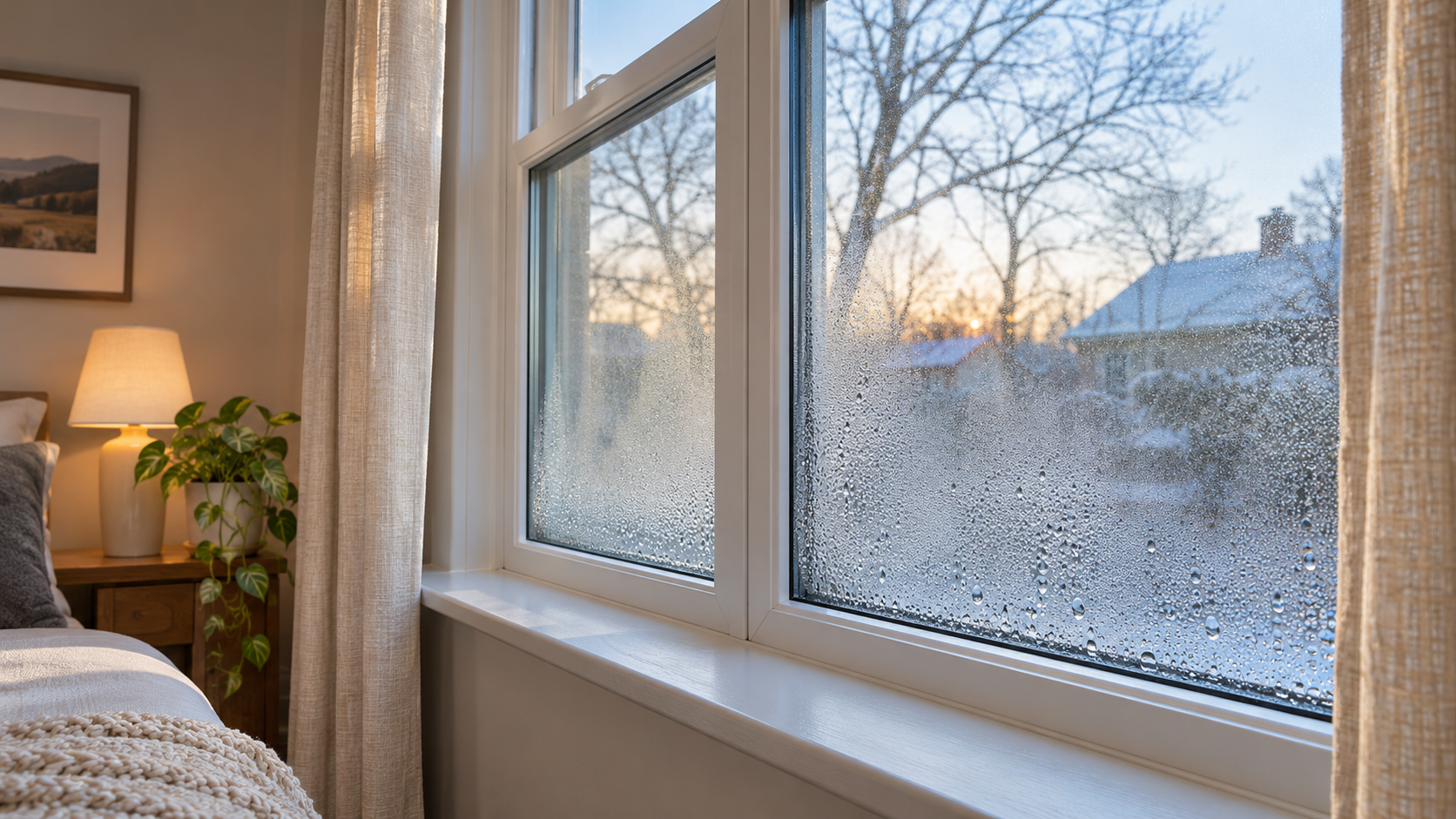
Learning how to stop condensation on windows starts with figuring out where the moisture is forming. Water you can wipe from the room side is a different problem from morning dew outside, and neither is the same as cloudy moisture sealed between two panes of glass.
That distinction can save you from paying for a window replacement you do not need. This guide shows you how to identify the problem, reduce interior condensation, recognize a possible failed insulated glass unit (IGU), and decide when glass repair or full replacement makes sense.
Quick answer: where is the condensation?
Start here before buying cleaners, sealants, or replacement windows.
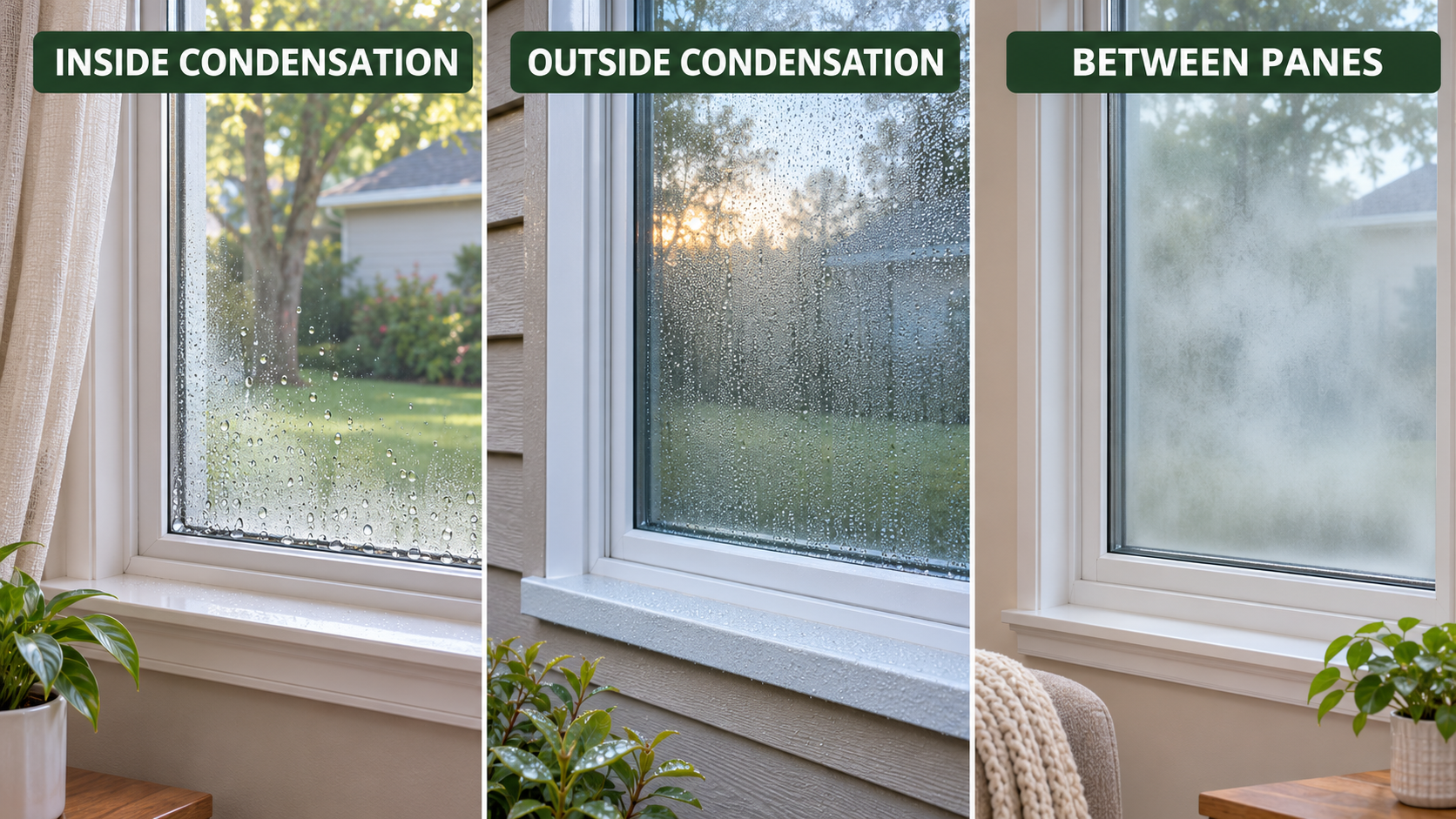
Inside surface
Usually a combination of indoor humidity and cold glass. Dry the sill; manage moisture and airflow first.
Outside surface
Often ordinary morning dew. Usually no repair needed if it clears as conditions change.
Between sealed panes
Often points to IGU seal failure. Ask whether the glass unit can be replaced without changing the frame.
First, identify which type of window condensation you have
A window can look foggy for three completely different reasons. The most useful clue is which glass surface is wet. If you can safely reach it, gently wipe the room-facing glass with a clean dry cloth. If the cloudiness disappears, you are dealing with room-side condensation. If it remains, the moisture could be outside or inside the sealed glazing cavity.
Look at the pattern
Room-side moisture often gathers along the lower glass edge and corners in cold weather. Exterior dew often shows up in the morning. Persistent cloudiness you cannot wipe from exposed surfaces deserves closer inspection.
Is it really a sealed double-pane unit?
Moisture between a removable storm panel and the original window is not the same as condensation inside a factory-sealed IGU. The gap behind a storm window can collect moisture for other reasons.
Do not reach outside an upper-story window to test it.
Only wipe surfaces you can reach safely. If exterior glass is inaccessible, compare the timing and pattern, inspect from a safe location, or ask a qualified window professional to check it. Do not remove glazing or drill into an insulated glass unit to investigate fog.
Why does condensation form on windows?
Water vapor is always present in indoor air. When moist air touches a glass surface that is cool enough, the air at that surface reaches its dew point and some vapor becomes liquid water. That is why a window can be wet on a cold morning even though you do not see moisture anywhere else in the room.
Three conditions drive most room-side window condensation: indoor humidity, glass surface temperature, and air movement near the window. A colder window can condense moisture at an otherwise ordinary humidity level. The lower edge of the glass can also be cooler than the center because the spacer and frame affect how heat moves through the assembly.
Where does the extra indoor moisture come from?
Showers, cooking, laundry, houseplants, humidifiers, unvented appliances and even occupants contribute moisture. In a tighter home, that moisture may remain indoors unless it is removed by ventilation or dehumidification. Closed blinds, heavy curtains and furniture blocking a heating register can also reduce warm-air circulation over cold glass.
The U.S. Environmental Protection Agency describes window condensation as a sign to check indoor moisture sources, ventilation, and the temperature of cold surfaces. A window is not automatically defective just because it sweats in winter.
How to stop condensation on windows from the inside
For moisture on the room-facing glass, the best first steps usually cost less than replacing windows. Address the water already present, measure room humidity, and look for the household activities creating excess moisture.
Dry the window, frame and sill
Wipe accessible glass and surrounding surfaces with a clean absorbent cloth. Do not allow water to sit on wood trim, drywall, painted sills or flooring. If the sill is swollen, soft, or repeatedly wet, investigate and repair the damage instead of covering it with paint or sealant.
Measure indoor relative humidity
Use a small digital hygrometer in the affected room, away from a heating register, draft or the wet glass itself. As a general indoor-air-quality guideline, the EPA recommends about 30%–50% relative humidity when practical. In very cold outdoor conditions, a lower indoor level may be needed to avoid condensation on cold windows. The right target depends on the weather, window and home.
Remove moisture at the source
Use bathroom exhaust fans during showers and afterward, and use a kitchen exhaust fan that vents outside when cooking. Confirm the clothes dryer exhausts outdoors. Reduce unnecessary humidifier output and avoid drying wet laundry inside small, poorly ventilated rooms. A recirculating range hood does not remove cooking moisture outdoors.
Give warm indoor air access to the glass
Open blinds or curtains during the day when practical. Keep nearby supply registers unobstructed, and avoid trapping a pocket of cold air against the pane with tightly closed coverings. A gentle increase in air movement can help, but it does not replace removing excess moisture.
Ventilate or dehumidify when needed
If outdoor conditions are suitable, a short period of ventilation may help remove humid indoor air. Where outdoor air is humid or ventilation is limited, a properly sized dehumidifier can help. Follow the appliance instructions and provide clearance for its air intake and exhaust; do not position it against a wet window or block its vents.
Check for drafts and unusually cold surfaces
Damaged weatherstripping, poor sash closure or gaps at the window perimeter can make an area feel colder. Repair clear air-leakage problems with compatible materials, but do not block engineered frame drainage or weep holes. Sealant is not a cure for condensation inside a failed IGU.
Watch what happens over several mornings
Record the indoor humidity, outdoor weather and which windows get wet. If reducing humidity and improving airflow helps, the cause is likely related to the indoor environment. If one window remains dramatically colder or repeatedly wets adjacent finishes, a closer evaluation of its glazing and installation may be worthwhile.

Money-saving tip: A humidity monitor, properly used bath fan, and improved airflow are often more sensible first purchases than a new window. They do not fix every cold-glass problem, but they help establish whether replacement is even relevant.
What if the room humidity is already fairly low?
A reading near 35%–45% does not guarantee dry windows during very cold weather. Condensation depends on the temperature at the glass, particularly near edges and frames. Compare nearby windows under similar conditions, look for blocked airflow, and check whether the window is a single-pane system or an older, less insulating assembly. A better-performing glazing system can raise the interior glass temperature, but the value of replacement should be weighed against the actual severity of the problem.
Condensation on the outside of windows: usually leave it alone
If droplets are on the exterior surface, especially early in the morning, you may simply be seeing dew. Outdoor air can deposit moisture on glass that cooled overnight. This can happen with well-insulated windows because less indoor heat reaches the exterior glass.
Exterior dew often clears after sunlight or outdoor temperatures rise. It does not, by itself, mean the glass seal has failed, the window leaks, or the frame needs replacement. The Natural Resources Canada condensation guidance explains why exterior moisture can appear on high-performance windows.
Exterior dew is different from water leaking around the opening.
Water dripping through a frame joint during rain, persistent staining below a sill, or wet drywall around the opening deserves an installation or building-envelope investigation. Do not assume every wet window is condensation.
What does condensation between double-pane window glass mean?
Modern double-pane windows generally contain an insulated glass unit (IGU): two panes separated by a sealed cavity, spacer, and perimeter edge-seal system. Depending on the product, that cavity may contain air or an insulating gas. Its purpose is to remain protected from ordinary outdoor or indoor moisture.
When a sealed unit develops a compromised edge seal, moisture may enter the cavity and appear as fog, streaking, or condensation between the panes. It may worsen or fade with temperature changes, but it will not wipe away from the room side. In some cases it leaves mineral deposits or permanent haze inside the unit.
Can you just reseal or defog the window?
Applying caulk around the visible frame does not restore the factory edge seal inside an IGU. Some services drill, vent or treat fogged glass to improve appearance, but such treatments do not generally restore the original hermetic seal, gas fill or tested insulating performance. That matters if the homeowner expects the same functionality as a new sealed unit.
For a confirmed failed IGU, the usual long-term repair is replacement of the affected glass unit, when the existing sash and frame allow it. For more detail on how panes, coatings, spacers and sealed cavities work, see Builzee’s Energy Efficient Window Glass Guide.
Before paying for new windows, ask these four questions
- Is the fog definitely inside a factory-sealed IGU? A storm panel or secondary glazing layer can create a different moisture situation.
- Can the existing sash accept a replacement IGU? Some systems have removable stops or glazing components; others are more restrictive.
- Is the glass covered by warranty? Check the manufacturer’s IGU seal warranty and whether labor is included.
- Is the rest of the opening sound? A failed seal is not the same as a rotten sill, distorted frame or flashing leak.
Window condensation: repair, glass replacement, or a new window?
The most expensive response is not always the right one. Match the scope of work to the confirmed problem. A single fogged IGU in a good sash is a different decision from a whole wall of deteriorated frames and recurring rain leaks.
| What you notice | Best first move | When to consider replacement |
|---|---|---|
| Water on the room-side glass | Dry surfaces; check humidity, ventilation, airflow and cold spots. | Evaluate the window only if the underlying thermal or envelope problem remains. |
| Dew on the outside | Usually no repair. Monitor whether it clears naturally. | Not warranted by exterior dew alone. |
| Fog between sealed panes | Check IGU warranty, glazing access and replacement-glass availability. | Replace the IGU when feasible; consider a sash/window if the system cannot be serviced. |
| Wet trim or wall during rain | Investigate flashing, perimeter waterproofing, drainage and wall conditions. | May require extensive opening repairs or window replacement depending on findings. |
| Rot, distortion or repeated problems | Assess frame, sash, glazing and adjacent wall together. | Full-frame replacement may be more sensible if components are deteriorated. |
Why replacing just the IGU can save money
If the frame, sash, hardware and surrounding waterproofing are sound, a glass-only replacement may preserve usable components and avoid unnecessary trim, drywall or exterior-finish work. But the replacement must be compatible with the frame and correctly specified for thickness, coatings, safety-glazing requirements and any manufacturer restrictions. Do not attempt to disassemble heavy or overhead glazing without qualified help.
For the broader decision, read Builzee’s Window Replacement: Repair vs. Replace guide. If you request several bids, use our window quote comparison checklist to check that every contractor is pricing the same scope.
When higher-performance glazing might help
If you have chronic room-side condensation despite reasonable humidity and airflow, window thermal performance may be part of the issue. A better-insulated glass package, improved edge spacer, appropriate frame thermal break and sound installation can keep the room-side glass warmer under cold conditions. Look at whole-window U-factor, frame construction and applicable condensation-related ratings rather than assuming that “double-pane” or “Low-E” tells the full story.
That does not mean every homeowner needs triple glazing. Climate, frame condition, orientation, installation quality and budget determine whether an upgrade makes sense.
How to prevent window condensation from coming back
Preventing repeated condensation is less about one trick and more about keeping moisture generation, ventilation and cold surfaces in balance. Start with daily habits; investigate the building or window if they do not work.
What not to do
- Do not cover chronic moisture with paint or caulk. It can hide a growing problem, especially where drywall or wood is staying wet.
- Do not block window drainage openings. Many frames are designed to manage incidental water through specific paths.
- Do not assume a dehumidifier repairs a failed sealed unit. It affects room humidity, not moisture trapped inside the IGU cavity.
- Do not treat exterior dew as a product defect. Verify the actual location of moisture first.
If window condensation has already caused paint damage on adjacent drywall, first correct the moisture issue, then follow Builzee’s guide to fixing peeling paint on walls. Cosmetic repair without addressing repeated wetting is unlikely to last.
When to call a professional
Get qualified help when the sash or sill is soft or decaying, water enters during rain, the wall stays wet, there is recurrent mold growth, the window cannot close securely, or you cannot safely inspect the glazing. A window contractor may need to work with a building-envelope or moisture specialist to distinguish condensation from a concealed leak.
Frequently asked questions about window condensation
Is condensation on the inside of windows normal in winter?
It is common, especially when indoor air is humid and glass is very cold. Occasional light condensation does not prove the window has failed, but recurring water should be dried and investigated so it does not damage surrounding materials.
How do I stop my bedroom windows from sweating overnight?
Check bedroom humidity with a hygrometer, avoid excessive humidifier use, confirm ventilation, and allow some air circulation near the glass. Closed curtains can trap cooler air against the window. The appropriate humidity level may need to be lower during unusually cold weather.
Will a dehumidifier stop window condensation?
It can help when excessive indoor humidity contributes to room-side moisture. It will not remove exterior dew, repair a cold or defective frame, or clear fog trapped within a failed IGU.
What humidity should a house be to prevent condensation?
The EPA suggests about 30%–50% indoor relative humidity when practical, but there is no single level that prevents window condensation in every climate. Colder outdoor temperatures and poorer insulating glass can require a lower level to keep the inside glass dry.
Why is condensation only around the edges of my window?
The edge of insulated glass often runs cooler than the center because of spacer and frame heat transfer. Airflow and shading also affect surface temperatures. A wet edge alone is not proof of seal failure; moisture location and other symptoms matter.
Does condensation between double-pane windows mean I need a whole new window?
Not necessarily. If moisture is within a factory-sealed IGU, the glass unit may need replacement. A sound, serviceable frame might permit IGU-only replacement. Frame deterioration, product restrictions, or obsolete parts may make sash or whole-window replacement more practical.
Can I fix fog between window panes with a hair dryer?
Heating the exposed surface does not repair a failed IGU edge seal. It may temporarily change the fog’s appearance, but the moisture pathway remains. Avoid concentrated heat that could damage glass, seals or nearby materials.
Is condensation outside a new window a bad sign?
Usually not. Morning dew on exterior glass can occur on high-performance windows when outdoor air is humid and the exterior surface cools overnight. It commonly disappears as sunlight or temperature rises.
What if my window is wet only when it rains?
Water entry during rain is not the same as ordinary condensation. Inspect the window’s joints, drainage, flashing and adjacent wall construction. Document the conditions and get help with persistent intrusion rather than simply applying caulk to visible gaps.
Start with the location of the moisture, not the price of a new window. Room-side condensation usually calls for humidity and airflow changes first. Exterior dew commonly needs no action. Fog trapped inside a sealed IGU calls for a product and warranty evaluation, with glass-only replacement worth checking before ordering a whole new assembly.
Fix the Problem Before Replacing the Window
Explore window glass performance, repair-versus-replacement decisions, installation details and buying guides so you can make a more informed choice and avoid paying for work you may not need.
Explore Windows GuidesTechnical references: For additional background on moisture control, exterior dew and sealed-glass condensation: