How to Fix a Stripped Screw Hole in Wood: Easy Methods That Actually Hold
If you’re trying to figure out how to fix a stripped screw hole in wood, the good news is that you usually don’t need to replace the entire piece. A stripped screw hole is one of those small problems that can make something feel completely broken.
A cabinet hinge starts pulling away from the door. A door hinge screw keeps spinning without tightening. A drawer pull becomes loose. Or a screw that used to hold firmly suddenly won’t grab the wood anymore.
Fortunately, you often don’t need to replace the entire piece of wood.
The right repair depends on how badly the hole is damaged, what type of wood you’re working with and how much load the screw needs to hold.
For a lightly stripped hole, a simple wood-and-glue repair may be enough. For a heavily damaged hinge or enlarged screw hole, a wood dowel or another more substantial repair usually makes more sense.
How to Fix a Stripped Screw Hole in Wood Starts With Finding the Cause
A wood screw holds because its threads bite into the surrounding material.
Once those wood fibers become crushed, torn out or enlarged, the screw no longer has enough solid material to grip.
Common causes include:
- Overtightening a screw
- Removing and reinstalling the same screw repeatedly
- Using a screw that is too small
- Loose hinges moving over time
- Soft wood
- Particleboard or MDF breaking down
- Water damage
- A screw pulling under load
Sometimes the screw itself is perfectly fine.
The problem is the hole around it.
If the screw turns endlessly without tightening or pulls out with very little resistance, the hole is probably stripped.
First, Check How Bad the Damage Is
Before choosing a repair, remove the screw and inspect the hole.
Lightly Stripped
The screw still grabs slightly but won’t tighten firmly.
A toothpick or wood-splinter repair can often work well here.
Moderately Enlarged
The hole is noticeably wider and the screw has almost no grip.
A wood dowel repair is usually stronger and more reliable.
Badly Damaged or Broken-Out Wood
If the surrounding wood is cracked, missing or crushed, simply filling the hole may not be enough.
You may need to rebuild the damaged area, move the screw location or replace the damaged component.
The repair should always match the load.
A decorative drawer knob does not need the same repair as a heavy door hinge or structural connection.
Method 1: Toothpicks and Wood Glue for a Small Stripped Hole
This is probably the best-known repair method, and for lightly stripped holes in solid wood, it can work surprisingly well.
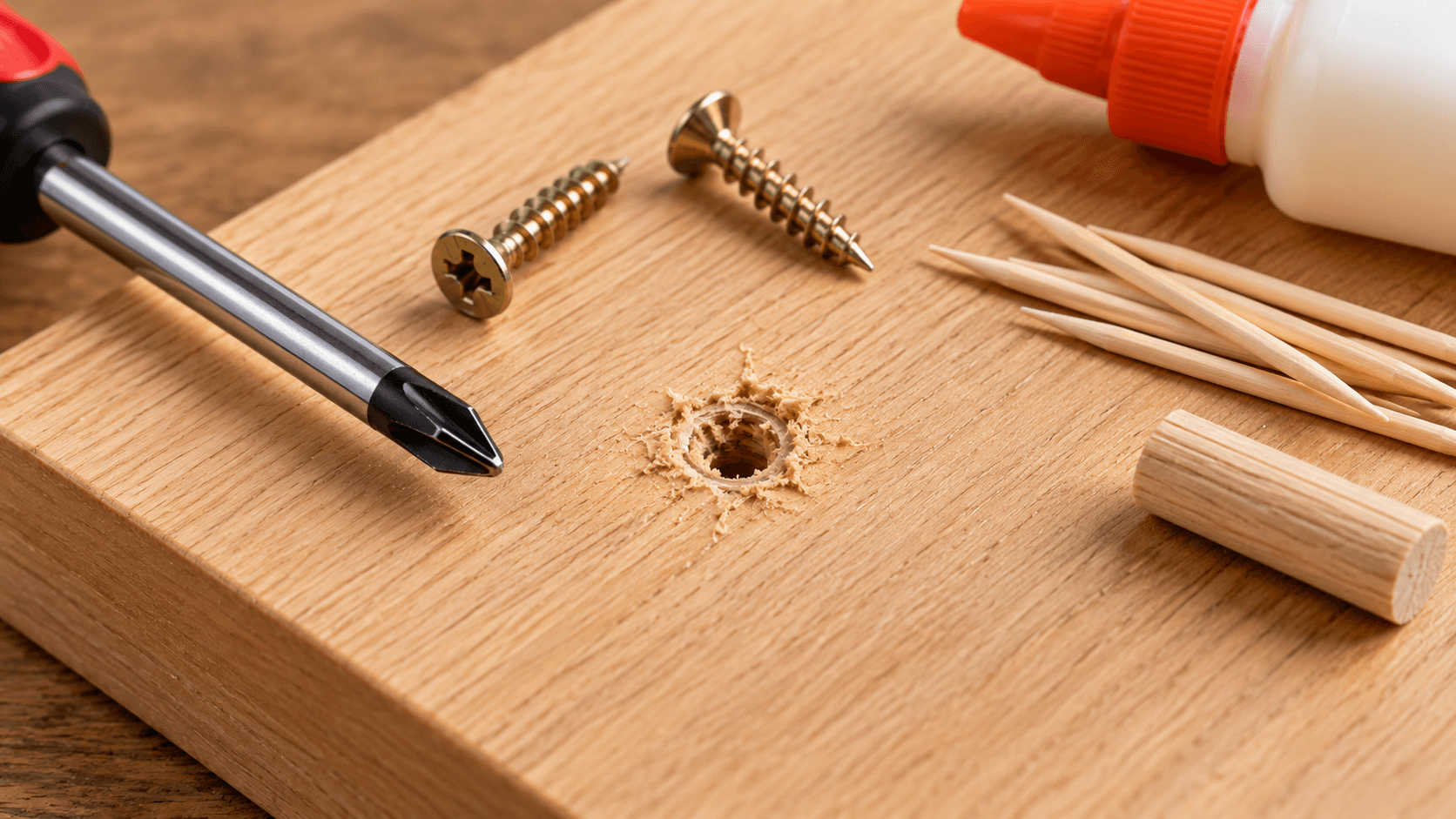
You’ll need:
- Wooden toothpicks
- Wood glue
- Utility knife or small saw
- Screwdriver
Step 1: Remove the Screw
Take the loose screw completely out of the hole.
Clear away any loose wood fibers or debris.
Step 2: Add Wood Glue
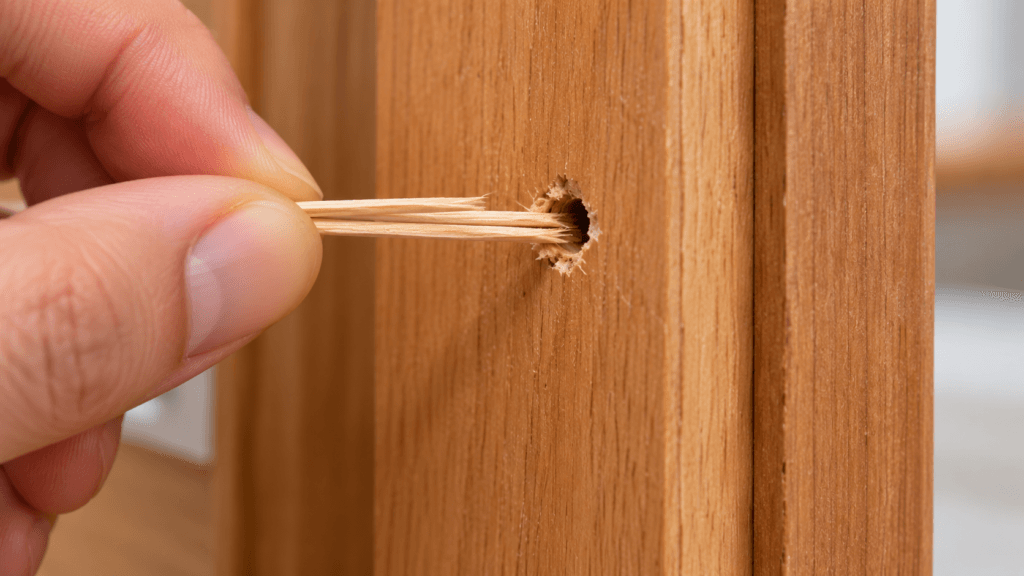
Put a small amount of wood glue on one or more wooden toothpicks.
You don’t need to completely fill the hole with glue. The goal is to bond fresh wood material inside the damaged area.
Step 3: Insert the Toothpicks
Push the toothpicks firmly into the hole.
Use enough material to fill the damaged space without forcing the surrounding wood apart.
Step 4: Trim Them Flush
Cut or snap the excess toothpick material so it sits flush with the surrounding surface.
Step 5: Let the Glue Dry
Allow the glue to cure according to the manufacturer’s instructions.
Step 6: Reinstall the Screw
Drive the screw back into the repaired hole.
For a small repair, the screw will often create its own path through the new wood fibers.
Do not overtighten it.
Once the screw is snug, stop.
When Does the Toothpick Method Work Best?
This method works well for lighter-duty repairs such as:
- Cabinet hinges
- Small hardware
- Drawer slides
- Light trim
- Furniture
- Small interior repairs
It should not be relied on for an important structural connection or a heavily loaded fastener.
For cabinet projects, you may also want to see How to Paint Kitchen Cabinets: A Step-by-Step Guide if you’re already repairing or refreshing existing cabinetry.
Method 2: Use a Wood Dowel for a Stronger Repair
When the hole is too damaged for toothpicks, a wood dowel repair is one of the most reliable fixes.
Instead of adding a few small pieces of wood, you’re replacing the damaged area with a solid piece of new wood.
You’ll need:
- Drill
- Drill bit
- Wood dowel
- Wood glue
- Saw or utility tool
- Smaller drill bit for a pilot hole
Step 1: Drill the Damaged Hole Clean
Choose a drill bit that matches the diameter of the dowel.
Carefully drill the stripped hole to create a clean, round opening.
You only need to remove enough material to create a solid surface for the dowel.
Step 2: Glue in the Dowel
Coat the dowel with wood glue and insert it firmly into the hole.
It should fit snugly without having to force it excessively.
Step 3: Trim It Flush
Once installed, cut the dowel so it is even with the surrounding wood.
Step 4: Let the Glue Cure
Allow the adhesive to dry fully before reinstalling the hardware.
Step 5: Drill a New Pilot Hole
Mark the original screw location.
Drill a pilot hole slightly smaller than the screw’s root diameter.
This helps reduce the chance of splitting the repair and keeps the screw tracking straight.
Step 6: Reinstall the Screw
Drive the screw into the new wood.
You now have fresh material for the threads to grip.
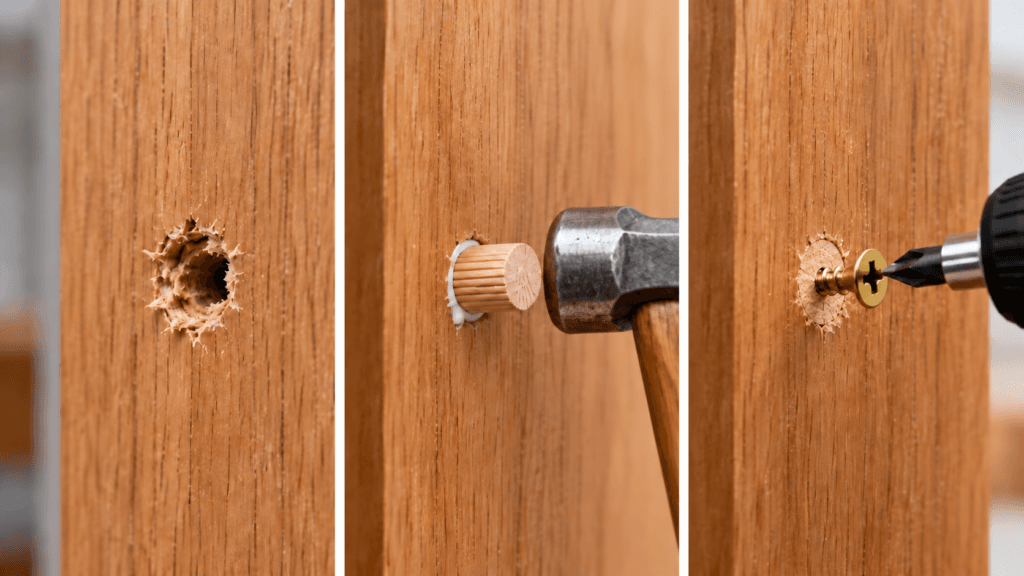
Toothpick Repair vs. Wood Dowel Repair
The two methods solve the same basic problem, but they’re not equal.
| Repair Method | Best For | Relative Strength |
|---|---|---|
| Toothpicks + glue | Lightly stripped hole | Good |
| Wood splinter + glue | Small to moderate damage | Good |
| Wood dowel | Enlarged or repeatedly stripped hole | Very good |
| Longer screw into solid wood | Hinges or hardware with deeper wood behind it | Very good |
| Threaded insert | Repeated removal or machine-screw applications | Excellent for the right application |
If a hole has already failed more than once, it usually makes sense to skip the toothpick repair and move to a dowel or another stronger solution.
Method 3: Use a Longer or Larger Screw
Sometimes the damaged part of the hole is only near the surface.
If there is solid wood farther behind the damaged area, a longer screw may be able to reach undamaged material.
This can be particularly useful for some door hinges.
But don’t automatically install the biggest screw you can find.
A screw that is too long can potentially hit:
- Wiring
- Plumbing
- Glass
- Finished surfaces
- Hardware behind the wood
A wider screw can also split the wood or damage the hinge.
Use this method only when you understand what the screw is fastening into.
Door Hinges Are a Common Example
A loose hinge screw in a door jamb may sometimes be replaced with a longer screw that reaches deeper framing.
That can provide substantially more holding power than repairing only the damaged surface fibers.
The screw size and location still need to be appropriate for the hinge and surrounding framing.
If you’re already working on a door project, Builzee’s Doors guides cover additional planning, materials and installation considerations.
What About Using a Golf Tee?
A wooden golf tee can work in a similar way to a dowel.
Glue the tee into the stripped hole, allow it to cure and trim it flush.
Then drill a pilot hole and reinstall the screw.
The tapered shape can be useful for irregular holes.
If you already have a drill and properly sized wood dowels available, however, a dowel is usually easier to size consistently and gives you more control over the finished repair.
What If the Hole Is in MDF or Particleboard?
MDF and particleboard do not behave the same way as solid wood.
Once the compressed fibers around a screw hole break apart, simply reinstalling the screw often makes the damage worse.
A toothpick repair may work temporarily for a lightly loaded item, but it is not always the best long-term solution.
Depending on the hardware, better options can include:
- Repair inserts
- Wood dowels where practical
- Hinge repair plates
- Relocating the fastener
- Specialized particleboard screws
The best method depends on what the screw is holding.
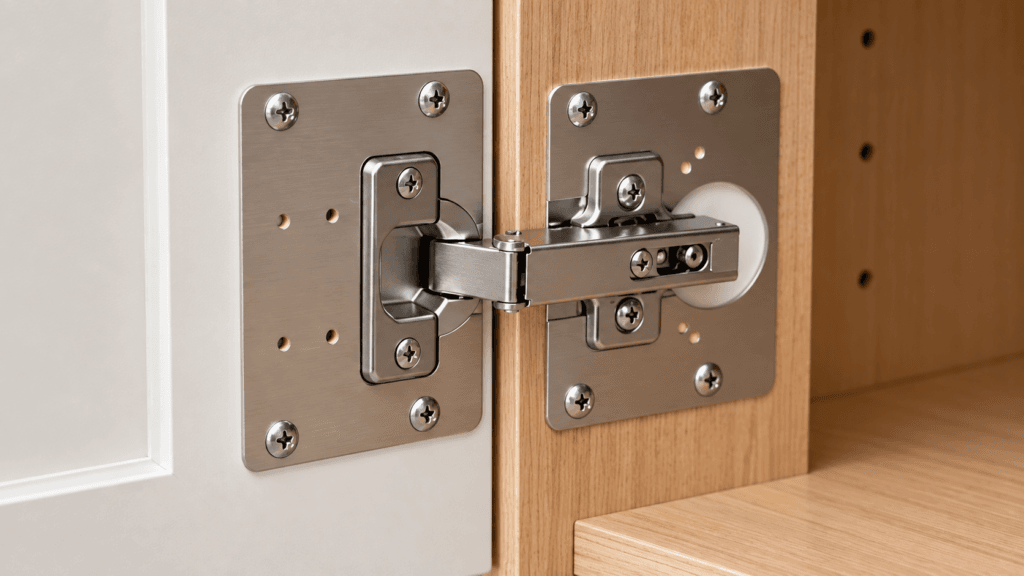
Cabinet Hinges Need Special Attention
European-style concealed cabinet hinges can put significant stress on a relatively small area of cabinet material.
If the hinge screws repeatedly pull out of particleboard, a hinge repair plate may be more reliable than repeatedly filling the same holes.
The repair plate spreads the load across a larger area instead of relying on the damaged material immediately around the original screw holes.
Don’t Skip the Pilot Hole
After repairing a badly stripped hole, drilling the correct pilot hole can make the repair last longer.
A pilot hole helps:
- Keep the screw straight
- Reduce splitting
- Make the screw easier to drive
- Prevent excessive stress on the repair
- Reduce the temptation to overtighten
The pilot hole should generally be smaller than the outside diameter of the screw threads.
You still want the threads to bite into the surrounding wood.
Avoid Overtightening the Screw Again
A repaired hole can be damaged again immediately if the screw is overtightened.
This happens frequently when using drills and impact drivers.
As the screw becomes snug, slow down.
For small cabinet and furniture hardware, a hand screwdriver can give you better control during the final tightening.
The screw needs to be secure.
It doesn’t need to be driven as hard as possible.
When Should You Move the Screw Instead?
Sometimes the original hole is simply too damaged to repair reliably.
If the design allows it, moving the screw slightly into fresh wood may be the better solution.
This is common with:
- Mounting brackets
- Shelving hardware
- Utility hooks
- Some furniture hardware
- Non-critical trim
Do not move a fastener casually on precision hardware such as hinges, drawer slides or structural connectors because alignment may matter.
When a Stripped Screw Hole Is More Than a Small Repair
Most stripped screw holes are minor.
But there are situations where you should stop treating the problem as a simple fastener repair.
Look more closely if:
- The wood is cracked
- The surrounding material is rotten
- Water damage is present
- Several nearby screws are pulling out
- A structural connector is loose
- Deck framing or railing hardware is involved
- The screw supports significant weight
A loose decorative cabinet hinge and a loose deck guardrail connection are completely different situations.
A toothpick or dowel repair should not be used as a substitute for properly repairing a structural connection.
For outdoor structural projects, see Builzee’s Decks & Outdoor Living guides for additional information on deck construction, fasteners and safety.
Which Repair Should You Use?
For most homeowners, the decision can be kept fairly simple.
Use toothpicks and glue when the hole is only slightly stripped.
Use a wood dowel when the hole is enlarged, damaged or has already been repaired once.
Consider a longer screw when you know there is solid material deeper behind the hole.
Use specialized repair hardware for MDF, particleboard or certain cabinet hinges.
Stop and inspect the surrounding material if the fastener is structural or the wood itself is damaged.
Final Takeaway
A stripped screw hole usually doesn’t mean the project is ruined.
For small holes in solid wood, adding fresh wood fibers with toothpicks and glue can restore enough material for the screw to grip again.
For a stronger repair, drilling out the damaged area and gluing in a wood dowel gives you a fresh piece of wood to work with.
The important part is matching the repair to the job.
A cabinet hinge, drawer pull and structural deck connection may all use screws, but they don’t require the same solution.
Repair the damaged wood, drill a proper pilot hole when needed and tighten the screw only until it’s secure.
That’s usually enough to turn a loose, spinning screw back into a solid connection.
Fixing Something Around the House?
Explore Builzee’s DIY guides for practical help with common repairs, maintenance, painting, and home improvement projects you can tackle yourself.