Fiberglass vs. Wood vs. Steel Entry Doors: Which Is Best?
Comparing fiberglass vs wood vs steel entry doors is not just about curb appeal. Material affects maintenance, weather resistance, security, thermal performance, refinishing expectations and how the entry ages over time.
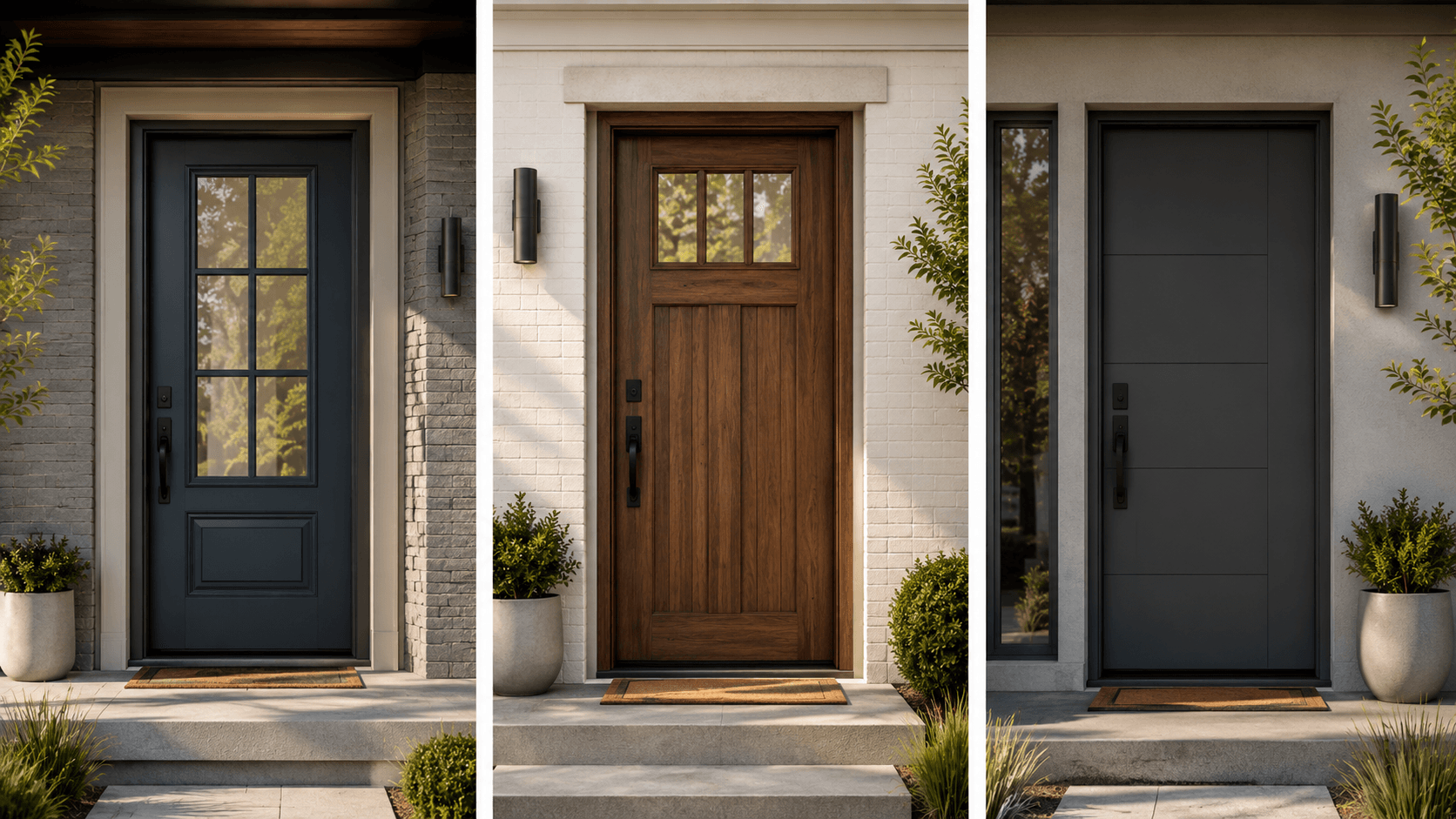
For many homes, fiberglass provides the broadest balance of durability, appearance and low maintenance. Wood remains the premium architectural choice when natural material and customization matter most. Steel often delivers strong value and security, especially for straightforward painted-door applications.
The best entry door is the one that fits the exposure, the frame condition and the maintenance level you are actually willing to keep up with.
The Short Version
Fiberglass
Usually the best all-around choice for homeowners who want low maintenance, decent energy performance and a door that can look traditional without the upkeep of real wood.
Wood
Often the best design choice when genuine character, custom sizes or stain-grade appearance are the priority and the door will receive proper finish maintenance.
Steel
Often the value choice when security, durability and price matter more than natural appearance. Best when the protective finish is maintained and the full frame is well built.
Fiberglass vs Wood vs Steel Entry Doors
| Material | What it does well | Main tradeoff | Best fit |
|---|---|---|---|
| Fiberglass | Low maintenance, good moisture resistance, stable, can imitate wood grain, commonly good thermal performance | Appearance varies by quality; lower-end products can look synthetic | Most front entries, side entries and homes wanting a durable painted or faux-wood finish |
| Wood | Authentic appearance, strong architectural character, easy to customize, repairable and refinishable | Requires more attention to exposure and finish maintenance | Traditional, custom and high-visibility entries where design value is paramount |
| Steel | Strong value, durable skin, painted finish, good security potential | Can dent; damaged coatings can lead to corrosion; style flexibility is lower than wood | Budget-conscious projects, utility entries and homeowners prioritizing value and security |
Where Each Door Material Shines
Fiberglass entry doors
Fiberglass doors are usually built with fiberglass skins over a framed, insulated core. That construction allows them to be relatively stable and efficient, with much less susceptibility to swelling or seasonal movement than solid wood. Higher-quality fiberglass products can convincingly imitate wood grain from normal viewing distances, especially when paired with good hardware and a carefully applied finish.
The main limitation is variability. Some fiberglass doors look excellent; some do not. Reinforcement for large glass inserts, multipoint hardware and oversized panels also matters. “Fiberglass” alone does not tell you the whole story.
Wood entry doors
Wood remains the premium material when natural character matters most. The warmth, depth, stain potential and custom possibilities are hard to duplicate. Wood can also be easier to repair cosmetically than dented steel or lower-end faux grain surfaces.
The tradeoff is exposure. Direct sun, repeated wetting and deferred finish maintenance can all shorten the life of the finish and eventually affect the wood itself. That does not make wood a poor choice. It simply means the entry should be selected and maintained with the actual site conditions in mind.
Steel entry doors
Steel doors usually use metal skins over an insulated core. For many homes, they offer an attractive combination of strength, value and simple painted finishes. They can work especially well where the design does not require a stained wood look and where the homeowner wants a practical entry solution.
Steel’s weakness is surface damage. Dents are hard to erase cleanly, and any damage to the coating should be monitored so that moisture does not begin corroding exposed metal. Quality also varies with gauge, edge construction and the frame system.
Performance Factors That Matter More Than the Material Alone
Sun and rain matter
A protected porch changes the equation. A door exposed to direct weather and strong sun needs more durable finishes and better weather detailing.
Glass changes the whole assembly
Decorative lite kits and sidelights affect U-factor, privacy, security and maintenance. Compare the full assembly, not just the opaque slab.
Do not ignore the frame
Weak jambs, poor anchorage or bad threshold integration can undermine a premium door. Installation quality still governs long-term performance.
The lock area matters most
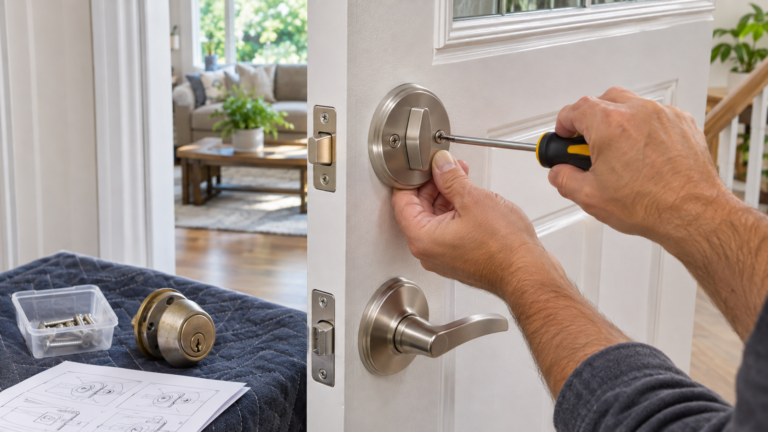
A strong slab is not enough. Long screws, reinforced strike areas, quality deadbolts and a sound frame matter as much as the door material.
Cost, Maintenance and Long-Term Ownership
Installed price varies widely by size, configuration, decorative glass, sidelights, transoms, frame material and labor. Even so, the basic relationship often looks like this:
| Material | Typical cost position | Maintenance expectation |
|---|---|---|
| Steel | Often the value option | Usually low if the finish remains intact and rust is prevented |
| Fiberglass | Often moderate | Usually low to moderate depending on finish and exposure |
| Wood | Often highest | Usually moderate to high, especially on stained exterior faces exposed to sun and rain |
Do not budget only for the slab. A realistic door project can include frame repairs, flashing corrections, trim, finish painting, lock upgrades, threshold work, casing repairs and sometimes sidelights or glazing changes. That is why a replacement bid should clearly separate product cost from the surrounding construction work.
How to Choose the Best Entry Door Material
Look at the exposure first
A highly exposed entry with minimal overhang often pushes homeowners toward fiberglass or well-protected steel unless they are committed to maintaining wood carefully.
Decide how important authentic material is
If only real wood will satisfy the architecture, accept the maintenance that comes with it and choose a quality product with appropriate protection.
Compare the full system, not just the label
Frame, threshold, weatherstripping, lite cutouts, lock reinforcement and installation condition all matter.
Separate security marketing from actual security
A steel slab in a weak frame is not automatically secure. Prioritize the strike, hinge reinforcement and anchorage into surrounding framing.
Ask what maintenance looks like five years from now
This is often the deciding factor between fiberglass and wood for homeowners who love the look of stain-grade entries but want less upkeep.
There Is No Single Best Entry Door Material for Every Home
Fiberglass is often the safest all-around recommendation. Wood is still the architectural standout when appearance and customization matter most. Steel delivers strong value and straightforward durability. The best choice depends on exposure, style, maintenance expectations and the quality of the complete door system.
External reference: U.S. Department of Energy guide to energy-efficient windows and doors.