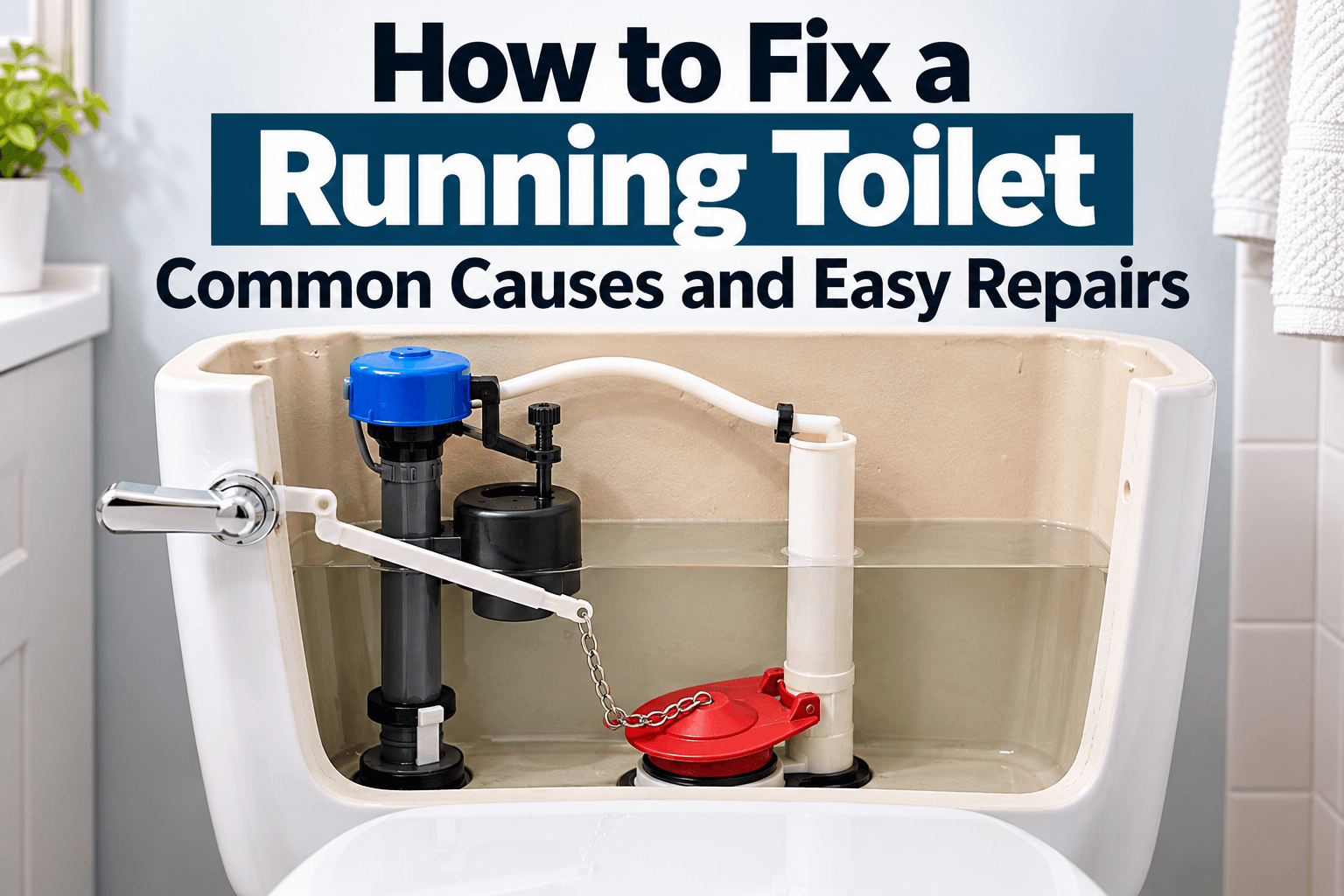
How to Fix a Running Toilet: Common Causes and Easy Repairs
If you’re trying to figure out how to fix a running toilet, start by taking the tank lid off and watching what happens after you flush.
In many cases, the problem is surprisingly simple.
A worn flapper may not be sealing. The chain may be too tight. The tank may be filling too high. Or the fill valve may no longer shut the water off properly.
Most of these repairs are inexpensive and beginner-friendly.
The important part is figuring out why the toilet is running before replacing parts.
What Does a Running Toilet Actually Mean?
A toilet normally refills after every flush and then becomes quiet once the tank reaches the correct water level.
If you continue hearing water after that, something inside the tank is allowing water to keep moving.
You may notice:
- Water running constantly
- A faint trickling sound
- The toilet turning on by itself every few minutes
- Water continuously entering the overflow tube
- The tank taking a long time to stop filling
- Small ripples in the bowl even when nobody has flushed
The exact symptom can help narrow down the problem.
Start by Removing the Tank Lid
Carefully lift the tank lid and place it somewhere safe.
Flush the toilet once and watch the parts inside the tank operate.
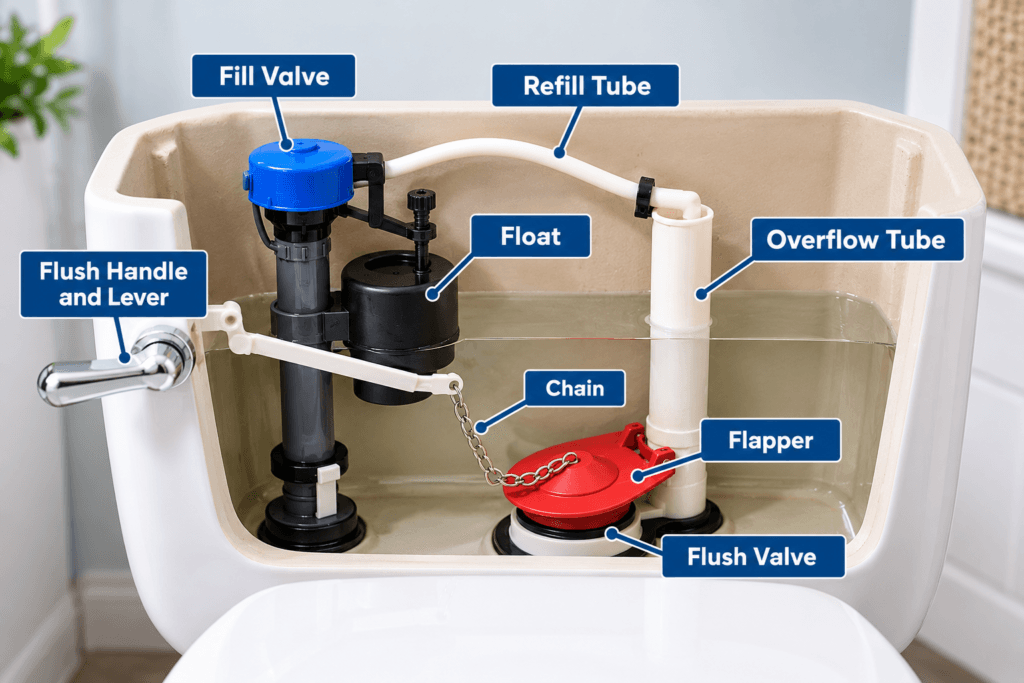
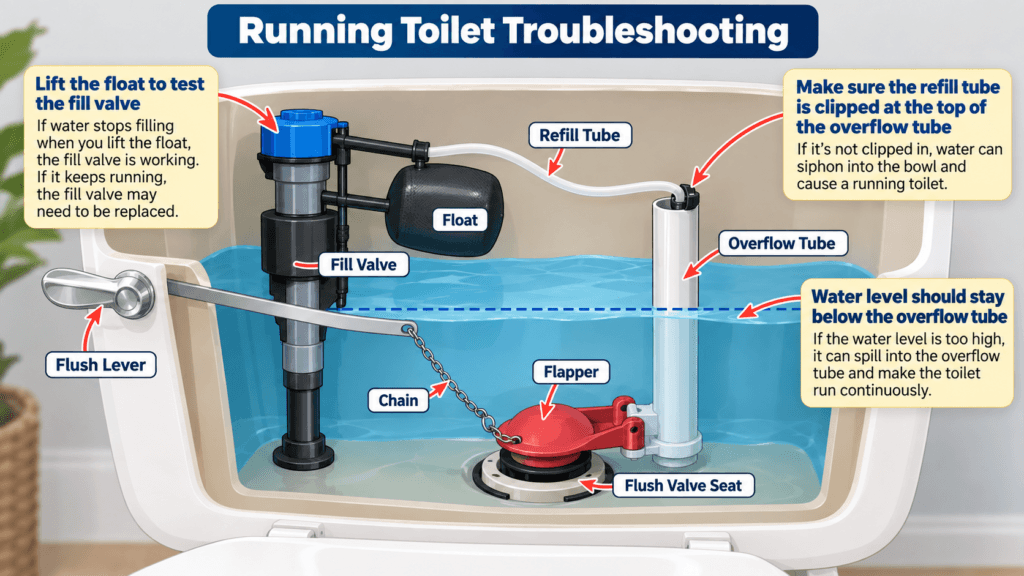
On a typical toilet, you’ll see:
- Flush handle and lever
- Chain
- Flapper
- Flush valve
- Overflow tube
- Fill valve
- Float
- Refill tube
You don’t need to understand every component before starting.
Just watch what happens from the moment you push the handle until the tank fills again.
Cause 1: The Flapper Isn’t Sealing Properly
The flapper is the rubber or plastic piece at the bottom of the tank that lifts when you flush.
When it drops back down, it should create a watertight seal over the flush valve opening.
If it doesn’t seal completely, water slowly leaks from the tank into the bowl.
The fill valve then keeps replacing that lost water.
This can make the toilet run continuously or turn on for a few seconds every few minutes.
Check the flapper
Look for:
- Warping
- Cracks
- Mineral buildup
- A worn sealing surface
- A flapper that doesn’t sit flat
- A chain caught underneath it
Lightly press down on the flapper with your finger.
If the running stops while you’re holding it down, the flapper or its sealing surface is a likely culprit.
Clean the sealing surface
Sometimes the flapper itself is still usable, but mineral deposits or debris prevent it from sealing.
Turn off the toilet’s water supply.
Flush the toilet to lower the water level.
Then wipe the underside of the flapper and the surface it rests against.
Turn the water back on and test the toilet.
If the flapper is stiff, cracked, distorted or still leaks, replace it.
Replacing a Toilet Flapper
Replacing a flapper is one of the easiest toilet repairs.
First, turn off the water supply valve behind or beside the toilet.
Flush the toilet.
Disconnect the chain from the flush lever.
Then detach the flapper from the mounting ears or posts at the base of the overflow tube.
Install a compatible replacement and reconnect the chain.
Before putting the tank lid back on, flush the toilet several times and make sure the flapper rises freely and drops completely onto the valve seat.
Cause 2: The Flapper Chain Is Too Tight or Too Loose
A perfectly good flapper can still leak if the chain isn’t adjusted correctly.
If the chain is too tight
The chain may hold the flapper slightly open even when the toilet isn’t being flushed.
That tiny gap is enough to allow water into the bowl continuously.
The chain should have a small amount of slack when the flapper is closed.
If the chain is too loose
Too much slack can cause the chain to:
- Tangle
- Fall underneath the flapper
- Prevent the flapper from opening fully
- Create an inconsistent flush
Move the chain connection to a different hole on the flush lever if needed.
You’re looking for enough slack that the flapper closes freely without leaving a large loop of chain inside the tank.
Cause 3: The Water Level Is Too High
Look at the water level inside the tank.
There should normally be some space between the water surface and the top of the overflow tube.
If water is flowing continuously into the overflow tube, the tank is filling too high.
That means the problem may be with the float adjustment rather than the flapper.
Adjust the Toilet Float
The float tells the fill valve when the tank has enough water.
Different toilets use different float designs.
Older toilets may have a ball attached to a long metal arm.
Newer toilets commonly use a float that moves vertically along the fill valve.
Most modern fill valves have an adjustment screw or clip that lets you raise or lower the shutoff level.
Adjust the float so the water stops below the top of the overflow tube.
Make small adjustments and flush between them.
Don’t simply bend or force components unless the manufacturer’s design specifically allows it.
Cause 4: The Fill Valve Isn’t Shutting Off
If the float appears to be adjusted correctly but water still keeps entering the tank, the fill valve itself may be worn or dirty.
The fill valve is usually the tall assembly mounted along one side of the tank.
It connects to the water supply beneath the toilet.
A quick test
While the toilet is running, gently lift the float.
If the water stops, the valve may simply need adjustment.
If the water continues running even with the float raised to its shutoff position, the fill valve may need cleaning or replacement.
Fill valves contain seals and internal components that wear over time.
Mineral deposits and sediment can also interfere with their operation.
Replacing a Toilet Fill Valve
A replacement fill valve is generally inexpensive, but this repair requires disconnecting the water supply.
Start by closing the toilet shutoff valve.
Flush the toilet and hold the handle down to remove as much water from the tank as possible.
Use a sponge or towel to remove the remaining water.
Place a small container or towel beneath the supply connection because some water will remain.
Disconnect the supply line from the toilet tank.
Remove the retaining nut holding the fill valve in place.
Lift the old valve out.
Install the replacement according to its instructions, reconnect the supply line and refill tube, then turn the water back on slowly.
Check carefully for leaks.
Adjust the new valve so the tank fills to the proper level.
Cause 5: The Refill Tube Is Installed Incorrectly
The small flexible tube running from the fill valve toward the overflow tube is the refill tube.
It sends water into the bowl while the tank refills.
The tube should normally be clipped near the top of the overflow tube rather than pushed deeply down inside it.
If it’s installed too far into the overflow tube, it can sometimes create unwanted siphoning.
Check that the refill tube is securely attached and positioned according to the fill valve manufacturer’s instructions.
Why Does My Toilet Run for a Few Seconds by Itself?
This is sometimes called ghost flushing.
You may be sitting in another room when the toilet suddenly refills for several seconds even though nobody used it.
Usually, the toilet isn’t actually flushing on its own.
Water is slowly leaking from the tank into the bowl.
Eventually, the tank level drops far enough that the fill valve opens and replaces the missing water.
The most common things to check are:
- Flapper
- Flush valve seal
- Chain adjustment
- Flush valve seating surface
If the toilet runs briefly every few minutes or every hour, start with the flapper.
Try the Food Coloring Test
If you suspect a slow tank-to-bowl leak but can’t see it, there’s an easy test.
Add several drops of food coloring to the toilet tank.
Do not flush.
Wait about 15 to 30 minutes.
Then look inside the toilet bowl.
If colored water appears in the bowl, water is leaking from the tank through the flush valve area.
That usually points toward the flapper or flush valve seal.
Flush afterward to remove the coloring.
Running Toilet vs. Clogged Toilet
A running toilet and a clogged toilet are two very different problems.
A running toilet usually involves components inside the tank.
A clogged toilet involves water having trouble moving through the toilet trap or drain line.
If flushing causes the bowl water to rise or drain slowly, don’t start replacing tank components.
You’re dealing with a drainage problem instead.
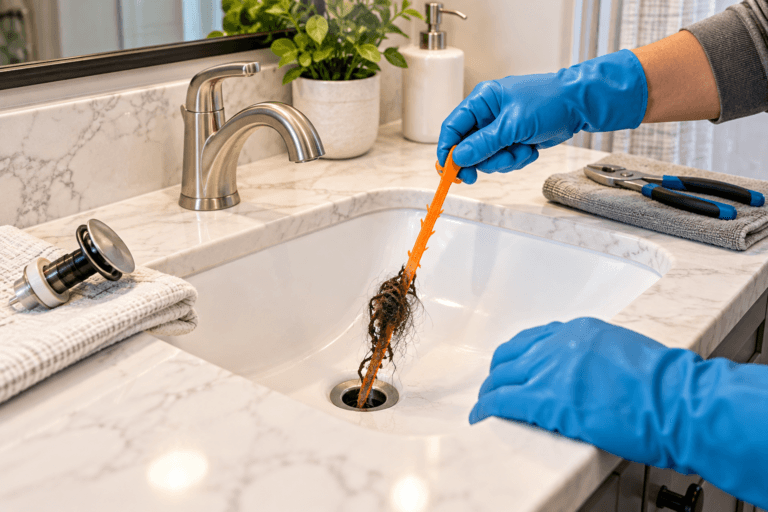
The same distinction applies to other fixtures. If you’re having trouble with a sink, tub or shower draining slowly, see How to Unclog a Drain: Simple Methods to Try Before Calling a Plumber.
What If Water Is on the Floor?
A running sound combined with water around the toilet needs more attention.
First, determine where the water is coming from.
Check:
- Supply line connection
- Shutoff valve
- Bottom of the fill valve
- Tank bolts
- Tank-to-bowl connection
- Toilet base
If water is actively leaking onto the floor, turn off the toilet’s water supply until you identify the source.
A leak outside the toilet can damage flooring and surrounding materials.
Water appearing around the base of the toilet may indicate a different problem than a running toilet and shouldn’t be ignored.
Don’t Overtighten Plastic Plumbing Parts
Many toilet repair components use plastic nuts, rubber seals and porcelain openings.
More torque does not necessarily create a better seal.
Overtightening can:
- Distort rubber washers
- Crack plastic fittings
- Damage threads
- In extreme cases, damage the porcelain tank
Hand-tighten components according to the manufacturer’s instructions and only use additional tool pressure when specifically required.
When Should You Call a Plumber?
A running toilet is often a good beginner DIY repair.
But there are situations where bringing in a plumber makes more sense.
Consider professional help if:
- The toilet still runs after replacing the flapper and fill valve
- Water is leaking from the tank or base
- The porcelain is cracked
- The shutoff valve doesn’t work
- Plumbing connections are badly corroded
- Several toilets or drains are acting strangely
- The toilet rocks or moves at the floor
- You aren’t comfortable disconnecting the water supply
If multiple fixtures are having drainage problems at the same time, the issue may also be farther down the plumbing system rather than inside the toilet itself.
How to Prevent a Running Toilet From Coming Back
Toilet parts naturally wear out, but occasional inspection can catch small problems early.
Every so often, remove the tank lid and check:
- Flapper condition
- Chain movement
- Tank water level
- Fill valve operation
- Refill tube position
- Signs of corrosion or mineral buildup
Pay attention when a toilet begins making noises between flushes.
A toilet that suddenly refills for a few seconds every hour is often giving you an early warning that the flapper is starting to leak.
Fixing the problem early is usually easier than waiting until the toilet runs continuously.
Which Running Toilet Repair Should You Try First?
Start simple.
If the toilet runs constantly, remove the tank lid and watch what happens.
Check the flapper first if you can see water slowly entering the bowl.
Check the chain if the flapper doesn’t close completely.
Check the water level and float if water is flowing into the overflow tube.
Check the fill valve if the water won’t shut off even when the float reaches its normal stopping point.
You don’t need to replace every component at once.
Diagnose the problem first and replace only what’s actually failing.
Final Takeaway
A running toilet may sound like a plumbing problem that requires a service call, but many cases come down to a few inexpensive parts inside the tank.
Start with the flapper and chain.
Then check the tank water level, float and fill valve.
If the toilet only runs occasionally, look for a slow leak between the tank and bowl.
And if water is leaking onto the floor, the toilet is cracked or several plumbing fixtures are acting up at once, stop treating it as a simple tank repair and investigate the larger problem.
For many homeowners, learning how the toilet tank works turns an annoying running toilet into a straightforward DIY fix.
Planning a Bathroom Project?
Explore Builzee’s Bathroom guides for practical help with showers, glass, materials, remodeling, maintenance and project planning.