
GLASS & ENERGY GUIDE
Understand Window Glass & Energy Performance
Learn how energy efficient window glass affects comfort, heat gain and insulation through Low-E coatings, SHGC, U-factor, glazing layers, gas fills and spacer systems.

WINDOW GLASS & PERFORMANCE
Understand the Numbers Behind Better Windows
Window performance depends on more than the frame. Glass construction, coatings, spacers and performance ratings all affect insulation, solar heat gain, comfort and energy use.
01 – INSULATE GLASS (IGU)
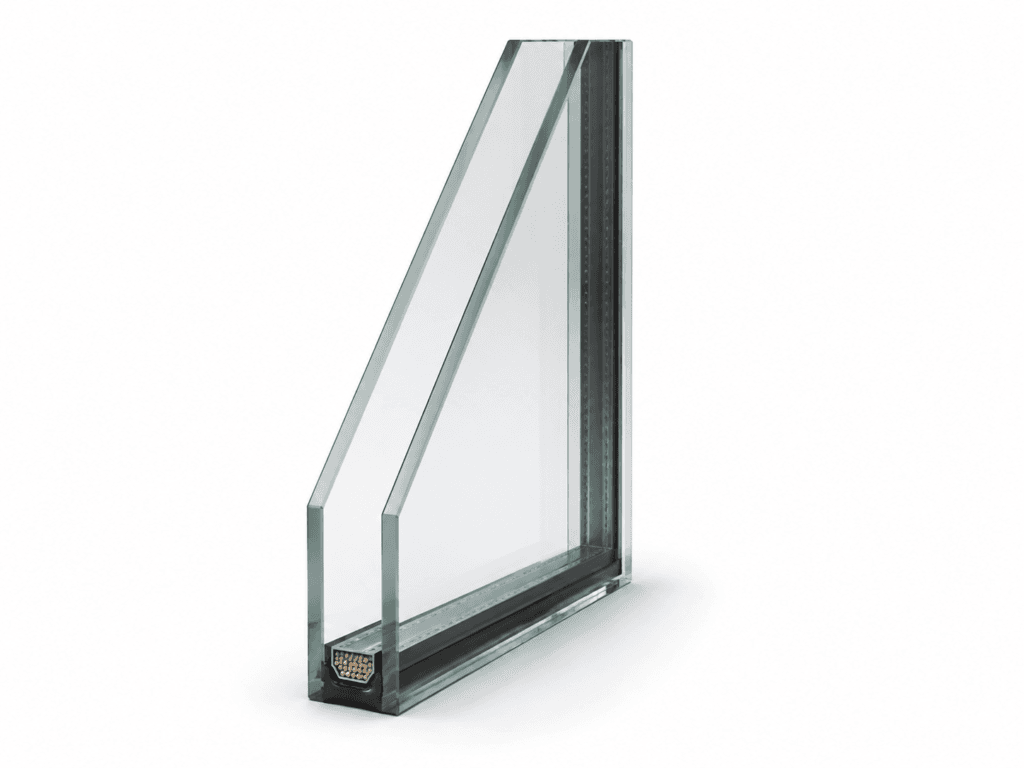
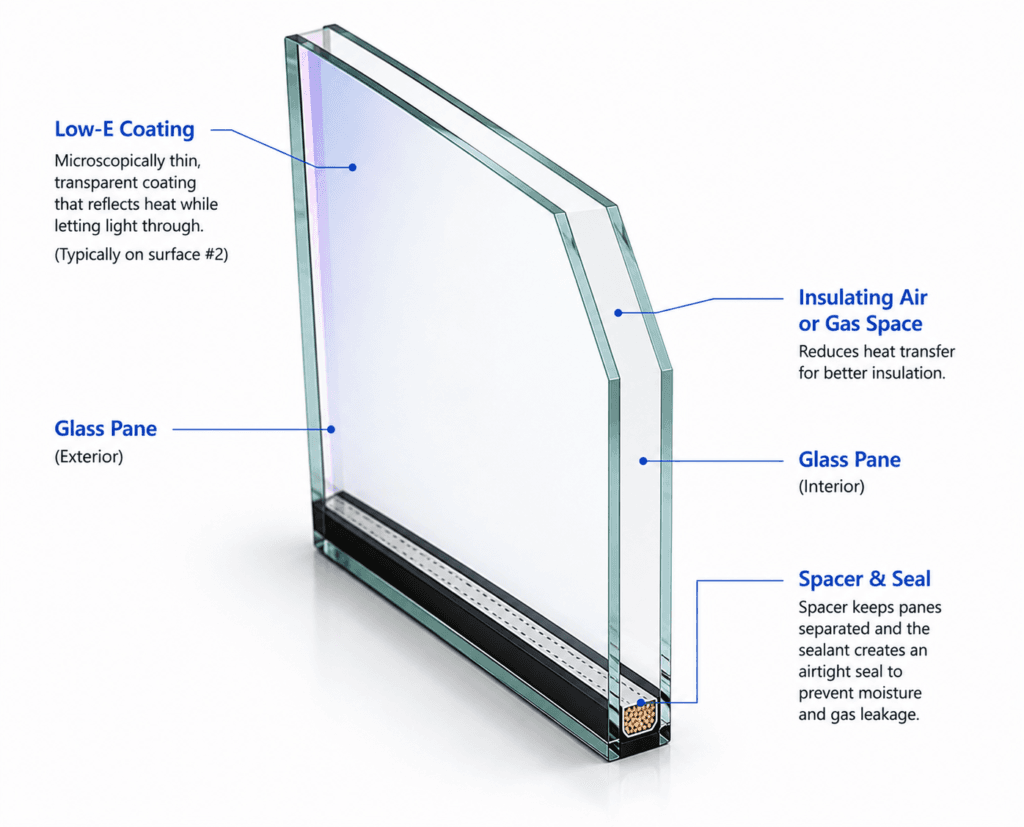
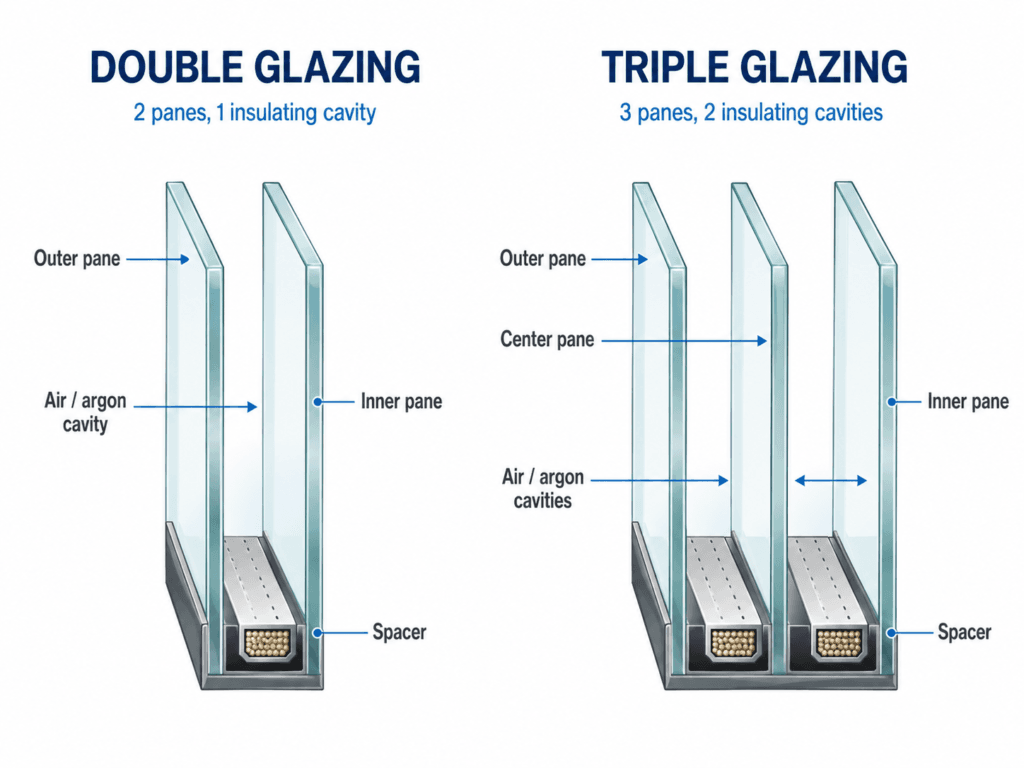
An insulated glass unit, or IGU, is made from two or more panes of glass separated by a sealed air space. The space between the panes helps reduce heat transfer and can improve comfort, condensation resistance and overall window energy performance.
BEST FOR
Most modern residential windows where improved insulation, comfort and energy efficiency are priorities.
GOOD TO KNOW
Most residential IGUs use two panes of glass with a sealed space between them. That cavity may contain air or an insulating gas such as argon, and the panes are held apart by a perimeter spacer system. Triple-pane units add a third pane and a second insulated space for higher performance.
02 – LOW_E GLASS
Low-E, or low-emissivity, glass uses a microscopically thin coating that helps control heat transfer through the glass while still allowing natural light into the home. Depending on the coating, it can help reduce heat loss in colder conditions and limit unwanted solar heat gain in warmer conditions.
BEST FOR
Homes where energy efficiency, indoor comfort, UV protection and reduced heating or cooling loads are priorities.
GOOD TO KNOW
Not all Low-E coatings perform the same way. Different coatings are designed for different climates and solar exposures, so the best choice depends on factors such as orientation, local climate and the window’s target U-Factor and SHGC.
03 – U-FACTOR
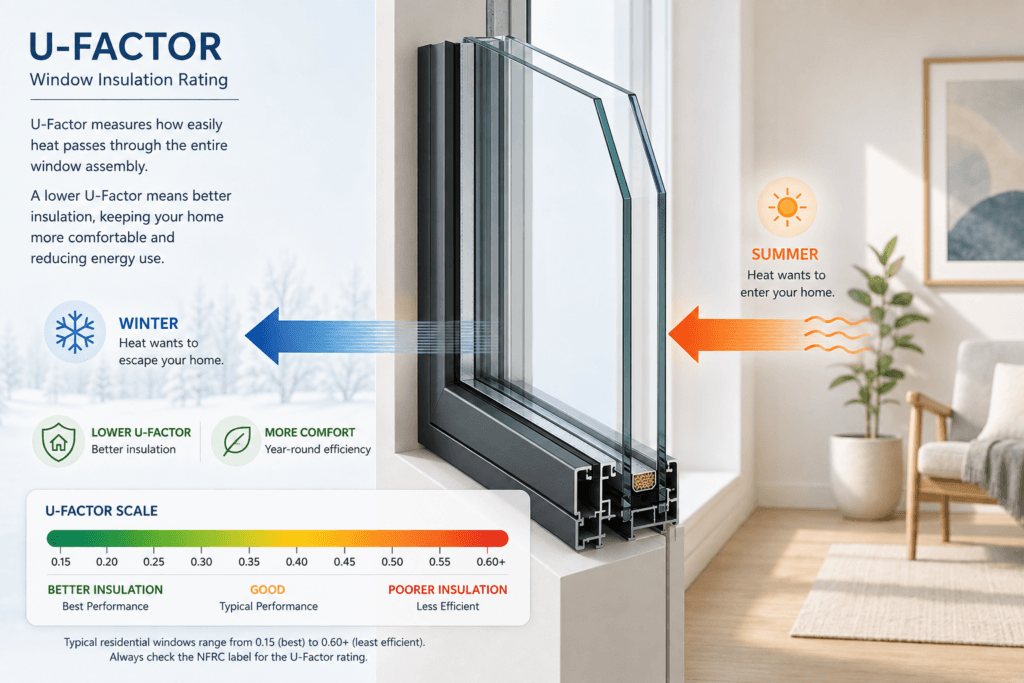
U-Factor measures how well a window resists heat flow. A lower U-Factor means the window provides better insulation and allows less heat to pass through the glass and frame.
BEST FOR
Comparing overall window insulation performance, especially in climates where heating or cooling efficiency is important.
GOOD TO KNOW
U-Factor looks at the performance of the entire window assembly, not just the glass. Frame material, glass type, spacers and gas fills can all affect the final rating. Lower is better.
04 – SHGC
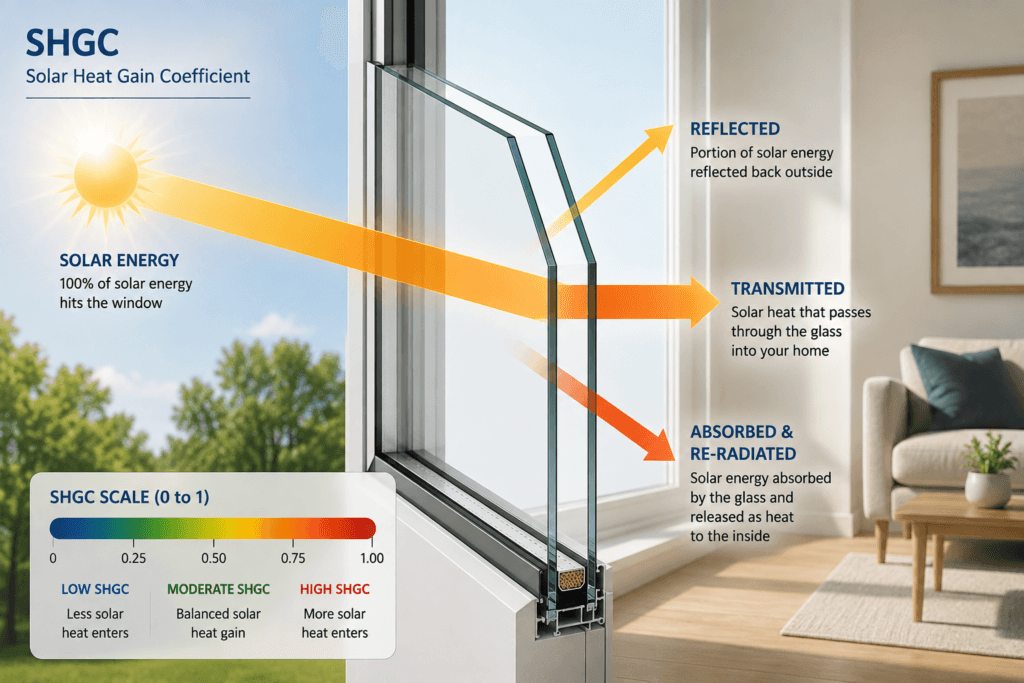
Solar Heat Gain Coefficient, or SHGC, measures how much solar heat passes through a window into the home. A lower SHGC means less solar heat enters through the glass.
BEST FOR
Comparing how different windows will perform in sunny exposures, especially in warmer climates or rooms that receive strong direct sunlight.
GOOD TO KNOW
SHGC is expressed as a number between 0 and 1. Lower values reduce solar heat gain, which can help with cooling loads, while higher values allow more solar warmth into the home. The right SHGC depends on climate, orientation, shading and how much winter solar heat you actually want.
05 – DOUBLE VS. TRIPLE GLAZING
Double-glazed windows use two panes of glass with one insulated space between them, while triple-glazed windows use three panes and two insulated spaces. Adding the extra pane can improve insulation, interior surface temperatures and sound control.
BEST FOR
Double glazing works well for most residential applications. Triple glazing is most useful in colder climates, high-performance homes, noisy locations or projects where maximum energy efficiency is a priority.
GOOD TO KNOW
Triple glazing generally provides better thermal performance, but it also adds weight and cost. Whether it is worth the upgrade depends on climate, window size, frame system, Low-E coatings and the performance level you are trying to achieve.
Need to compare glass weight? Use the Glass Weight Calculator to estimate the approximate weight of monolithic, laminated, double-glazed or triple-glazed glass based on panel size, thickness and glass makeup.
06 – GAS FILLS & SPACERS
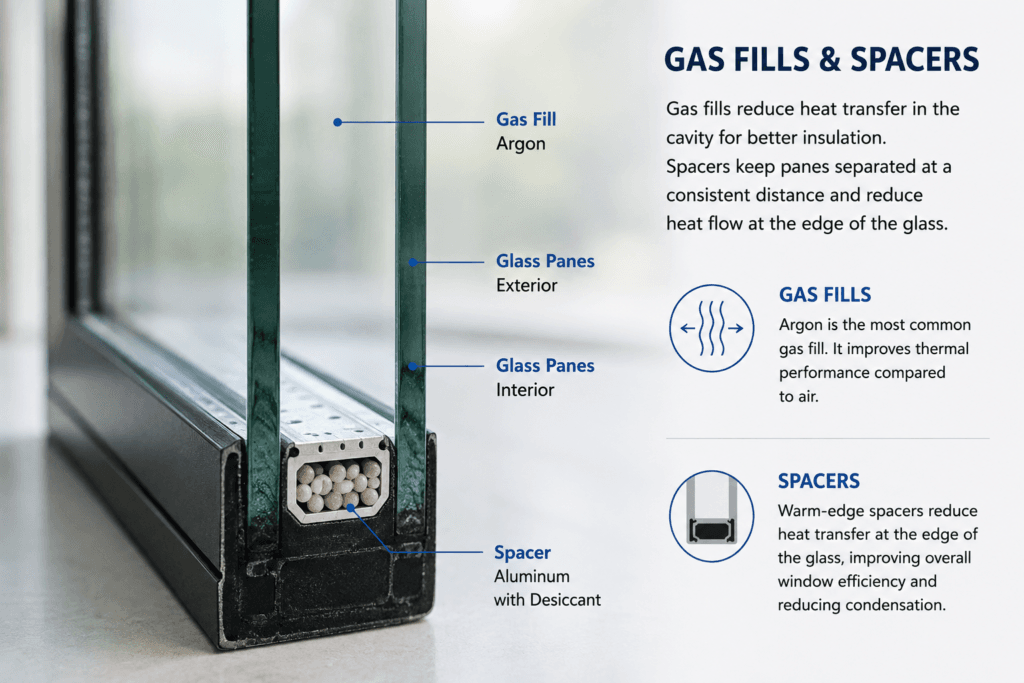
The space between panes in an insulated glass unit can be filled with air or an insulating gas such as argon or krypton. The panes are held apart by a perimeter spacer system, which also helps maintain the sealed cavity.
BEST FOR
Improving the thermal performance of double- or triple-glazed windows without changing the basic window size or appearance.
GOOD TO KNOW
Argon is the most common gas fill because it offers a good balance of performance and cost. Krypton can provide better insulation in narrower cavities but is typically more expensive. Spacer design also matters because the edge of the glass can be a significant path for heat transfer, so warm-edge spacers can help improve thermal performance and reduce interior-edge condensation.
QUICK COMPARISON
Compare Window Glass & Energy Features at a Glance
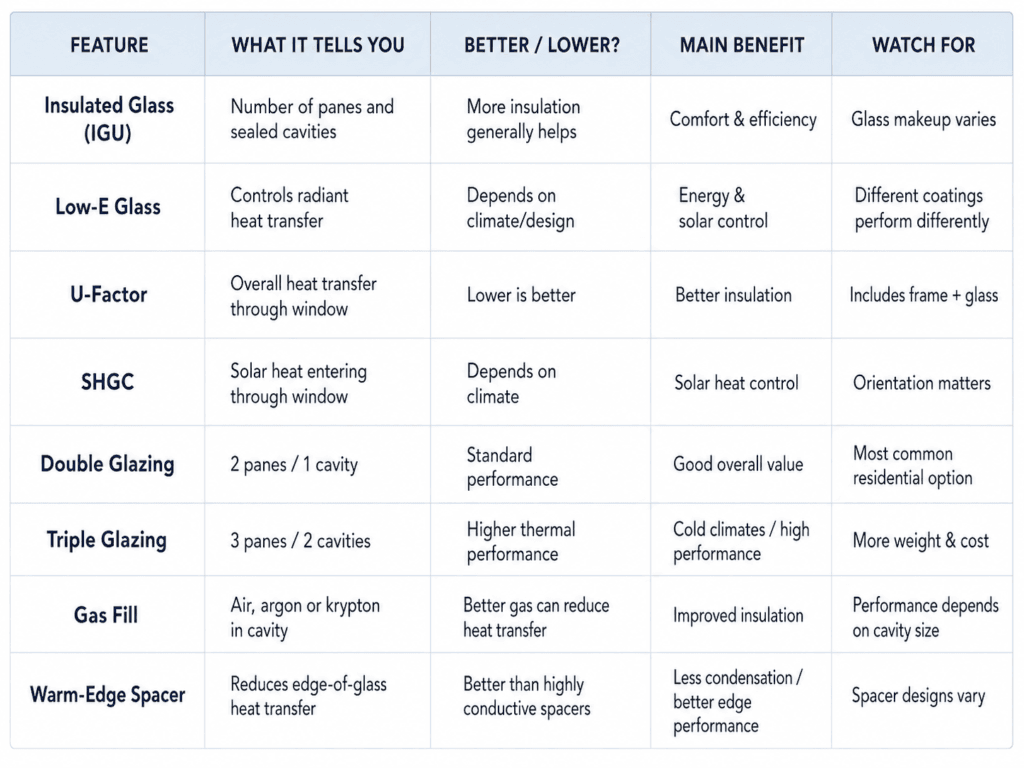
Performance information is provided for general comparison only. Actual window performance varies based on glass configuration, coatings, spacer system, gas fill, frame design, product size, climate, orientation and installation conditions. Refer to the manufacturer’s NFRC-rated values for specific products.