Deck Railing Ideas: Wood, Cable, Metal, Glass & More
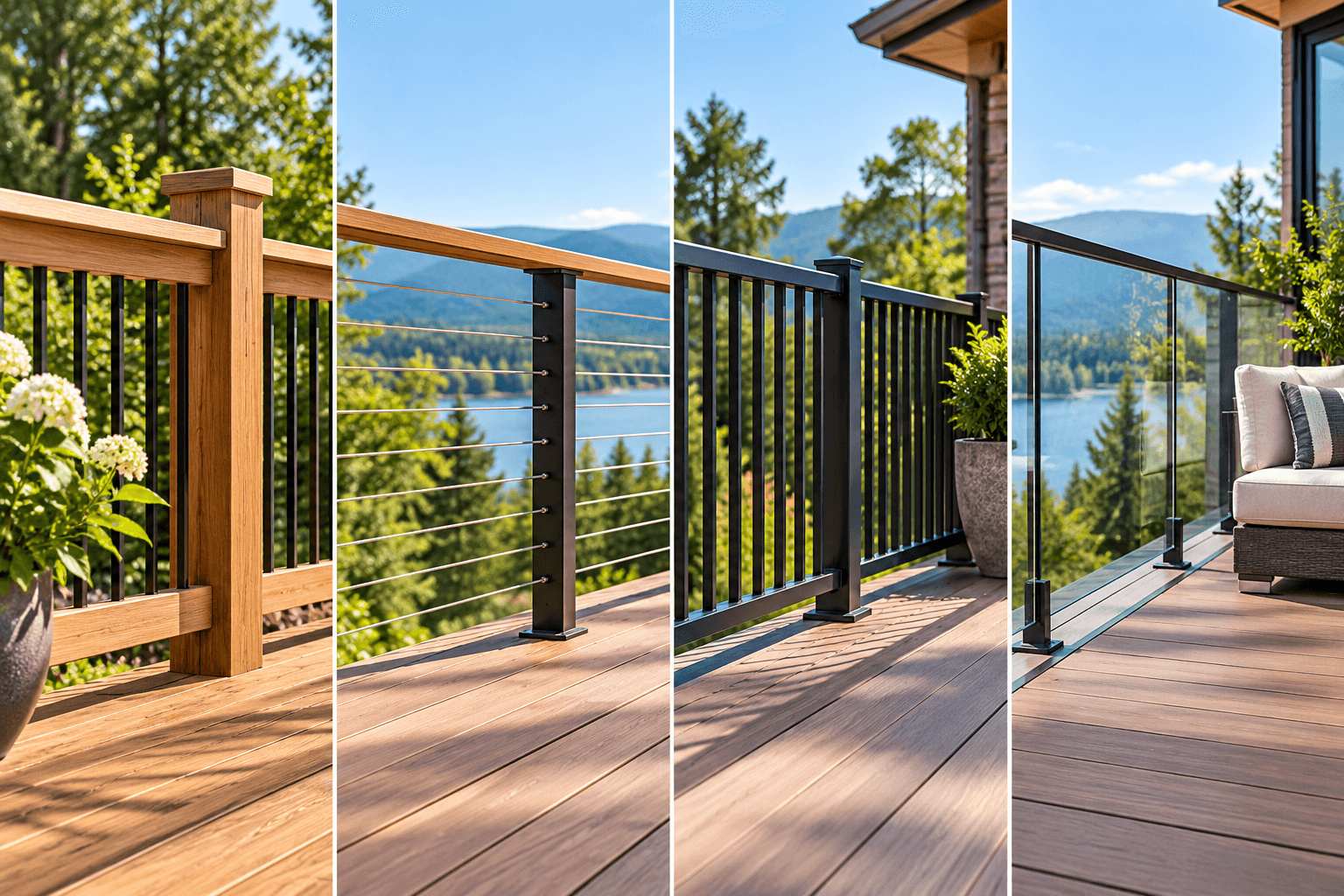
Deck railing ideas range from traditional wood balusters to cable, metal, glass and composite systems. A deck railing does more than keep people away from an open edge. It has a major effect on how the deck looks from the yard, how open the view feels when you are sitting outside and how much maintenance the finished space will require.
Traditional wood railings still work well on many homes, but cable, metal, glass and composite systems give homeowners far more options than the basic vertical wood baluster layout.
The best choice depends on the style of the house, the view around the deck, exposure to weather, maintenance expectations and how the railing connects back into the deck structure.
What to Consider When Comparing Deck Railing Ideas
Start with the way the deck will actually be used rather than choosing a railing from a photo alone.
A deck overlooking a lake or hillside may benefit from a railing that preserves the view. A deck close to neighboring properties may need more privacy. Homes in coastal or consistently wet environments need materials and hardware that can handle moisture and corrosion.
Railing also needs to work with the deck itself. Post locations, stair openings, corners and framing reinforcement should be considered before the surface boards are finished.
Builzee’s Deck Planning & Layout guide covers many of the decisions that should be made before construction begins.
Think About These Five Things
Appearance
The railing should make sense with the architecture of the home and the decking material.
Views
Posts, balusters and infill can either preserve the surrounding view or become a major visual element.
Maintenance
Wood may need refinishing, while metal, composite and glass have different cleaning and maintenance requirements.
Exposure
Sun, rain, salt air and snow can affect materials and hardware differently.
Structure
Railing posts need solid attachment to the framing. A good-looking system still needs to resist movement and everyday use.
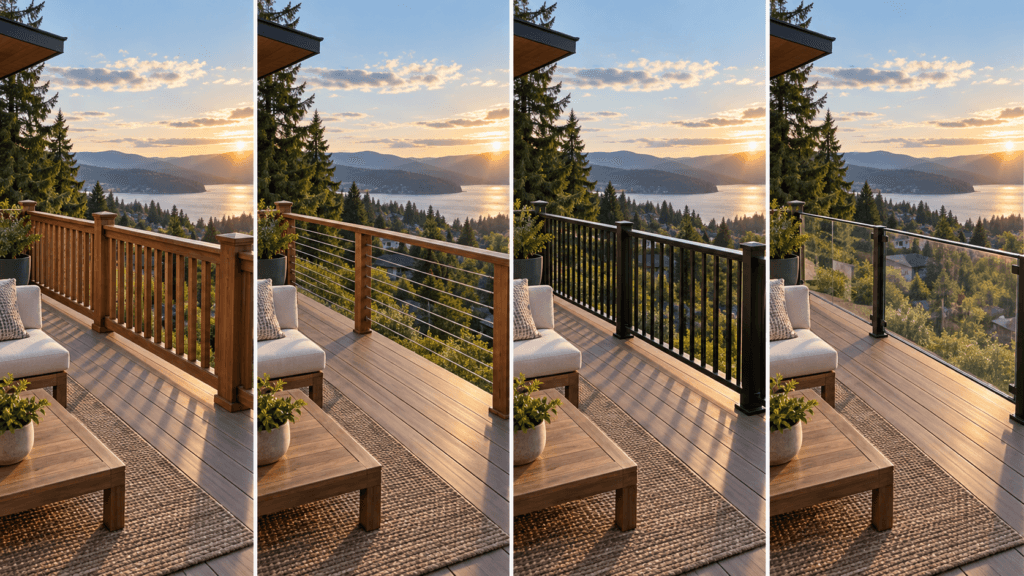
Wood Deck Railing
Wood remains one of the easiest railing materials to coordinate with a traditional deck.
Posts, rails and balusters can all be built from the same or complementary lumber as the decking. The railing can also be stained to blend into the deck or painted to create contrast.
Wood gives you flexibility because components can be cut and shaped relatively easily. It also works well for custom details that would be difficult to achieve with a prefabricated railing kit.
The tradeoff is maintenance.
Exposed rails and post caps receive plenty of sun and moisture, and horizontal surfaces can hold water longer than vertical deck components. Peeling finish, checking and localized rot often show up first around joints, fasteners and the tops of wood components.
Wood railing makes the most sense when you want a natural appearance and are comfortable maintaining the finish along with the rest of the deck.
Cable Railing
Cable railing is popular because it creates a relatively open view while keeping the posts and top rail visible.
Horizontal stainless-steel cables span between structural posts, reducing the amount of material in the sightline compared with traditional balusters.
The result can work especially well on decks facing scenery, pools or large backyards.
Cable railing is not simply a matter of drilling holes through posts and pulling cable between them. The tension in the cables puts force into the end and corner posts, so those connections need to be designed accordingly.
Cable spacing, tensioning and the type of fittings used are also important. Requirements vary by railing system and local code, so follow the manufacturer’s installation instructions rather than improvising the layout.
From a maintenance standpoint, the cables themselves are relatively simple, but fittings and hardware should still be checked periodically for looseness or corrosion.
Metal Railing
Metal railing can range from simple black aluminum balusters to heavier steel systems with a more architectural appearance.
One of the biggest advantages is consistency. Factory-made posts, rails and balusters create clean lines without the natural variation found in wood.
Dark metal railing also works with a wide range of deck colors. It can provide contrast against warm wood decking or blend into the background when paired with darker composite boards.
Aluminum is commonly used because it resists rust and does not require painting like unfinished steel. Steel can provide a heavier appearance and high strength, but coatings and corrosion protection become especially important outdoors.
Metal railing also works well in mixed systems. Wood or composite posts can be paired with metal balusters, or a metal frame can be combined with cable or glass infill.
If you are still deciding on the deck surface itself, Builzee’s Deck Types & Materials guide covers wood, composite, PVC and other decking choices.
Glass Deck Railing
Glass railing provides one of the clearest views available.
Instead of traditional balusters, glass panels fill the space between posts or mount into a more minimal framing system. This can work especially well on decks overlooking water, hillsides, landscaped yards or other areas where preserving the view is a priority.
Glass can also act as a wind barrier in some layouts because the panels do not have the open gaps found in cable or baluster railings.
The obvious tradeoff is cleaning.
Fingerprints, dust, water spots and pollen are more noticeable on glass than they are on most other railing materials. A railing that looks nearly invisible when clean can become much more noticeable once the panels collect residue.
Glass systems can also require more careful handling and installation. Panel dimensions, edge conditions, hardware and structural support need to follow the railing manufacturer’s requirements.
For homeowners who value an unobstructed view more than minimal cleaning, glass can create a very clean finished result.
Composite Railing
Composite railing is designed for homeowners who want the heavier appearance of traditional wood railing without regularly staining or painting the components.
Many systems use composite or capped sleeves over structural posts, along with manufactured rails and balusters.
Colors are generally coordinated with popular composite decking lines, making it easier to create a consistent deck package.
Composite railing components are typically larger and visually heavier than cable or glass systems. That can be an advantage on larger decks where a more substantial railing looks proportional to the structure.
Like composite decking, these systems still need cleaning. Low maintenance does not mean no maintenance.
Check the specific product before the framing is complete because post locations, blocking and mounting requirements can vary between systems.
Mixed-Material Railing
Some of the best-looking deck railings combine two or more materials instead of using a single system throughout.
A few common combinations include wood posts with metal balusters, composite posts with cable infill, metal framing with a wood top rail, or wood and glass used together.
Mixed-material railing lets you keep some of the warmth of wood while reducing the visual weight of the railing.
It can also help connect different parts of the project. A wood top rail might relate to the deck surface while black metal balusters coordinate with windows, doors or exterior lighting.
The important part is making sure the components are intended to work together structurally. Do not assume that parts from unrelated railing systems can simply be combined because they look compatible.
Railing Ideas for Better Views
When the deck faces a view you want to preserve, reducing visual interruption becomes the priority.
Cable railing works well because the thin horizontal lines tend to disappear from a distance.
Glass provides the clearest uninterrupted opening but requires more cleaning.
Thin metal balusters can also preserve a surprising amount of visibility, especially when they are dark enough to blend into the background.
Post placement matters too. Even a very open railing can feel heavy if oversized posts are spaced awkwardly across the main view.
Think about the view from a seated position, not just while standing. A top rail that looks perfectly positioned when you are walking around may fall directly across the horizon once you sit down.
Railing Ideas for More Privacy
Not every deck should feel completely open.
A deck close to a neighboring home, sidewalk or shared property line may benefit from targeted privacy rather than enclosing the entire perimeter.
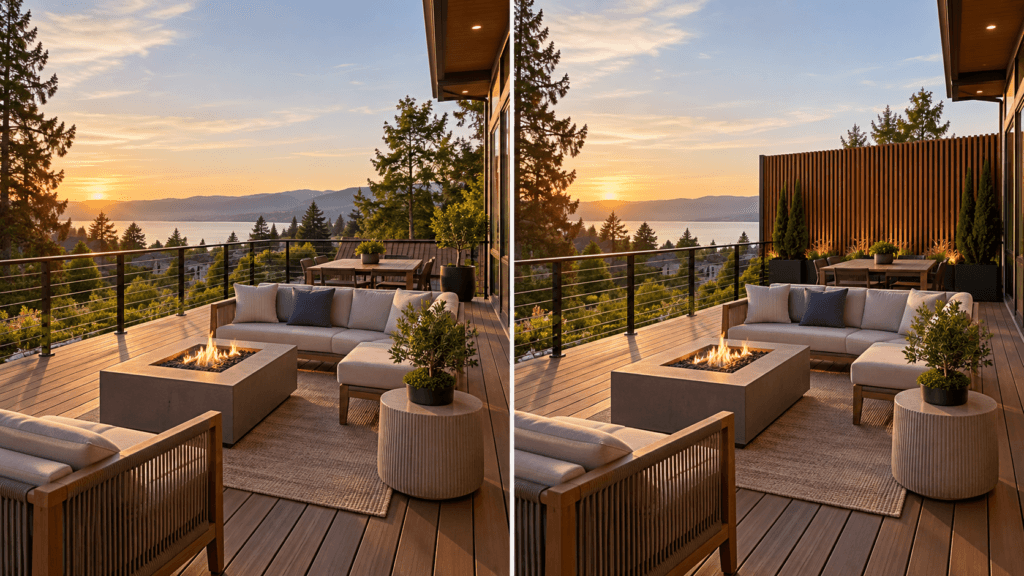
Privacy can be added with taller screens, closely spaced vertical boards, slatted panels or landscaping near selected sections of the deck.
The key is using privacy where it is actually needed.
Closing every side can make a small deck feel boxed in. Often a better approach is to use a privacy screen along one edge while keeping the remaining railing relatively open.
This is especially useful when seating or dining areas consistently face one neighboring property.
Maintenance and Durability
Railing maintenance depends heavily on the material.
Wood should be inspected for cracking, peeling finish, soft areas and loose connections. Horizontal rails and post tops deserve particular attention because water can sit on them.
Metal systems should be checked for damaged coatings, corrosion and loose fasteners.
Cable systems occasionally need tension adjustment, and fittings should remain secure.
Glass needs regular cleaning but generally does not require refinishing.
Composite railing usually needs routine washing and inspection of connections rather than painting or staining.
Whatever material you choose, movement matters. A railing post that becomes noticeably loose should not be treated as a cosmetic issue.
Builzee’s Deck Repair & Maintenance guide covers other areas of the deck that should be inspected over time.
Safety and Code Considerations
Railing design cannot be based on appearance alone.
Whether a guard is required depends on the deck configuration and applicable local requirements. Guard height, opening limitations, stair handrails and other details are also governed by building codes.
Those requirements can vary by jurisdiction and project type, so verify the rules that apply to the actual property before ordering a railing system.
The structural attachment matters just as much as the visible railing.
Guard posts should connect into the deck framing in a way that transfers loads into the structure rather than relying only on deck boards or surface fasteners.
That is why blocking and railing-post locations are best planned before the decking goes down.
For a closer look at how posts, joists, beams, hardware and guards work together, see Builzee’s Deck Structure & Components guide.
Which Railing Style Fits Your Deck?
There is no single railing style that works best everywhere.
Wood is a good fit when you want a traditional appearance and the ability to stain or repaint the railing later.
Cable works well when preserving the view is a priority and you prefer a lighter visual profile.
Metal provides clean lines and relatively low maintenance while working with both traditional and contemporary homes.
Glass offers maximum visibility but requires more cleaning.
Composite railing provides a substantial traditional look with less refinishing than wood.
Mixed-material systems give you the most flexibility when you want to balance appearance, views and maintenance.
Before choosing, look at the entire deck instead of the railing by itself. The decking color, house exterior, stairs, furniture and surrounding landscape all affect how the finished system will look.
Bottom Line
Deck railing is both a safety system and a major design element. Wood, cable, metal, glass and composite can all work well, but they create very different views, maintenance requirements and visual styles.
Choose the railing early enough that the post locations, framing and stair layout can be coordinated with it. Then compare materials based on how the deck will actually be used, what you want to see from it and how much maintenance you are willing to take on.
A railing that fits the structure, the house and the surrounding view will usually look better than one chosen simply because it looked good in a showroom or photo.
Planning a Deck Project?
Explore Builzee’s Decks & Outdoor Living guides for practical help with railing, materials, layout, structure, installation, maintenance and buying decisions.