How to Fix a Stripped Screw Hole in Wood: Easy Methods That Actually Hold
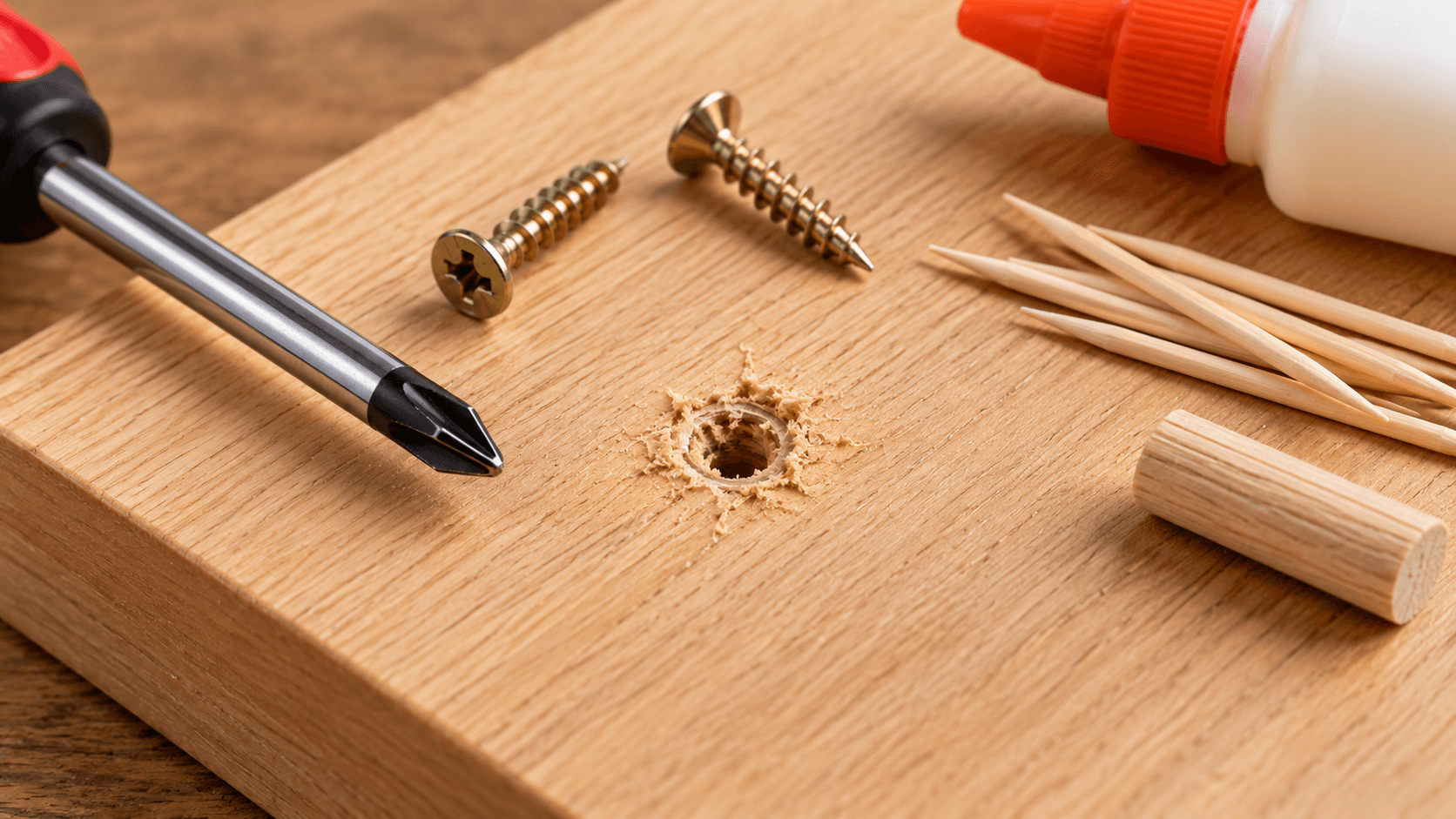
To fix a stripped screw hole in wood, first check how much solid material remains. A few toothpicks and wood glue can restore a lightly worn hole, while an enlarged hinge hole usually calls for a properly fitted dowel or repair hardware.
The aim is to give the screw fresh material to grip without splitting the wood, misaligning the hinge, or concealing a more serious problem. Match the repair to the load, not just the size of the hole.
Pick the right repair
What actually failed?
Screw spins but nearly grips
Lightly crushed fibers in sound wood can often be repaired with thin wood pieces and glue.
Hole is wide or already patched
A fitted hardwood dowel provides a fresh substrate for a carefully sized pilot hole.
Cabinet board is crumbling
MDF or particleboard may need a specialized insert, a hinge repair plate or component replacement.
| Repair | Where it makes sense | Important limit |
|---|---|---|
| Toothpicks + wood glue | Light wear in solid wood; small cabinet or furniture hardware | Not a structural or heavy-load solution |
| Wood dowel + glue | Oversized holes; repeated failure; solid wood substrates | Drill straight; use the correct dowel and pilot hole |
| Longer screw | Only where verified sound material exists deeper behind the hole | Confirm no wiring, glazing, pipes or finished faces are behind |
| Hinge plate / insert | Some MDF, particleboard or high-cycle hinge mounts | Requires compatible hardware and backing |
| Relocate / replace part | Cracked, rotten or missing substrate | Avoid relocating precision or structural fasteners casually |
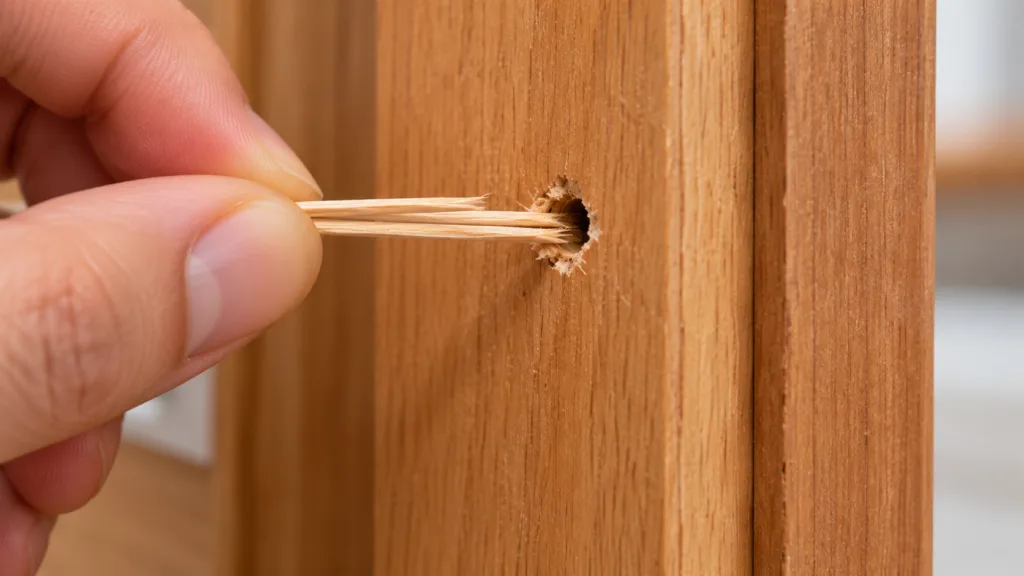
How to Fix a Lightly Stripped Screw Hole With Toothpicks
A small repair can be effective when the wood is otherwise healthy and the screw is not carrying an unusual load.
Remove and inspect
Take out the screw. Clear loose fibers and check whether the surrounding wood is still firm, dry and uncracked.
Prepare new wood fibers
Apply a modest amount of wood glue to a few wooden toothpicks or thin wood splinters. Add only enough to occupy the damaged portion.
Seat and trim
Press the pieces into the hole without wedging it apart, then trim the excess flush with the surface.
Allow proper cure
Wait for the adhesive to cure for the time stated by the glue manufacturer before loading the connection.
Reinstall gently
Start the screw straight. Finish with a hand screwdriver and stop as soon as it is snug; overtightening may strip the repair again.
How to Repair a Larger Stripped Hole With a Wood Dowel
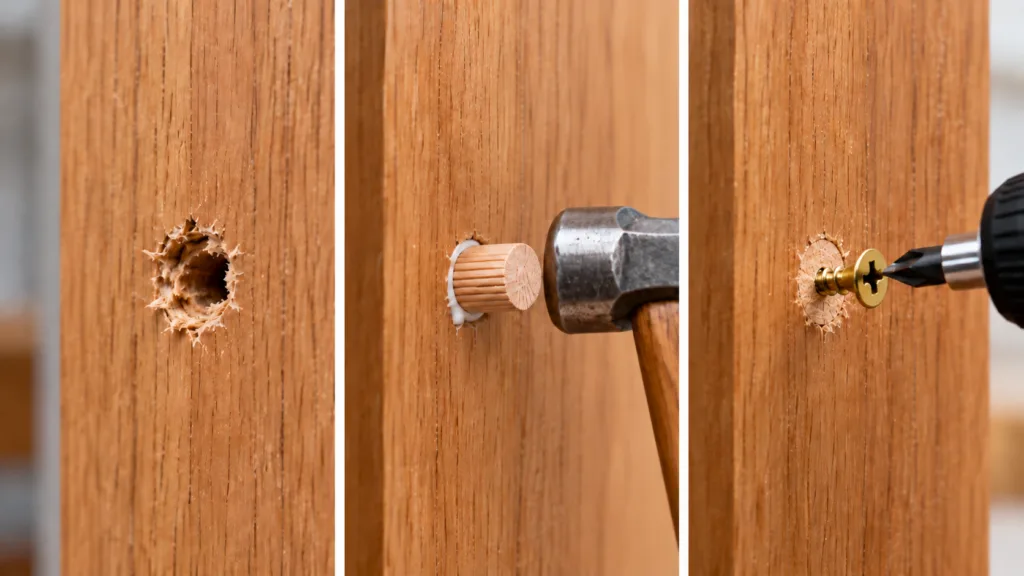
A dowel removes the damaged material and replaces it with solid wood. It is typically the more dependable option for enlarged holes in solid timber.
Choose the dowel size
Select a dowel large enough to replace the damaged fibers without weakening the surrounding member.
Drill a clean straight opening
With the part supported, bore a clean hole to match the dowel diameter. Control depth so you do not penetrate the finished face or hidden material.
Glue the dowel in place
Apply wood glue, insert the dowel with a snug fit and trim it flush. Let the adhesive fully cure.
Mark the hardware position
Reposition the hinge or bracket and locate the new screw hole accurately. Alignment matters for doors and slides.
Pre-drill and reinstall
Use a pilot bit appropriate to the screw and wood, then drive the fastener straight without excessive torque.
If the wood around the dowel is split, soft or decayed, a correctly fitted dowel alone is not enough. Fix or replace the surrounding component before remounting hardware.
Special Cases: Door Hinges, MDF and Particleboard
Door jamb hinges
A longer screw can sometimes reach sound framing behind the jamb, but only when you know the backing and path are clear. A too-long or oversized screw may strike concealed utilities, finish material or nearby glazing, or damage the hinge.
Concealed cabinet hinges
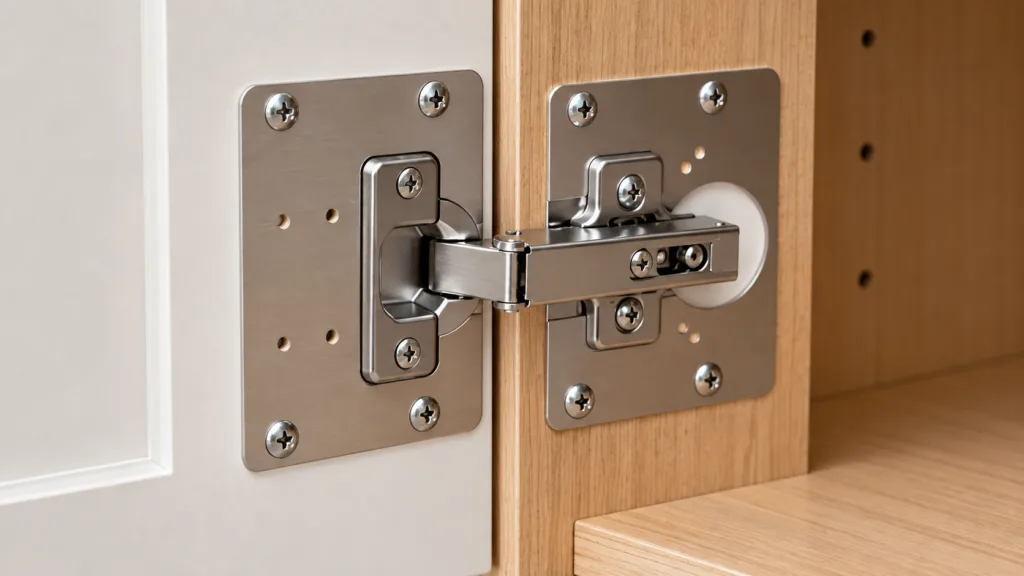
Repeated screw pullout in particleboard is often better addressed with a manufacturer-compatible hinge repair plate or specialized fastening system. Repair plates spread the load rather than relying only on loose fibers at the original hole.
Why pilot holes and tightening matter
A pilot hole helps a screw track straight and reduces splitting. Size it for the fastener and material rather than using one generic bit. For small hardware, hand tightening at the end is safer than using full drill torque.
A wooden golf tee can sometimes substitute for a dowel on noncritical repairs, but a correctly sized dowel is more predictable. If the damage is beyond the screw location, replace the damaged piece or use a purpose-made repair system.
Before You Put the Hardware Back
A short quality check prevents fixing the same loose screw twice.
What keeps a repaired screw from stripping again?
Don’t assume glue alone provides holding power
Wood glue should bond actual wood in a well-fitted repair. A thick puddle of adhesive inside an empty hole does not recreate the long-grain material a wood screw needs to grip. If the hole is so large the toothpicks float inside it, graduate to a dowel rather than adding more glue.
Mind the substrate thickness
Thin cabinet parts or furniture panels can split when drilled too deeply or when an oversized screw is used. Check the panel thickness and any finished face before selecting a dowel or a different fastener. If you cannot access enough material for a sound repair, a surface-mounted reinforcement or component replacement may make more sense.
Recheck the cause of movement
A hinge that keeps loosening may be misaligned, overloaded or binding. Fixing the screw holes without correcting that movement can lead to another failure. After reinstalling the hardware, open and close the door repeatedly and look for shifting plates, uneven gaps or new squeaking.
Furniture and deck hardware are different problems
Furniture and small trim are common DIY repairs. Structural framing and guardrail fasteners require compatible connectors and substrates with a verified load path. A glued filler or casual relocation is not a substitute for the original structural connection.
Frequently asked questions
Questions before you start
Can I use a bigger screw instead of filling the hole?
Sometimes, but only if the material can safely accept the larger fastener and it will not damage the hardware or split the wood.
Are toothpicks strong enough for a door hinge?
For a lightly loaded small hinge in sound wood they may help, but for a heavy door or recurring failure a fitted dowel or verified structural backing is more reliable.
Will wood filler hold a screw?
Many cosmetic wood fillers are not intended to provide reliable threaded grip. Check the product instructions and favor solid wood or rated repair hardware for load-bearing fasteners.
Repair the substrate, not just the symptom
Use a light wood-fiber repair when damage is minor, a dowel when the hole is enlarged, and purpose-made hardware or replacement where MDF, high loads or damaged wood require it.