Kitchen Backsplash Ideas: Tile, Slab, Peel-and-Stick & More
The best kitchen backsplash ideas do two jobs: protect the wall from splashes and make the cabinets and countertop feel like a finished composition. Tile, full-height slab, natural stone and peel-and-stick each solve that problem differently.
Flexible styles with grout to maintain.
Fewer joints and a cleaner look.
Faster updates when conditions allow.
Kitchen Backsplash Ideas by Material
Choose the backsplash with the countertop in mind. Strong countertop movement often works best with a quieter wall; a simple counter can support more colorful, textured or patterned tile. Consider cleaning and installation details before choosing from a photograph.
Ceramic and subway tile
Versatile, repairable and available in many colors, proportions and laying patterns. Grout maintenance is the tradeoff.
Porcelain tile
Typically dense and durable; larger formats can reduce the number of joints. The installer must plan proper substrate, cuts and edges.
Zellige and handmade-look tile
Variation in surface, glaze and edges brings character. Expect uneven reflections, more visible joint variation and greater layout care.
Natural stone tile
Marble and limestone add real variation and depth, but some stone needs sealing and more careful cleaning.
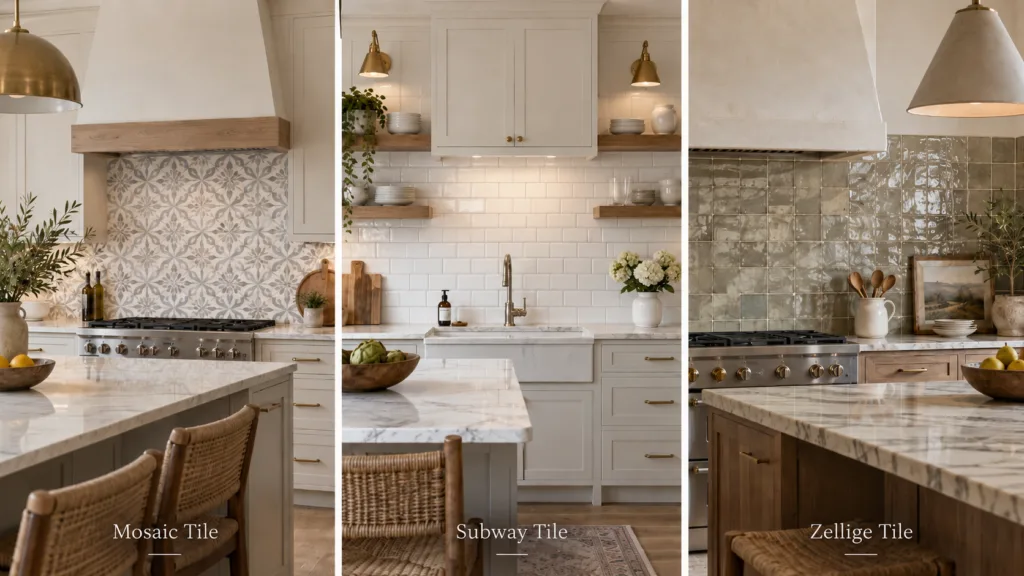
Subway tile does not have to mean horizontal white brickwork. A vertical stack, elongated rectangle, contrasting grout or irregular glossy finish can make a familiar tile feel very different.
Full-Height Slab Backsplashes
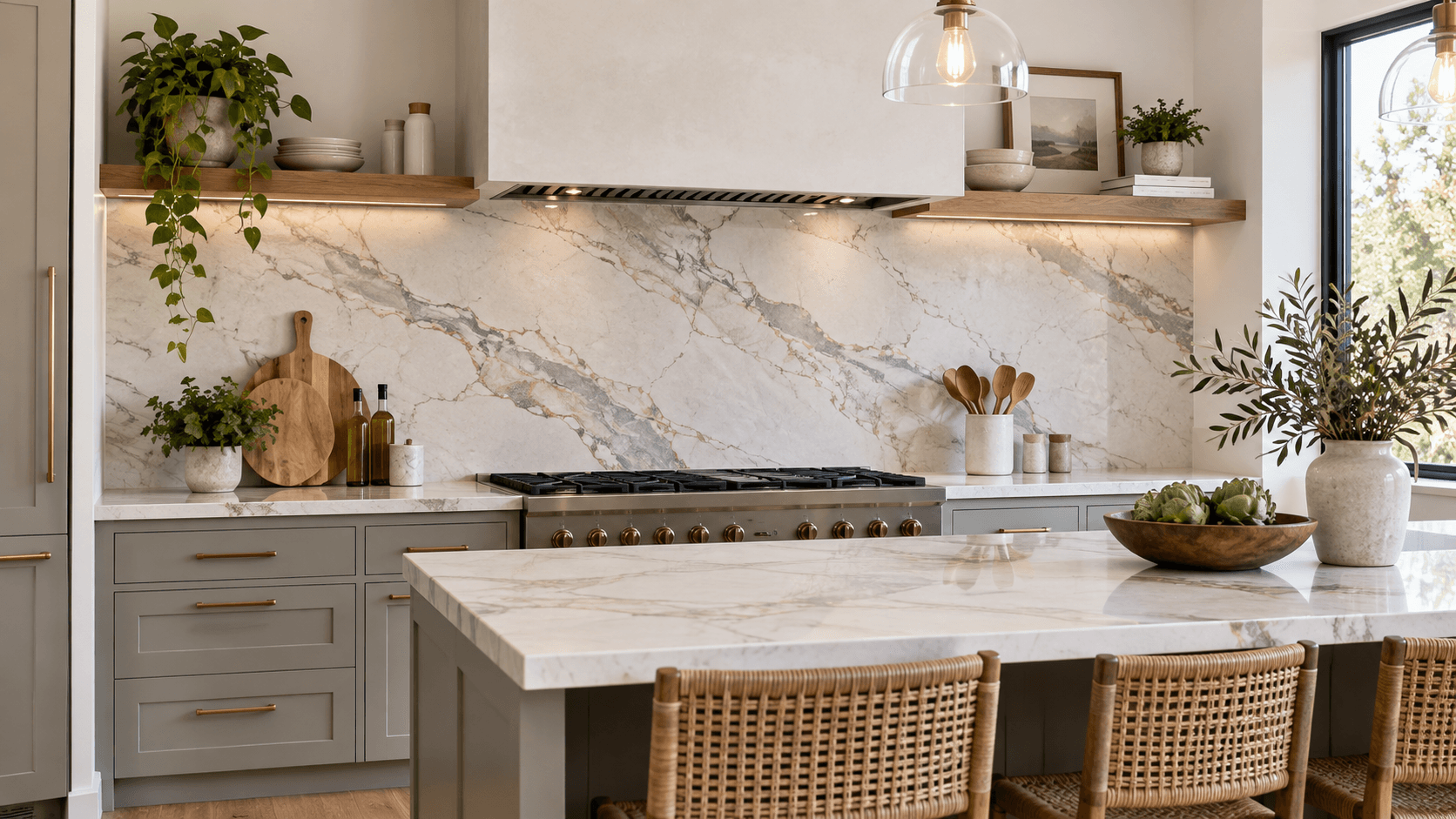
A slab can run from the countertop to the cabinet underside or farther up the wall, especially behind a range hood. Quartz, large-format porcelain, marble, quartzite and granite can create broad uninterrupted surfaces with fewer joints and easy-to-wipe faces.
Quartz slab
A consistent, contemporary look that pairs naturally with matching quartz counters. Confirm manufacturer use and heat limitations at the range.
Porcelain slab
Can mimic stone at large scale with a variety of patterns. Cutouts, handling and edge fabrication require capable installers.
Natural-stone slab
Strong veining can become a feature. Review the actual slab and bookmatch or vein-direction plans before fabrication.
Continuous backsplash
Fewer grout lines can make cleaning easier, but outlet placement, windows, slab seams and corners need earlier decisions.
How High Should a Kitchen Backsplash Go?
Backsplash height changes both cost and the visual weight of the material. A four-inch-style short return is very different from a full-height tile or slab feature, and neither is automatically right for every kitchen.
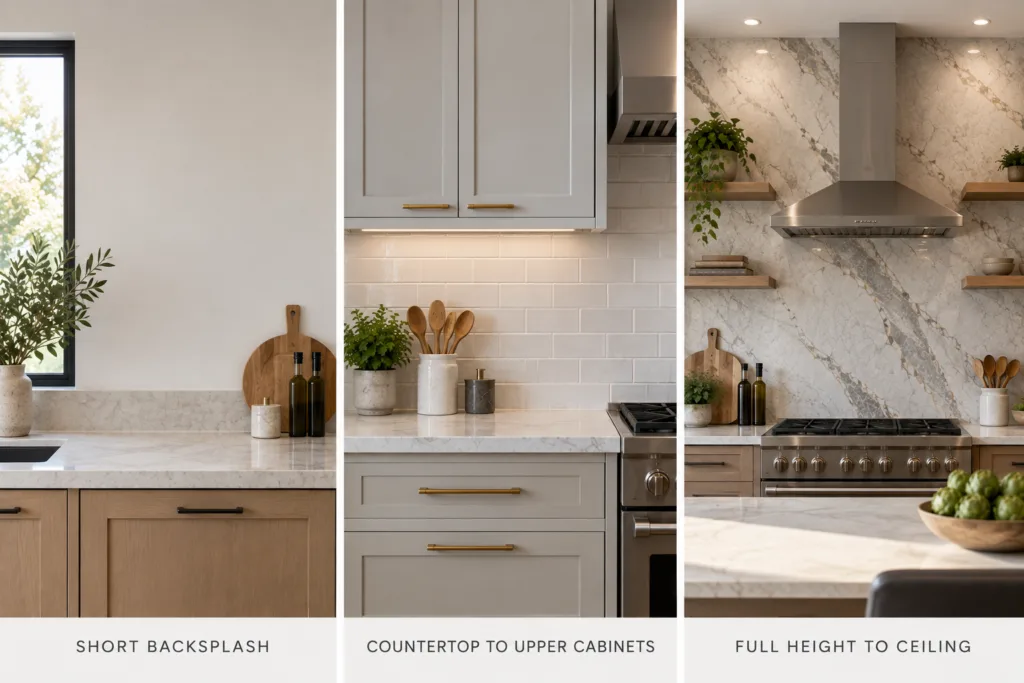
| Height approach | Visual effect | Practical consideration |
|---|---|---|
| Short countertop return | Mostly painted wall; restrained finish | Less protection above the short splash |
| Counter to upper cabinets | Familiar continuous work-surface treatment | Protects typical sink and prep zone walls |
| Full height or ceiling | A focal feature or strong continuity | More material, cutouts and finish coordination |
Should Your Backsplash Match the Countertop?
Match
Carry the same or coordinating slab from countertop onto the wall for a seamless composition.
Coordinate
Repeat one tone from veining or cabinetry without copying the complete pattern.
Contrast
Use a bold tile with a comparatively quiet counter and restrained cabinets, so the surfaces do not compete.
For a small kitchen, limiting visual breaks can make the room feel more continuous. Large-format tile, low-contrast grout, and a consistent backsplash height often help. Still, a deliberate accent can work well when the rest of the composition is calm.
See Small Kitchen Remodel Ideas for layout and storage changes that can make more impact than finish choice alone.
Is Peel-and-Stick Backsplash Worth Considering?
Peel-and-stick tile is a reasonable option when the goal is a lower-disruption update, a temporary finish or a decorative wall outside persistent wet and high-heat conditions. Better-quality products have more convincing texture, but surface preparation remains crucial.
Where it can make sense
A smooth, sound, cleaned kitchen backsplash, rental project with permission, bar area or laundry wall.
Where to use caution
Behind ranges and cooktops, on grease-contaminated walls, heavy texture, or where edges receive regular water.
If you are considering this material, see Peel-and-Stick Tile: Pros, Cons & Where to Use It for preparation, removal and location-specific cautions.
Grout, Outlets and the Range Area
A backsplash is not only the center of the wall. The most visible mistakes happen around outlets, cabinet edges, windows, returns and the point where material meets a range hood.
Choose grout before installation
Low-contrast grout makes a surface quieter; contrast highlights every joint and layout error. Check actual samples together.
Plan outlets and device depths
Identify cover plate style, wall thickness and device extension requirements before tile or slab is set. A qualified electrician handles wiring changes.
Resolve the range zone
Confirm the appliance instructions and selected backsplash heat limitations. Choose easy-to-clean surfaces suited to cooking and grease exposure.
Plan termination and corners
Sketch where tile ends at cabinet sides, open wall areas and windows, and choose trims or edge details that look intentional.
Test samples in the kitchen
Check at morning and evening light, with cabinet and countertop samples, before finalizing a pattern.
Kitchen Backsplash Cost Drivers
A low-priced tile can still become an expensive backsplash when a wall needs extensive prep, outlets must be coordinated, edges are complicated or a detailed pattern takes more labor. Large slabs have fewer joints but more involved fabrication and handling.
| Cost category | What to check |
|---|---|
| Material and overage | Tile or slab area, pattern layout, cuts, attic stock and waste |
| Wall preparation | Existing tile removal, drywall repairs, waterproofing needs if applicable |
| Labor and specialty work | Complex pattern, natural stone, large slabs and difficult access |
| Accessories | Grout, setting materials, sealant, trims, edge profiles |
| Devices and finishes | Outlet extenders/relocation, switch plates, cabinet returns, hood transitions |
Kitchen Backsplash FAQs
What is the easiest backsplash to clean?
Smooth slab or large-format tile with fewer grout joints is often easier to wipe than heavily textured tile. Material-specific cleaning rules still apply.
Does backsplash have to match the countertop?
No. Matching provides continuity, coordinating repeats colors without duplicating pattern, and deliberate contrast can work with restrained surrounding finishes.
Can peel-and-stick tile go behind a stove?
Only where that specific product is approved for the required heat conditions and appliance clearances. Never assume a printed vinyl tile behaves like ceramic.
Is grout color important?
Yes. Close colors make joints less visible; contrasting grout emphasizes the tile pattern and installation precision.
Should I choose tile before cabinets and counters?
It is usually easier to coordinate backsplash after the major cabinet and countertop decisions, because those materials dominate the room.
Choose for the actual project
Good results come from matching the product and installation to the real surface, use, moisture exposure and maintenance expectations. Read the specific product instructions before you buy, then plan the details that are easy to overlook.