Best Flooring for Dogs & Pets: What Actually Holds Up?
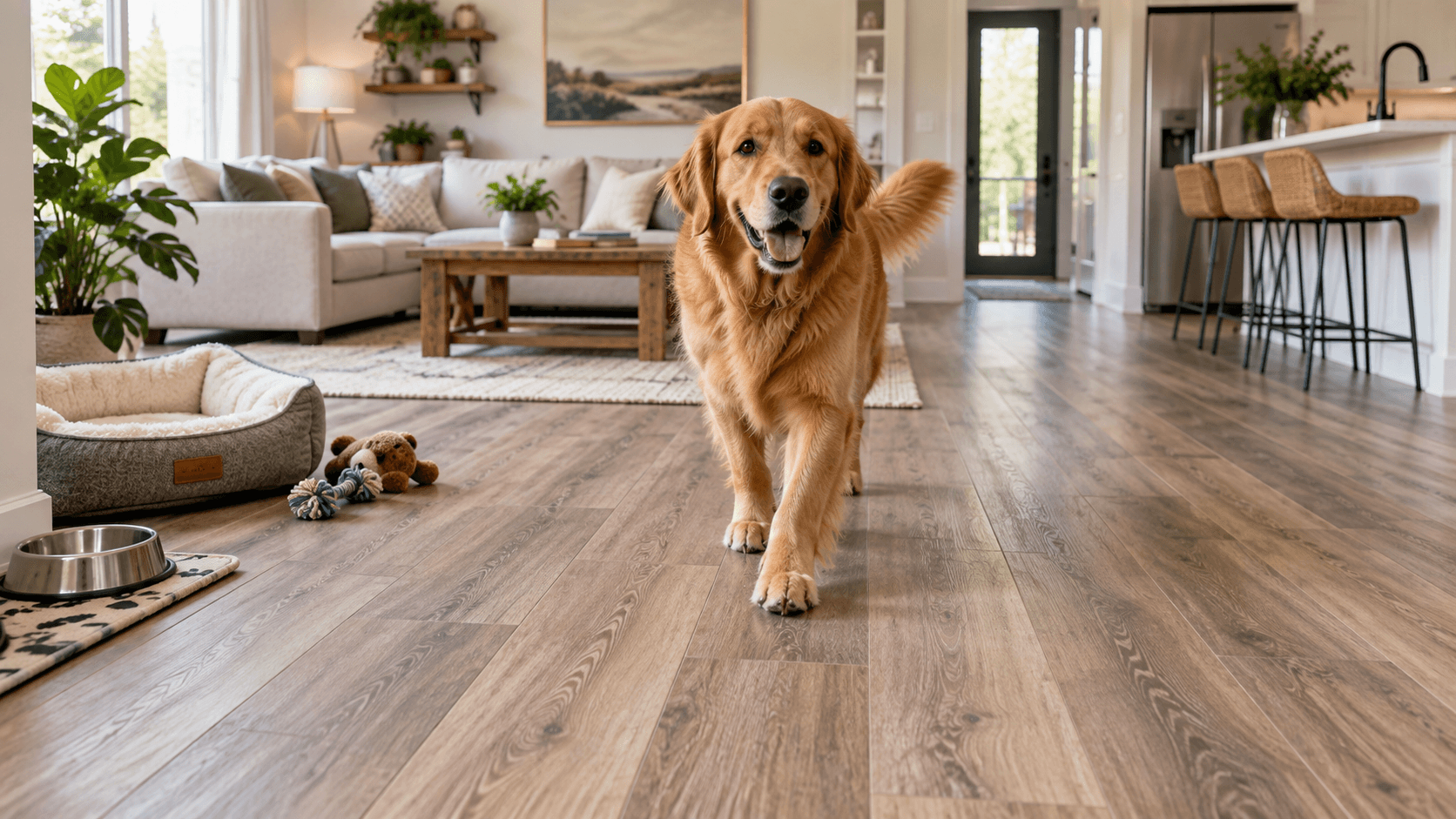
Choosing flooring gets a little more complicated when a dog lives in the house.
A floor can look great in a showroom and still become frustrating once you add muddy paws, water bowls, long nails, an occasional accident and a 70-pound dog taking a corner at full speed. On the other hand, the toughest floor on paper is not always the best one for an older dog that needs traction and a little forgiveness underfoot.
That is why the best flooring for dogs is usually not about finding one material that “wins.” It is about figuring out which problems matter most in your house.
A puppy creates different challenges than a calm adult dog. A large retriever is harder on a floor than a ten-pound lap dog. And a senior dog may care a lot more about grip than whether the surface can survive another decade without a scratch.
If you are still narrowing down flooring categories in general, Builzee’s Flooring Types & Materials guide is a good place to start. But if pets are a major part of the decision, here is what actually matters.
The Four Things That Matter Most With Dogs
Most pet-friendly flooring conversations eventually come back to the same four issues: scratches, water, traction and cleaning.
Scratch resistance gets most of the attention, but it is only one piece of the puzzle. A highly scratch-resistant floor can still be a poor choice if your dog slips on it constantly or if an accident causes the seams to swell.
For many households, the better way to think about flooring is to ask what happens on a normal Tuesday.
Does your dog run through the house after coming inside? Does the water bowl end up surrounded by a small lake? Are you dealing with puppy accidents? Does your dog shed heavily? Is the dog older and starting to lose traction on smooth floors?
Those answers usually point toward the right material faster than a generic durability rating.
LVP Is Probably the Most Balanced Choice for Most Dog Owners
Luxury vinyl plank has become popular in pet-friendly homes for a reason. It handles several of the common dog problems reasonably well at the same time.
The biggest advantage is water resistance. Spilled bowls, wet paws and accidents are much less threatening to vinyl than they are to flooring with a wood-fiber core.
That matters even more with puppies, older dogs or households where pets have unrestricted access to most of the home.
Good LVP is also fairly easy to clean and does not require much special maintenance. Hair, dirt and paw prints can usually be handled with routine vacuuming and damp cleaning.
The tradeoff is that vinyl is not impossible to scratch. Large dogs with long nails can leave marks, particularly on inexpensive products with weaker wear layers or very glossy finishes. Softer vinyl can also dent under heavy furniture or concentrated loads.
If you are comparing vinyl with laminate specifically, our LVP vs Laminate Flooring guide goes much deeper into the differences in moisture resistance, scratching, feel and installation.
For a lot of homes with dogs, though, LVP hits a practical middle ground: good moisture resistance, good durability, easy cleaning and a surface that is generally more forgiving than tile.
Laminate Can Be Excellent for Dog Nails
Laminate sometimes gets overlooked in pet discussions because people immediately think about water damage.
That concern is legitimate, but laminate has one major strength: the surface on a good product can be extremely tough.
If your biggest concern is scratching from nails, quality laminate deserves serious consideration. Its hard wear surface can hold up very well in homes with active dogs.
Modern laminate also looks much better than older generations of the product. Better versions have deeper texture, more realistic wood patterns and less repetition from plank to plank.
Where laminate becomes more complicated is moisture.
A spilled water bowl that gets wiped up is one thing. A puppy accident that sits unnoticed for hours is another. If moisture gets through the joints and reaches the core, swelling can become permanent.
Water-resistant laminate has improved significantly, but the product specifications matter. Some floors are designed for much more moisture exposure than others.
If laminate is your favorite visually, I would not rule it out just because you own a dog. I would simply be more careful about where it goes and how much water exposure you realistically expect.
Tile Is Extremely Durable, but Your Dog May Not Love It
Tile solves a lot of flooring problems.
Dog nails are unlikely to bother porcelain or ceramic tile. Water is rarely an issue when the floor assembly is installed correctly. Accidents are easy to clean. Mud does not scare it. A large dog is not going to dent it.
From a durability standpoint, tile is hard to beat.
From the dog’s perspective, the story can be different.
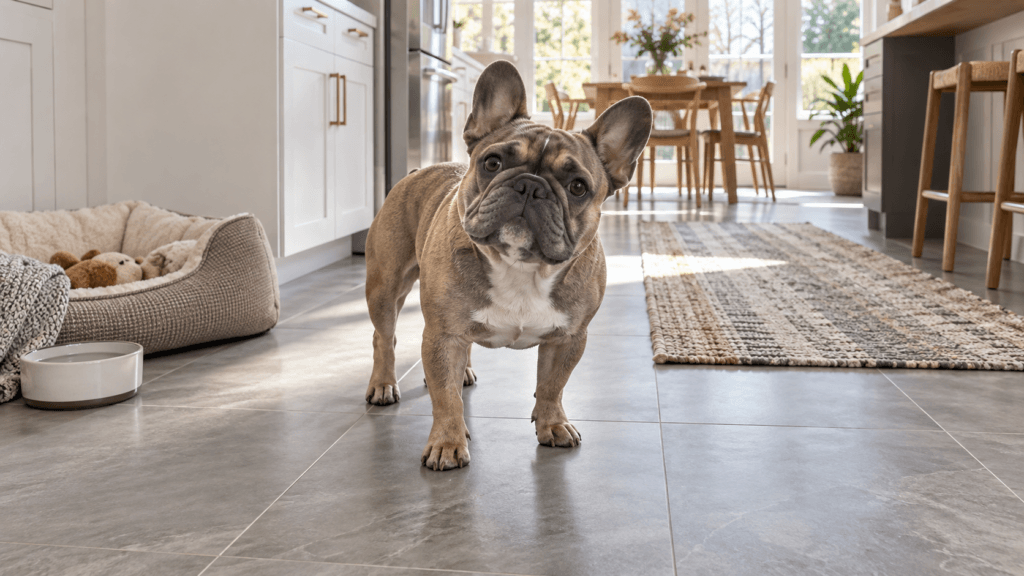
Tile is hard, cold and often slippery. A young dog may not care much, but older dogs can struggle on smooth tile, particularly when getting up from a lying position or turning quickly.
That is something homeowners often discover after the flooring is installed.
Area rugs and runners can make a big difference, especially in hallways and places where the dog frequently changes direction.
Grout also deserves some attention. While the tile itself is easy to clean, grout can collect dirt and staining over time if it is not maintained.
Tile makes the most sense when durability and water resistance are the priorities and you are willing to add softer, higher-traction areas for the dog.
Hardwood Can Work With Dogs, but You Have to Accept Some Wear
A lot of homeowners assume dogs and hardwood simply do not mix.
That is not really true.
Dogs live on hardwood floors every day. The better question is whether you are comfortable with the floor developing some character over time.
Hardwood can scratch. Large dogs, grit carried in from outside and furniture movement can all leave marks in the finish.
But hardwood has one major advantage that LVP and laminate do not: many wood floors can eventually be refinished.
A scratched vinyl plank generally stays scratched unless the plank is replaced. A solid hardwood floor may be sanded and refinished years later.
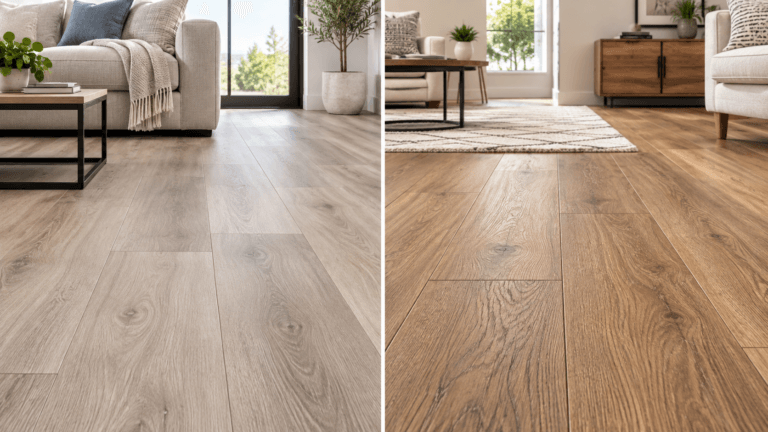
Species and finish also matter. Harder wood species tend to resist denting better, while matte or low-sheen finishes usually hide minor scratches better than glossy surfaces.
Color makes a difference too. Very dark wood can make light scratches, dust and pet hair more visible.
Engineered hardwood can also work with pets, but refinishing ability varies depending on the thickness of the real-wood wear layer. Our Flooring Maintenance, Repair & Refinishing guide explains the difference between surface repairs, recoating and full refinishing.
If you love real wood and can live with some scratches, having a dog is not necessarily a reason to avoid it.
Carpet Is Comfortable, but Accidents Change the Equation
Dogs usually love carpet.
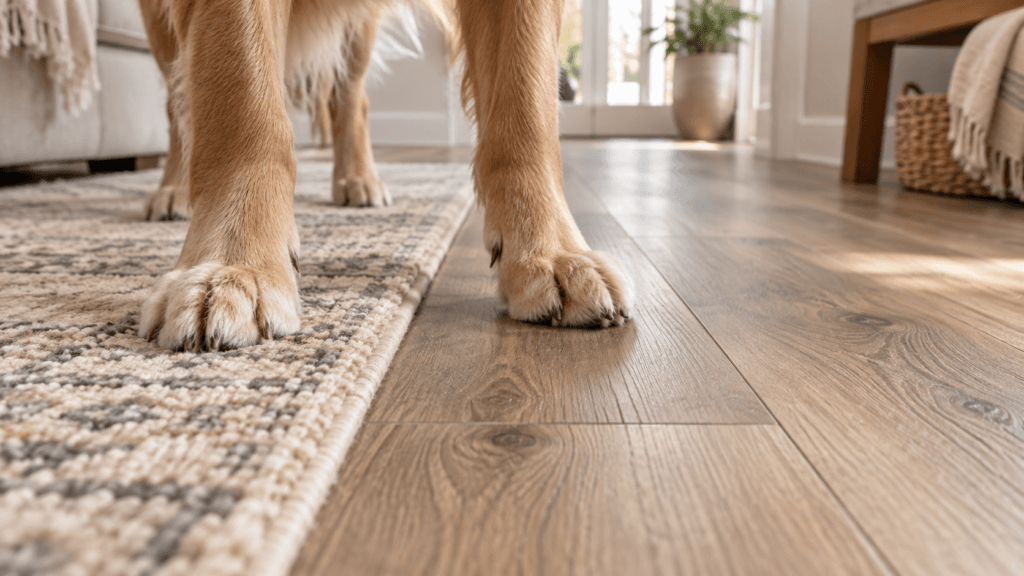
It is warm, quiet, soft and easy to grip. Senior dogs in particular may move much more confidently on carpet than on slick hard flooring.
For the homeowner, maintenance is the tradeoff.
Hair, dirt and odors can work their way into the fibers. Stains are more difficult to deal with than they are on LVP or tile. Repeated accidents can eventually affect the carpet pad or even the subfloor below.
That does not make carpet a bad pet flooring choice. It simply works better in some rooms than others.
A carpeted bedroom with an adult house-trained dog can be completely reasonable. Wall-to-wall carpet in the main entry used by three muddy dogs may become frustrating quickly.
If you like the comfort of carpet but want easier cleaning, area rugs over hard flooring can offer a useful compromise. Rugs are easier to replace, and they can also provide traction where the dog needs it most.
Large Dogs Change the Durability Equation
A 15-pound dog and an 80-pound dog do not put the same stress on a floor.
Large dogs create more concentrated pressure through their nails, generate more force when running and are more likely to slide furniture, bowls or other objects around.
For bigger dogs, I would pay particular attention to the surface finish and construction quality rather than choosing a flooring category based on name alone.
A high-quality LVP or laminate is usually a safer bet than the cheapest version of either product.
You should also look at the finish.
Highly glossy surfaces tend to show scratches more easily and can be more slippery. Textured matte surfaces are often more forgiving visually and may provide better traction.
This is one of those situations where spending a little more on the right construction can make more sense than replacing a cheaper floor sooner.
Puppies Bring a Different Problem: Water
Puppies are less about scratches and more about accidents.
That shifts the priority toward moisture resistance and easy cleaning.
LVP and tile are especially attractive during this stage because they give you more margin for error when something sits on the floor longer than you realized.
Laminate can still work, particularly newer moisture-resistant products, but I would pay closer attention to seam protection and manufacturer limitations.
Hardwood can survive occasional accidents when they are cleaned promptly, but repeated moisture exposure can discolor the finish or affect the wood.
If the puppy stage is temporary and you really want hardwood or laminate long-term, strategically placed washable rugs or mats can help protect the highest-risk areas.
Older Dogs Need Traction More Than Anything Else
This is an easy factor to overlook when choosing flooring for a young dog.
As dogs age, smooth hard floors can become difficult to navigate. They may hesitate before crossing a room, struggle to stand or lose their footing when turning.
If you already have an older dog, surface grip deserves as much consideration as scratch resistance.
Textured LVP and laminate can be better than very smooth finishes, but rugs and runners are often the simplest solution.
Place them along the paths your dog actually uses, especially between the bed, food and water, exterior doors and favorite rooms.
A beautiful floor does not do much good if your dog becomes afraid to walk across it.
Do Dog Nails Really Destroy Floors?
Usually not as dramatically as people expect.
Normal nail contact is different from dragging furniture or grinding sand into a finish. The bigger issue is repeated scratching over time, particularly when nails are long or a dog frequently runs and pivots on the same part of the floor.
Keeping nails trimmed is one of the simplest ways to protect almost any hard flooring.
Keeping grit out of the house matters too. Sand and small debris under paws can act like an abrasive on the finish.
Entry mats, routine vacuuming and quick cleaning probably do more for long-term floor appearance than obsessing over a single scratch-resistance rating.
What About the Water Bowl?
The area around a water bowl deserves its own plan.
Even a perfectly house-trained dog can splash water several times a day.
If your flooring is sensitive to moisture, place the bowls on a waterproof mat with enough area around them to catch spills. The mat should be compatible with the flooring underneath, because some rubber or latex-backed mats can discolor certain floor finishes.
For LVP and tile, the risk is lower, but standing water should still be wiped up.
Waterproof flooring is not the same thing as a waterproof room. Moisture can still travel around edges, under baseboards or through other openings and reach the substrate.
The Subfloors & Preparation guide covers moisture conditions below finished flooring in more detail.
What Flooring Is Easiest to Keep Clean With Pets?
For straightforward everyday cleaning, LVP and tile are probably the easiest.
Both allow hair and debris to be vacuumed easily, and most spills can be wiped away without much drama.
Laminate is also simple to maintain as long as excessive water is avoided.
Hardwood requires a little more attention to which cleaning products are used, while carpet obviously holds more hair and dirt within its fibers.
Whatever flooring you choose, avoid assuming that stronger cleaner means cleaner floor. Harsh products can haze finishes, damage protective layers or leave residues that attract more dirt.
Always start with the manufacturer’s care recommendations.
Don’t Forget the Subfloor and Installation
Pet-friendly flooring still needs to be installed correctly.
A waterproof LVP plank does not solve a moisture problem in a concrete slab. A scratch-resistant laminate will not perform properly if the subfloor is so uneven that the locking joints move every time someone walks across it.
Before flooring goes down, moisture, flatness, movement and underlayment need to be addressed.
Builzee’s Subfloors & Preparation guide walks through those conditions, while the Flooring Installation guide covers floating, glue-down and other common installation methods.
This matters even more in a pet household because flooring already receives more abuse. Starting with a poor installation only shortens the margin for error.
So What Is the Best Flooring for Dogs?
For the average pet household, LVP is probably the most balanced option.
It handles water well, cleans easily, offers good everyday durability and comes in enough styles that homeowners are not limited to a utilitarian-looking floor.
Laminate is especially compelling when scratch resistance and realistic wood appearance are priorities and moisture exposure is relatively controlled.
Tile is the durability choice, particularly in wet areas, but comfort and traction may need to be addressed.
Hardwood works better with dogs than its reputation suggests, especially if you accept that some wear is part of owning a real wood floor.
Carpet remains the comfort winner but requires more effort when it comes to hair, stains and accidents.
The room matters too. You do not have to use the same flooring everywhere. Tile or LVP in wet areas and carpet or wood in bedrooms can sometimes make more sense than forcing one material through the entire house.
Our Choosing Flooring by Room guide can help if you are planning different materials across several spaces.
A Few Things I Would Avoid
I would be cautious with very glossy flooring in a home with active dogs. It tends to show scratches and paw prints more easily, and the slick surface may be harder for the dog to grip.
I would also be careful about choosing the absolute cheapest LVP or laminate simply because the sample looks good. The quality of the wear surface, locking system and core construction matters once the floor is subjected to years of traffic.
And I would not choose flooring based entirely on a marketing label such as “pet proof.”
No residential floor is truly immune to scratches, water, dents or wear.
The goal is to find the material that handles the problems you are most likely to have.
Bottom Line
The best flooring for dogs is the floor that works for both sides of the household.
You want something that can survive paws, nails, water and cleaning. Your dog needs a surface that is comfortable and secure enough to walk on every day.
For many homes, LVP provides the best overall combination. Laminate is a strong alternative when scratch resistance matters more than moisture, while tile, hardwood and carpet each have situations where they make more sense.
Pay attention to the dog you actually have, not just the flooring specifications.
A young Labrador, a tiny Maltese and a twelve-year-old shepherd can all live in the same house and have very different needs from the floor beneath them.
Planning a Flooring Project?
Explore Builzee’s complete Flooring Guides for practical help with materials, room-by-room choices, subfloors, installation, maintenance, costs and buying decisions.