
FLOORING BY ROOM
Choose Flooring Based on How the Room Is Used
The best flooring for each room depends on moisture, foot traffic, comfort, pets, cleaning and how the space is used. Compare the most practical flooring choices for kitchens, bathrooms, living spaces, bedrooms, basements and high-traffic areas.
START WITH THE BASICS
Start With How the Room Is Used
The best flooring for each room depends on what that space has to deal with every day. A bedroom may prioritize comfort and quiet, while a bathroom needs to handle regular moisture. Kitchens see spills and heavy traffic, and basements introduce their own concerns because the floor may sit directly over concrete.
Before choosing a material, consider:
- How often the room is used
- Whether water or spills are likely
- Foot traffic and pets
- How easy the floor needs to be to clean
- Comfort underfoot
- Sun exposure
- The type and condition of the subfloor
If you have not compared the major materials yet, start with the Flooring Types & Materials Guide before narrowing the choice by room.
01 — KITCHENS
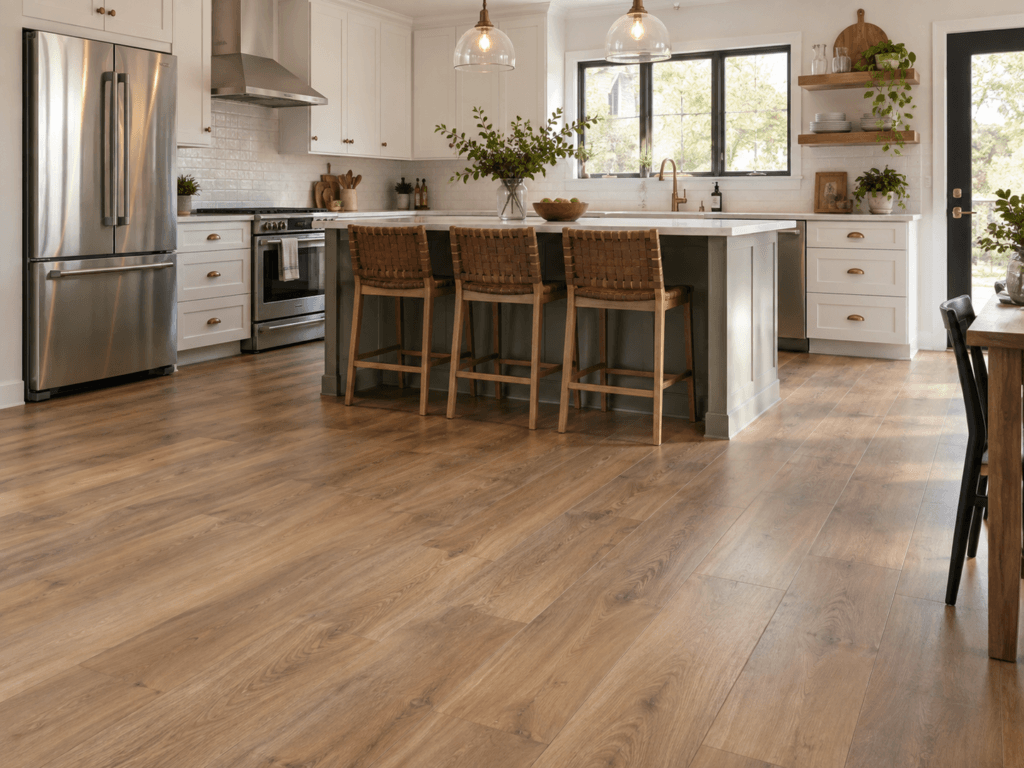
Kitchen flooring needs to handle more than appearance. Spills, dropped objects, cooking residue, chairs and frequent foot traffic all put more wear on the floor than many other rooms. Strong options often include luxury vinyl plank, tile, engineered hardwood and properly selected hardwood. LVP is popular because it is relatively easy to maintain and many products offer high moisture resistance. Tile provides excellent resistance to water and everyday wear, although it is harder underfoot. Wood and engineered wood can create a warmer, more continuous look in an open-plan home, but spills need to be cleaned promptly.
BEST FOR
Choose a material that balances durability, easy cleaning and the look you want to carry through adjacent living spaces.
GOOD TO KNOW A kitchen floor does not need to be completely different from the rest of the house. In an open-plan layout, continuing the same wood or wood-look flooring through the kitchen can create a cleaner visual transition when the product is appropriate for the space.
For broader kitchen planning, see the Builzee Kitchen Guides.
02 — BATHROOMS
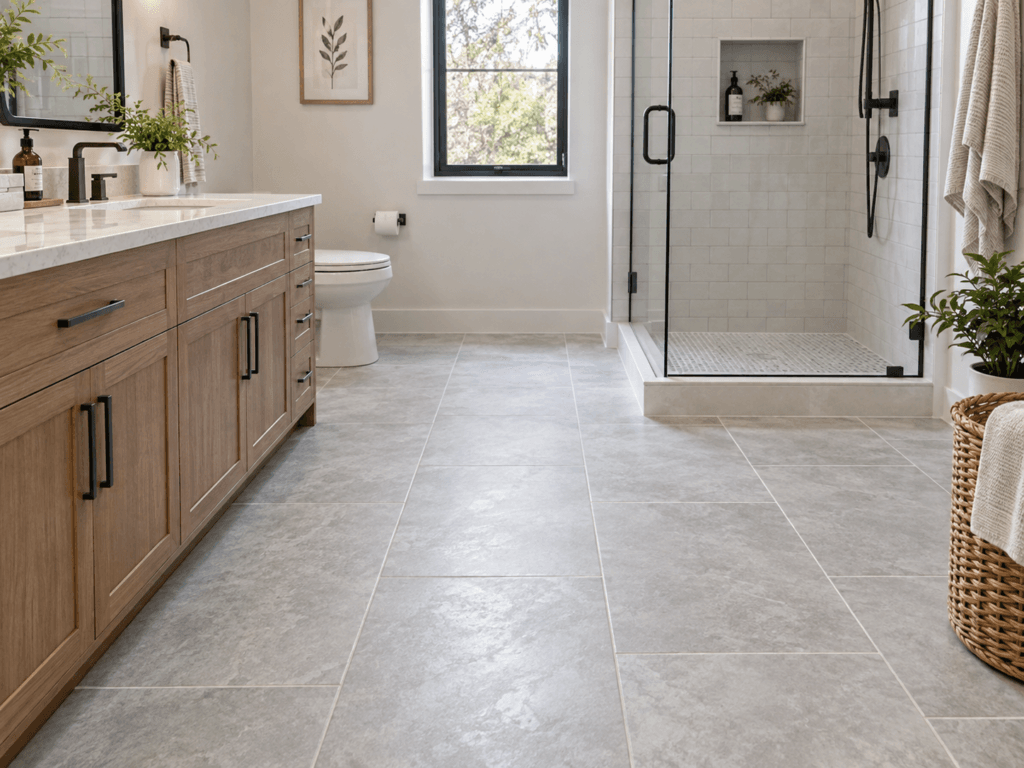
Bathrooms place much more emphasis on moisture resistance. Water around showers, tubs and sinks makes porcelain or ceramic tile one of the most common choices. Certain luxury vinyl products may also work well when the manufacturer approves them for bathroom installation. Natural stone can be used too, but maintenance and sealing requirements vary by material.
BEST FOR
Flooring that tolerates regular moisture, is easy to clean and provides appropriate traction underfoot.
GOOD TO KNOW
The flooring material is only one part of a bathroom floor system. Waterproofing, substrate preparation, transitions and installation details around showers and tubs still matter. Large-format tile can reduce the number of grout joints, while smaller-format tile may be useful where the floor needs to follow slopes, such as certain shower applications.
For more bathroom planning ideas, visit the Bathroom Guides.
03 — LIVING ROOMS & FAMILY ROOMS
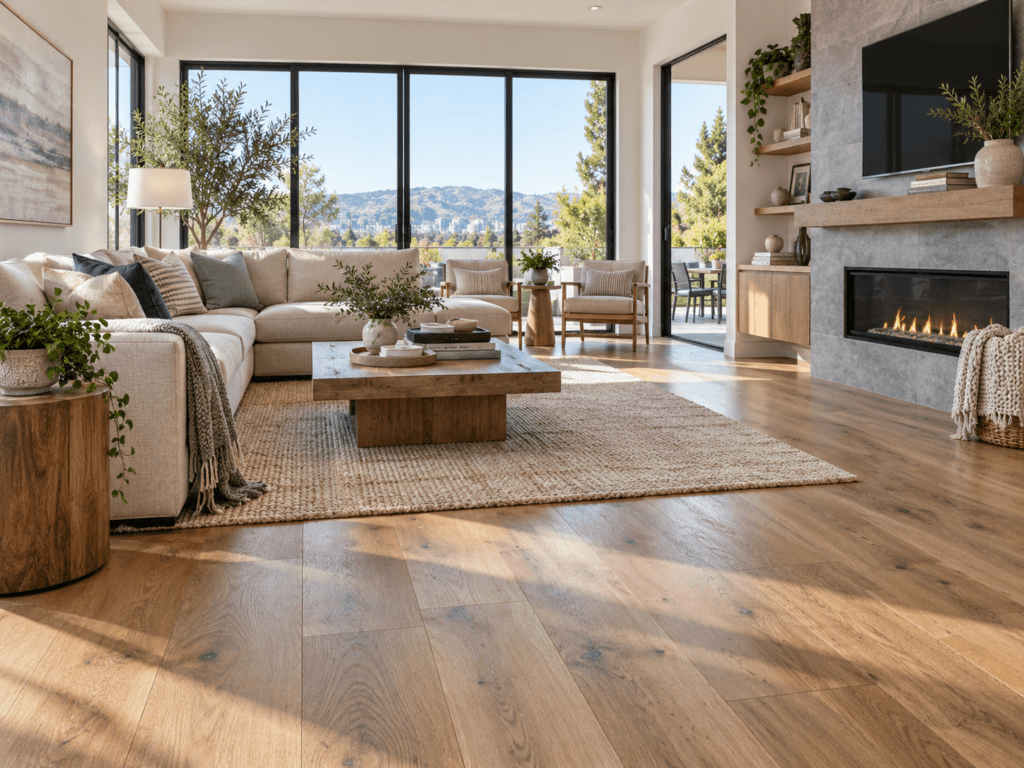
Living rooms usually give homeowners the greatest flexibility because moisture is less of a concern. Solid hardwood, engineered hardwood, LVP, laminate and carpet can all make sense depending on the home and how the room is used. Hardwood and engineered wood provide the look and feel of natural wood. LVP and laminate can create a similar visual effect with different maintenance and cost considerations. Carpet adds softness and sound absorption, which can be useful in family rooms or media spaces.
BEST FOR
Choose based on appearance, comfort, traffic, pets and how the flooring connects to neighboring rooms.
GOOD TO KNOW
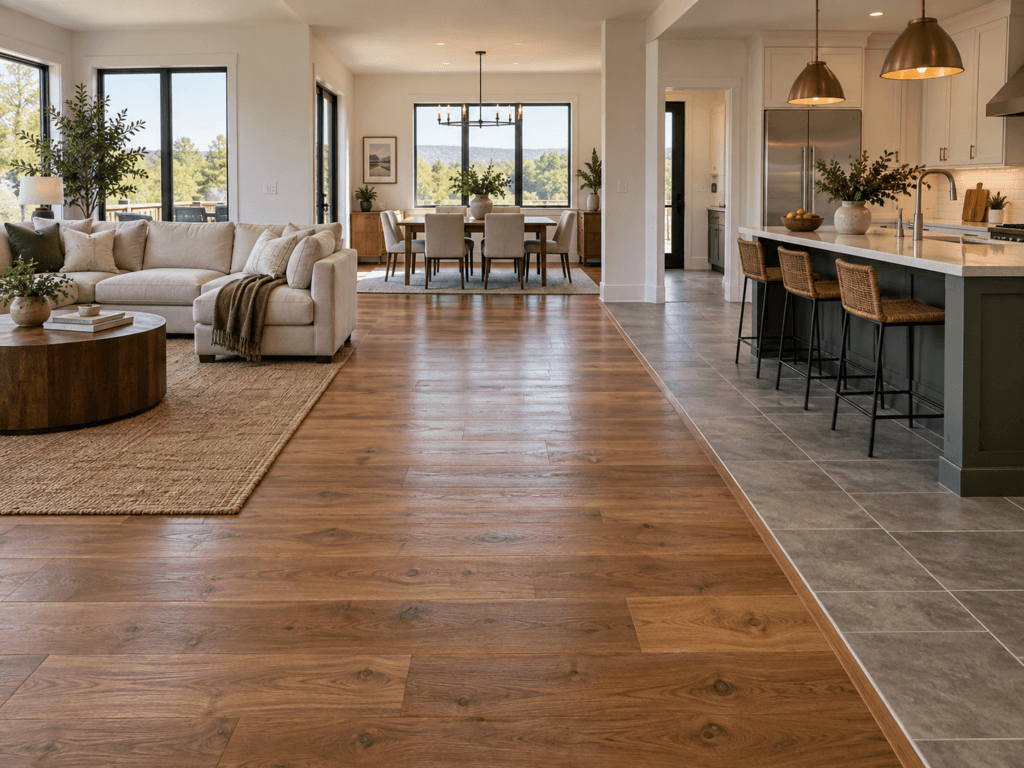
Large open spaces tend to look better when flooring transitions are kept intentional. Changing materials at every room opening can make an open floor plan feel fragmented. If the living room connects directly to a kitchen or dining area, consider the entire sightline before selecting the floor.
04 — BEDROOMS
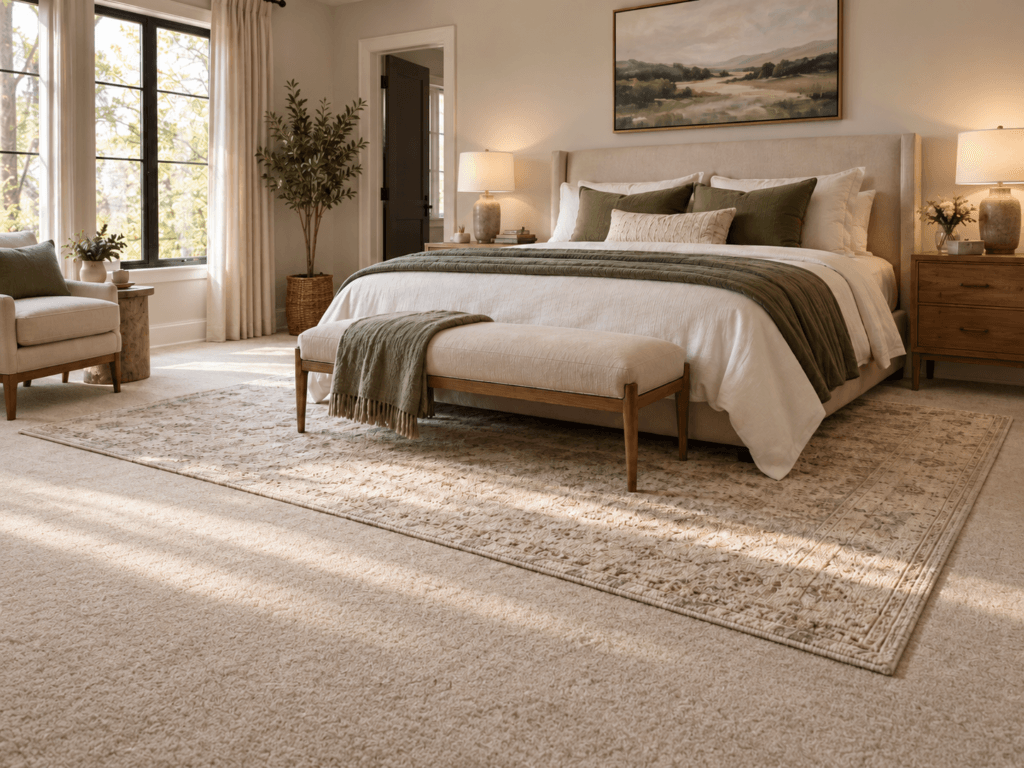
Bedrooms generally experience less moisture and lower foot traffic than kitchens, bathrooms and entry areas. That allows comfort and appearance to play a larger role in the decision. Carpet, hardwood, engineered hardwood, laminate and LVP are all commonly used. Carpet provides the softest and warmest feel underfoot and can reduce sound. Hard-surface flooring is easier to clean and may be preferred by homeowners who want flooring continuity throughout the house.
BEST FOR
Comfort, quiet, warmth and a finish that fits the rest of the home.
GOOD TO KNOW
If you prefer hard flooring but still want softness, a large area rug can provide much of the comfort of carpet without permanently covering the floor. Upstairs bedrooms may also benefit from considering sound transmission, particularly when there are living spaces directly below.
05 — BASEMENTS
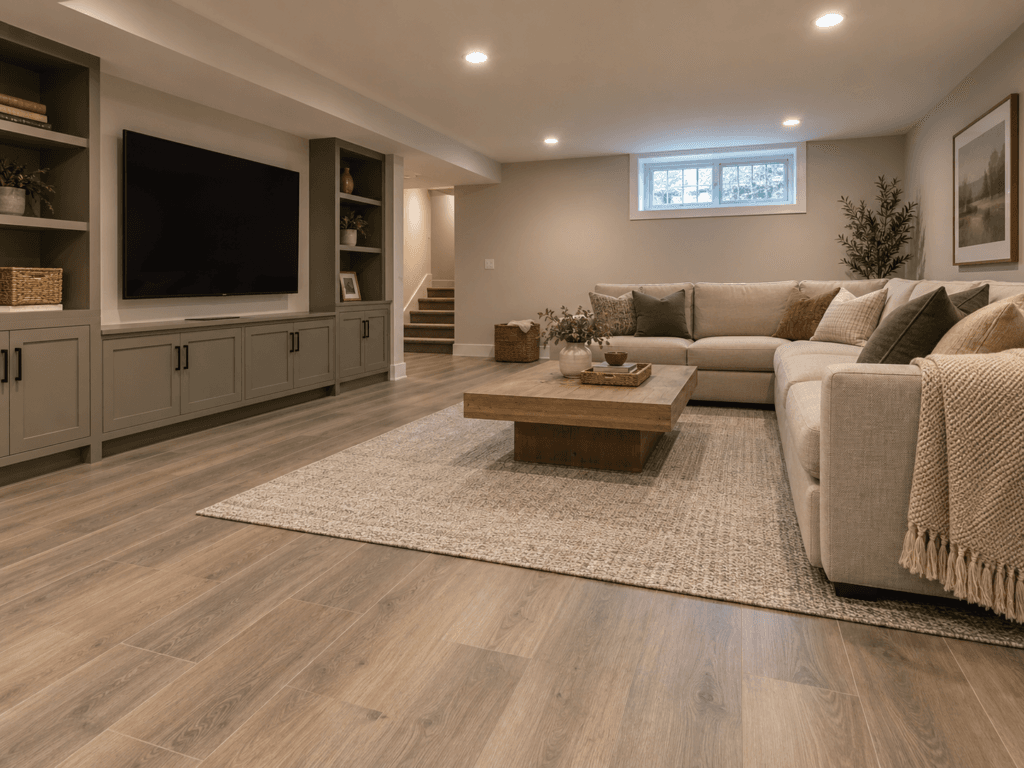
Basements require more attention to what is happening underneath the flooring. Many basement floors are concrete slabs, and moisture vapor can affect what can safely be installed over them. Luxury vinyl, tile and some engineered flooring systems are commonly considered for basement use, but the correct choice depends on moisture conditions and manufacturer requirements. Traditional solid hardwood is generally less suitable for below-grade installations.
BEST FOR
Materials designed to work over concrete and tolerate the moisture conditions of the space.
GOOD TO KNOW
Do not choose basement flooring before evaluating the slab. A basement that looks dry can still have moisture vapor moving through the concrete. Testing, underlayment and preparation requirements should be determined before flooring is installed.
06 — ENTRYWAYS & HIGH-TRAFFIC AREAS
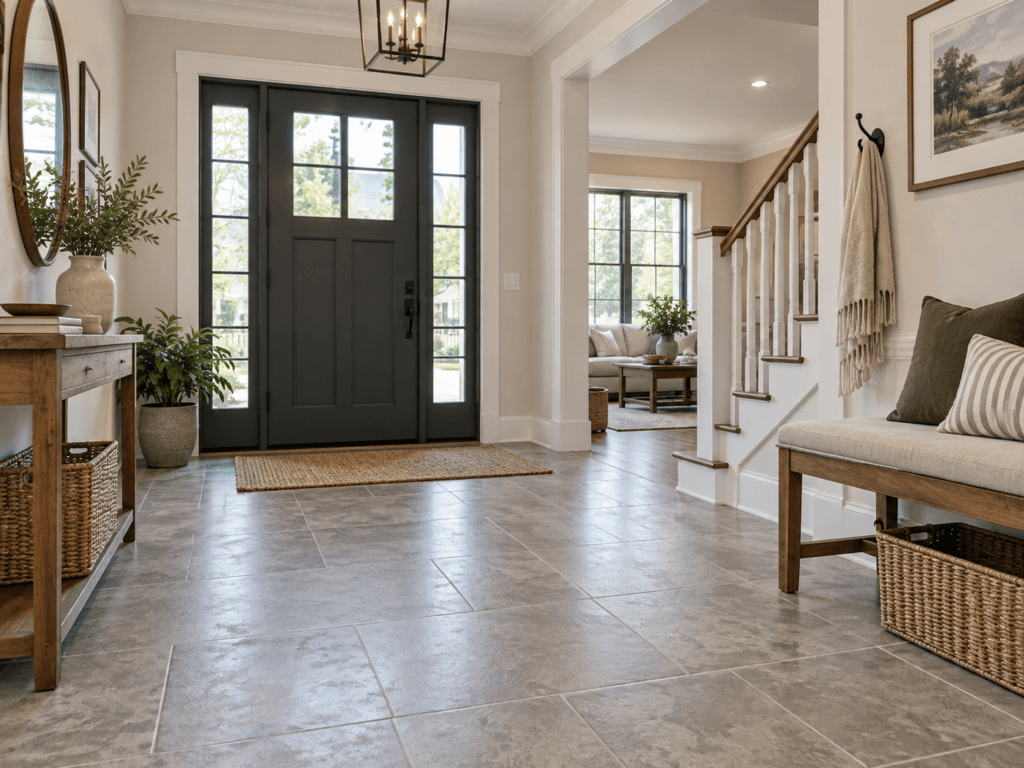
Entryways, hallways and other high-traffic spaces deal with shoes, dirt, grit, pets and repeated wear. Durability and cleaning become especially important here. Tile, LVP, quality laminate, hardwood and engineered hardwood may all be used depending on the home and level of exposure. Tile and resilient flooring can be particularly practical near exterior doors where wet shoes are common.
BEST FOR
Durable surfaces that are easy to clean and can tolerate repeated traffic without requiring excessive maintenance.
GOOD TO KNOW
Dirt and grit can act like sandpaper on almost any finish. Entrance mats and regular cleaning can make a noticeable difference in how well flooring holds up, regardless of which material you choose. If pets are part of the household, also look at scratch resistance, traction and how easily accidents can be cleaned.
PETS, KIDS & BUSY HOUSEHOLDS
Room type is not the only consideration.
A quiet household and a home with children, multiple pets and constant activity may need very different flooring even when the rooms are identical.
For busy homes, consider:
- Scratch resistance
- Stain resistance
- Ease of cleaning
- Moisture performance
- Surface traction
- Whether damaged areas can be repaired or replaced
- How visible dirt and pet hair will be on the finish
There is rarely one material that wins every category. Decide which characteristics matter most in your household.
OPEN-PLAN HOMES
Open floor plans create another decision: where should the flooring change?
Using one material throughout a living room, dining area and kitchen can make the home feel larger and more continuous.
Changing materials can still make sense where room conditions are significantly different, but transitions should look intentional.
Natural stopping points include:
- Doorways
- Changes in room width
- Cabinet lines
- Structural openings
- Changes in floor elevation
Avoid placing transitions randomly in the middle of an open space simply because two flooring products meet there.
COMPARE FLOORING BY ROOM
Best Flooring Options at a Glance
| Room | Strong Options | Main Concern | What to Watch |
|---|---|---|---|
| Kitchen | LVP, tile, engineered wood, hardwood | Spills and traffic | Moisture, cleaning, dropped objects |
| Bathroom | Tile, bathroom approved resilient flooring | Water exposure | Slip resistance, waterproofing and substrate |
| Living / Family Room | Hardwood, engineered wood, LVP, laminate, carpet | Appearance and everyday wear | Continuity with adjacent rooms |
| Bedroom | Carpet, hardwood, engineered wood, laminate, LVP | Comfort and sound | Cleaning preferences and noise |
| Basement | LVP, tile, below grade approved engineered flooring | Concrete and moisture | Slab moisture and below-grade approval |
| Entry / High Traffic | Tile, LVP, hardwood, engineered wood, laminate | Dirt and abrasion | Scratch resistance and easy cleaning |
Bottom Line
These are general starting points, not universal rules. Flooring products within the same category can have very different moisture ratings, wear layers, installation methods and warranty requirements. Always check the specific product before assuming it is suitable for a kitchen, bathroom, basement or other demanding location.