Engineered Hardwood vs. Solid Hardwood: Which Is Better?
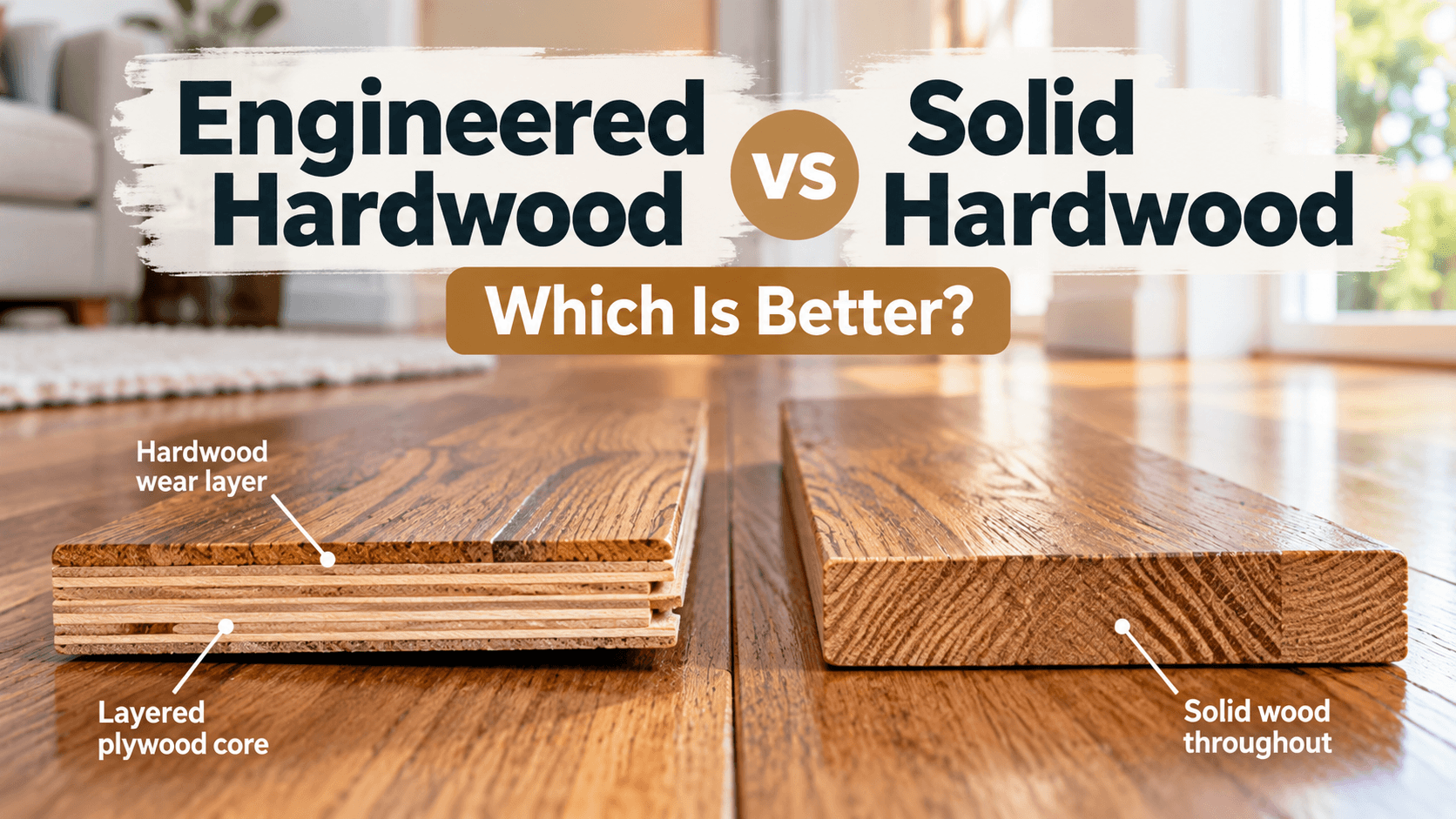
Engineered hardwood vs solid hardwood is a choice between two genuine wood floors that can look nearly identical. Solid hardwood is milled from one piece of wood. Engineered hardwood has a real hardwood surface over a layered core designed for greater dimensional stability.
The better choice depends on your subfloor, moisture conditions, room location, preferred board width and whether you expect to sand and refinish the flooring decades from now. Neither is automatically waterproof, scratch-proof or cheaper.
Engineered Hardwood vs Solid Hardwood: Quick Comparison
With stable humidity and suitable plywood framing, choose based on refinishing plans, appearance and installed price.
Look for a product specifically approved for the location and an installation system designed for the slab’s moisture conditions.
Usable wood above the tongue generally permits more sanding cycles than a thin engineered hardwood wear layer.
| Factor | Solid hardwood | Engineered hardwood |
|---|---|---|
| Composition | One solid wood piece throughout | Real wood surface over layered wood or engineered core |
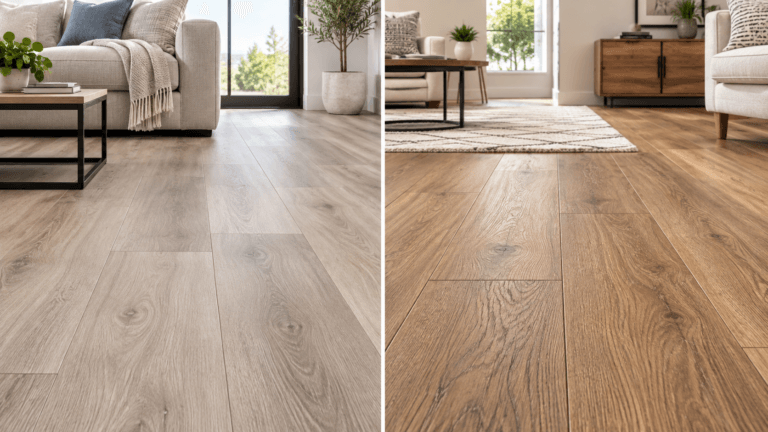
| Appearance | Natural wood surface | Natural wood surface; can look identical |
| Moisture movement | Generally more sensitive to humidity changes | Generally more dimensionally stable, not waterproof |
| Refinishing | Often multiple full sandings, depending on wear above tongue | Depends on wear-layer thickness, prior work and manufacturer approval |
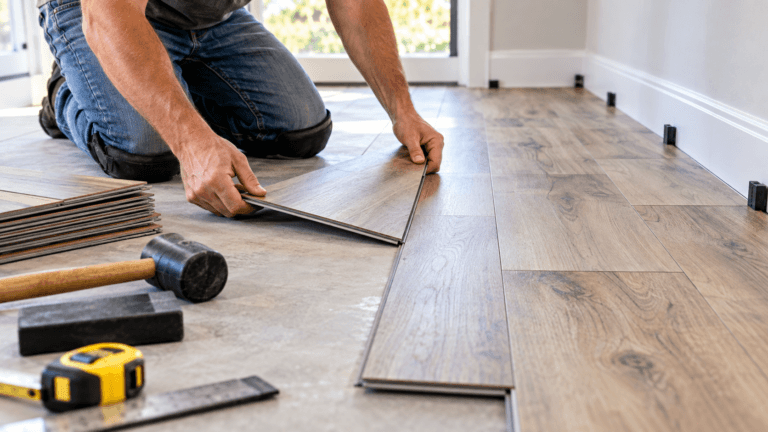
| Installation | Traditionally nailed or stapled to approved wood subfloor | May be glued, nailed, stapled or floated depending on model |
| Concrete slabs | Requires a specially designed and approved assembly | Many products can be installed over tested and prepared concrete |
| Wide planks | Movement control becomes more important | Layered construction can support greater dimensional stability |
| Price | Depends on species, finish, grade and labor | Depends on surface wear layer, core quality, brand and labor |
For a broader comparison with vinyl, laminate, tile and carpet, use Builzee’s Flooring Types & Materials guide.
Solid vs Engineered Hardwood Construction
Solid hardwood
Typically milled from a single hardwood board, often around 3/4 inch thick. Oak, maple, hickory, walnut and other species come in various grades, widths and finishes. Its usable wood above the tongue-and-groove connection is a major long-term advantage.
Engineered hardwood
A real hardwood veneer or sawn wear layer sits over plywood, other wood layers or an engineered wood core. Product quality can vary significantly. Two samples with the same oak face may have very different wear-layer thicknesses and installation rules.
Why the layered core matters
Real wood responds to humidity. Solid boards can expand and contract across their width, leading to seasonal gaps, cupping or crowning if conditions become extreme. Layered engineered products are generally designed to reduce movement, although they still expand and contract and can be damaged by water.
That additional stability is useful for many concrete installations and wider boards, provided the selected product is approved. An engineered board is not automatically suitable for every basement, radiant-heat system or damp slab.
The National Wood Flooring Association recognizes solid, engineered and composite-engineered categories as real wood flooring when the top wear surface is genuine wood.

Which Hardwood Works Best by Subfloor and Room?
Bedrooms and living rooms
Both products can work well over a suitable wood subfloor with controlled humidity. Solid becomes attractive when longevity and repeated refinishing are priorities. Engineered can be useful for wider planks or specific installation methods.
Slab-on-grade spaces
Approved engineered products are often the practical choice, typically glued or floated as designed. Test the slab’s moisture and flatness first. Do not assume concrete is suitable because it looks dry.
Basements and below grade
Solid hardwood is generally avoided. Even engineered wood should only be used if the location is dry and the manufacturer explicitly approves below-grade use. Recurring dampness calls for a different approach.
Kitchens and powder rooms
Either may be appropriate in some kitchens if spills are managed quickly and the assembly is suitable. For full bathrooms with regular water exposure, neither is usually the first choice. Neither is waterproof.
Wide-plank floors
Engineered construction often offers improved stability, which can help with wide formats. Wide solid planks can also work but require appropriate moisture control and installation details.
Radiant heating
Engineered hardwood is commonly considered, but not every engineered product is approved. Confirm compatible species, maximum temperatures, controls and installation requirements for both systems.
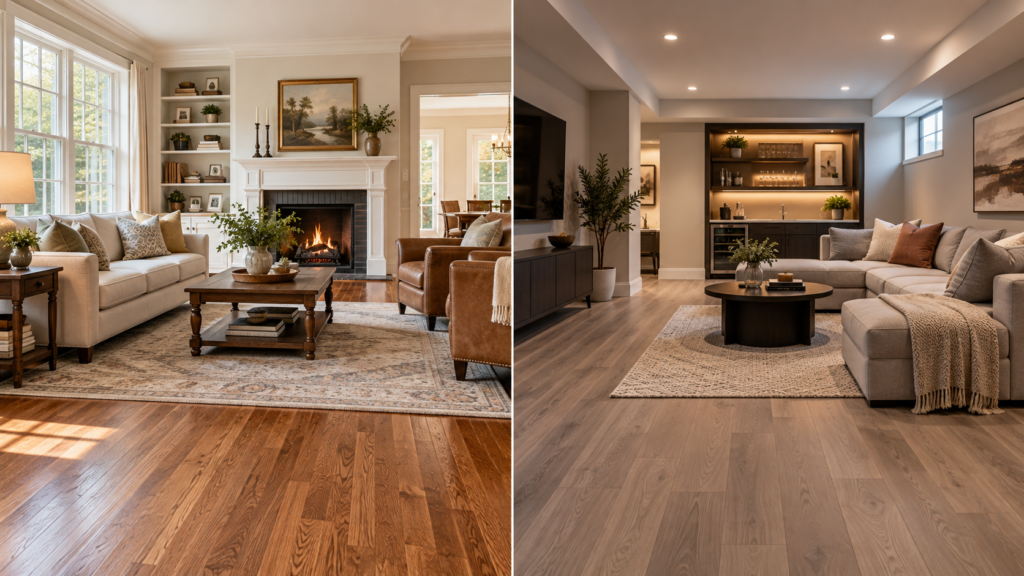
Both products need stable indoor conditions. The NWFA’s wood flooring moisture guidance explains how swelling, cupping, shrinkage and gaps relate to humidity changes. Follow the narrower requirements of the actual flooring and adhesive product if they differ from general recommendations.
Can Engineered Hardwood Be Refinished Like Solid Hardwood?
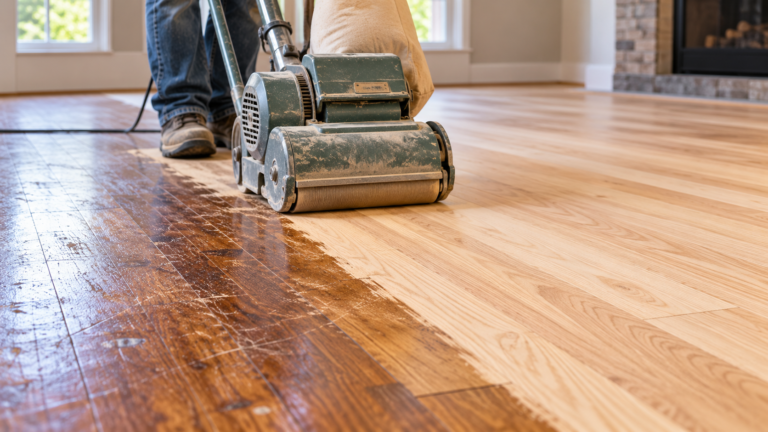
Solid hardwood: Often yes, several times over its life, but usable wood is limited by the tongue location, original board thickness and prior sanding. Poorly performed sanding or existing damage can reduce future options.
Engineered hardwood: Sometimes. A thin real-wood veneer may only permit recoating, while a substantial wear layer may allow one or more full sandings. The number cannot be determined reliably from total board thickness or a generic product label.
| Condition | Likely action | What to check |
|---|---|---|
| Dull finish, no deep wear | Clean or consider a compatible maintenance recoat | Finish chemistry and recoat suitability |
| Scattered surface scratches | Minor repairs, professional evaluation or recoat | Scratch depth and factory finish instructions |
| Deep scratches / exposed wood | Board repair or full sanding, if sufficient wood remains | Wear layer, old sanding, tongue and groove |
| Warped / water-damaged boards | Correct source of moisture; assess repair or replacement | Subfloor and remaining moisture, not just finish |
| Thin engineered veneer | Avoid full sanding unless manufacturer approves | Measured wear-layer thickness and product specifications |
The NWFA explains that actual sanding capacity depends on several factors, including condition, flatness, skill and wear-layer thickness. Review its refinishing guidance. If restoring an existing floor, see How to Refinish Hardwood Floors.
Do not confuse a light maintenance recoat with sanding all the way to bare wood. Neither should be attempted blindly on an unknown engineered product.
Service Life, Repairability and Matching Existing Floors
Does solid hardwood last longer?
Solid hardwood often offers the greatest potential service life because usable wood above the tongue can be refinished repeatedly when it remains in good condition. A well-made engineered floor can also last decades, particularly with a thicker wear layer and proper installation. An inexpensive thin-veneer floor may reach the limit of its recoverable surface earlier. Avoid treating any lifespan figure as a promise independent of maintenance, moisture and product construction.
Replacing individual boards
Both types can sometimes be repaired by replacing isolated boards, but the installation method changes the work. Removing glued-down engineered flooring from concrete can be more disruptive than removing a damaged board in some nailed systems. Conversely, proprietary click-lock flooring may have its own board-replacement procedures. Matching the exact stain, plank width, texture and factory sheen years later may be difficult even when the material itself remains available.
Matching existing hardwood in a remodel
When adjacent rooms already have solid oak, the priority may be matching thickness, board dimensions and the finished floor elevation rather than choosing the most dimensionally stable construction. Engineered wood can offer a visually close match, but transitions may be required. Check finished height at doors, stairs, kitchen cabinets and other flooring. If you intend to sand the new and old rooms together, the engineered surface must be suitable for that plan.
Does one type improve home value more?
Neither construction automatically guarantees a higher resale price. Buyers may care more about the flooring’s condition, consistent appearance, installation quality and suitability for the room. A premium engineered wood floor with an appropriate installation can be more desirable than a poorly installed solid floor. Treat resale value as a secondary consideration after moisture performance and service life in your home.
Save a carton label or product SKU, the installation guide, the adhesive or underlayment details and a few spare boards. That makes later repairs, warranty questions and flooring additions much easier to manage.
Engineered Hardwood vs Solid Hardwood Cost and Durability
There is no universal cheaper option. Basic engineered flooring with a thin veneer may cost less than some solid hardwood, while premium wide-plank engineered flooring with a thick sawn wear layer can cost more than a standard solid oak floor. Species, grade, board width, finish and vendor all affect material cost.
Installation also changes the comparison. Solid hardwood over a suitable plywood subfloor can be a conventional nail-down project. An approved engineered system over concrete may avoid a built-up wood subfloor but still need slab moisture testing, surface preparation, adhesives or an underlayment system. Compare the complete installed price rather than the shelf price per carton.
How to compare two flooring quotes
- Match visible quality. Compare the same wood species, width, grade, finish and appearance.
- Check hidden construction. Confirm engineered wear-layer thickness and core quality, or solid board thickness and profile.
- Document the substrate. Include flattening, leveling, patching, plywood repairs, slab testing and any moisture mitigation.
- Identify installation scope. Include nails, glue, underlayment, expansion details, transition strips and height conflicts at doors.
- Include extras and later work. Count waste, trim, moving furniture, removing old floors and realistic future refinishing or board replacement.
Durability and pets: compare the surface finish
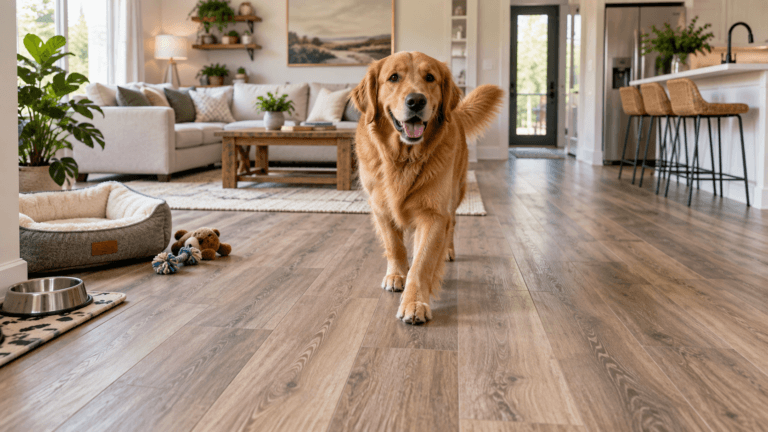
Both materials expose real wood, so dents and scratches depend heavily on wood species, factory finish, abrasive grit and use. A matte textured oak floor may disguise minor scratches better than a dark glossy finish, regardless of the core. Pets can scratch both. Solid hardwood’s main long-term advantage is often the ability to renew the surface more extensively, not immunity to damage.
For other pet-friendly options, see Builzee’s Best Flooring for Dogs & Pets guide. For all wood floors, sweep grit, use furniture pads, wipe up spills immediately and avoid steam or soaking wet mops.
What to Ask Before Buying Either Hardwood Floor
Request the current installation and warranty documents for the exact product SKU. Ask the installer how moisture will be tested and recorded before work begins. Retain spare boards and the product information for future repairs.
Match the Floor to the Subfloor and Your Long-Term Plans
Choose solid hardwood when you have favorable above-grade conditions, a suitable wood subfloor and want the strongest potential for repeated refinishing. Choose an approved engineered hardwood product when dimensional stability, concrete slab installation, wider planks or a compatible radiant system matters more. The quality of the actual product and installation matters more than the name alone.