How Long Does a Home Renovation Take? Typical Timelines by Project
One of the first questions homeowners ask before starting construction is how long the project will take.
A realistic home renovation timeline depends on more than the number of days workers are physically inside the house. Planning, permits, material lead times, inspections, existing conditions and change orders can all affect the schedule.
Some projects may take only a few days. Larger renovations can take several months.
What Determines a Home Renovation Timeline?
The length of a renovation is usually affected by:
- project size
- design complexity
- permit requirements
- material availability
- contractor scheduling
- number of trades involved
- inspections
- existing conditions
- owner decisions
- change orders
A simple project with readily available materials may move quickly.
A project involving structural work, custom products and multiple inspections will usually take longer.
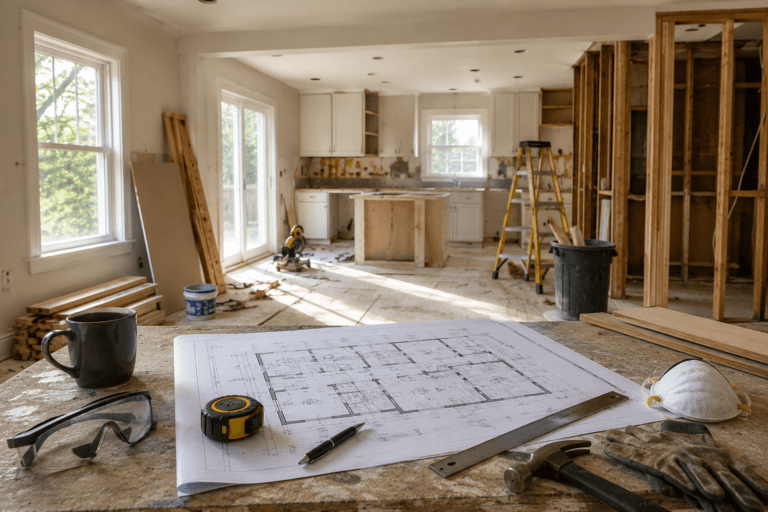
1. Planning and Design
The schedule begins before construction starts.
Planning may include:
- defining the scope
- setting the budget
- developing drawings
- selecting materials
- obtaining contractor quotes
- reviewing product options
- coordinating engineering
Smaller projects may require only a few days or weeks of preparation.
Larger renovations may require several weeks or months before construction can begin.
For a more complete planning process, see Builzee’s How to Plan a Home Renovation guide.
2. Permits and Approvals
Permit review can have a major impact on the schedule.
Depending on the project and jurisdiction, permits may be required for:
- structural changes
- electrical work
- plumbing
- mechanical systems
- additions
- window or door modifications
- major remodeling
Simple permits may be approved relatively quickly, while projects requiring plan review, engineering or revisions can take considerably longer.
Permit timelines also vary widely by city and county.
See Builzee’s Home Renovation Permits guide for more information.
3. Material Ordering and Lead Times
Materials should be considered part of the project schedule.
Some products may be available immediately, while others require weeks or months to manufacture.
Potential long-lead items include:
- custom windows
- specialty doors
- cabinets
- countertops
- shower glass
- appliances
- specialty tile
- plumbing fixtures
- custom metalwork
Starting demolition before critical materials are available can leave the home unfinished while the project waits for deliveries.
Typical Home Renovation Timelines
The following ranges are general planning estimates. Actual schedules vary depending on project scope, location, contractor availability, inspections and existing conditions.
| Project | Typical Construction Time |
|---|---|
| Interior Painting | 1–5 days |
| Flooring Replacement | 2–7 days |
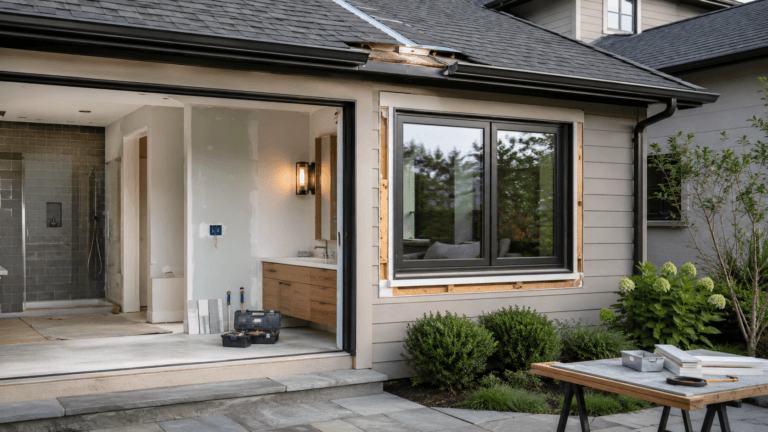
| Window Replacement | 1–3 days for many homes |
| Small Bathroom Remodel | 2–4 weeks |
| Full Bathroom Remodel | 4–8+ weeks |
| Kitchen Remodel | 6–12+ weeks |
| Major Whole-Home Renovation | 3–9+ months |
Important: These ranges generally refer to active construction and do not necessarily include design, permitting, product ordering or contractor wait times.
4. Bathroom Remodel Timeline
A small bathroom refresh may take only a few weeks.
A more complete renovation can take significantly longer.
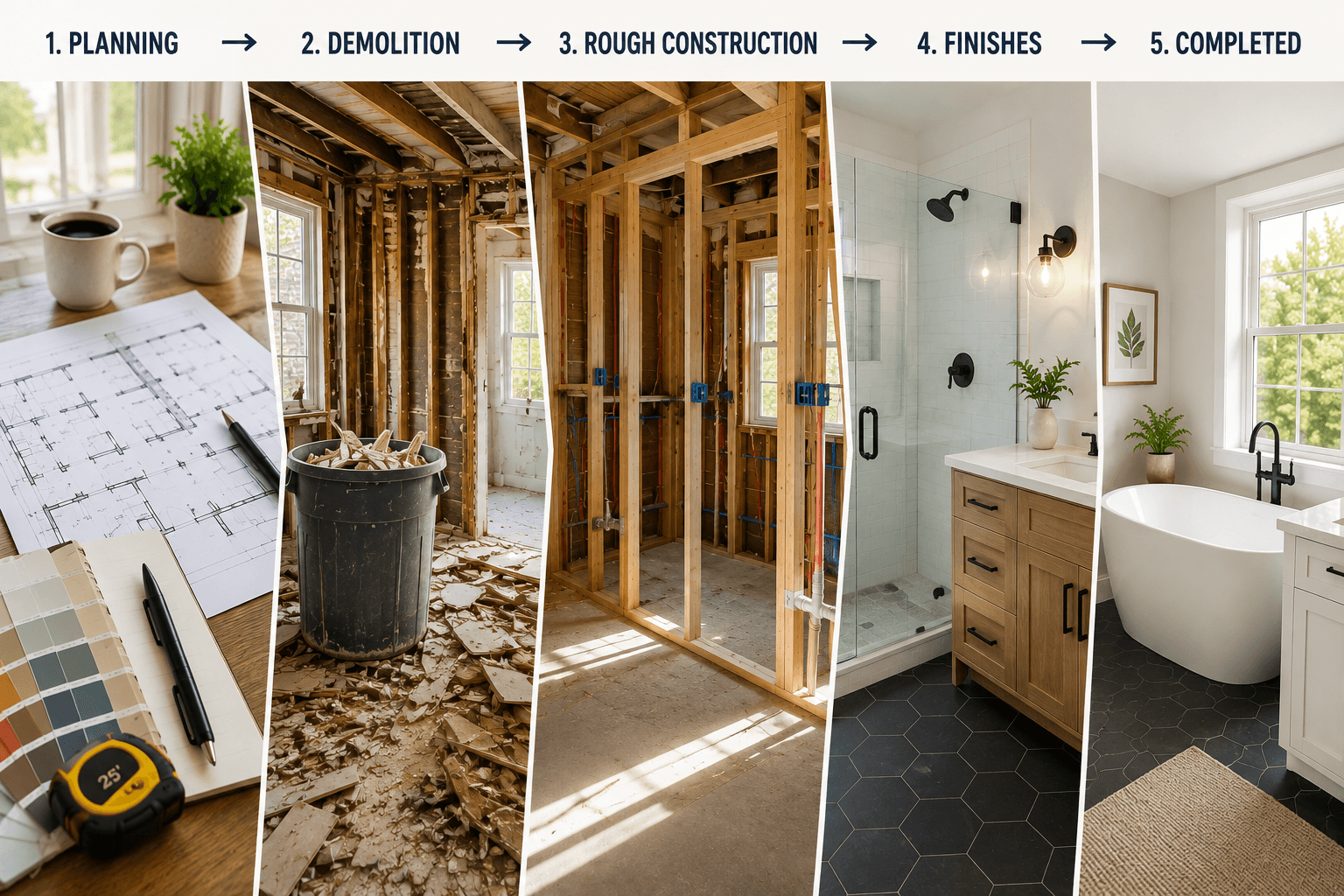
A typical full bathroom remodel may involve:
- demolition
- plumbing rough-in
- electrical work
- framing
- inspections
- waterproofing
- tile installation
- vanity installation
- countertops
- fixtures
- shower glass
- painting
- finish work
A straightforward project may take around 4 to 8 weeks, while complicated bathrooms can take longer.
Custom shower glass, specialty tile and hidden water damage are common causes of additional time.
For budgeting guidance, see Builzee’s Bathroom Remodel Cost in 2026 guide.
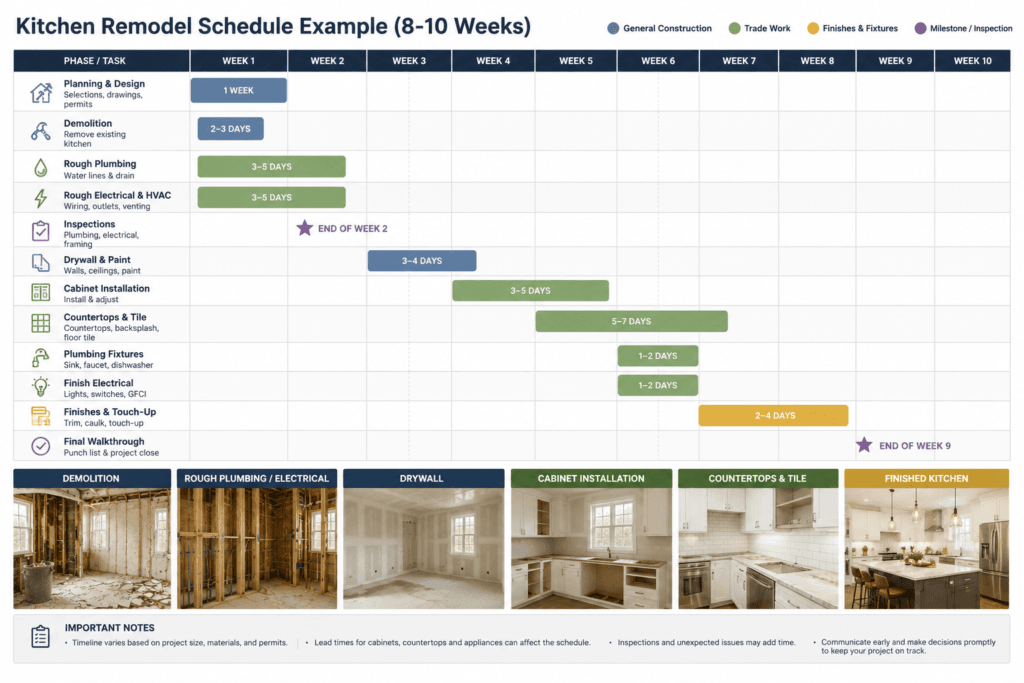
5. Kitchen Remodel Timeline
Kitchen renovations often involve more trades and longer material lead times than smaller projects.
A full kitchen remodel may include:
- demolition
- framing
- electrical
- plumbing
- HVAC modifications
- drywall
- cabinets
- countertops
- flooring
- backsplash
- appliances
- lighting
- painting
A typical construction period may be around 6 to 12 weeks or more.
Custom cabinetry, stone countertops and appliance delays can extend the schedule.
Changing the kitchen layout can also add time because plumbing, electrical and walls may need to be relocated.
6. Window Replacement Timeline
Window replacement can often be completed relatively quickly once the windows arrive.
For many homes, installation may take approximately 1 to 3 days, depending on:
- number of windows
- window size
- installation method
- opening condition
- exterior access
- finish work
However, the total project timeline can be much longer if the windows are custom manufactured.
Production lead time may exceed the installation time by several weeks.
For more detail, see Builzee’s Window Replacement Guide.
7. Flooring Replacement Timeline
Many flooring projects can be completed in less than a week.
A straightforward installation may take around 2 to 7 days.
The schedule depends on:
- square footage
- furniture removal
- demolition
- subfloor condition
- leveling
- material acclimation
- stair work
- transitions
Unexpected subfloor repairs can add time.
Tile and hardwood installations may also require more preparation than floating flooring systems.
8. Whole-Home Renovation Timeline
Whole-home renovations involve multiple rooms and trades.
A major project may take approximately 3 to 9 months or longer.
The schedule may include:
- demolition
- structural modifications
- framing
- electrical
- plumbing
- HVAC
- insulation
- drywall
- flooring
- cabinetry
- tile
- painting
- trim
- fixtures
- inspections
Large renovations may also require extensive design and permitting before construction begins.
The more interconnected the work becomes, the more important scheduling and coordination are.
Why Renovation Projects Get Delayed
Renovation schedules can change even when the project is well planned.
Common causes include:
- permit delays
- inspection delays
- material backorders
- custom product lead times
- hidden damage
- weather
- contractor availability
- design changes
- change orders
- late owner decisions
- incorrect measurements
- damaged deliveries
Some delays can be prevented. Others cannot.
The goal is to reduce avoidable delays before construction begins.
Hidden Conditions Can Affect the Schedule
Existing homes often contain conditions that are not visible during the estimate.
Examples include:
- damaged framing
- old electrical wiring
- corroded plumbing
- water damage
- mold
- uneven floors
- hidden ductwork
- structural conflicts
When these conditions are discovered, work may need to stop while the problem is evaluated and corrected.
This can affect both the schedule and the budget.
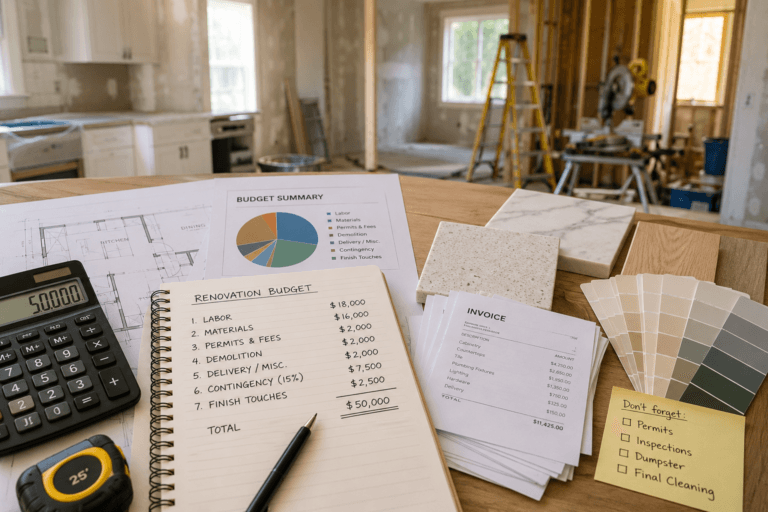
See Builzee’s Home Renovation Budget guide for more information on planning for unexpected conditions.
How to Keep a Renovation on Schedule
Homeowners can help reduce delays by making important decisions early.
Before construction begins:
- finalize the scope
- confirm permits
- select major materials
- verify lead times
- compare contractor schedules
- order long-lead products
- establish a change-order process
- make owner decisions promptly
Avoid changing major selections after construction has started whenever possible.
Late changes can affect material orders, subcontractors and work that has already been completed.
Ask Contractors About the Schedule Before Hiring
When reviewing proposals, ask each contractor:
- When can you start?
- How long do you expect construction to take?
- Will crews be working continuously?
- Which materials could affect the schedule?
- Who coordinates inspections?
- How are delays communicated?
- How are schedule changes handled?
A contractor who provides a clear schedule is easier to compare with one who provides only a total price.
See Builzee’s How to Compare Contractor Quotes Before Starting a Home Renovation guide.
Should You Move Out During a Renovation?
Whether you can remain in the home depends on the project.
Living in the home may be manageable during:
- painting
- flooring in limited areas
- window replacement
- individual room renovations
Temporary relocation may be more practical during:
- major kitchen renovations
- whole-home projects
- extensive plumbing shutdowns
- structural work
- projects creating substantial dust or noise
Temporary housing can also affect the total renovation budget.
Bottom Line
A realistic home renovation timeline should include more than active construction.
Planning, permits, product lead times, inspections, hidden conditions and contractor availability can all affect when the project actually starts and finishes.
Simple projects may take only a few days, while kitchens, bathrooms and whole-home renovations can take weeks or months.
The best way to reduce schedule surprises is to make decisions early, confirm material availability and understand the entire process before demolition begins.
Planning a Home Project?
Explore Builzee’s practical guides for renovation planning, costs, permits, materials and project decisions.