How to Budget for a Home Renovation Without Getting Surprised
A home renovation budget should account for more than the materials you can see.
Labor, permits, delivery, demolition, design fees, taxes, disposal, hidden conditions and change orders can all affect the final project cost.
Building a realistic home renovation budget before construction begins can help you make better decisions and reduce the chance of running out of money halfway through the project.
What Should a Home Renovation Budget Include?
A complete renovation budget may include:
- labor
- materials
- demolition
- disposal
- permits
- design
- engineering
- delivery
- taxes
- equipment
- temporary protection
- storage
- finish work
- contingency
The exact mix depends on the project, but the goal is to capture both obvious and less visible costs.
1. Start With the Total Amount You Can Spend
Before choosing finishes, establish the maximum amount you are comfortable spending.
That number should include your contingency, not just the contractor’s base price.
For example, if your overall limit is $50,000, it may not make sense to sign a $50,000 construction contract before accounting for permits, upgrades and unexpected conditions.
Work backward from the true total budget.
2. Separate Hard Costs and Soft Costs
It helps to divide the budget into two broad categories.
Hard costs are physical construction expenses such as:
- labor
- materials
- demolition
- installation
- equipment
- delivery
- disposal
Soft costs may include:
- design
- engineering
- permit fees
- testing
- inspections
- temporary housing
- financing costs
This makes it easier to see where the money is actually going.
3. Add a Contingency
Renovation projects involve existing conditions that may not be visible before demolition.
A contingency is money reserved for unexpected work.
Common examples include:
- damaged framing
- old wiring
- plumbing problems
- water damage
- uneven floors
- mold
- hidden structural conditions
Bathrooms can be particularly sensitive to hidden moisture and waterproofing problems that are not visible until demolition begins.
The right contingency depends on the project, but older homes and more invasive renovations generally carry more uncertainty.
GOOD TO KNOW
Contingency should be treated as reserve money, not as extra money to spend on upgrades before construction starts.
4. Include Permits and Professional Fees
Permit and professional costs are easy to overlook.
Depending on the project, you may need:
- building permits
- electrical permits
- plumbing permits
- mechanical permits
- architectural drawings
- structural engineering
- energy calculations
- inspections
Some contractors include these items in their proposals. Others exclude them.
Confirm responsibility before comparing prices.
For more detail, see Builzee’s Home Renovation Permits guide.
5. Account for Demolition and Disposal
Removing existing materials costs money too.
Budget items may include:
- demolition labor
- dumpsters
- hauling
- landfill fees
- floor protection
- dust barriers
- temporary cleanup
These expenses may not be exciting, but they are part of the project.
A proposal that does not clearly identify demolition and disposal should be reviewed carefully.
6. Watch Allowances and Material Upgrades
Contractor quotes often include allowances for products that have not yet been selected.
Common allowances include:
- tile
- plumbing fixtures
- lighting
- flooring
- countertops
- hardware
For bathroom projects, tile, plumbing fixtures, vanities and shower components can create especially large differences between allowance pricing and the final selections.
If the allowance is lower than the products you actually want, the difference becomes an added cost later.
Before signing, compare the allowance with realistic product pricing.
7. Include Delivery, Tax and Small Accessories
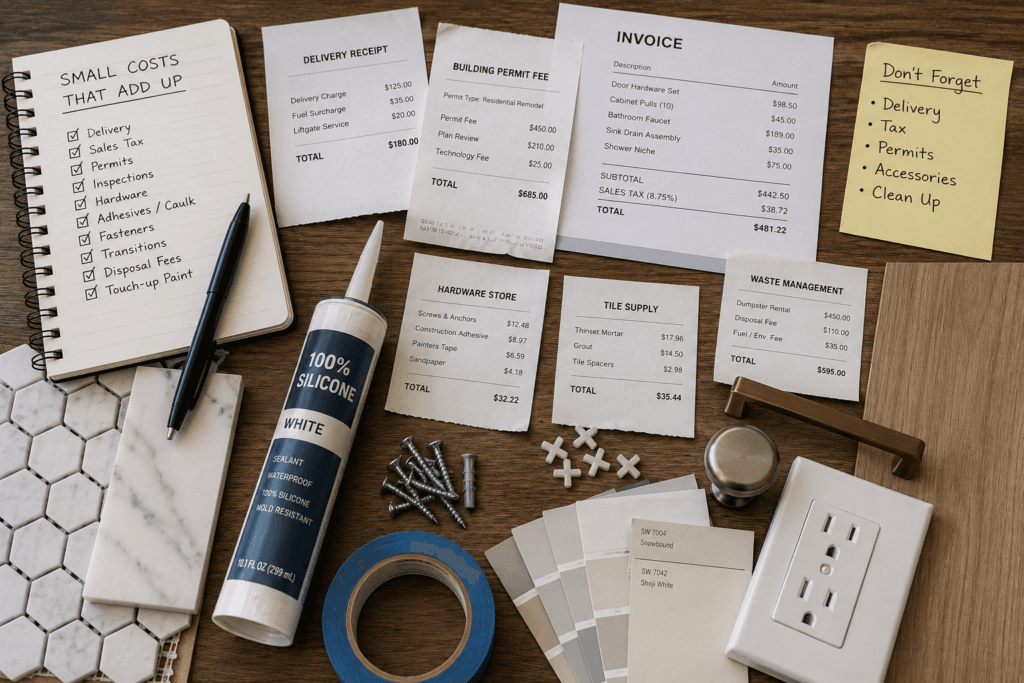
Small costs can add up quickly.
Examples include:
- sales tax
- freight
- delivery
- fasteners
- adhesives
- trim
- transitions
- caulk
- grout
- sealants
- hardware
- touch-up materials
These items may seem minor individually, but a large project can involve many of them.
8. Plan for Hidden Conditions
Renovation work often exposes conditions that were not visible during the estimate.
Examples include:
- rot
- corrosion
- plumbing leaks
- damaged subfloor
- obsolete electrical systems
- inadequate framing
- hidden ductwork
- water intrusion
Not every hidden condition can be predicted.
The goal is to leave enough flexibility in the budget to handle them without disrupting the entire project.
9. Understand Change Orders
A change order modifies the original scope or price.
Common reasons include:
- owner-requested upgrades
- design changes
- hidden conditions
- added work
- material substitutions
- code-related corrections
Before construction begins, understand how changes will be priced and approved.
A clear change-order process helps prevent confusion later.
For more detail, see Builzee’s How to Compare Contractor Quotes Before Starting a Home Renovation guide.
10. Leave Room for Final Touches
Homeowners often focus on the main construction work and forget the finishing items.
Final costs may include:
- paint touch-up
- window coverings
- mirrors
- towel bars
- accessories
- furniture
- landscaping
- cleaning
- small repairs
Do not spend the entire budget before the project reaches completion.
Home Renovation Budget Example
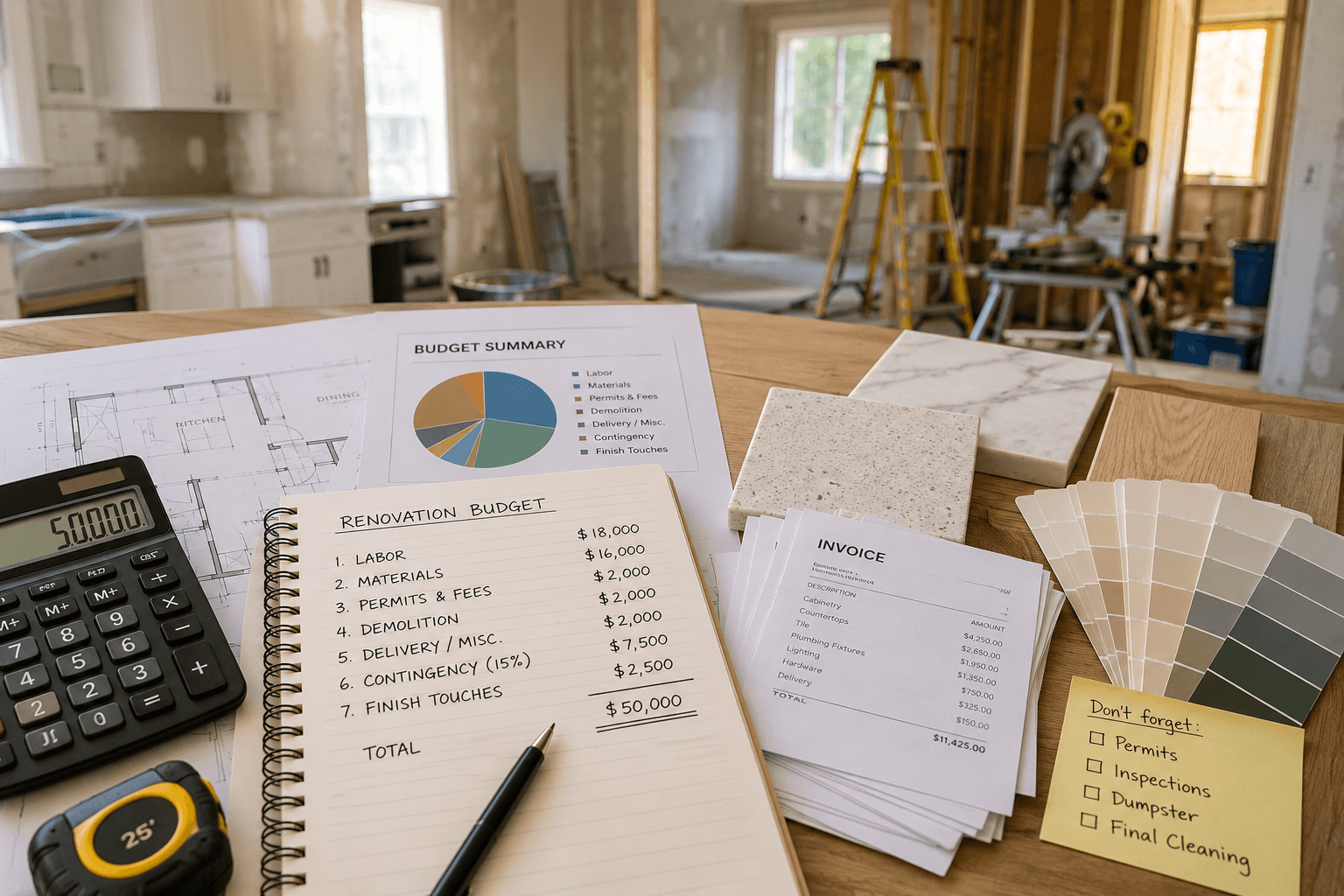
Here is a simple example of how a $50,000 renovation budget might be organized:
| Budget Category | Example Amount |
|---|---|
| Construction Labor | $18,000 |
| Materials | $16,000 |
| Permits & Professional Fees | $2,000 |
| Demolition & Disposal | $2,000 |
| Delivery & Miscellaneous | $2,000 |
| Contingency | $7,500 |
| Final Touches | $2,500 |
| Total | $50,000 |
This is only a planning example. Actual percentages vary significantly depending on the project, location and existing conditions.
Where Homeowners Commonly Overspend
Common budget problems include:
- selecting finishes before setting the budget
- upgrading too many items at once
- underestimating labor
- ignoring permit costs
- assuming allowances will cover premium products
- making late design changes
- starting without contingency
Many overruns are not caused by one large mistake.
They come from multiple smaller decisions made throughout the project.
For more examples, see Builzee’s 10 Home Renovation Mistakes That Cost Homeowners the Most.
How to Cut Cost Without Hurting the Project
Reducing cost does not always mean choosing the cheapest product.
Better options may include:
- keeping the existing layout
- avoiding unnecessary plumbing relocation
- selecting standard-size products
- simplifying custom details
- prioritizing visible upgrades
- keeping structural changes limited
- making selections early
- reducing last-minute changes
Cutting complexity can sometimes save more than downgrading materials.
Should You Spend More on High-ROI Projects?
If resale matters, it can help to understand which improvements may provide stronger value.
Exterior upgrades, entry doors, siding and certain smaller remodeling projects can sometimes produce better resale returns than major luxury renovations.
See Builzee’s Best Home Improvement ROI in 2026 guide for current planning data.
Bottom Line
A realistic home renovation budget should include more than the contractor’s base price.
Plan for labor, materials, permits, demolition, delivery, allowances, hidden conditions, change orders and final details.
The more complete the budget is before construction begins, the easier it becomes to make informed decisions when costs change.
Planning a Home Project?
Explore Builzee’s practical guides for renovation planning, costs, materials and project decisions.