DIY vs. Hiring a Contractor: Which Home Projects Should You Do Yourself?
DIY projects can save money, build useful skills and give homeowners more control over a renovation. But not every project is a good candidate for do-it-yourself work.
The decision between DIY vs hiring a contractor should be based on more than labor cost. Safety, permits, tools, experience, waterproofing, structural work and the consequences of a mistake all matter.
Some projects are relatively forgiving. Others can become expensive quickly if they are done incorrectly.
What Should You Consider Before Choosing DIY?
Before deciding to handle a project yourself, consider:
- your experience
- required tools
- safety risks
- permit requirements
- time available
- material cost
- difficulty of correcting mistakes
- warranty requirements
- whether the work affects structure, plumbing, electrical or waterproofing
A project that looks simple on the surface may involve hidden conditions once demolition starts.
GOOD TO KNOW
The best DIY projects are usually those where mistakes are easy to correct and do not create major safety, water or structural risks.
Projects That Are Often DIY-Friendly
Some home improvement projects are commonly manageable for homeowners with basic tools and patience.
Examples include:
- interior painting
- replacing cabinet hardware
- installing shelving
- assembling storage systems
- replacing simple trim
- landscaping
- installing certain floating floors
- replacing basic decorative fixtures
- minor drywall patching
Even with relatively simple projects, preparation often determines the final result.
1. Interior Painting and Cosmetic Updates
Painting is one of the more approachable DIY projects.
The actual painting is usually straightforward, but good results depend on:
- surface preparation
- patching
- sanding
- masking
- priming
- clean cut lines
- proper drying time
The financial risk is relatively low compared with plumbing, electrical or structural work.
If the finish does not turn out well, it can usually be corrected without damaging the building.
2. Cabinet Hardware and Simple Fixtures
Replacing cabinet pulls, knobs, towel bars and similar accessories can also be good DIY work.
The main challenge is keeping everything aligned and avoiding unnecessary holes.
Templates, careful measurement and pilot holes can make these projects much easier.
3. Flooring Projects
Some flooring systems are more DIY-friendly than others.
Floating laminate or certain luxury vinyl plank systems may be manageable for homeowners who carefully prepare the subfloor and follow manufacturer requirements.
More complex flooring work may involve:
- floor leveling
- moisture testing
- adhesive installation
- transitions
- stairs
- difficult layouts
Tile also requires more skill because layout, cutting, substrate preparation and grout quality all affect the finished result.
Projects That Often Require More Experience
Once a project involves the building envelope, water, electricity, gas or structural components, the consequences of mistakes become more serious.
These projects deserve additional caution.
4. Window Replacement
Window replacement can look simple because the finished product is relatively compact, but proper installation involves more than placing a window into an opening.
Important details may include:
- opening preparation
- flashing
- drainage
- shimming
- fastening
- air sealing
- exterior weatherproofing
- interior finishing
A poorly installed window can leak even when the window itself is high quality.
For more detail, see Builzee’s Window Installation Guide.
5. Bathroom and Shower Work
Bathroom renovations can combine several trades in a very small area.
A typical project may involve:
- demolition
- plumbing
- electrical
- waterproofing
- tile
- cabinetry
- countertops
- glass
- ventilation
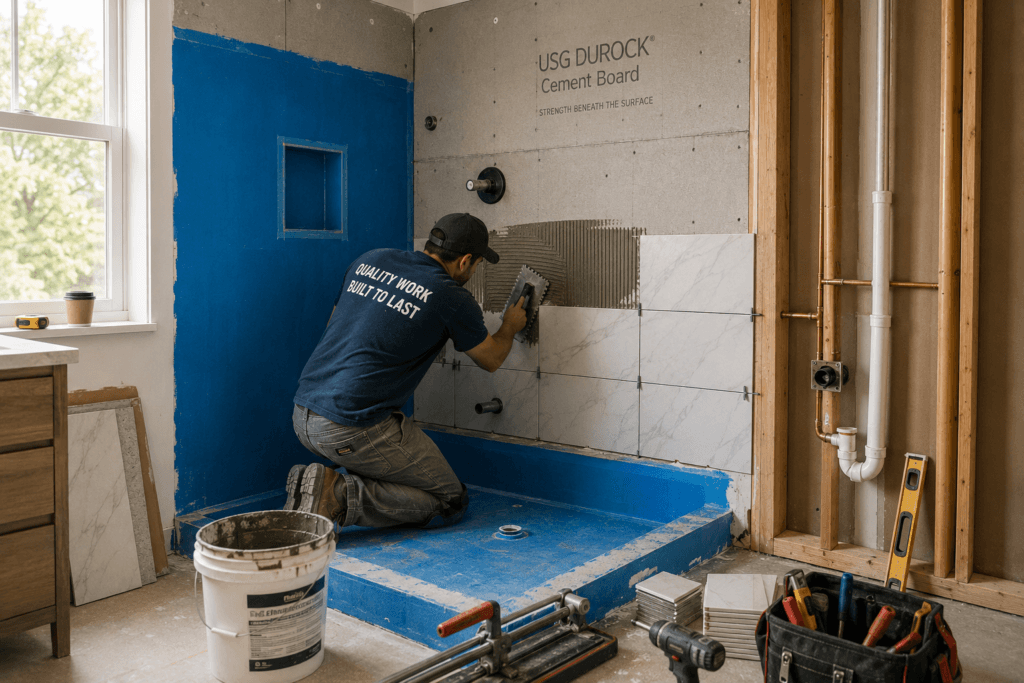
Shower waterproofing deserves particular attention. Small installation errors can allow water to enter walls or floors and may not become obvious until damage has already occurred.
DIY cosmetic work may be reasonable, but full shower reconstruction usually requires much more experience. Shower glass and enclosure selection also needs to be coordinated with the finished opening, waterproofing and surrounding fixtures.
6. Electrical Work
Electrical work has obvious safety risks and is regulated in many jurisdictions.
Replacing a decorative device may be very different from:
- adding circuits
- modifying wiring
- installing recessed lighting
- upgrading service
- changing an electrical panel
- working near energized equipment
The more complex the electrical scope becomes, the stronger the case for using a qualified professional.
7. Plumbing
Minor plumbing work may be manageable for some homeowners, but hidden leaks can create expensive damage.
Projects involving:
- supply piping
- concealed drains
- shower valves
- water heaters
- gas piping
- major fixture relocation
should be approached carefully.
A connection can appear successful initially and still leak later inside a wall or floor. For bathroom projects, plumbing, electrical and ventilation should be coordinated together before walls and finishes are closed.
8. Structural Changes
Structural work is generally not a good place to experiment.
Removing walls, enlarging openings, cutting framing or modifying beams can affect how loads are transferred through the building.
Structural projects may require:
- engineering
- temporary shoring
- permits
- inspections
- specialized hardware
- precise installation
If you are unsure whether a wall is structural, do not assume it is safe to remove.
9. Roofing
Roofing combines technical installation with significant fall risk.
Even a relatively small roofing project can involve:
- underlayment
- flashing
- penetrations
- drainage
- edge conditions
- ventilation
A roof that appears visually acceptable can still leak if flashing or waterproofing details are wrong.
Working at height adds another reason many homeowners choose professional installation.
When Permits Change the Decision
Permit requirements can also affect whether DIY makes sense.
Depending on the jurisdiction and scope, permits may be required for work involving:
- structural changes
- electrical systems
- plumbing
- mechanical systems
- windows and doors
- additions
- major remodeling
Some jurisdictions allow homeowners to perform certain permitted work themselves, while others may impose additional requirements.
Before starting, confirm the local rules.
You can also review Builzee’s Home Renovation Permits guide.
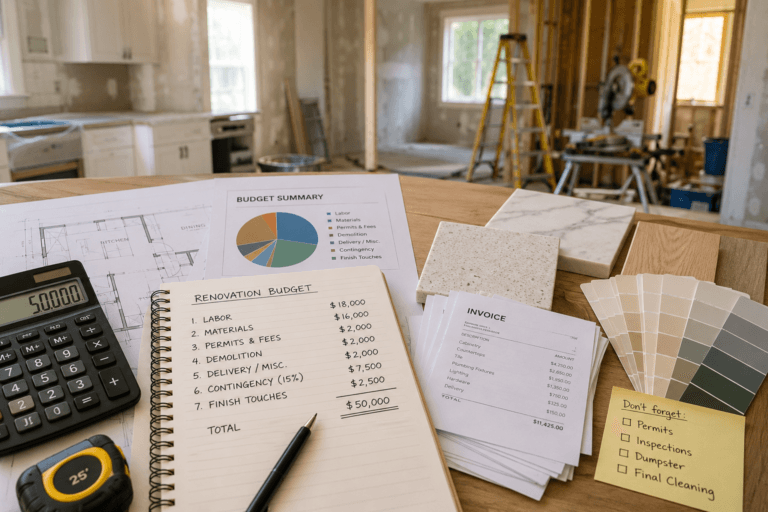
Is DIY Actually Cheaper?
DIY can reduce labor cost, but labor is only one part of a project.
Homeowners may still need to purchase:
- tools
- safety equipment
- delivery
- disposal
- specialty fasteners
- adhesives
- waterproofing materials
- replacement materials for mistakes
Time also has value.
A professional crew may complete work in a day that takes a homeowner several weekends.
That does not mean DIY is a bad choice. It simply means the real savings should be evaluated realistically.
Hidden Costs of DIY
Some common hidden costs include:
- buying tools that are rarely used again
- ordering extra material
- damaging finished materials
- correcting layout mistakes
- failed inspections
- water damage
- schedule delays
- hiring a contractor later to redo the work
DIY savings are greatest when the work is relatively low risk and the homeowner already has the necessary tools and experience.
DIY vs Contractor Comparison
| Project | DIY Suitability | Main Concern |
|---|---|---|
| Interior painting | High | Preparation and finish quality |
| Cabinet hardware | High | Layout and alignment |
| Floating flooring | Moderate | Subfloor condition |
| Tile backsplash | Moderate | Layout and cutting |
| Window replacement | Low–Moderate | Flashing and waterproofing |
| Shower remodel | Low | Waterproofing |
| Plumbing relocation | Low | Leaks and code |
| Electrical panel work | Very Low | Safety and code |
| Structural wall removal | Very Low | Engineering and permits |
| Roofing | Very Low | Fall risk and weatherproofing |
Important: This is a general planning guide. Project difficulty, regulations and safety requirements vary by property and jurisdiction.
When Hiring a Contractor Makes Sense
Hiring a contractor generally makes more sense when a project involves:
- significant safety risk
- structural work
- concealed plumbing
- complex electrical work
- waterproofing
- specialized equipment
- permitting and inspections
- tight schedules
- expensive finished materials
Professional installation can also be valuable when warranties depend on approved installation methods.
Before hiring, compare scope carefully rather than looking only at the lowest price.
See Builzee’s guide on How to Compare Contractor Quotes Before Starting a Home Renovation.
Should You Combine DIY and Professional Work?
A renovation does not have to be entirely DIY or entirely contractor-built.
A hybrid approach can work well.
For example, a homeowner might handle:
- demolition
- painting
- cabinet hardware
- cleanup
- simple finish work
while licensed or experienced professionals handle:
- electrical
- plumbing
- waterproofing
- structural work
- complex installation
This can reduce cost while keeping higher-risk portions of the project in experienced hands.
Bottom Line
The decision between DIY vs hiring a contractor comes down to risk, skill, time and the consequences of getting something wrong.
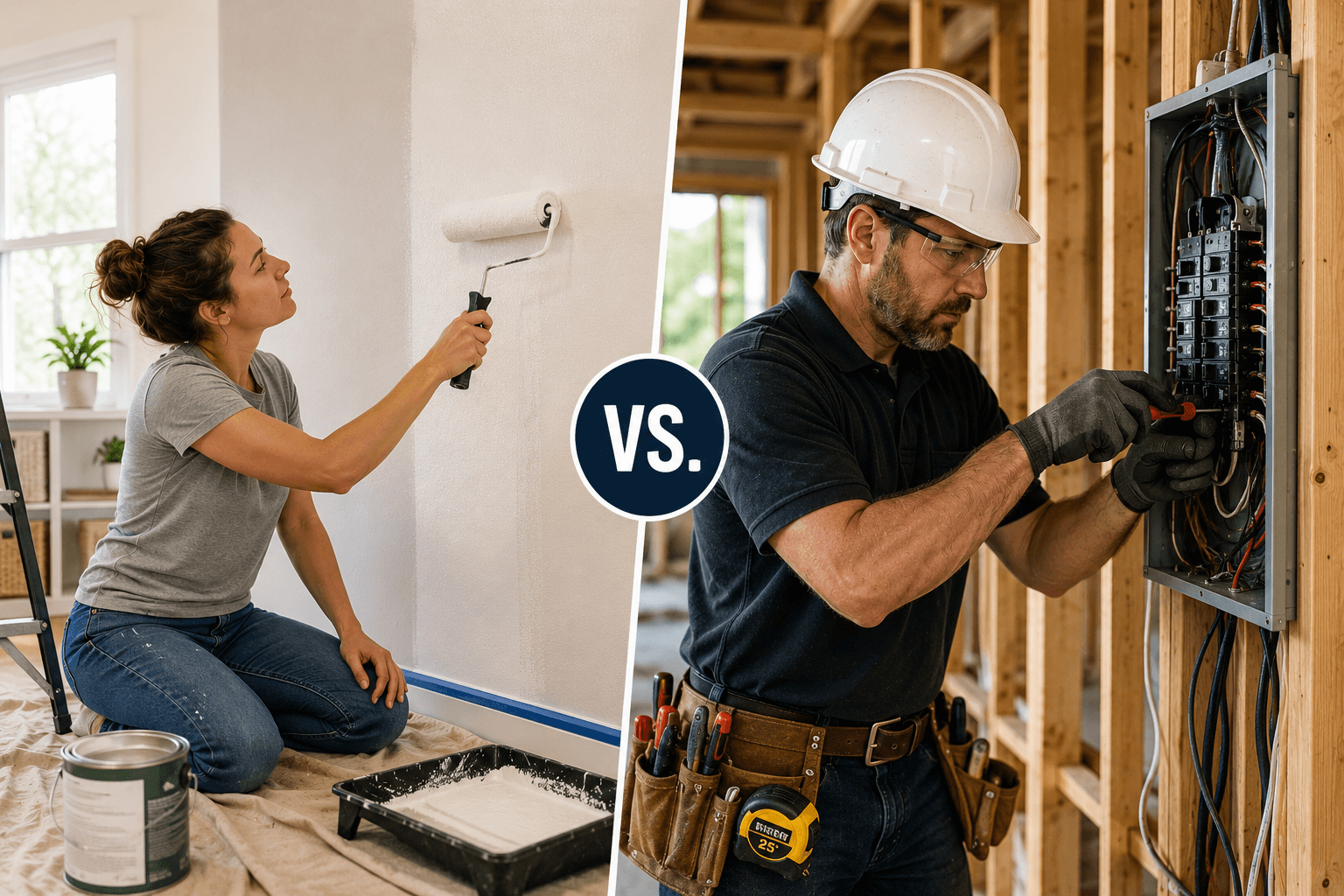
Painting a bedroom and rebuilding a shower are both home improvement projects, but they carry very different levels of technical and financial risk.
DIY makes the most sense when the work is manageable, mistakes are easy to correct and safety risks are limited.
When a project involves structure, electricity, plumbing, waterproofing or major building systems, professional help can often protect both the home and the budget.
Planning a Home Project?
Explore Builzee’s practical guides for project planning, materials, costs, installation and renovation decisions.