
FLOORING TYPES GUIDE
Which Flooring Type Is Right for Your Home?
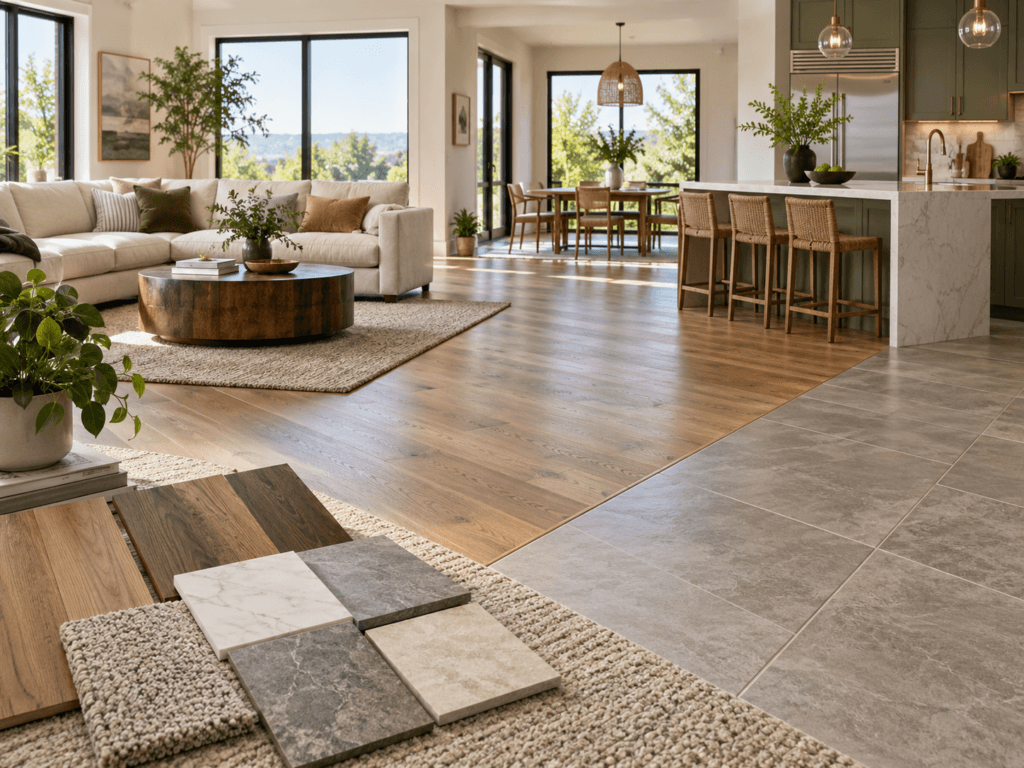
Different flooring types and materials perform very differently depending on the room, moisture exposure, traffic, maintenance and the look you want. Compare the most common flooring types before deciding what works best for your home.
FLOORING TYPES
Which Flooring Type Is Right for Your Home?
Choosing between different flooring types and materials is about more than appearance. Moisture, foot traffic, pets, maintenance, comfort and the condition of the subfloor can all affect which material makes sense in a particular room.
Some floors prioritize the look and feel of natural wood. Others are designed around water resistance, easier maintenance or lower upfront cost. Understanding the differences before buying can help you avoid using the wrong material in the wrong space.
01 — HARDWOOD FLOORING
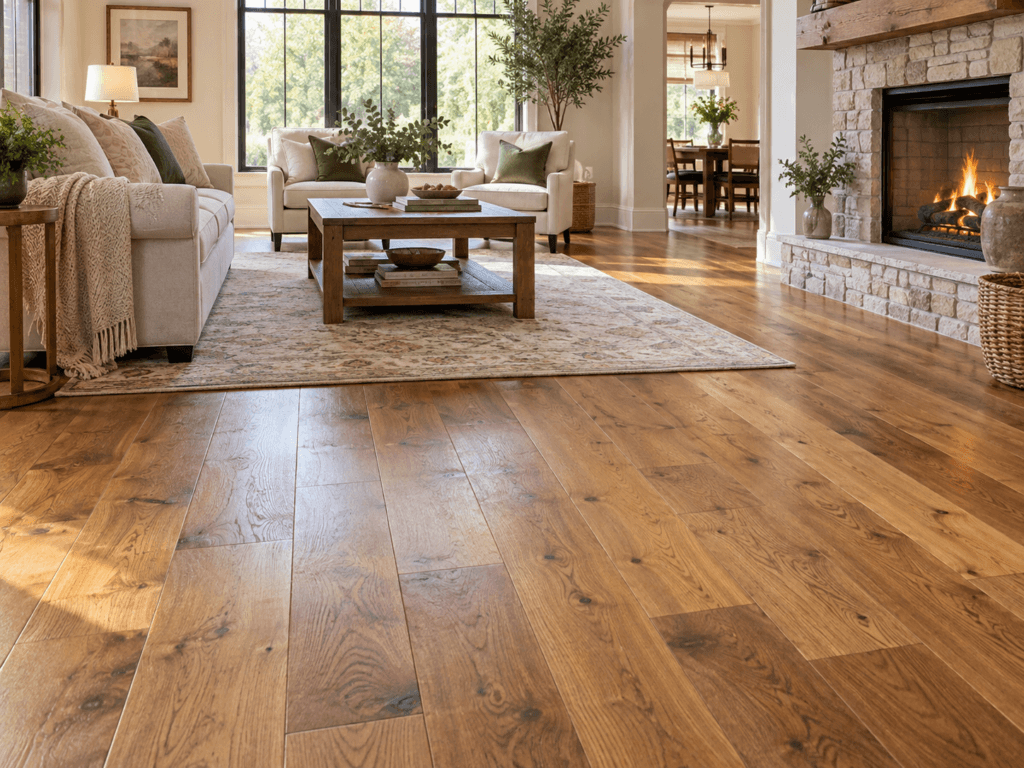
Hardwood flooring is made from solid pieces of wood, typically with tongue-and-groove edges that are nailed or stapled to a suitable wood subfloor. Oak, maple, hickory and walnut are among the common species used in residential flooring. One of hardwood’s biggest advantages is that the wear surface is real wood throughout. Depending on the product, condition and previous refinishing, many solid hardwood floors can be sanded and refinished as they age.
BEST FOR
Living rooms, dining rooms, bedrooms, hallways and other dry interior spaces where natural appearance and long-term service life are priorities.
GOOD TO KNOW
Wood responds to changes in moisture and humidity. Excess moisture can cause movement, cupping or other damage, so hardwood is generally not the first choice for bathrooms or areas with recurring moisture. Installation also requires the subfloor and jobsite conditions to be appropriate for the particular flooring product.
02 — ENGINEERED HARDWOOD
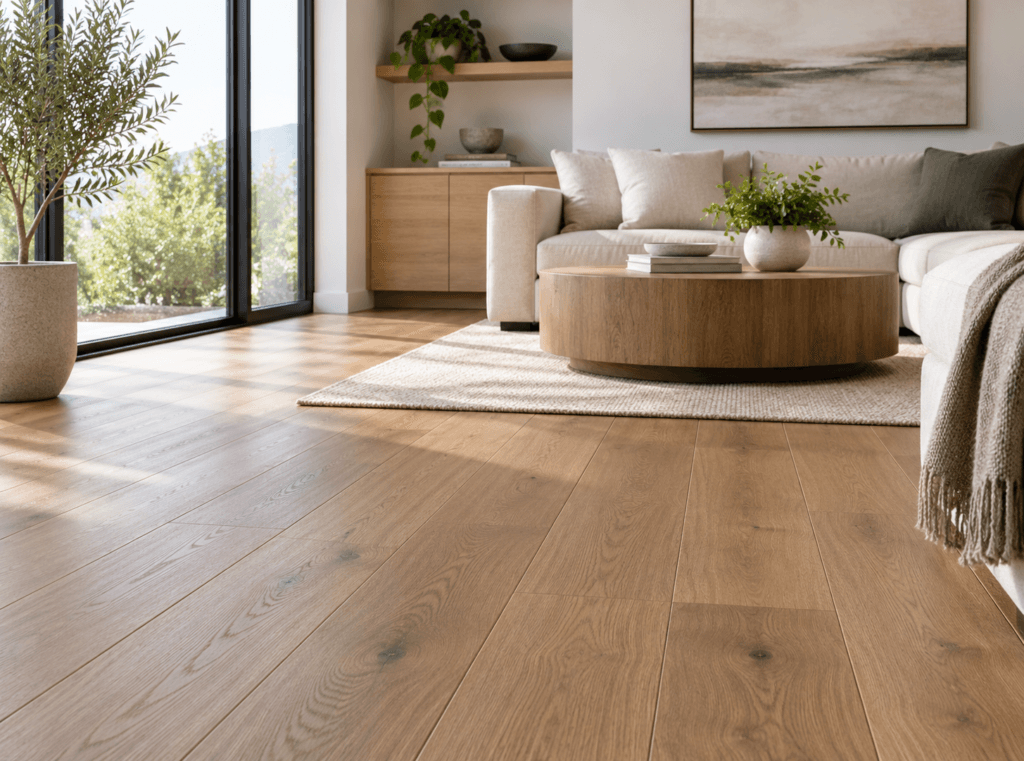
Engineered hardwood uses a real wood wear layer bonded over multiple layers of plywood or another stable core material. From the surface, a quality engineered floor can look very similar to solid hardwood. The difference is underneath. Its layered construction generally provides better dimensional stability than a comparable solid wood plank, which can make engineered wood suitable for a wider range of installation conditions. Depending on the product, it may be installed by floating, gluing or fastening it to the subfloor.
BEST FOR
Living areas, bedrooms and open-plan spaces where homeowners want real wood but need more installation flexibility than traditional solid hardwood provides.
GOOD TO KNOW
Engineered hardwood products vary considerably. The thickness of the real wood wear layer affects whether the floor can be sanded and refinished in the future. Some products may allow refinishing, while others have a thin veneer intended primarily for the original factory finish. Check the manufacturer’s specifications rather than assuming all engineered wood performs the same way.
03 — LUXURY VINYL PLANK (LVP)
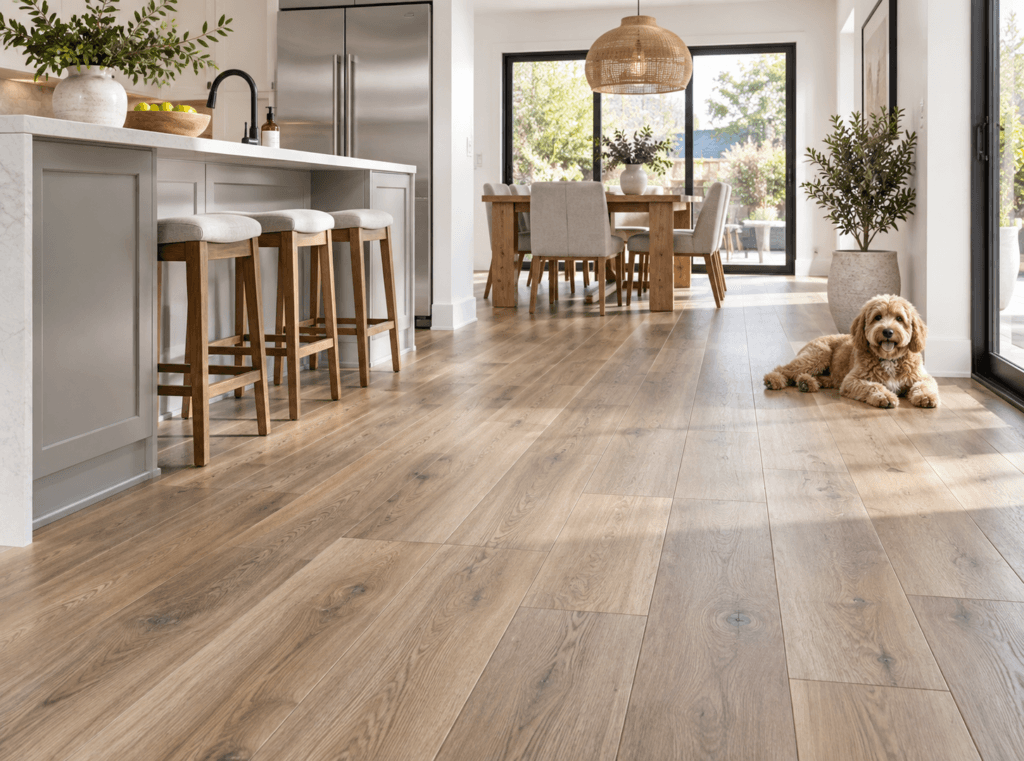
Luxury vinyl plank is a resilient flooring product designed to imitate wood while using a synthetic layered construction. Many modern LVP products use rigid cores and photographic wear layers that can reproduce wood grain, plank variation and texture surprisingly well. Most residential LVP installations use a click-lock floating system, although glue-down products are also available. One of its major advantages is its resistance to everyday moisture, which has made it popular in kitchens, basements and busy households.
BEST FOR
Kitchens, basements, family rooms, rental properties, homes with pets and other spaces where easy maintenance and moisture resistance are important.
GOOD TO KNOW
The word waterproof is commonly used when marketing vinyl flooring, but that typically describes the flooring material itself. Water can still reach walls, transitions or the subfloor through perimeter gaps or other openings. Installation requirements, subfloor conditions and manufacturer instructions still matter. Wear-layer quality, core construction and locking systems also vary between products.
04 — LAMINATE FLOORING
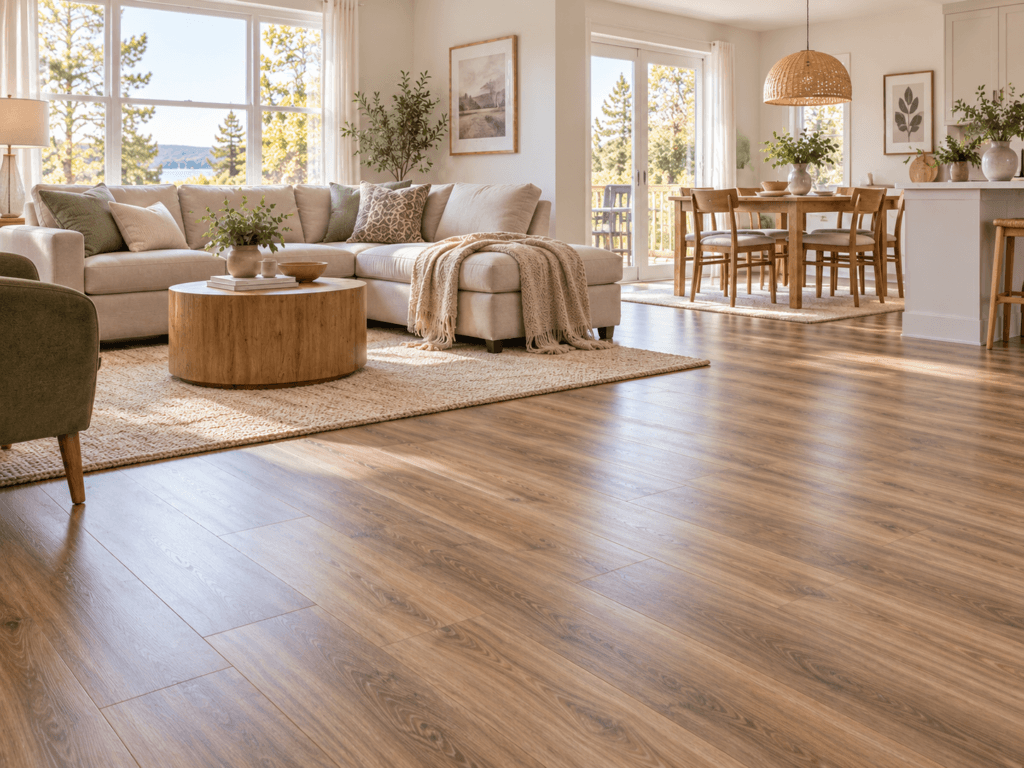
Laminate flooring uses a manufactured core with a decorative image layer and a durable transparent wear surface. Like LVP, many laminate floors use click-lock edges and are installed as floating floors. Modern laminate can reproduce wood texture and grain very effectively, and it is often chosen as a lower-cost alternative to hardwood or engineered wood. Laminate surfaces can also offer good resistance to scratches and everyday wear.
BEST FOR
Bedrooms, living rooms, offices and other interior areas where homeowners want the appearance of wood without the cost of natural hardwood.
GOOD TO KNOW
Moisture performance varies significantly between laminate products. Some newer products are specifically designed for improved water resistance, while others remain vulnerable to swelling if moisture reaches the core. If you plan to use laminate in a kitchen or other area where spills are likely, check the manufacturer’s water-resistance claims, installation requirements and warranty limitations carefully.
05 — TILE FLOORING
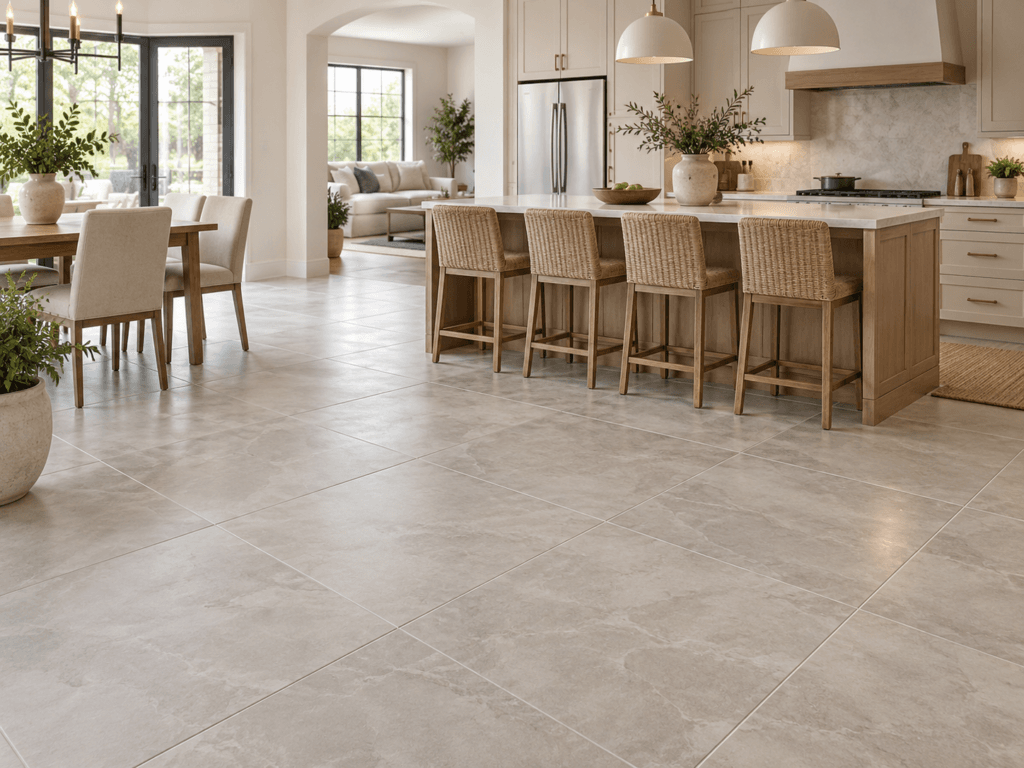
Tile is one of the most durable flooring options available and works particularly well in areas exposed to moisture. Porcelain and ceramic are the most common residential choices, while natural stone such as marble, limestone, slate and travertine may also be used. Tile can imitate stone, concrete, wood and other materials while providing a hard, easy-to-clean surface. Unlike floating flooring, tile depends heavily on proper substrate preparation and installation.
BEST FOR
Bathrooms, kitchens, laundry rooms, entries, mudrooms and other areas where moisture resistance and durability are priorities.
GOOD TO KNOW
Tile itself can be extremely durable, but the finished floor is only as good as the surface underneath it. Substrate movement, poor preparation or improper installation can contribute to cracked tile or grout. Tile is also harder and colder underfoot than wood, vinyl, laminate or carpet. Area rugs or radiant floor heating are sometimes used where additional comfort is desired.
06 — CARPET
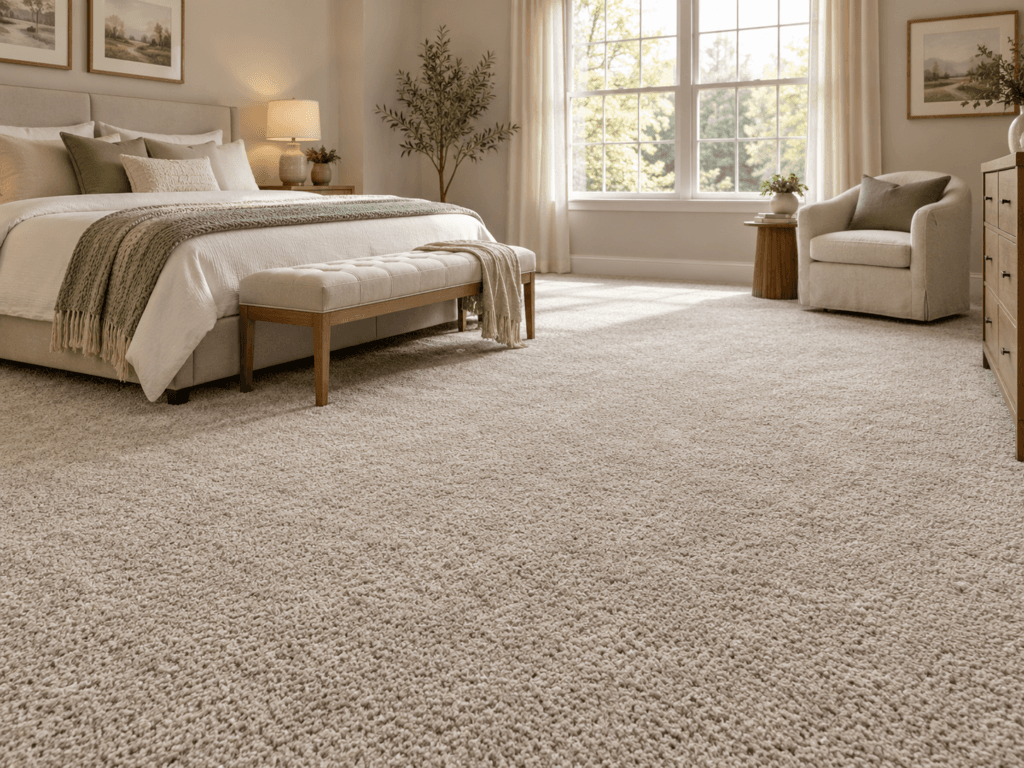
Carpet provides softness, warmth and sound absorption that hard-surface flooring cannot match. Residential carpet is available in a wide range of fibers, pile heights, textures and densities, and the padding underneath can have a significant effect on how the finished floor feels. While carpet has become less common in kitchens and main living areas, it remains widely used in bedrooms and other spaces where comfort matters more than moisture resistance.
BEST FOR
Bedrooms, home offices, upstairs rooms, media rooms and other dry spaces where softness, warmth and sound control are priorities.
GOOD TO KNOW
Carpet generally requires more frequent cleaning than hard-surface flooring and can retain dust, dirt and stains within the fibers. Fiber type, construction and pad quality all affect durability. For homes with pets, children or heavy traffic, look beyond color and texture and compare stain resistance, fiber construction and the manufacturer’s maintenance requirements.
COMPARE DOOR TYPES
Compare Flooring Types at a Glance
| Flooring Type | Best For | Moisture Resistance | Maintenance |
|---|---|---|---|
| Hardwood | Living rooms, bedrooms and main living areas | Low | Moderate |
| Engineered Hardwood | Living spaces and areas where greater dimensional stability is useful | Moderate | Moderate |
| Luxury Vinyl Plank | Kitchens, basements, pets and busy households | High (product dependent) | Easy |
| Laminate | Bedrooms, living areas and budget-conscious projects | Moderate (product dependent) | Easy |
| Tile | Bathrooms, kitchens, entries and wet areas | High | Easy to Moderate |
| Carpet | Bedrooms, offices and spaces where softness matters | Low | Moderate |
ESTIMATE MATERIALS
Once you’ve chosen a flooring type, use the Flooring Quantity Calculator to estimate how much material you’ll need based on room dimensions and your selected waste allowance.
GOOD TO KNOW
Moisture resistance, durability and installation requirements can vary significantly within each flooring category. A material advertised as waterproof or water resistant does not automatically make the entire floor assembly waterproof. Seams, perimeter conditions, transitions, subfloor preparation and the manufacturer’s installation requirements can all affect how the finished floor performs. The room itself matters too. A material that works well in a bedroom may not be the best choice for a bathroom, basement or busy kitchen. That is why flooring should be selected based on both the material and where it will actually be installed.