

DIY vs. Hiring a Contractor: Which Home Projects Should You Do Yourself?
DIY vs hiring a contractor is not simply a labor-cost comparison. The more important questions are what happens if the work goes wrong, whether the task affects concealed building systems and whether you can complete it safely, legally and to the required standard.
Painting a bedroom and replacing an exterior window can both look straightforward from the finished surface. Their hidden risks are very different. This guide helps you decide what to do yourself, what to leave to qualified professionals and where a hybrid approach can work.
The Four-Part DIY Decision Test
If a mistake stays visible, DIY is often easier to evaluate.
A crooked cabinet handle or poor paint cut line is usually simple to repair. A hidden plumbing leak, failed shower waterproofing, unsafe wiring or incorrect structural cut can cause damage that remains unseen until the repair is expensive.
Low consequence
Painting, shelving, cabinet hardware, minor drywall patching and simple decorative work when no hazards are present.
Moderate risk
Floating floors, tile backsplash, trim or minor fixture changes after evaluating substrate, tools, local rules and access.
High consequence
Structure, concealed plumbing, complex electrical work, shower waterproofing, roofing, gas systems and major exterior weatherproofing.
- Safety: Could a mistake cause injury, shock, fire, fall or structural failure?
- Hidden damage: Could water or air leakage remain concealed until framing and finishes deteriorate?
- Regulation: Does your jurisdiction require a permit, inspection, license or specialized testing?
- Recoverability: Could you correct the work without opening walls or paying twice?
If the first two questions identify substantial risk, low material cost does not make the work a good DIY candidate.
DIY vs Contractor: Project-by-Project
| Project | DIY suitability | Main concern |
|---|---|---|
| Interior painting | Often high | Prep, masking, finish quality and safe handling |
| Cabinet hardware / simple trim | Often high | Layout, fastening, hidden services |
| Minor drywall patch | Often high | Matching finish and checking for moisture source |
| Floating LVP or laminate | Moderate | Subfloor flatness, moisture, transitions, stairs |
| Tile backsplash | Moderate | Layout, cuts, substrate and protected adjacent surfaces |
| Window replacement | Low to moderate | Flashing, drainage, sealing and exterior finish integration |
| Shower reconstruction | Generally low | Waterproofing, slopes, penetrations and inspections |
| Plumbing or electrical relocation | Low | Concealed leaks, code, safety and permit requirements |
| Structural wall modification | Very low | Engineering, load path, temporary support |
| Roofing | Very low | Fall risk, flashing and water management |
Suitability ratings are general planning judgments, not permission to perform regulated work. Requirements depend on the property and local jurisdiction.
Projects often worth doing yourself
Interior painting, simple shelving, cabinet pulls and minor finish work often offer meaningful savings because the materials are accessible and errors are visible. Even these tasks require sound surface prep, proper anchors, protective equipment and time to do them carefully.
Some floating flooring can also be reasonable DIY work. But verify subfloor condition, flatness, moisture and installation instructions before opening the boxes. Stairs, uneven substrates and difficult transitions quickly increase the skill requirement.
Projects where scope expands
Window replacement seems compact but involves sill preparation, flashing, drainage, anchorage and air sealing. Shower work combines several systems in a small area. Structural framing, electrical service and roofing introduce especially high consequences.
See Builzee’s contractor quote comparison guide if you decide to hire out the high-risk portion.
Why Shower and Waterproofing Work Deserve Special Caution
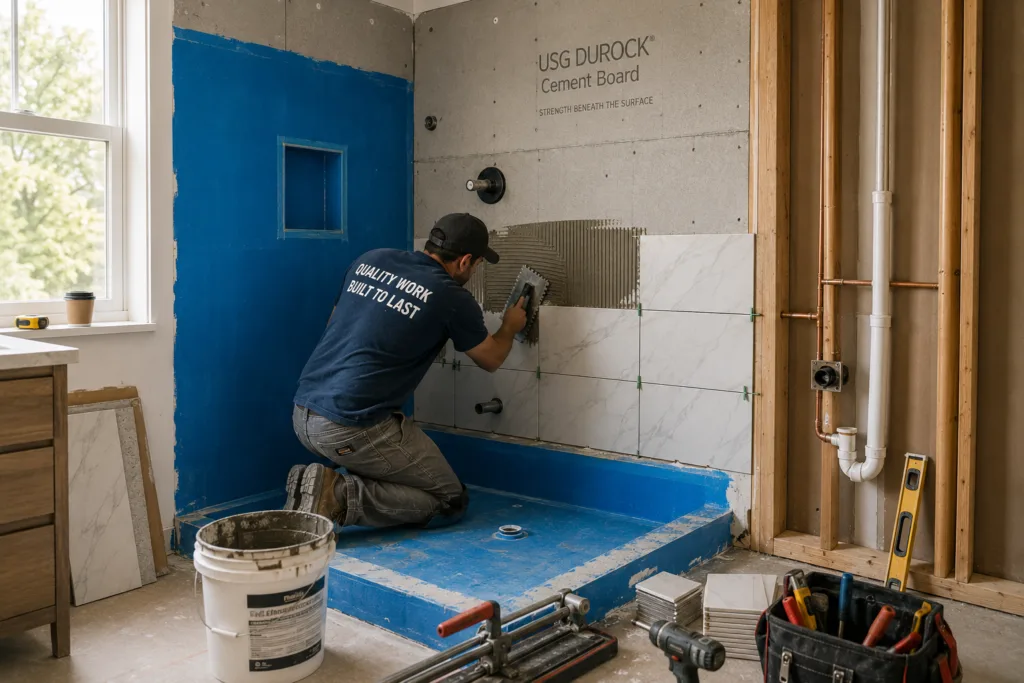
Tile and grout are finish materials, not a substitute for a complete waterproofing system. A shower rebuild requires coordinated substrate selection, membrane continuity, drain connection, penetrations, slope and curing or testing requirements according to the approved system.
Small errors around corners, transitions, valves or the shower base may not be visible once tile is installed. Water damage can then spread inside concealed framing.
Learn what to verify in Builzee’s Waterproofing & Tile Guide. Product instructions and local code requirements govern actual installation.
What about roofing and structural changes?
Roofing adds serious fall exposure along with weatherproofing details, while altering load-bearing walls can affect the building’s structural load path and demand engineered design, permits and temporary support. These are generally not good trial-and-error projects. OSHA’s residential fall-protection information illustrates the hazards professionals must manage; it does not make roof work safe for an untrained homeowner.
Is DIY Actually Cheaper? Use a Complete Budget
DIY saves paid installation labor, but it can introduce tool purchases, disposal, delivery, extra material, missed work time and rework. Compare the complete cost of each route, not only the product price.
Illustrative: simple painting project
Example only, not a market quote. Your home size, paint system and tools can change the result. Add the value of your time and any cost of correcting errors before comparing with an installed bid.
Also budget for
- Tools you do not own
- Safety and dust control
- Material waste and extra trips
- Rental equipment
- Delivery and disposal
- Permits and inspections where applicable
- Schedule conflicts with professional trades
- Potential repair or rework
For a multi-trade renovation, the ability to finish on schedule can be worth as much as the apparent hourly labor savings.
Combine DIY and Contractor Work Carefully
A hybrid approach can protect the high-risk parts of the house while keeping smaller finish tasks affordable. But it only works when responsibilities, sequencing and warranty boundaries are clear.
Cosmetic prep and finishes
Painting, cabinet hardware, limited clean-up and minor finish repairs, where hazards and contract responsibilities allow.
Specialty and concealed systems
Electrical, plumbing, structural modifications, roofing, flashing and engineered waterproofing.
Agree on handoffs
Who protects adjacent surfaces, orders materials, handles demolition, obtains inspections, schedules trades and owns defects?
Before splitting the work
Ask your contractor whether owner-performed prep or demolition affects their warranty, required inspections, substrate acceptance or completion date. Put the split scope and exclusions in writing. Uncontrolled demolition can create additional cost, hazardous dust or unexpected structural work.
When to hire a contractor
Hire professional help when the project involves substantial safety risk, hidden systems, expensive finished materials, hard-to-correct defects, special equipment or complicated permitting. Verify license and insurance requirements where they apply, and compare scope and exclusions alongside price.