
How to Budget for a Home Renovation Without Getting Surprised
A realistic home renovation budget begins with the complete amount you can spend, not the first contractor number you receive. Construction, design, permits, delivery, finishes, taxes, allowances and contingency all have to fit inside that total.
Homeowners often overspend through a series of smaller decisions rather than one dramatic mistake. The solution is to separate estimated costs, committed costs and remaining reserve before demolition starts, then update those figures as selections and changes are approved.
What Does a Complete Home Renovation Budget Look Like?
Suppose your absolute spending limit is $50,000. That is the total project ceiling, including any contingency, not the amount you should immediately authorize in the contractor’s construction contract.
Includes a $7,500 contingency reserve (15% of the total example budget). That reserve is not an upgrade allowance.
The proportions are a worked example, not industry-standard percentages. Scope and local market change the mix.
| Cost category | Illustrative allowance | What it covers |
|---|---|---|
| Construction labor | $18,000 | Trades and installation labor |
| Materials | $16,000 | Products and core supplies |
| Permits & professional fees | $2,000 | Permit fees, design or engineering as applicable |
| Demolition & disposal | $2,000 | Removal and hauling |
| Delivery & miscellaneous | $2,000 | Freight, accessories and minor costs |
| Contingency reserve | $7,500 | Unforeseen conditions and approved changes |
| Final touches | $2,500 | Hardware, small repairs, touch-ups and cleaning |
| Total project cap | $50,000 | Everything must fit inside this ceiling |
For a $50,000 cap in this scenario, the planned costs before reserve are $42,500. A 15% contingency may be reasonable in some projects, but the right reserve depends on scope certainty, building age, invasive demolition and financial risk.
Which Costs Belong in Your Renovation Budget?
Hard costs: building the work
- Demolition, hauling and disposal
- Trades, labor and supervision
- Materials, fixtures and equipment
- Deliveries, freight and taxes
- Consumables, fasteners and sealants
- Temporary protection and jobsite cleanup
- Interior and exterior finish restoration
Soft and indirect costs
- Plans, design and engineering
- Permits, tests and inspections
- Temporary accommodations or storage
- Financing, insurance and administrative fees where applicable
- Owner selections and approved upgrades
- Contingency for unforeseen conditions
- Final accessories and punch-list items
These are planning categories, not a rule that every expense must appear as a separate contractor line item. Some proposals bundle several items together. The important question is whether someone has priced, included or explicitly excluded each required part of the job.
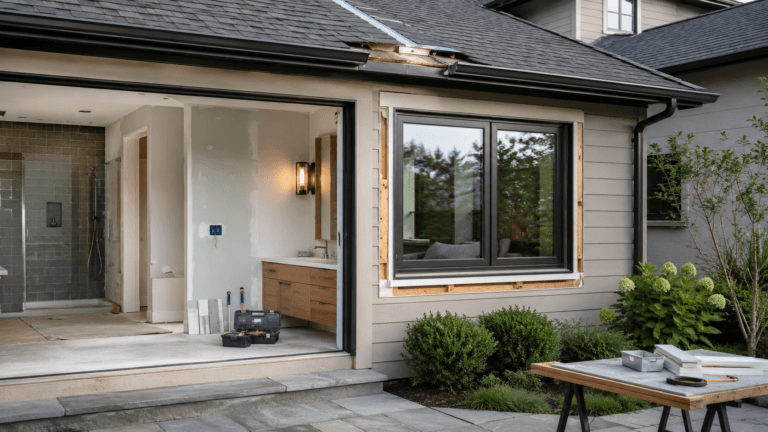
For example, an interior bathroom remodel might include plumbing rough-in, new tile, a custom shower glass enclosure, waterproofing, dust containment and fixture upgrades. A kitchen renovation might instead emphasize cabinets, countertops, appliances and electrical work. Even if the total cost looks similar, the financial risks and categories are not interchangeable.
One helpful method is to label each category as confirmed, allowance, excluded or unknown. Confirmed items have defined scope and pricing. Allowances depend on future selections. Excluded items need another budget owner. Unknown items should be investigated or supported by reserve funds before signing.
Allowances, Change Orders and the Small Costs That Add Up
An allowance is a budgeted placeholder for something not yet selected. Examples include tile, countertops, plumbing fixtures, lighting and door hardware. An allowance can make an initial proposal look attractive even when it is too low to cover the products you will actually choose.
A change order should identify the reason for the change, added or deleted scope, price adjustment, schedule impact and written authorization. Do not rely on casual verbal approvals. You can compare scope language in Builzee’s contractor quote comparison guide.
Keep an owner decision log with the original allowance, selected item, difference, approval date and the party responsible for ordering. This makes material upgrades visible before they turn into unexpected invoices. It also helps separate changes caused by a homeowner request from changes necessary to correct concealed existing conditions.

Look for the expenses that are easy to overlook: shipping charges, inspection fees, demolition protection, fasteners, sealants, transitions, mirrors, towel bars, exterior touch-ups and final cleaning. None is necessarily large, but together they can consume the budget intended for the last phase of the project.
Plan the Payment Schedule, Not Just the Grand Total
A renovation can be within budget on paper and still create cash pressure if payment dates are not coordinated with available funds. Before work starts, compare the signed agreement, deposits, milestone payments, owner-purchased materials and the amount you must keep available for approved changes.
Before signing
- Confirm what’s included in the contract price
- List products with allowances or pending selections
- Verify permits and inspection responsibility
- Clarify when payments become due
During construction
- Track paid-to-date versus committed balance
- Record approved change orders separately
- Update actual material selections
- Protect the remaining contingency
Payment terms and legal limits vary by jurisdiction and project type. The general principle is to document the schedule and match payments to the agreed milestones rather than improvising as invoices arrive. Keep receipts and contractor change approvals in one place.
How to Reduce Renovation Cost Without Damaging the Project
Value engineering is most effective when it removes complexity instead of quietly lowering performance. Keeping existing plumbing locations, using standard-size products, limiting structural changes and finalizing materials early can have a larger effect than switching every finish to the least expensive option.
- Preserve the layout where it works. Moving drains, walls and ducts can affect multiple trades.
- Complete specifications early. Late finish decisions can cause delays, substitutions and rework.
- Separate must-have work from optional upgrades. Safety, water intrusion and structural repairs should not be treated like elective cosmetic finishes.
- Compare complete bids. A lower proposal may simply exclude drywall, disposal, waterproofing or final cleanup.
- Use your reserve deliberately. Apply contingency to genuine unknowns and approved necessary changes, not as the first source for design upgrades.
For a project-first approach, start with How to Plan a Home Renovation. If resale value is your primary goal, also review Home Improvement ROI, but do not let national resale data override urgent repairs or personal needs.
Home Renovation Budget Checklist
- Set a total spending cap before selecting finishes
- Confirm demolition, disposal and temporary protection
- Confirm permits, design and engineering responsibility
- Review material selections against allowances
- Include tax, delivery and small accessories
- Identify likely hidden-condition risks
- Document changes before approving them
- Track payments, commitments and remaining balance
- Leave room for final finishes and cleanup
- Keep contingency protected until it is needed
A Reliable Budget Is a Living Project Document
The budget should show the total cap, current scope, committed amounts, approved changes and remaining contingency. It should be detailed enough to compare estimates before construction and simple enough to update when decisions are made.