How Long Does a Roof Last? Lifespan by Roofing Material
A roof does not have a single expiration date.
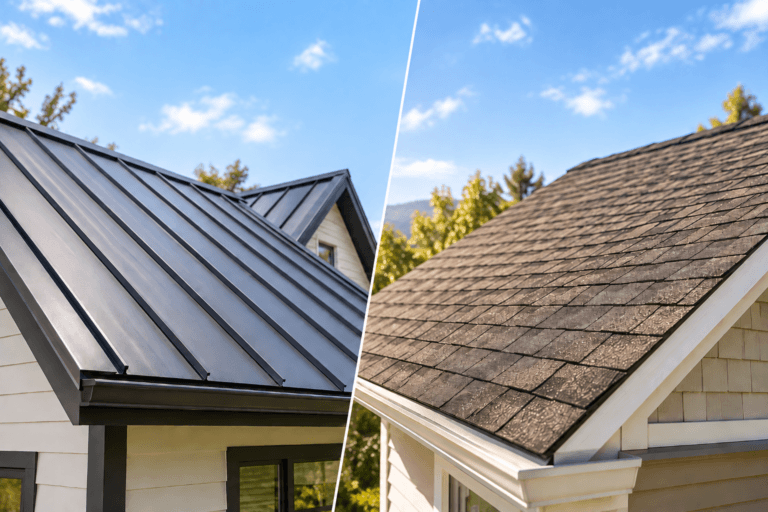
An asphalt shingle roof may be ready for replacement after a couple of decades, while a properly installed metal, tile or slate roof can remain serviceable for many decades longer. Even two roofs made from the same material can age very differently depending on climate, installation quality, attic ventilation, drainage and maintenance.
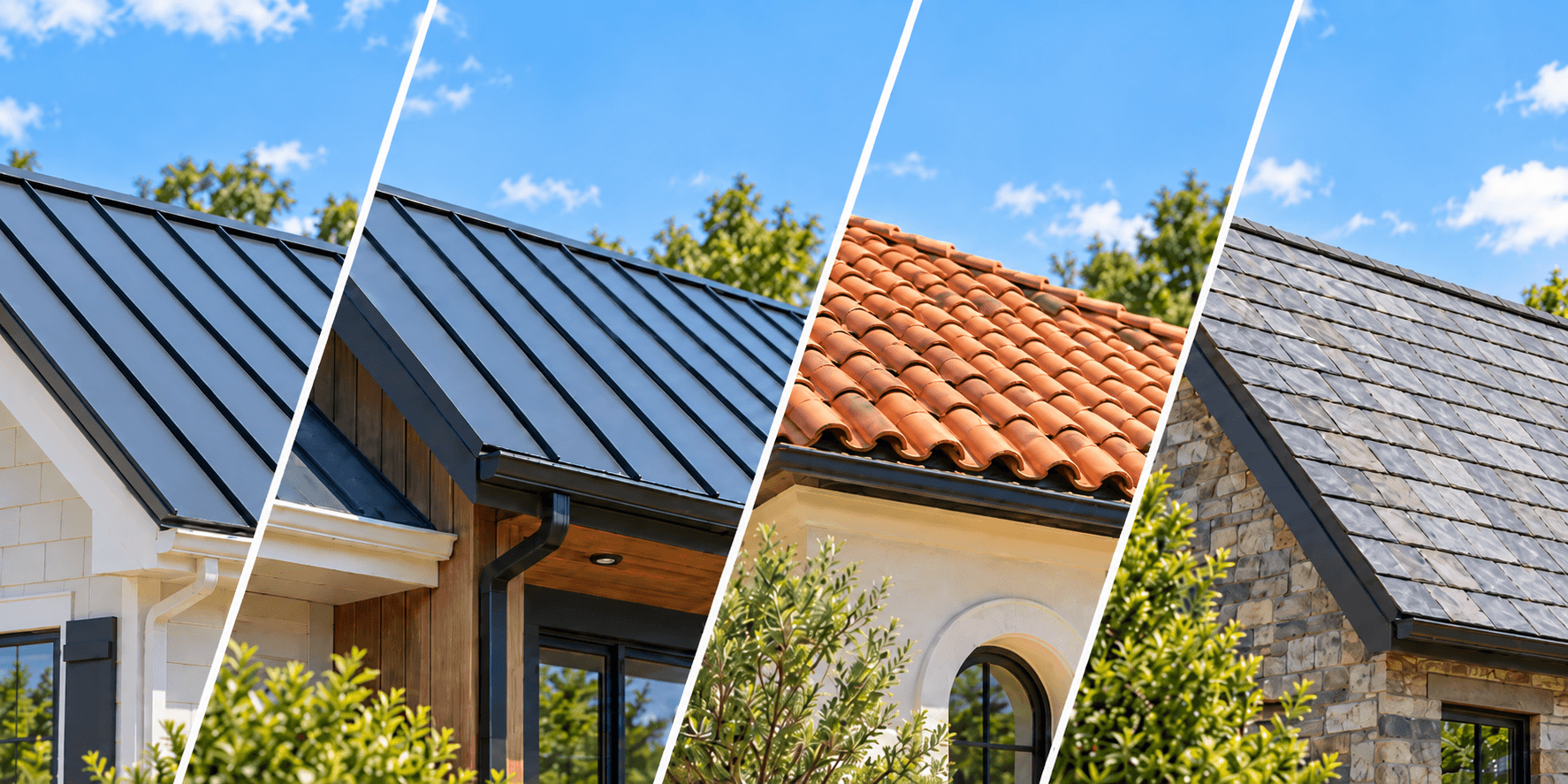
As a general rule, most homeowners can expect a roof to last anywhere from 20 years to well over 100 years, depending largely on the material.
The age of the roof is useful information, but it should never be the only reason to repair or replace it. Condition matters more.
If you are comparing materials for an upcoming project, start with Builzee’s Roof Types & Materials guide for a closer look at how the major roofing systems differ.
Roof Lifespan at a Glance
| Roofing Material | Typical Lifespan |
|---|---|
| Asphalt shingles | 20–30+ years |
| Metal roofing | 40–70+ years |
| Clay or concrete tile | 50–100+ years |
| Natural slate | 75–150+ years |
| Synthetic or composite roofing | 30–50+ years |
| Flat or low-slope roofing | 15–30+ years |
These are planning ranges, not guarantees. Product quality, climate, roof design and installation can move the actual service life considerably in either direction.
The National Roofing Contractors Association makes the same point: useful roof life depends on factors including local conditions, proper design, material quality, installation and maintenance.
How Long Do Asphalt Shingles Last?
Asphalt shingles are the most common residential roofing material in the United States, and for many homeowners, 20 to 30 years is a reasonable planning range.
That number can vary quite a bit.
Basic three-tab shingles generally have a shorter expected service life than heavier architectural or premium shingles. A high-quality architectural shingle installed correctly on a well-ventilated roof can perform longer than a lower-grade product exposed to intense heat, repeated storms or poor attic conditions.
GAF places the general lifespan of asphalt shingles at about 20 to 30 years, although individual products, environments and installations vary. Read GAF’s residential roofing guidance.
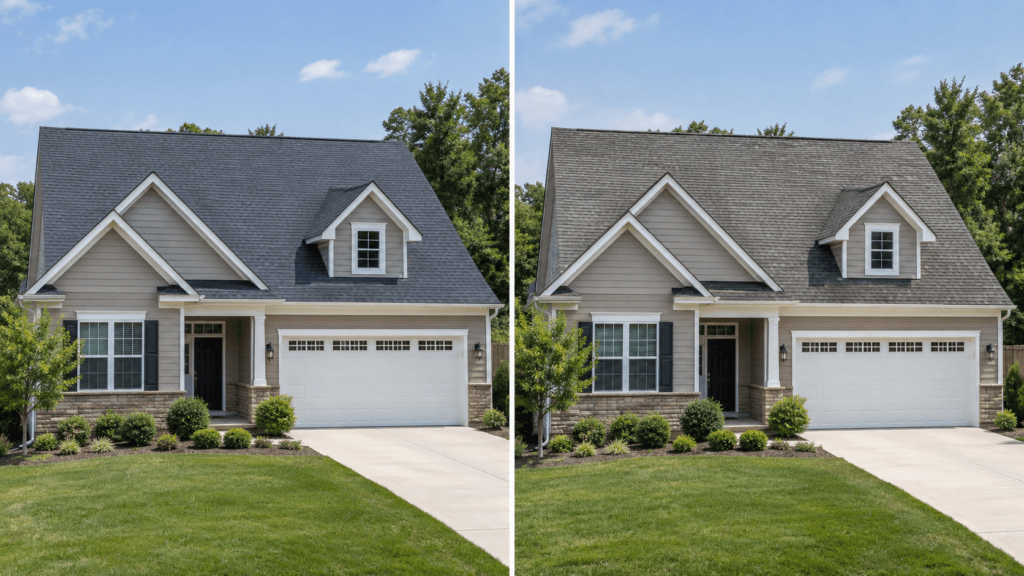
As asphalt shingles age, look for changes across the roof rather than focusing on one damaged shingle. Widespread granule loss, curling edges, cracking, exposed fiberglass or repeated failures in different locations can indicate that the roof is aging as a system.
One missing shingle on an otherwise healthy 10-year-old roof is a repair problem. Similar failures occurring throughout a 25-year-old roof are a different conversation.
How Long Does a Metal Roof Last?
A properly installed residential metal roof can often last 40 to 70 years or longer.
That longevity is one of the biggest reasons homeowners consider metal despite its higher initial cost.
Standing-seam systems can be especially durable because much of the fastening system is concealed beneath the panels. The type of metal, protective coating, seam design, flashing details and environment all matter.
Coastal exposure, corrosion, poor panel detailing or improper allowance for thermal movement can shorten the life of a metal roof. On the other hand, a well-designed system can remain serviceable through several generations of asphalt roofs.
The Metal Roofing Alliance says homeowners can generally expect metal roofing to last several times longer than conventional asphalt roofing and cites service lives extending 30 to 50 years and beyond.
The panels themselves are only part of the system. Fasteners, sealants, coatings and flashing may need attention before the main metal panels reach the end of their useful life.
How Long Does a Tile Roof Last?
Clay and concrete tile are among the longest-lasting residential roofing materials.
A properly installed tile roof can commonly provide 50 to 100 years or more of service. The Tile Roofing Industry Alliance notes that clay and concrete tile roofs can last 50 to 100 years or longer, with many manufacturers offering warranties of 50 years or more.
There is an important distinction with tile roofs, though.
The visible tiles may still be in good condition while components underneath them are aging.
Underlayment, flashing and other waterproofing materials beneath the tile may eventually require replacement even when much of the tile itself can be reused. Individual tiles can also crack from impact or improper foot traffic without meaning the entire roof has failed.
That is why evaluating a tile roof means looking at the whole assembly, not just counting broken tiles.
How Long Does a Slate Roof Last?
Natural slate can have an exceptionally long service life.
A quality slate roof may last 75 to 150 years or more, depending on the slate itself, installation and maintenance. Some slate roofs remain in service for generations.
The material is naturally resistant to water and fire and does not deteriorate in the same way asphalt roofing does.
The tradeoff is that slate is heavy, expensive and specialized. The supporting roof structure must be suitable for the load, and repairs should be performed by someone familiar with slate roofing. Walking carelessly on the roof can crack pieces that otherwise had decades of useful life remaining.
Flashings and fasteners can also reach the end of their useful lives before the slate itself does.
A long-lasting material does not automatically mean every component surrounding it will last equally long.
How Long Does Synthetic or Composite Roofing Last?
Synthetic and composite products are designed to reproduce the appearance of materials such as slate or cedar shake without carrying the same weight or maintenance requirements.
A broad planning range is about 30 to 50 years, but this category deserves more caution than the others because products differ considerably.
Some are polymer-based. Others use recycled materials, rubber blends or engineered composites. Manufacturing methods, UV resistance, impact ratings and warranties vary by product.
This is one roofing category where the manufacturer’s documentation matters more than a generic lifespan number.
If you are considering synthetic roofing, compare the specific warranty, fire and impact ratings, approved installation method and track record of the actual product rather than assuming every composite roof will perform the same way.
How Long Does a Flat or Low-Slope Roof Last?
Residential flat and low-slope roofs are different from conventional pitched roofs because they generally rely on membrane systems rather than overlapping shingles.
Depending on the system and conditions, 15 to 30 years or more is a useful general range.
TPO, PVC, modified bitumen and other low-slope roofing products each behave differently, so there is no single lifespan that applies to every flat roof.
Drainage becomes especially important.
A pitched shingle roof is designed to move water away quickly. On a low-slope roof, poor drainage can leave water sitting on the membrane and increase stress around seams, drains, penetrations and perimeter details.
If your home has both pitched and low-slope sections, do not assume those roof areas will reach replacement age at the same time.
What Actually Determines How Long a Roof Lasts?
Material gets most of the attention because it is easy to compare. In practice, several less-visible factors can have just as much influence over roof life.
Installation Quality
A premium roofing material does not make up for poor installation.
Fastener placement, underlayment, flashing, valleys, penetrations and edge details all have to work together. Small errors made during installation can create problems years before the roofing material itself should be worn out.
Our Roof Installation guide walks through these concealed parts of the installation process in more detail.
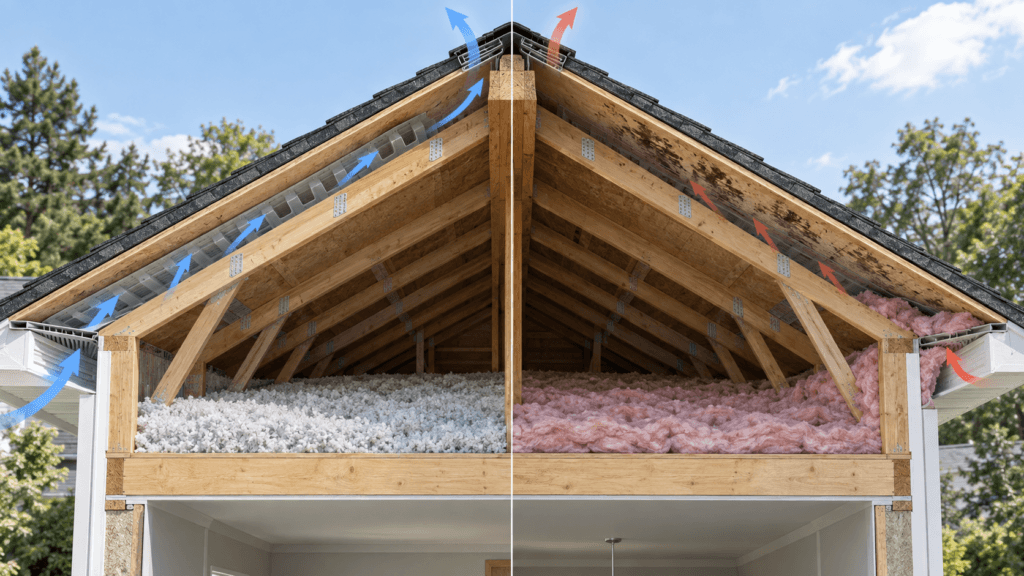
Attic Ventilation and Moisture
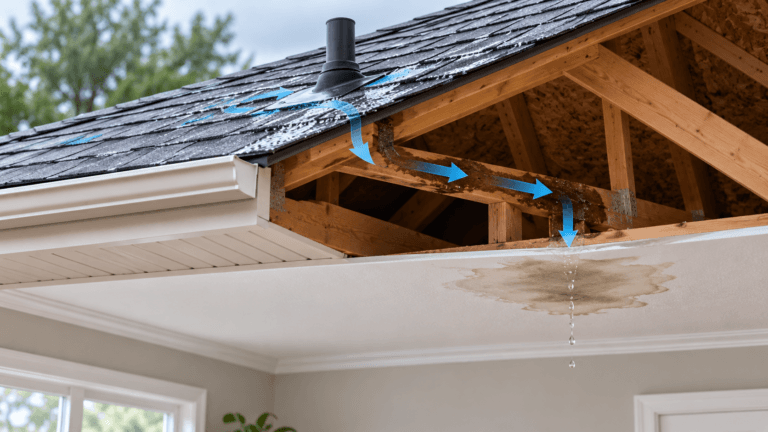
Excess attic heat and moisture can create conditions that are hard on the roof deck and roofing system.
Ventilation is not simply about adding roof vents. Intake, exhaust, insulation and air sealing need to work together.
If you are seeing condensation, moisture staining or unusual attic temperatures, see our Roof Ventilation & Moisture guide.
Climate and Sun Exposure
Roofs in different parts of the country experience very different conditions.
Intense UV exposure and heat can accelerate aging. Freeze-thaw cycles can affect some materials. High winds, hail, heavy rain, snow loads, salt air and wildfire exposure create different stresses.
Even roof orientation can matter. One roof plane may receive significantly more afternoon sun than another and age faster.
Drainage
Water needs somewhere to go.
Clogged gutters, blocked valleys, inadequate low-slope drainage and poorly detailed transitions can keep water against materials longer than intended.
A roofing system that drains correctly generally has a much easier life.
Maintenance
Roofs do not require constant attention, but ignoring them entirely is not a good strategy either.
Keeping gutters and valleys clear, trimming problematic branches and dealing with small flashing or penetration failures early can prevent localized problems from turning into expensive structural repairs.
What Can Shorten a Roof’s Lifespan?
Sometimes a roof wears out naturally. Other times something accelerates the process.
Poor installation is one of the biggest concerns because the problem may be hidden beneath the finished roofing. Improper flashing, incorrect fastening, inadequate underlayment or poor ventilation may not become obvious until water damage has already started.
Other factors include repeated storm damage, clogged drainage, excessive foot traffic, tree contact, trapped moisture and repairs that cover symptoms without correcting the underlying problem.
This is also why warranty length and actual roof life should not be treated as the same thing.
A 30-year, 40-year or “lifetime” material warranty does not necessarily mean the roof will provide that exact number of years without maintenance, nor does it mean every type of failure is covered. Warranty terms, exclusions and coverage periods vary substantially.
Signs a Roof May Be Nearing the End of Its Life
There is no single symptom that proves a roof needs replacement.
What matters is the pattern.
One cracked shingle can usually be repaired. Hundreds of brittle shingles are different. One failed pipe boot does not mean the roof has failed. Repeated leaks at unrelated locations can indicate a broader problem.
Common signs worth investigating include widespread cracking or curling, heavy granule loss, repeated leaks, deteriorated flashing, brittle roofing materials, multiple previous repairs and areas of damaged roof decking.
If you are trying to decide whether a problem is still repairable, our Roof Repair & Maintenance guide covers the difference between localized failures and broader deterioration.
Can Maintenance Make a Roof Last Longer?
Maintenance cannot turn a worn-out roof into a new one, but it can help prevent avoidable damage.
The goal is mostly simple: keep water moving where it belongs and deal with small failures before they spread.
That means keeping gutters and valleys clear, periodically checking flashing and penetrations, managing overhanging tree branches and inspecting the roof after significant storms.
It also means paying attention inside the attic.
A small water stain on roof sheathing, damp insulation or a rusting fastener may reveal a problem long before water reaches a finished ceiling.
Photos are useful too. Taking pictures from the same ground-level locations every year gives you something objective to compare instead of trying to remember what the roof looked like twelve months ago.
Should You Replace a Roof Just Because It’s Old?
Not necessarily.
Roof age is useful because it tells you when closer attention is warranted. It does not tell you exactly when the roof will fail.
A 22-year-old asphalt roof that remains dry, lies flat and shows consistent wear may still have service life remaining. Another roof of the same age may already have widespread cracking, deck damage and repeated leaks.
Replacement starts making more sense when deterioration is widespread, repairs are becoming frequent or the roofing material can no longer be disturbed without causing additional damage.
If you are getting close to that point, our Roof Replacement & Cost guide explains the major factors that affect replacement scope and pricing.
Roof Age Is Only Part of the Story
So, how long does a roof last?
For asphalt shingles, roughly 20 to 30 years is a reasonable starting point. Metal roofing can often reach 40 to 70 years or more. Tile and slate can last considerably longer, while synthetic and low-slope roofing depend heavily on the specific system.
Those numbers are useful for planning, but your actual roof does not know how old it is.
What matters is how the complete system is performing.
A well-designed roof with proper installation, good drainage, balanced attic conditions and reasonable maintenance has the best chance of reaching the upper end of its expected lifespan. When deciding whether to repair or replace, look at the roof’s condition first and use its age as supporting information, not the final answer.
Planning a Roofing Project?
Explore Builzee’s Roofing Guides for practical help with roof types, ventilation, installation, repairs, maintenance, replacement and cost planning.