
ROOF VENTILATION & MOISTURE
Understand How Attic Airflow Helps Protect Your Roof
Roof ventilation helps move heat and moisture out of the attic while allowing fresh air to enter near the lower edges of the roof. A properly designed system can help reduce condensation, control attic temperatures and protect roof decking, insulation and other building materials. This guide explains how intake and exhaust ventilation work together and what homeowners should watch for.
VENTILATION BASICS
Understand How Balanced Roof Ventilation Works
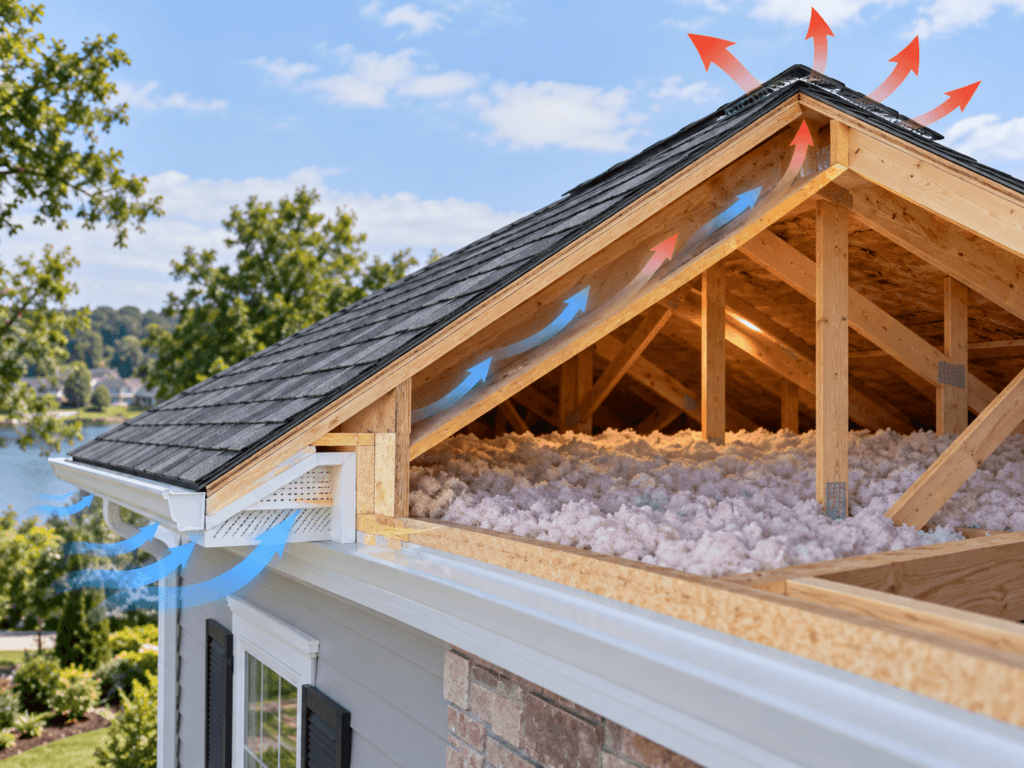
A properly ventilated attic needs both intake and exhaust. Cooler outside air typically enters near the lower edges of the roof, moves through the attic space and exits near the highest points. The goal is continuous airflow rather than simply adding more vents.
01 — INTAKE VENTILATION
Intake vents allow outside air to enter the attic, usually near the eaves. Soffit vents are one of the most common intake methods, although other low-roof intake systems may also be used.
WATCH FOR
Painted-over vents, insulation blocking the openings, debris buildup or too little intake area compared with the exhaust ventilation.
02 — ATTIC AIRFLOW
Once air enters the attic, it needs a clear path toward the exhaust vents. Proper airflow helps carry excess heat and moisture out of the attic rather than allowing it to remain trapped against the roof deck.
WATCH FOR
Blocked air paths, insulation packed tightly against the roof deck, poorly positioned vents or areas of the attic that receive little circulation.
03 — EXHAUST VENTILATION
Exhaust vents allow warm, moisture-laden air to leave the attic. Common options include ridge vents, box vents and other high-mounted roof vents.
WATCH FOR
Blocked ridge vents, damaged vent housings, poor flashing or an exhaust system that is oversized compared with the available intake ventilation.
GOOD TO KNOW
More ventilation is not always better. Intake and exhaust should be sized and positioned as a balanced system. Adding exhaust vents without enough intake air can reduce performance and may pull air from unintended areas of the home instead of through the soffits.
MOISTURE & CONDENSATION
Control Moisture Before It Damages the Roof System
Moisture can enter the attic from indoor air, roof leaks or outdoor humidity. When warm, moist air reaches colder surfaces such as the underside of the roof deck, condensation can form. Over time, repeated moisture exposure can damage sheathing, insulation and framing and may contribute to mold growth.
ATTIC CONDENSATION
Condensation often develops when warm interior air leaks into a colder attic and reaches the underside of the roof deck. This can be more noticeable during colder weather, especially when indoor humidity is high.
WATCH FOR
- Water droplets or frost on roof sheathing
- Dark staining on the underside of the roof deck
- Damp or compressed insulation
- Musty odors
- Rusting fasteners or metal components
AIR LEAKS & INDOOR MOISTURE
Ventilation alone cannot correct every moisture problem. Warm indoor air can enter the attic through gaps around recessed lights, plumbing penetrations, attic access openings, ductwork and other ceiling penetrations. Bathroom fans, kitchen exhaust and clothes dryers should also discharge outdoors rather than into the attic.
WATCH FOR
- Exhaust ducts terminating inside the attic
- Gaps around ceiling penetrations
- Poorly sealed attic access doors
- High indoor humidity
- Moisture concentrated around specific openings
GOOD TO KNOW
Attic moisture control usually requires more than adding roof vents. Air sealing, insulation, proper exhaust ducting and balanced ventilation all work together. If moist indoor air is continually leaking into the attic, additional ventilation may reduce symptoms without addressing the source.
COMMON VENT TYPES
Know the Main Ways Attic Air Enters and Exits
Different vent types serve different parts of the airflow path. Some bring air into the attic, while others allow warm air to escape. The right combination depends on the roof design, attic layout and ventilation strategy.
01 — SOFFIT VENTS
Soffit vents are installed along the underside of the roof overhang and are one of the most common intake vent types.
BEST FOR
Providing continuous low-level intake air along the eaves.
WATCH FOR
Blocked perforations, insulation covering the openings or painted-over vent panels.
02 — RIDGE VENTS
Ridge vents run along the peak of the roof and allow warm air to escape near the highest point of the attic.
BEST FOR
Continuous exhaust when paired with adequate soffit or other intake ventilation.
WATCH FOR
Blocked vent slots, damaged ridge caps or insufficient intake lower on the roof.
03 — BOX VENTS
Box vents, sometimes called static vents, are individual exhaust vents installed near the upper portion of the roof.
BEST FOR
Roofs where a continuous ridge vent is not practical.
WATCH FOR
Poor flashing, damaged housings, too few vents or uneven placement across the attic.
04 — GABLE VENTS
Gable vents are installed in the exterior wall at the end of an attic rather than through the roof surface.
BEST FOR
Certain attic configurations, especially where the roof shape does not support a continuous ridge-and-soffit system.
WATCH FOR
Airflow patterns that interfere with other vent types, blocked openings or inadequate overall ventilation.
GOOD TO KNOW
Mixing different exhaust vent types does not automatically improve ventilation. In some roof designs, combining ridge vents, box vents and gable vents can create unintended airflow paths. The system should be planned so intake and exhaust work together rather than competing with each other.
SIGNS OF POOR VENTILATION
Know What Problems to Look For
Poor attic ventilation does not always show up as an obvious roof problem. In many cases, the first signs appear as excess heat, trapped moisture or deterioration inside the attic.
01 — EXCESS ATTIC HEAT
An attic that stays extremely hot can increase heat buildup at the roof deck and make the home harder to cool.
WATCH FOR
- Very high attic temperatures
- Upstairs rooms that are noticeably warmer
- HVAC systems working harder than expected
- Heat buildup concentrated near the roof deck
02 — MOISTURE & CONDENSATION
Trapped moisture can lead to staining, damp insulation and condensation on framing or roof sheathing.
WATCH FOR
- Water droplets or frost
- Dark stains on plywood or rafters
- Damp or compressed insulation
- Musty odors
- Rust on nails or metal fasteners
03 — ROOF & ATTIC DAMAGE
Long-term heat and moisture exposure can contribute to deterioration of roofing and attic materials.
WATCH FOR
- Warped or delaminated roof sheathing
- Premature shingle deterioration
- Mold-like growth on framing or decking
- Soft or damaged wood
- Repeated moisture problems with no active roof leak
GOOD TO KNOW
These signs can have more than one cause. Poor ventilation may contribute, but roof leaks, air leakage from the living space, insulation problems and indoor humidity should also be checked before assuming ventilation alone is the issue.
ATTIC AIRFLOW DETAILS
Keep the Air Path Open From Soffit to Ridge
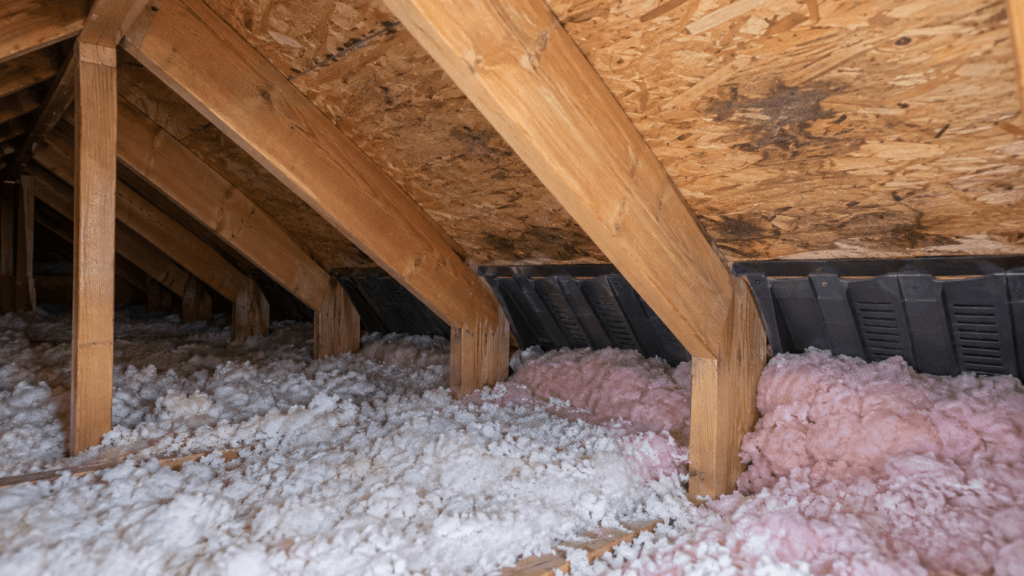
Ventilation works best when outside air can move freely from the intake vents near the eaves toward the exhaust vents higher on the roof. Insulation, air leaks and blocked rafter bays can interrupt that path even when the roof has plenty of vents.
01 — VENTILATION BAFFLES
Baffles, sometimes called rafter vents, create a clear channel between the soffit intake and the attic space while keeping insulation away from the underside of the roof deck.
WATCH FOR
Missing baffles, crushed or displaced channels, insulation blocking the opening or baffles that do not extend far enough above the insulation.
02 — INSULATION
Attic insulation helps slow heat transfer between the living space and attic, but it should not block ventilation openings at the eaves.
WATCH FOR
Insulation packed tightly into soffits, uneven coverage, compressed material or areas where insulation has been moved away from the ceiling.
03 — AIR SEALING
Air sealing reduces the amount of warm, moist indoor air that leaks into the attic through ceiling gaps and penetrations.
Common leakage points include recessed lights, wiring holes, plumbing penetrations, attic hatches and duct openings.
WATCH FOR
Visible gaps, poorly sealed attic access panels, open penetrations or exhaust ducts that leak into the attic.
GOOD TO KNOW
Ventilation, insulation and air sealing perform different jobs. Ventilation moves attic air, insulation slows heat transfer, and air sealing limits unwanted airflow from the living space. Improving only one part of the system may not solve a heat or moisture problem if the others are not working properly.
BEFORE CHANGING THE VENTILATION
Check the Whole System Before Adding More Vents
Adding vents is not automatically the right fix for a hot or damp attic. The existing intake, exhaust, insulation, air sealing and roof design should be reviewed together before changes are made.
01 — VENT BALANCE
The amount of intake ventilation should generally work with the amount of exhaust ventilation so air can move through the attic as intended.
CHECK FOR
- Adequate soffit or other low-level intake
- Exhaust vents located near the upper roof area
- Intake openings that are not blocked
- A system that is not relying on exhaust alone
02 — ROOF & ATTIC DESIGN
Roof geometry affects how air moves. Complex roofs, isolated attic areas, vaulted ceilings and additions may not ventilate the same way as a simple open attic.
CHECK FOR
- Separate attic cavities
- Short or blocked rafter bays
- Roof sections without clear intake-to-exhaust paths
- Areas where one vent type may interfere with another
03 — EXISTING CONDITIONS
Heat or moisture problems may come from issues other than ventilation, including roof leaks, indoor humidity, poorly sealed ceiling penetrations or improperly vented exhaust fans.
CHECK FOR
- Active or past roof leaks
- Bathroom or dryer exhaust terminating in the attic
- Moisture staining around specific penetrations
- Gaps around attic access openings
- Damaged insulation or sheathing
GOOD TO KNOW
Ventilation changes should address the cause of the problem, not just the symptom. If the attic is hot, damp or showing signs of condensation, it is worth checking airflow, insulation, air sealing and moisture sources together before simply adding more roof vents.
FINAL CHECK
Roof Ventilation & Moisture Checklist
Before changing attic ventilation or approving roofing work, confirm that the complete airflow and moisture-control system has been considered.
□ Soffit or other intake vents are present and unobstructed
□ Exhaust vents are located near the upper roof area
□ Intake and exhaust ventilation are reasonably balanced
□ Ventilation baffles keep insulation out of the airflow path
□ Attic insulation is not blocking the eaves
□ Ceiling penetrations and attic access openings are air sealed
□ Bathroom, kitchen and dryer exhaust ducts terminate outdoors
□ Roof sheathing has been checked for staining or deterioration
□ Insulation has been checked for dampness or compression
□ Plumbing vents and roof penetrations are properly flashed
□ Existing vent types work together rather than against each other
□ Separate attic cavities have their own airflow path where needed
□ Active roof leaks have been ruled out
□ Moisture problems are being addressed at the source, not just with added vents
GOOD TO KNOW
A ventilation upgrade should be based on the attic’s actual conditions and roof design. If a contractor recommends simply adding vents, ask how the intake, exhaust, insulation, air sealing and moisture sources were evaluated first.
Bottom Line
Good roof ventilation depends on a complete system. Intake vents bring outside air into the attic, exhaust vents allow warm and moisture-laden air to leave, and open airflow paths help connect the two.
But ventilation alone cannot solve every attic problem. Air sealing, insulation, indoor humidity control and proper exhaust ducting all play a role in protecting the roof deck and attic from excess heat and moisture.
Understanding how these pieces work together makes it easier to diagnose condensation problems, compare roofing recommendations and avoid adding vents that do not actually address the cause.