
BATHROOM VANITIES & FIXTURES
Choose Fixtures That Fit the Space and How You Use It
Bathroom vanities and fixtures affect storage, counter space, plumbing, maintenance and everyday comfort. Compare vanity styles, countertops, sinks, faucets, toilets and other fixture choices before deciding what works best for your bathroom.
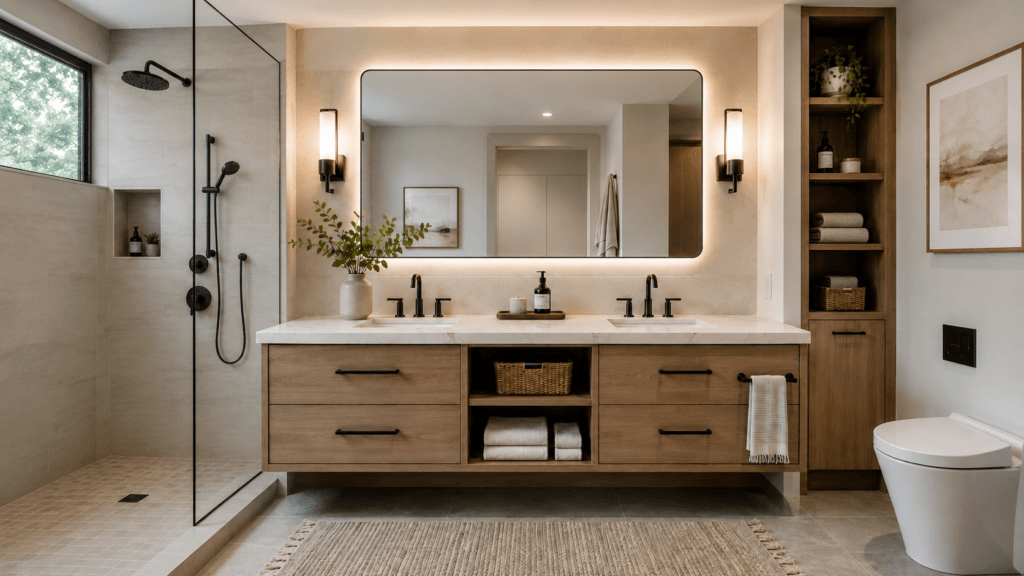
VANITY OPTIONS
Choose a Vanity That Fits the Room and Your Storage Needs
Vanity size and mounting style affect storage, floor space, plumbing and how open the bathroom feels. Start with the available wall width and how many people will regularly use the space, then compare the main configurations.
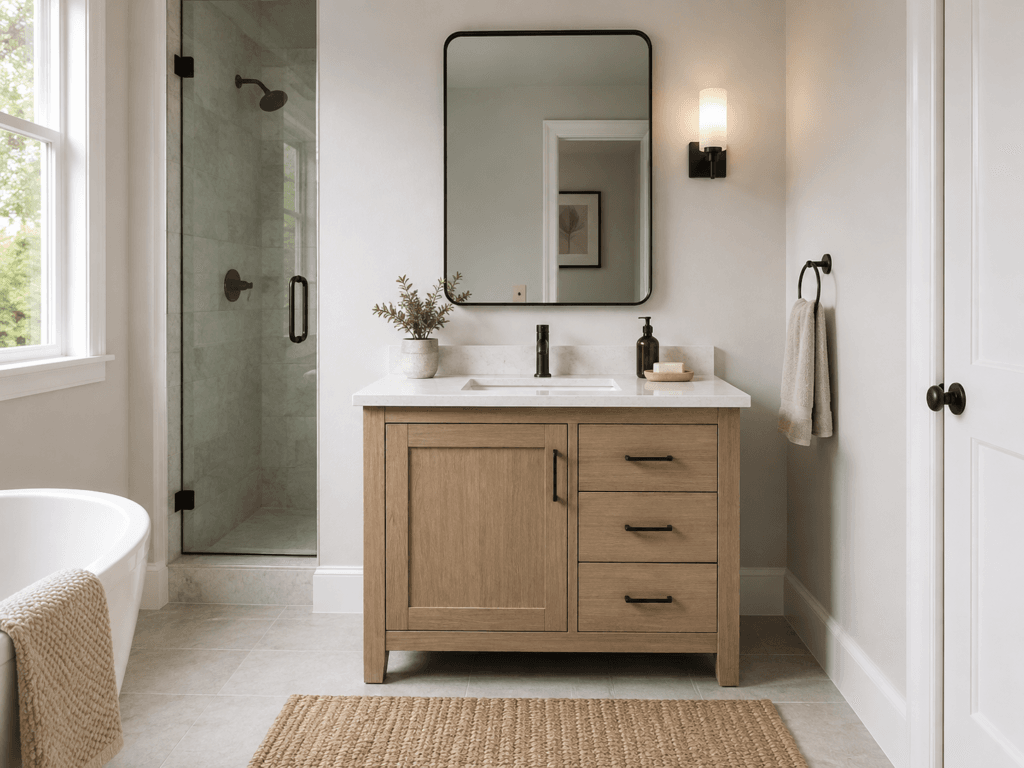
01 — FREESTANDING SINGLE
Practical for most small and medium bathrooms.
A freestanding single vanity provides one sink with cabinet or drawer storage below. It is widely available in standard sizes and is usually one of the simplest options for replacement projects.
BEST FOR
Powder rooms, guest baths and bathrooms where one sink provides enough everyday function.
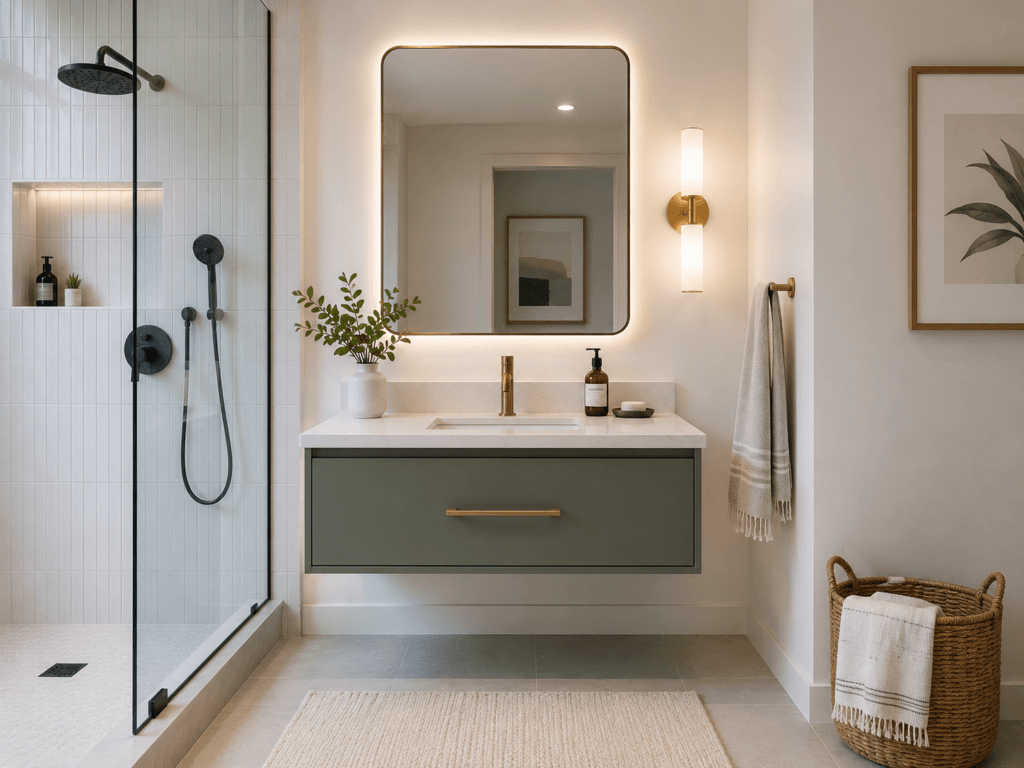
02 — FLOATING SINGLE
Creates a lighter, more open appearance.
A floating vanity mounts to the wall and leaves the floor visible below. It can make a smaller bathroom feel less crowded and allows easier floor cleaning, but the wall needs suitable support.
BEST FOR
Modern bathrooms, smaller spaces and projects where a more open visual style is preferred.
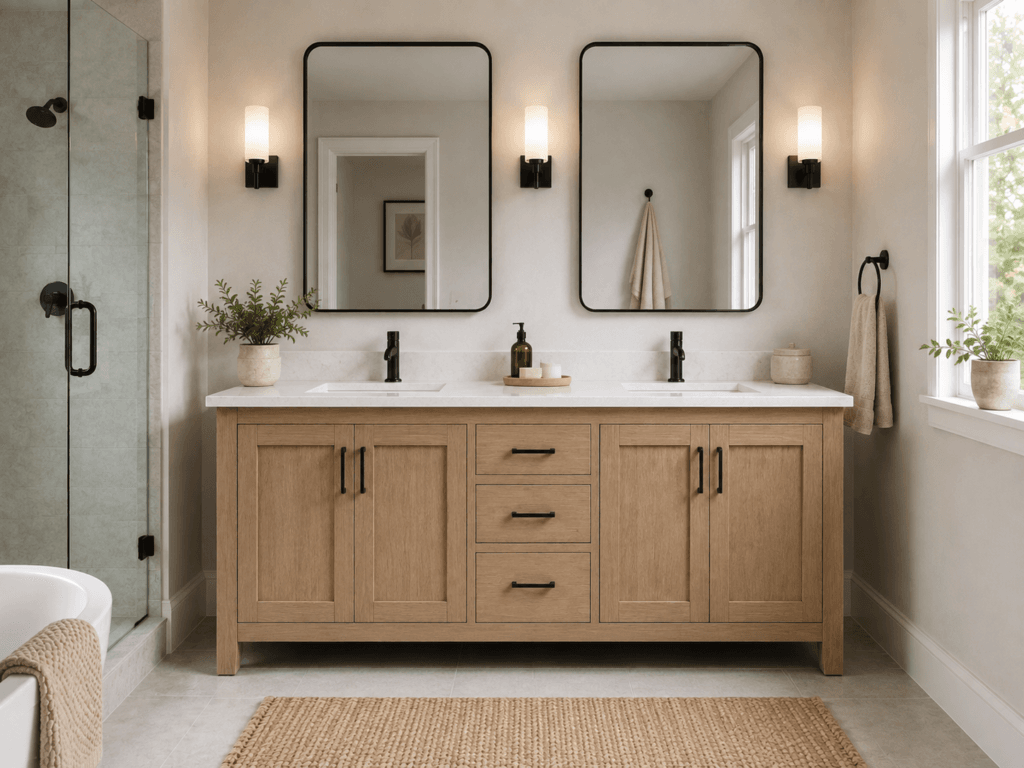
03 — FREESTANDING DOUBLE
More counter space and two dedicated sink positions.
A double vanity gives two users separate sinks while providing additional countertop and storage space. The extra width requires more wall space and usually additional plumbing coordination.
BEST FOR
Primary and shared bathrooms where two people regularly use the vanity at the same time.
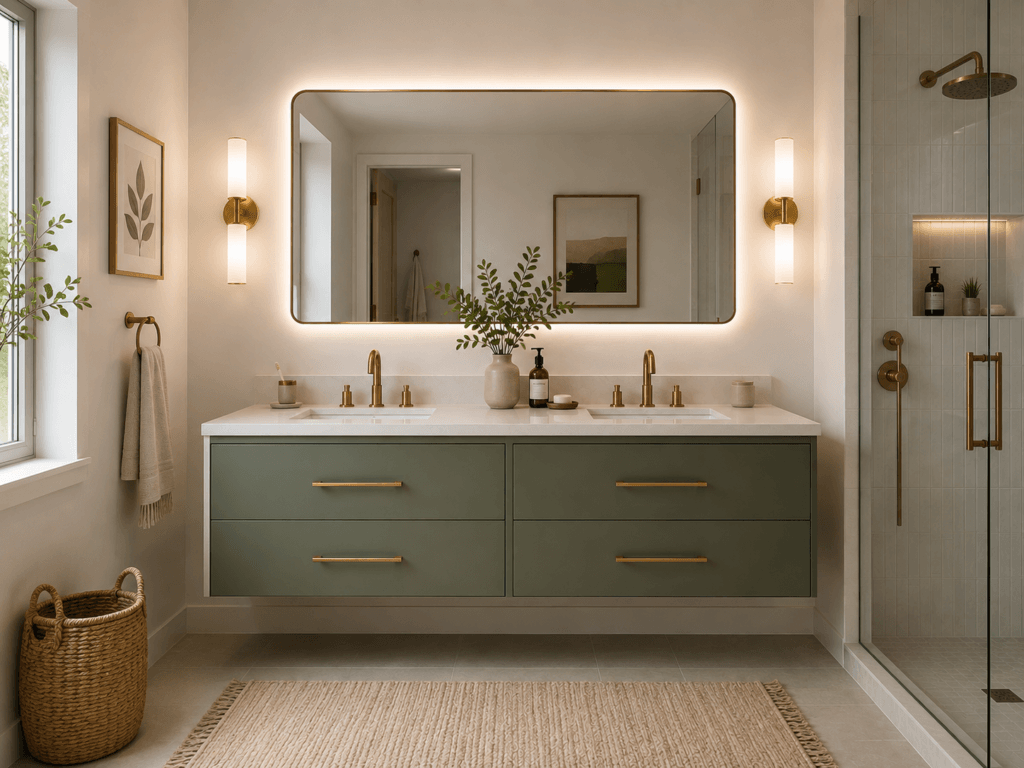
04 — FLOATING DOUBLE
Combines two sinks with a more streamlined appearance.
A floating double vanity provides the capacity of a larger vanity while keeping the floor visually open. Because the cabinet and countertop can be heavy, proper wall attachment and support should be planned before installation.
BEST FOR
Larger contemporary bathrooms where storage, two sinks and a clean wall-mounted look are priorities.
COUNTERTOP MATERIALS
Choose a Countertop That Can Handle Daily Bathroom Use
Bathroom countertops deal with water, cosmetics, cleaning products and frequent use. Appearance matters, but maintenance, stain resistance, seams and compatibility with the sink should also influence the choice.
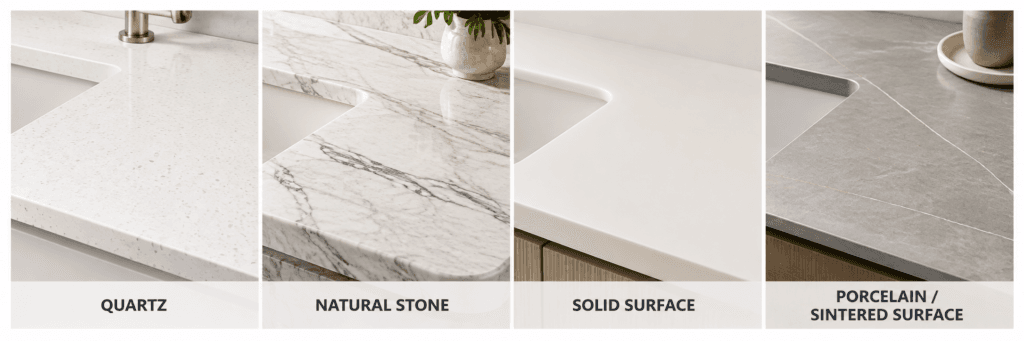
01 — QUARTZ
Low maintenance and widely available.
Engineered quartz offers consistent color and pattern with good stain resistance and does not typically require routine sealing. It is available in many stone-inspired finishes and works well with most vanity and sink configurations.
BEST FOR
Homeowners who want a durable, relatively low-maintenance countertop with many design options.
02 — NATURAL STONE
Unique appearance with more maintenance.
Marble, granite and other natural stones offer variation that manufactured materials cannot completely replicate. Depending on the stone, sealing and more careful cleaning may be required to help reduce staining or etching.
BEST FOR
Bathrooms where natural variation and premium appearance are higher priorities than minimal maintenance.
03 — SOLID SURFACE
Clean appearance with flexible fabrication.
Solid-surface materials can create smooth transitions, integrated backsplashes and, in some designs, integrated sinks. The material is nonporous and can often be repaired or refinished if the surface becomes scratched.
BEST FOR
Simple contemporary bathrooms and projects where seamless-looking fabrication is important.
04 — PORCELAIN / SINTERED SURFACE
Thin, durable and highly resistant to moisture.
Large-format porcelain and sintered surfaces can provide stone-like appearances with strong resistance to staining and moisture. Fabrication and edge detailing require experienced installers because the material can behave differently from traditional stone slabs.
BEST FOR
Modern bathrooms where thin profiles, durability and low water absorption are priorities.
GOOD TO KNOW
Vanity countertops are usually smaller than kitchen countertops, so remnants from larger slabs may sometimes provide access to premium materials at a lower material cost. Fabrication, sink cutouts, edge work and installation still affect the final price.
SINK OPTIONS
Choose a Sink That Works With the Countertop and Vanity
Sink style affects countertop space, cleaning, faucet placement and how the vanity is fabricated. The best option depends on the countertop material, vanity depth and the look you want.
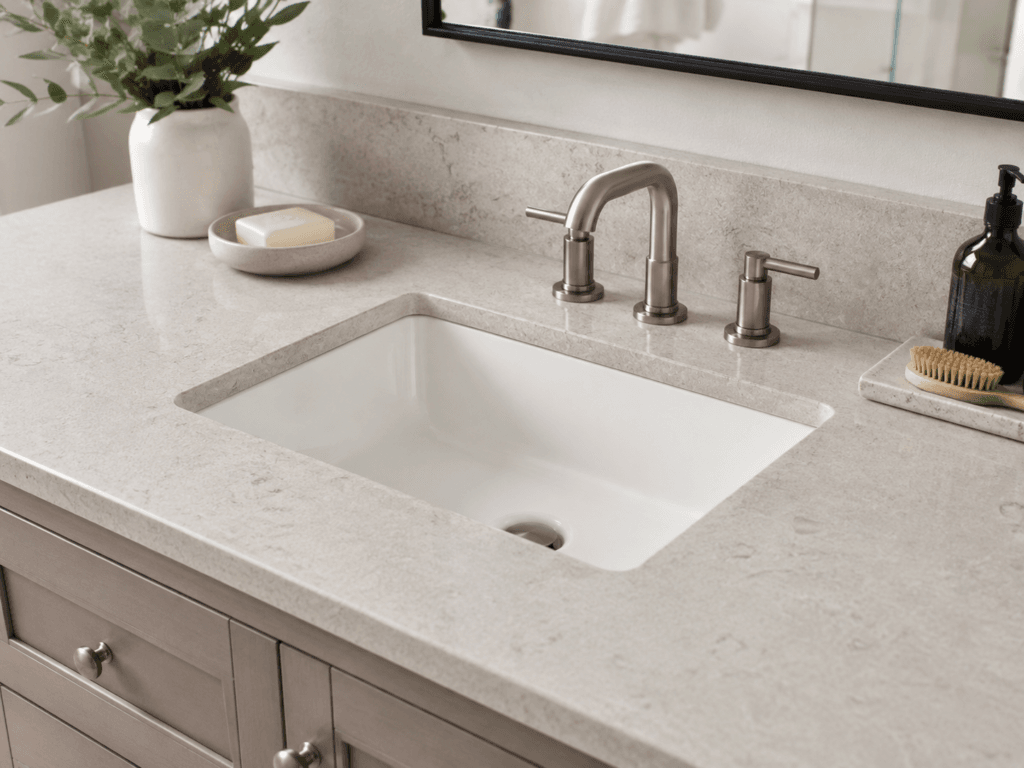
01 — UNDERMOUNT SINK
Clean appearance with an uninterrupted countertop edge.
An undermount sink is installed below the countertop, leaving the counter surface exposed around the opening. It makes it easy to wipe water directly into the basin and works especially well with solid countertop materials.
BEST FOR
Quartz, stone and solid-surface countertops where a clean, integrated appearance is preferred.
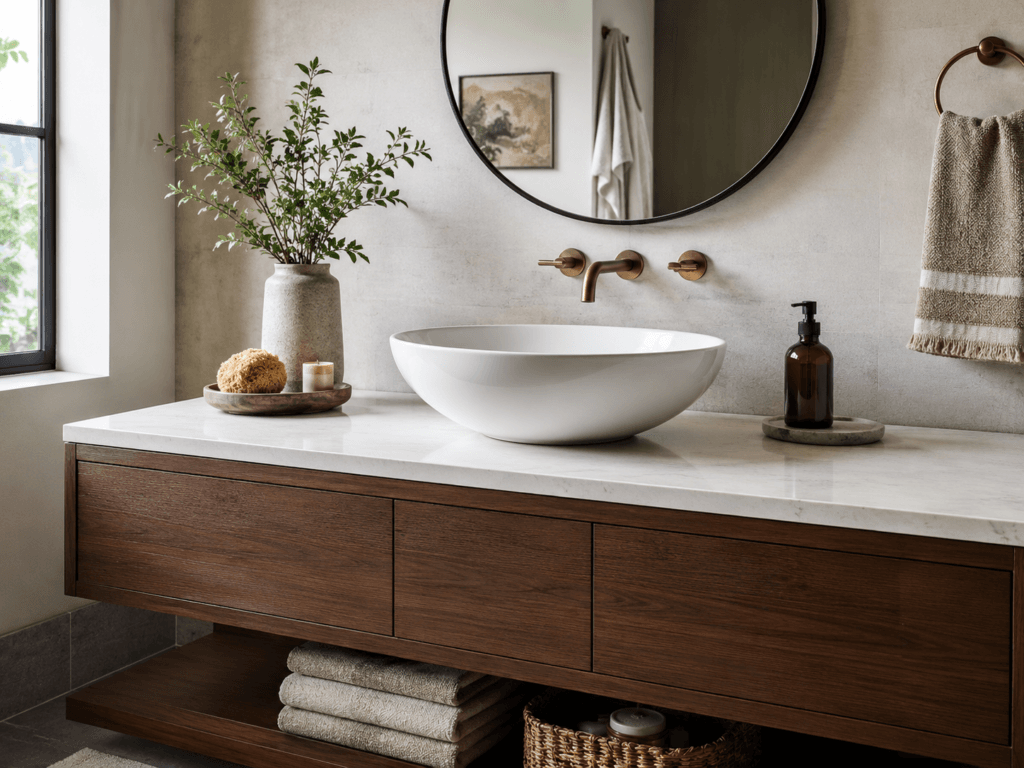
02 — VESSEL SINK
Creates a stronger visual focal point.
A vessel sink sits primarily above the countertop rather than below it. It can add height and character to the vanity, but faucet height, counter height and splash control need to be coordinated carefully.
BEST FOR
Powder rooms and design-focused bathrooms where the sink itself is intended to stand out.
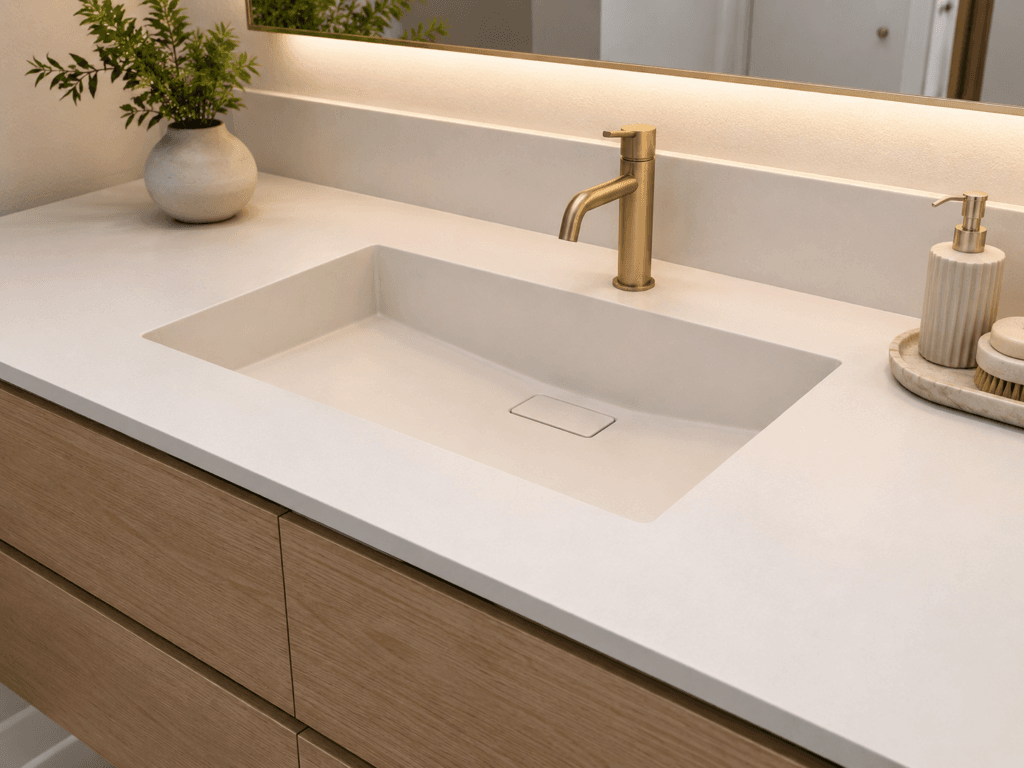
03 — INTEGRATED SINK / TOP
Sink and countertop function as one coordinated surface.
Integrated vanity tops combine the basin and countertop into a single assembly or seamless-looking surface. They reduce joints around the sink and can simplify cleaning and installation.
BEST FOR
Contemporary bathrooms, streamlined designs and projects where easy maintenance is a priority.
GOOD TO KNOW
Sink dimensions should be checked against the usable cabinet space below. Deep basins, drains and plumbing can interfere with vanity drawers or reduce storage if the cabinet was not designed around the sink.
FAUCENT OPTIONS
Match the Faucet to the Sink, Countertop and How You Use It
Faucet style affects installation, cleaning, splash control and the amount of countertop space required. Check the sink dimensions, mounting holes and faucet reach before choosing a configuration.
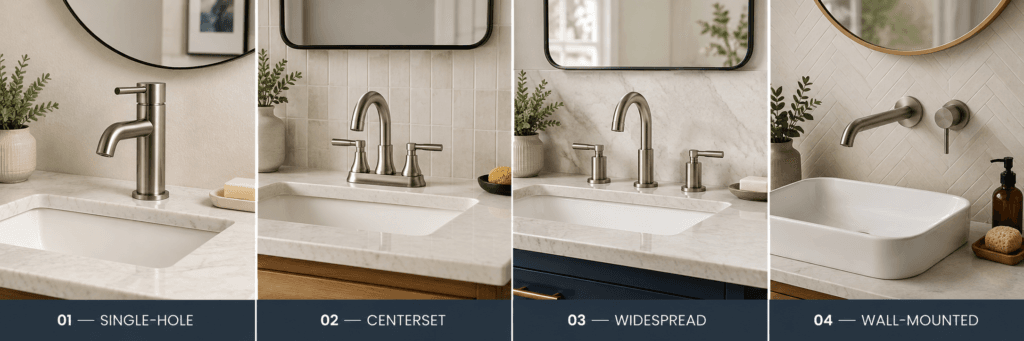
01 — SINGLE-HOLE
Simple installation with a compact footprint.
A single-hole faucet combines the spout and control into one unit. It works well on smaller vanities and creates a clean, minimal countertop.
BEST FOR
Compact bathrooms, modern vanities and sinks with limited mounting space.
02 — CENTERSET
Compact three-hole configuration.
Centerset faucets combine the spout and handles on a single base designed for closely spaced mounting holes. They are common on smaller vanities and traditional sink tops.
BEST FOR
Standard vanity tops where space is limited and the sink is already drilled for a centerset faucet.
03 — WIDESPREAD
Separate handles with more design flexibility.
Widespread faucets use separate hot and cold handles with an independent spout. The components can be spaced farther apart, creating a more substantial appearance on larger countertops.
BEST FOR
Larger vanities and bathrooms where a more customized or premium look is preferred.
04 — WALL-MOUNTED
Keeps faucet hardware off the countertop.
Wall-mounted faucets can free up counter space and create a clean appearance, but the rough plumbing location, sink position and spout reach need to be established before the wall is finished.
BEST FOR
Vessel sinks, custom vanities and projects where plumbing locations can be coordinated early.
GOOD TO KNOW
Faucet reach matters as much as faucet height. The water stream should land comfortably inside the basin without hitting too close to the back edge or creating excessive splash near the front.
MIRRORS & MEDICINE CABINETS
Plan the Mirror Along With Lighting and Storage
The mirror affects more than appearance. Its size, lighting, storage and electrical features should be coordinated with the vanity, faucet, outlets and wall construction before finishes are complete.
STANDARD / FRAMED MIRROR
A conventional wall mirror is simple, flexible and available in nearly any size or shape. Framed mirrors can also help coordinate the vanity with other bathroom finishes.
MEDICINE CABINET
Medicine cabinets add concealed storage directly above the vanity. Recessed models create a cleaner look but require enough wall depth and coordination with framing, plumbing and electrical work.
LED / LIGHTED MIRROR
Lighted mirrors integrate LEDs into or behind the mirror. Some provide ambient backlighting, while others include front-facing illumination that can provide more useful light for grooming.
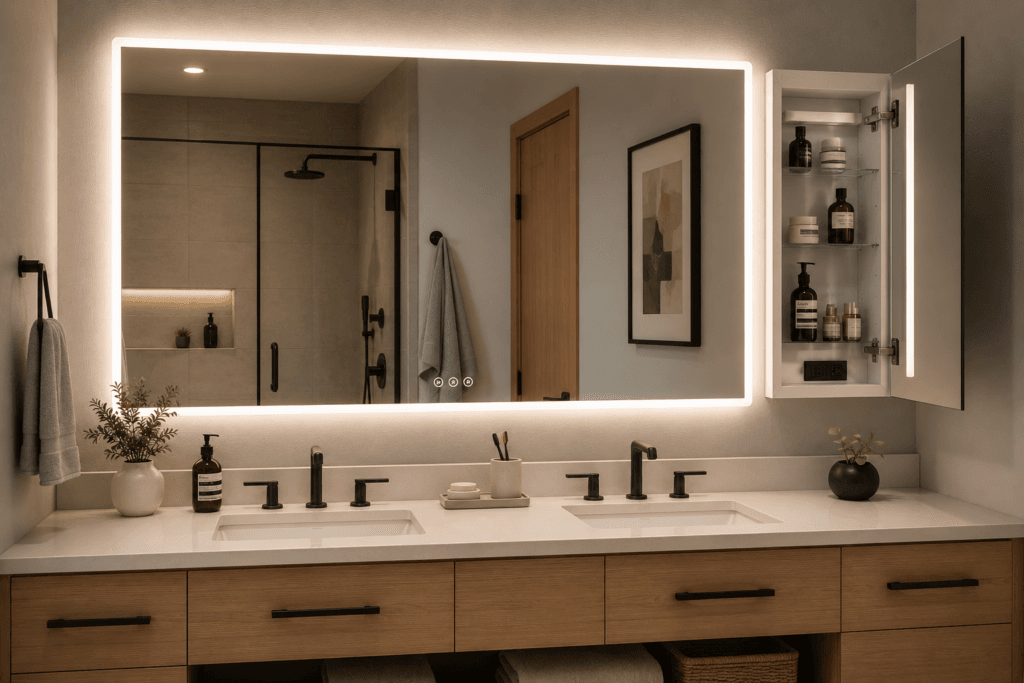
MIRROR FEATURES
01 — BACKLIGHTING
LED lighting behind the mirror creates a soft glow against the wall and can add ambient light to the bathroom.
02 — FRONT LIGHTING
Front-facing LEDs direct more light toward the user and can provide better illumination for shaving, makeup and other grooming tasks.
03 — DEMISTER / DEFOGGER
A demister pad is an electric heating element installed behind part of the mirror. It warms the glass to help reduce condensation after a hot shower.
04 — CONTROLS & POWER
Depending on the mirror, features may include dimming, adjustable color temperature, touch controls, integrated outlets, USB charging or other electrical options.
GOOD TO KNOW
Backlighting alone may not provide enough forward-facing task lighting. If grooming light is important, consider a mirror with front-facing LEDs or coordinate the mirror with separate vanity sconces.
PLAN AHEAD
Lighted mirrors, demister pads and recessed medicine cabinets may require power, blocking or wall modifications. Confirm these requirements before electrical rough-in and before the wall is closed.
TOILET OPTIONS
Choose a Toilet That Fits the Space and Plumbing
Toilet style affects floor space, cleaning, installation and plumbing requirements. Before buying, confirm the rough-in dimension, available clearance and whether you want standard or integrated bidet features.
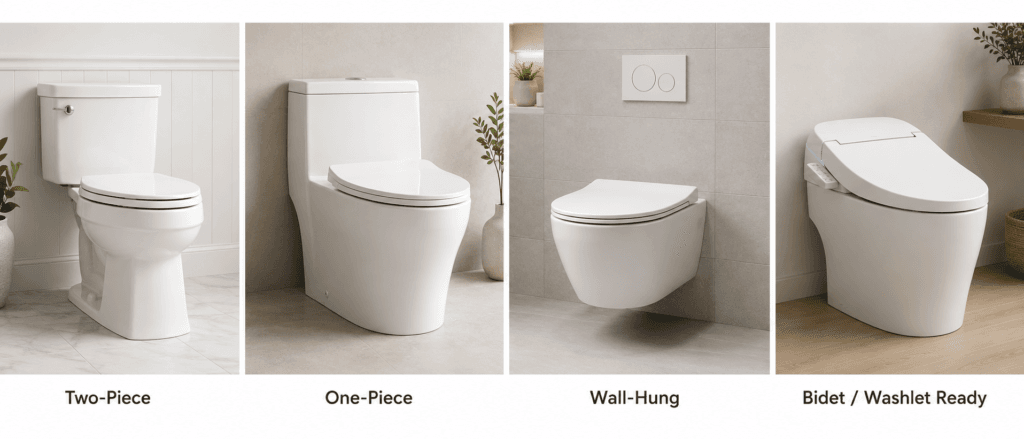
01 — TWO-PIECE
Common, affordable and easy to service.
A two-piece toilet has a separate tank and bowl. It is widely available, comes in many price ranges and allows individual components to be replaced more easily.
BEST FOR
Most standard bathroom remodels where availability, value and straightforward installation are priorities.
02 — ONE-PIECE
Cleaner profile with fewer exterior joints.
A one-piece toilet combines the tank and bowl into a single fixture. The smoother exterior can be easier to clean and often creates a more streamlined appearance.
BEST FOR
Bathrooms where easier cleaning and a more finished look justify the higher typical cost.
03 — WALL-HUNG
Opens up visible floor space.
A wall-hung toilet mounts to an in-wall carrier with the tank concealed inside the wall. It can make the bathroom feel more open and allows easier cleaning underneath, but framing and plumbing need to be coordinated early.
BEST FOR
Modern bathrooms and projects where floor space, appearance and early construction planning are priorities.
04 — BIDET / WASHLET READY
Adds washing and comfort features.
Bidet seats and integrated washlet toilets can add heated seats, warm-water washing, drying and other features. Many powered models require a nearby electrical outlet in addition to the normal water connection.
BEST FOR
Bathrooms where comfort and upgraded hygiene features are important.
GOOD TO KNOW
Toilet rough-in dimensions should be confirmed before ordering. Also check whether an elongated bowl, bidet seat or wall-hung system changes the clearance needed around nearby doors, vanities or shower glass.
STORAGE & ACCESSORIES
Plan Storage Around What You Actually Use
Good bathroom storage is less about adding more cabinets and more about putting everyday items where they are easiest to reach. Vanity drawers, medicine cabinets, linen storage and accessories should all be planned around how the bathroom will be used.
01 — VANITY DRAWERS
Drawers can make toiletries and smaller items easier to organize than deep cabinet doors. Check how plumbing, sink depth and drain locations affect the usable drawer space.
02 — MEDICINE & LINEN STORAGE
Medicine cabinets, tall cabinets and linen storage can keep frequently used items off the countertop. Recessed storage should be coordinated with framing and utilities before the wall is closed.
03 — TOWEL & TOILET ACCESSORIES
Towel bars, hooks, toilet paper holders and robe hooks should be positioned where they are easy to reach without interfering with doors, drawers or shower glass.
04 — OPEN STORAGE & NICHES
Open shelves and recessed niches can provide convenient storage while keeping frequently used items visible. Their location should be planned so they do not create clutter or interfere with circulation.
GOOD TO KNOW
Accessory locations are easy to overlook until the bathroom is nearly finished. Blocking for towel bars, hooks and other wall-mounted items is much easier to add before drywall and tile are installed.
BEFORE YOU BUY
Bathroom Vanity & Fixture Measuring Checklist
Before ordering vanities, sinks, faucets, mirrors or toilets, confirm the actual dimensions and rough-in locations in the finished bathroom. Small conflicts can affect drawers, plumbing, electrical devices and how comfortably the fixtures can be used.
☐ Available vanity width and depth are confirmed
☐ Finished floor height is considered
☐ Sink dimensions fit the vanity cabinet
☐ Drain and water-supply locations work with the cabinet
☐ Vanity doors and drawers can open fully
☐ Faucet mounting holes match the selected faucet
☐ Faucet reach works with the sink basin
☐ Mirror width and mounting height are confirmed
☐ Sconces and outlets will not conflict with the mirror
☐ Power is planned for lighted mirrors or demister pads
☐ Medicine cabinet depth works with wall framing
☐ Toilet and bidet electrical requirements are planned
☐ Doors, shower glass and nearby fixtures have adequate clearance
GOOD TO KNOW
Do not rely only on manufacturer nominal dimensions. Review the actual product drawings before rough plumbing, electrical work or cabinetry is finalized, especially for wall-mounted faucets, recessed medicine cabinets and wall-hung toilets.
WHERE TO SPEND MORE
Some Upgrades Matter More Than Others
Not every bathroom fixture needs to be premium. Spending more usually makes the most sense on components that are used every day, are difficult to replace later or directly affect how well the bathroom functions.
01 — VANITY HARDWARE
Better drawer slides, hinges and cabinet construction can improve everyday use and durability. Soft-close hardware and full-extension drawers are especially useful in frequently used bathrooms.
02 — FAUCETS & VALVES
Reliable faucets and internal valve components are worth prioritizing because leaks, loose handles and worn cartridges can become frustrating over time.
03 — MIRROR & LIGHTING
Good task lighting can make a bigger difference than decorative upgrades. If choosing a lighted mirror, useful features may include dimming, adjustable color temperature and a demister pad.
04 — TOILET & BIDET FEATURES
A better toilet can improve flushing performance, comfort and cleaning. Bidet or washlet features may also be worth planning for early because adding electrical power later can be more difficult.
GOOD TO KNOW
Spend based on function rather than brand name alone. A well-planned mid-range fixture that fits the space and is installed correctly can provide better value than a premium product that creates plumbing, clearance or maintenance problems.
Bottom Line
Bathroom vanities and fixtures should be selected as a coordinated system rather than as individual products. Confirm the available space, plumbing and electrical locations first, then compare vanity size, countertop material, sink and faucet compatibility, mirror features, storage and toilet requirements before ordering.