
BATHROOM REMODELING & COST
Understand Where the Money Goes Before You Remodel
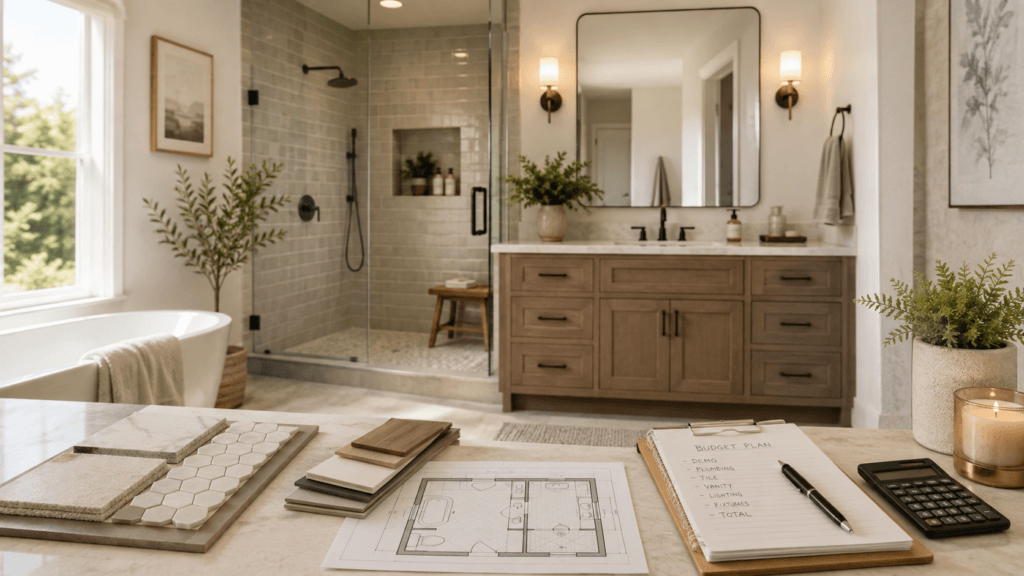
Bathroom remodeling cost can vary widely depending on the size of the room, project scope, labor, materials and how much plumbing or electrical work needs to change. Understanding the major cost drivers can help you build a more realistic budget before construction begins.
COST DRIVERS
What Makes One Bathroom Remodel Cost More Than Another?
Bathroom remodeling cost depends on much more than the size of the room. The biggest differences usually come from how much of the existing bathroom is being changed, the level of finishes selected and how much plumbing, electrical or structural work is required.
01 — PROJECT SCOPE
Replacing finishes and fixtures in their existing locations usually costs less than changing the layout, moving walls or rebuilding major portions of the bathroom.
02 — LABOR & INSTALLATION
Tile work, plumbing, electrical, waterproofing, cabinetry and finish carpentry can represent a large part of the budget. More complex details generally require more labor and coordination.
03 — MATERIAL & FIXTURE LEVEL
Vanities, countertops, tile, plumbing fixtures, shower glass and lighting are available across a wide price range. Premium selections can increase the total quickly when several upgrades are combined.
04 — EXISTING CONDITIONS
Water damage, outdated wiring, deteriorated plumbing, uneven framing or other hidden conditions may not be discovered until demolition begins and can add work that was not part of the original plan.
GOOD TO KNOW
Two bathrooms of the same size can have very different remodeling costs. Keeping plumbing locations and the basic layout intact can often control cost more effectively than simply choosing cheaper finishes.
REMODEL SCOPE
Know Whether You Are Refreshing or Rebuilding
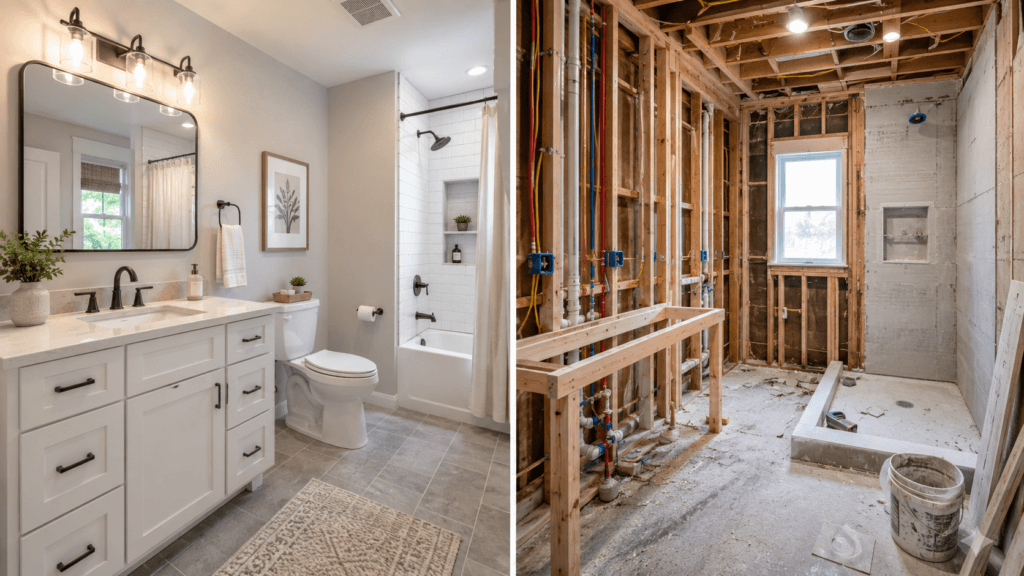
One of the biggest cost differences comes from project scope. A cosmetic refresh keeps most of the existing bathroom in place, while a full remodel can involve demolition, new waterproofing, relocated plumbing, electrical changes and completely new finishes.
COSMETIC REFRESH
A cosmetic refresh focuses on visible upgrades without substantially changing the layout or hidden systems.
Typical work may include:
- Painting walls
- Replacing faucets or lighting
- Updating mirrors and accessories
- Installing a new vanity or countertop
- Replacing a toilet
- Changing hardware and finishes
BEST FOR
Bathrooms that function well but look dated and do not have major water, plumbing or layout problems.
FULL REMODEL
A full remodel removes much of the existing bathroom and rebuilds the space around new systems, finishes or a different layout.
Typical work may include:
- Demolition to framing or substrate
- New shower waterproofing and tile
- Plumbing relocation
- Electrical and lighting upgrades
- New vanity, fixtures and shower glass
- Flooring and wall finishes
BEST FOR
Older bathrooms, damaged spaces or projects where the layout, shower, plumbing or overall function needs significant improvement.
GOOD TO KNOW
A project can fall somewhere between these two categories. Replacing a vanity and fixtures may be relatively simple, while rebuilding only the shower can still involve substantial waterproofing, tile and plumbing work.
WHERE THE MONEY GOES
Understand the Major Parts of a Bathroom Remodel Budget
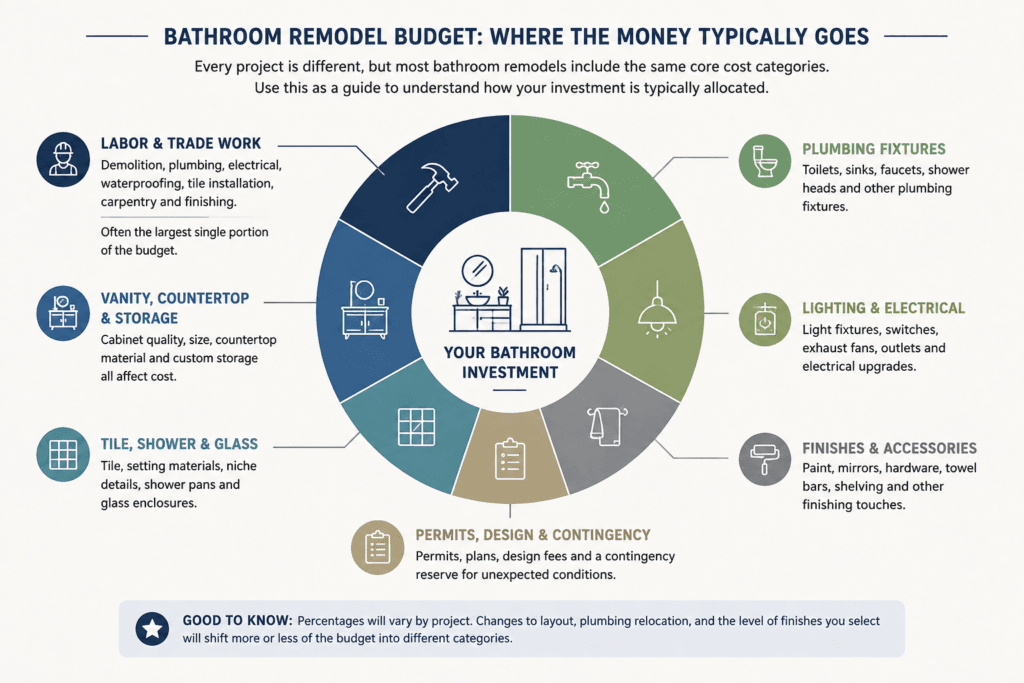
Bathroom remodeling cost is usually spread across several categories rather than one major purchase. Labor, tile, plumbing fixtures, cabinetry, glass and finishing work can each take a meaningful share of the total budget.
01 — LABOR & TRADE WORK
Demolition, plumbing, electrical, waterproofing, tile installation, cabinetry and finish work often represent a significant portion of the overall project cost.
02 — VANITY, COUNTERTOP & STORAGE
Cabinet size, construction quality, countertop material and custom storage can create a large price range, especially for double vanities or made-to-order cabinetry.
03 — TILE, SHOWER & GLASS
Shower waterproofing, tile, setting materials and glass enclosures can add substantial cost because they combine both material and skilled installation.
04 — FIXTURES & FINISHES
Faucets, toilets, sinks, lighting, mirrors, hardware and accessories may seem like smaller purchases individually, but the total can add up quickly.
GOOD TO KNOW
Budget percentages vary widely by project. A bathroom with inexpensive finishes but major plumbing relocation may spend more on labor, while a simple layout with premium tile, cabinetry and fixtures may shift more of the budget toward materials.
LABOR VS. MATERIALS
Know What You Are Paying for Beyond the Products
Bathroom remodeling cost is not just the price of tile, fixtures and cabinetry. Installation labor, demolition, preparation, coordination and finish work can equal or exceed the cost of the visible materials.
LABOR & INSTALLATION
Labor costs can include demolition, plumbing, electrical work, waterproofing, tile installation, cabinetry, painting, glass installation and final finish work.
Complex layouts, large-format tile, custom niches, wall-mounted fixtures and detailed finish work can increase labor even when the materials themselves are not especially expensive.
WHAT DRIVES LABOR UP
- Moving plumbing or electrical locations
- Detailed tile patterns or large-format tile
- Custom shower construction
- Installing a new vanity or countertop
- Difficult access or demolition
- Multiple trades working in a small space
MATERIALS & FIXTURES
Material costs include the products that remain in the finished bathroom, such as tile, vanity cabinetry, countertops, plumbing fixtures, lighting, mirrors, shower glass and accessories.
The same basic bathroom layout can have a very different total material cost depending on whether the selections are entry-level, mid-range or premium.
WHAT DRIVES MATERIAL COST UP
- Custom cabinetry and countertops
- Premium plumbing fixtures
- Natural stone or specialty tile
- Frameless or oversized shower glass
- Integrated bidet, lighting or smart features
GOOD TO KNOW
Saving money on materials does not always reduce installation cost. An inexpensive tile with a difficult pattern or poor dimensional consistency, for example, can require more labor than a higher-quality product that installs more predictably.
COST INCREASERS
Upgrades That Can Push the Budget Higher
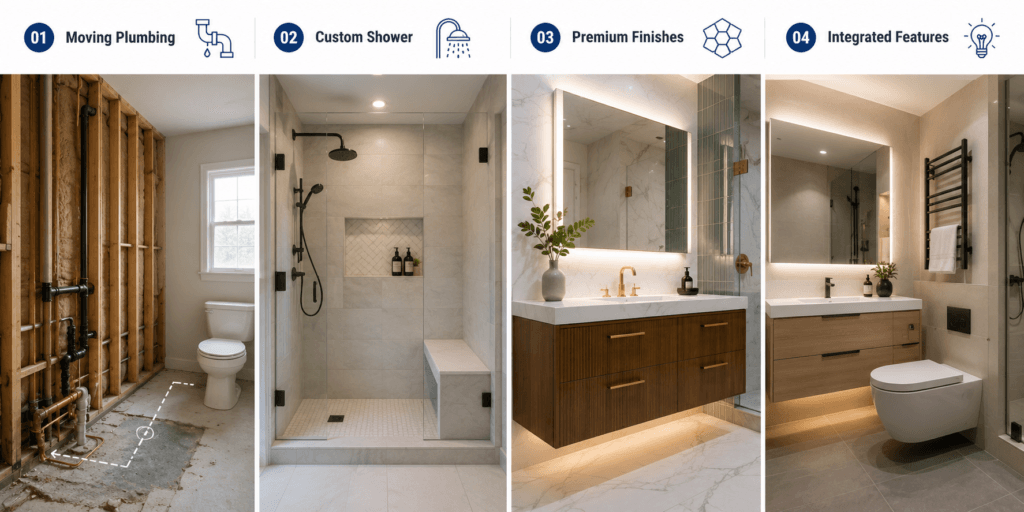
Some bathroom upgrades add cost because they require more expensive materials, more labor or additional coordination between trades. These features can still be worthwhile, but they should be identified early so they do not become surprise expenses later.
01 — MOVING PLUMBING
Relocating toilets, showers, tubs or sinks can require changes to water lines, drains, venting and sometimes framing or floor construction. Keeping fixtures near their existing locations can often reduce cost.
02 — CUSTOM SHOWERS
Large showers, benches, niches, curbless entries, multiple shower heads and custom glass can increase waterproofing, tile, plumbing and installation costs at the same time.
03 — PREMIUM FINISHES
Natural stone, specialty tile, custom cabinetry, designer fixtures and upgraded hardware can raise material costs quickly, especially when used throughout the entire bathroom.
04 — INTEGRATED FEATURES
Heated floors, lighted mirrors, towel warmers, bidet toilets and other powered features may require additional circuits, controls, rough-in work or specialty installation.
GOOD TO KNOW
The most expensive upgrades are often the ones that affect more than one trade. A larger shower, for example, may involve plumbing, waterproofing, tile, framing, glass and electrical work rather than just one additional product.
UNEXPECTED COSTS
Leave Room in the Budget for What You Cannot See Yet
Bathroom remodels often uncover conditions that were hidden behind tile, drywall, cabinetry or flooring. A contingency reserve can help absorb necessary repairs without forcing major changes to the rest of the project.
01 — WATER DAMAGE
Leaks around showers, tubs, toilets or plumbing connections can damage framing, subfloors and wall materials. The extent of repairs may not be clear until demolition begins.
02 — OLD PLUMBING OR WIRING
Older bathrooms may contain deteriorated piping, outdated wiring or previous work that needs to be corrected before new fixtures and finishes are installed.
03 — FRAMING & SUBFLOOR REPAIRS
Uneven floors, damaged studs, inadequate blocking or deteriorated subflooring can require additional carpentry before tile, cabinetry or glass can be installed properly.
04 — PERMITS & SCOPE CHANGES
Permit requirements, inspections or owner-requested changes during construction can add both cost and time, especially when work must be revised after rough-in has started.
GOOD TO KNOW
For a full remodel, it is usually safer to keep part of the budget uncommitted until demolition is complete. The right contingency depends on the age of the home, project complexity and how much hidden construction is being disturbed.
WHERE TO SPEND MORE
Put More of the Budget Into the Parts That Matter Most
A bathroom remodel does not need premium materials everywhere. Spending more usually makes the most sense on systems and components that are difficult to replace later, used every day or important to long-term performance.
01 — WATERPROOFING & INSTALLATION
Good waterproofing, substrate preparation and proper installation are worth prioritizing because failures behind tile can be expensive and disruptive to repair later.
02 — PLUMBING FIXTURES & VALVE
Reliable faucets, shower valves and concealed plumbing components are used constantly and can be difficult to access once walls and finishes are complete.
03 — CABINETRY & HARDWARE
Well-built vanity cabinets, drawer slides and hinges can improve everyday use and durability, especially in bathrooms that see frequent use.
04 — LIGHTING & VENTILATION
Good lighting and effective exhaust ventilation can have a bigger impact on daily comfort and bathroom performance than many decorative upgrades.
GOOD TO KNOW
Spend based on function, durability and replacement difficulty rather than price alone. Decorative finishes are often easier to change later than waterproofing, concealed plumbing, cabinetry or electrical rough-in.
BEFORE YOU SET THE BUDGET
Bathroom Remodeling Budget Checklist
Before construction begins, confirm the project scope, major product selections and the work that may affect labor or hidden conditions. A more complete budget at the start can reduce costly changes later.
☐ Decide whether the project is a refresh or full remodel
☐ Confirm whether the existing layout will change
☐ Identify any plumbing fixtures being relocated
☐ Set an allowance for vanity and countertop
☐ Budget for tile, waterproofing and shower work
☐ Include shower glass and hardware
☐ Include plumbing fixtures and accessories
☐ Include lighting and electrical upgrades
☐ Account for ventilation or exhaust fan work
☐ Include permits, design or professional fees where needed
☐ Confirm demolition and disposal are included
☐ Review labor and installation costs separately from materials
☐ Set aside money for hidden or unexpected conditions
☐ Keep a portion of the budget available for final adjustments
GOOD TO KNOW
Compare contractor proposals by scope as well as price. A lower quote may exclude demolition, permits, waterproofing, shower glass, finish work or other items that appear in a more complete proposal.
Bottom Line
Bathroom remodeling cost depends on the scope of work, labor, material selections and the condition of the existing space. Build the budget around the complete project rather than just the visible finishes, keep room for unexpected conditions and prioritize the systems that are difficult or expensive to change later.