
WINDOW REPLACEMENT GUIDE
Should You Repair or Replace Your Windows?
Learn when window replacement makes sense, which warning signs matter, when repair may still be enough and what to consider before starting a replacement project.
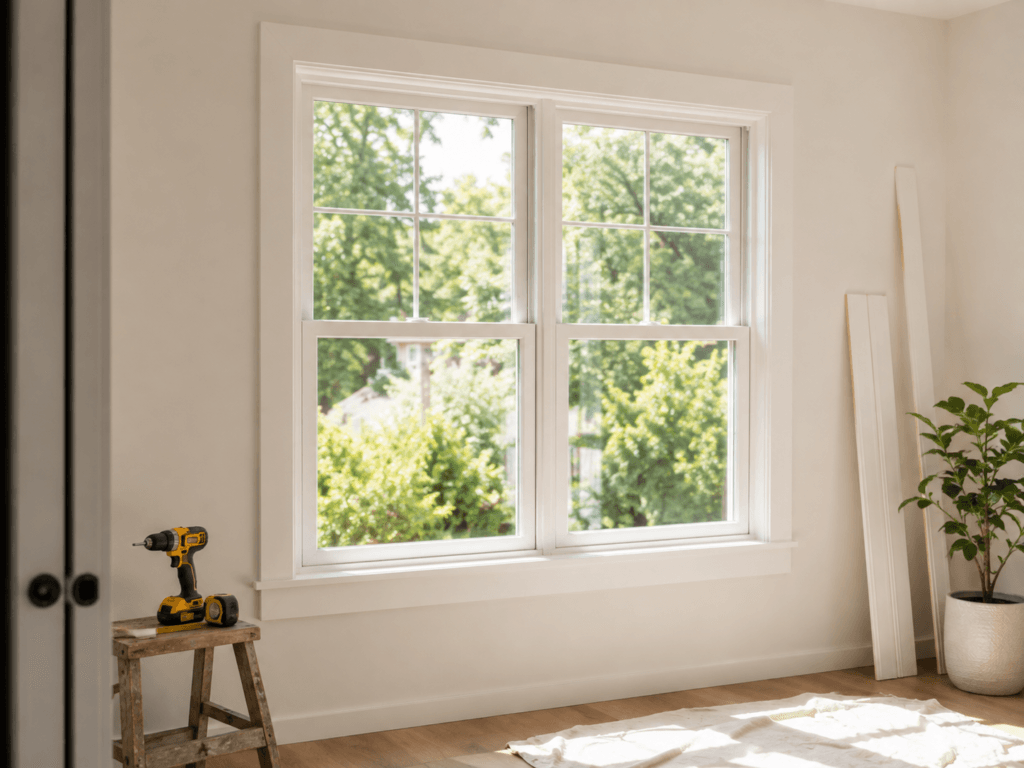
WINDOW REPLACEMENT
Know When It’s Time to Replace Your Windows
Windows can often be repaired, but age, water intrusion, failed seals, poor operation and energy performance may make replacement the better long-term option. Understanding the condition of your existing windows helps you decide what actually needs to be done.
01 – SIGNS YOUR WINDOWS NEED REPLACEMENT
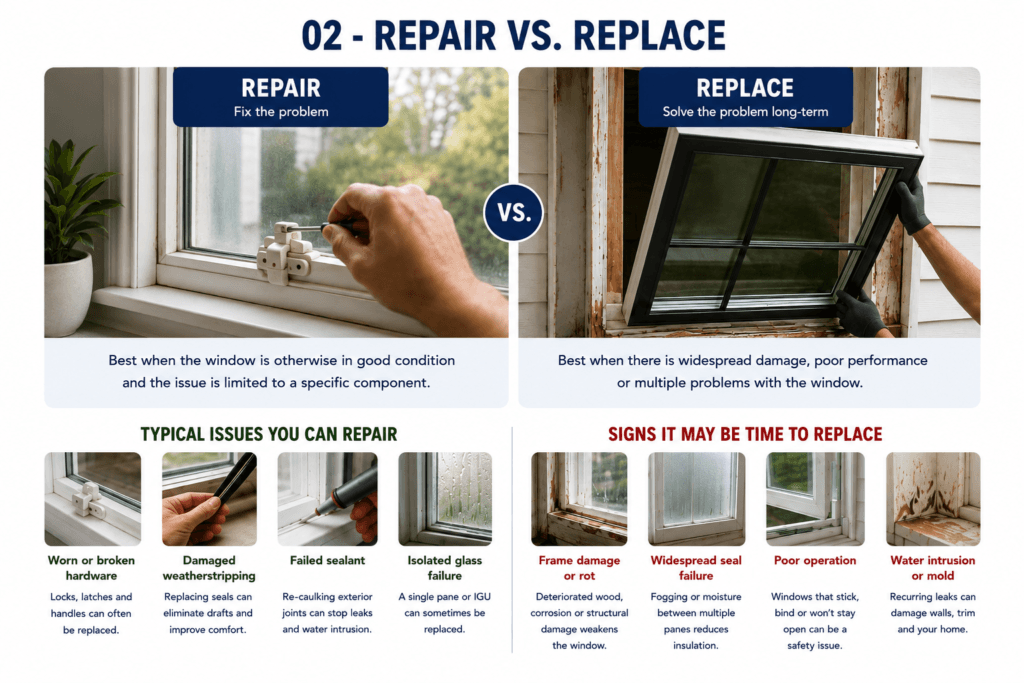
Windows may need replacement when they become difficult to operate, allow noticeable drafts or water intrusion, show frame deterioration, or develop failed insulated glass seals. Repeated problems can indicate that repair alone may no longer be the best long-term solution.
BEST FOR
Homeowners evaluating older windows, visible damage, recurring leaks, fogged glass, poor operation or declining comfort and energy performance.
GOOD TO KNOW
One problem does not always mean the entire window needs to be replaced. Failed hardware, weatherstripping, sealant or individual glass units can sometimes be repaired. Replacement makes more sense when problems are widespread, structural components are deteriorated or the existing windows no longer meet the project’s performance needs.
02 – REPAIR VS. REPLACE
Not every window problem requires full replacement. Issues such as worn hardware, damaged weatherstripping, failed sealant or an isolated insulated glass failure may be repairable, while more extensive deterioration can make replacement the better long-term choice.
BEST FOR
Homeowners deciding whether to fix an existing window or invest in a complete replacement.
GOOD TO KNOW
Repair usually makes sense when the frame and surrounding opening are still in good condition and the problem is limited to a replaceable component. Replacement becomes more practical when there is recurring water intrusion, significant frame damage, poor operation, widespread seal failure or multiple problems affecting the same window.
03 – RETROFIT VS. FULL-FRAME REPLACEMENT
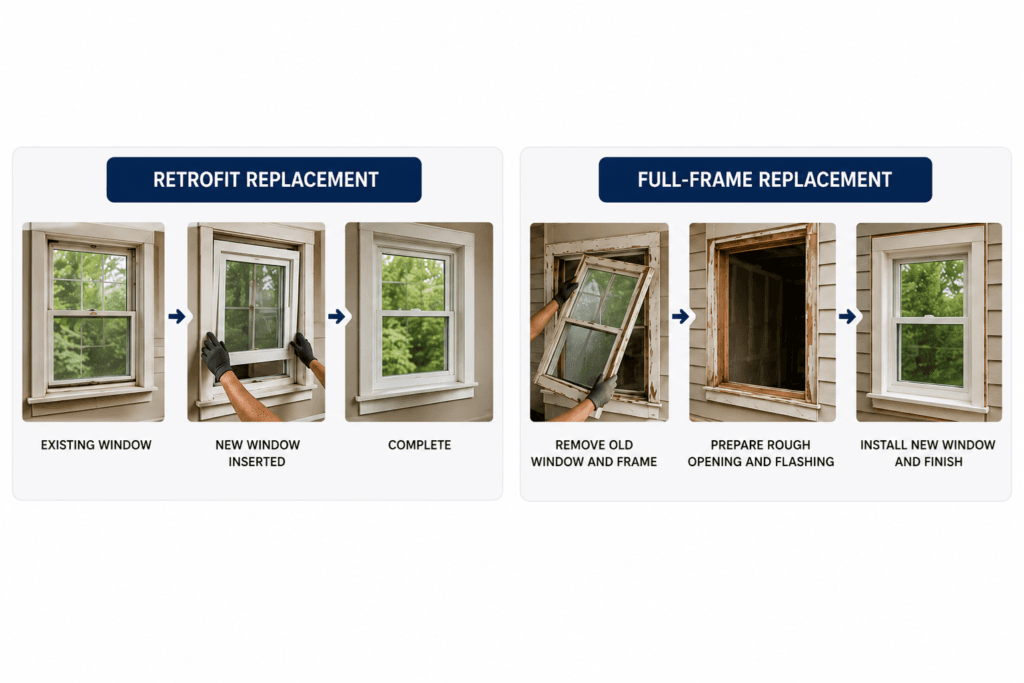
A retrofit replacement installs a new window within the existing window frame or opening, while a full-frame replacement removes the existing window assembly down to the rough opening before the new window is installed.
BEST FOR
Retrofit replacement works well when the existing frame and surrounding waterproofing are still in good condition. Full-frame replacement is better when there is frame deterioration, water damage, poor installation, or a need to correct the opening and flashing.
GOOD TO KNOW
Retrofit installation is usually faster and less disruptive, but it can slightly reduce the visible glass area because the new frame fits inside the existing opening. Full-frame replacement takes more labor and finish work, but it allows the installer to inspect and repair the rough opening, flashing and surrounding conditions before installing the new window.
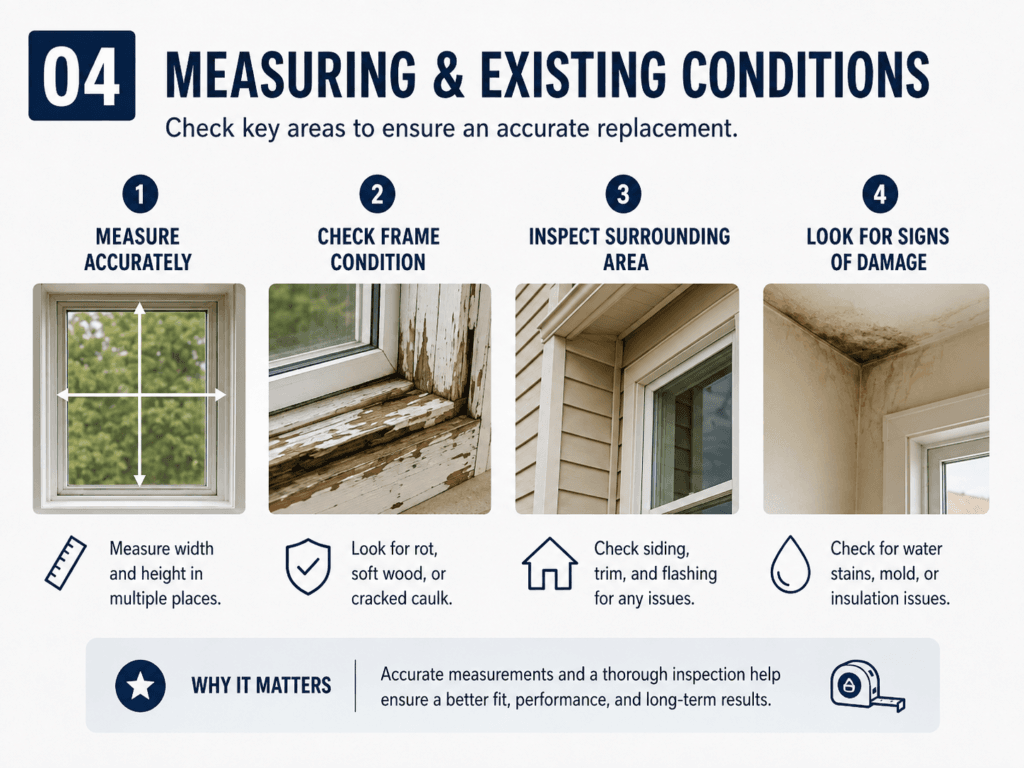
04 – MEASURING & EXISTING CONDITIONS
Accurate measurements are important, but replacement windows also depend on the condition of the existing opening. Width, height, frame depth, sill condition, surrounding trim, wall finish and signs of water damage can all affect what type of replacement will work.
BEST FOR
Homeowners preparing for estimates, comparing replacement options or trying to understand why a new window cannot always be ordered from the visible glass size alone.
GOOD TO KNOW
Measurements should be taken at multiple points because older openings may not be perfectly square, level or plumb. Before ordering, the installer should also verify the existing frame condition, available installation depth, exterior cladding or stucco, interior trim and any evidence of leakage or deterioration that could affect the final window size or installation method.
05 – CHOOSING REPLACEMENT WINDOWS
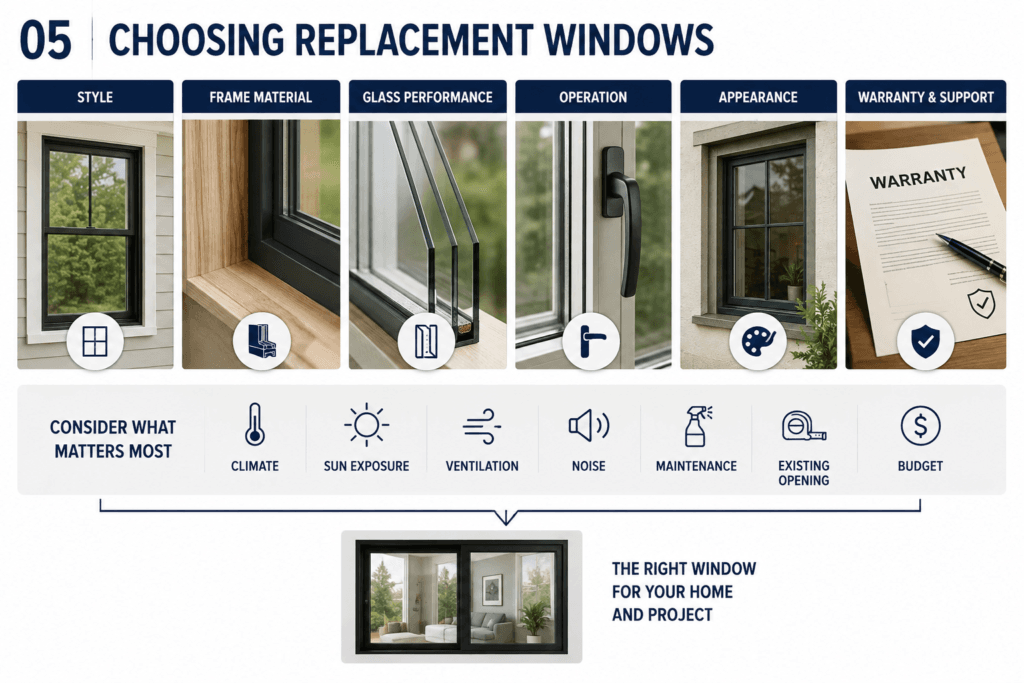
Choosing a replacement window involves more than matching the existing size. Window style, frame material, glass performance, operation, appearance, warranty and installation method should all fit the needs of the home and the conditions of the opening.
BEST FOR
Homeowners comparing products and deciding which replacement window offers the right balance of performance, appearance, maintenance and budget.
GOOD TO KNOW
Start with the conditions that matter most for your project, such as climate, sun exposure, ventilation, noise, maintenance and existing opening size. Compare complete window performance rather than focusing on one feature alone, and verify that the selected product is appropriate for the opening, installation method and local project requirements.
06 – WHAT TO EXPECT DURING REPLACEMENT
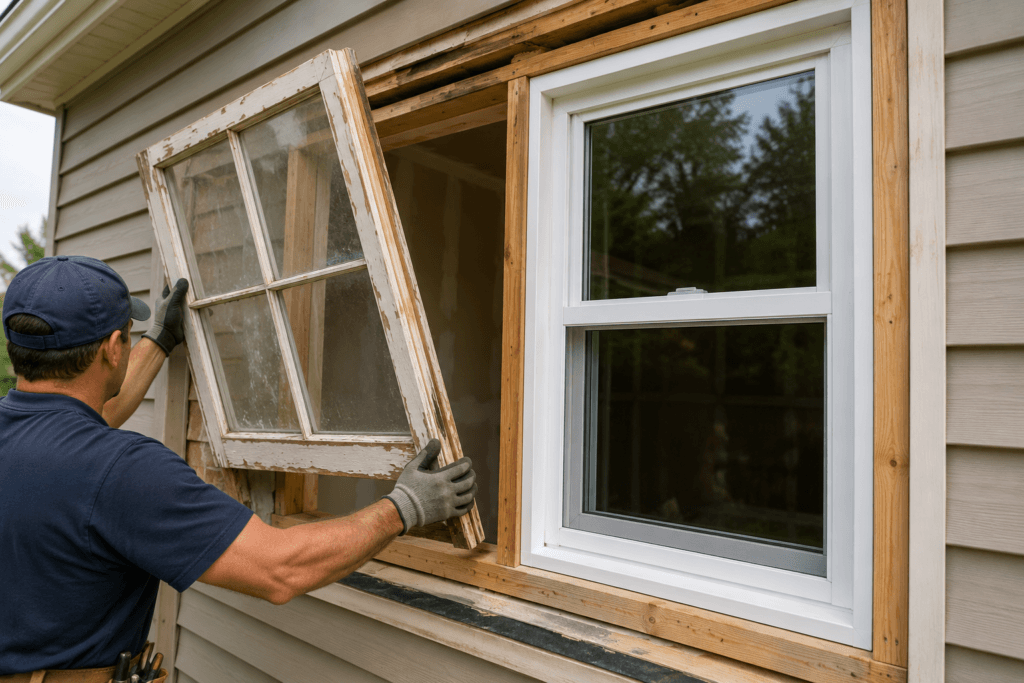
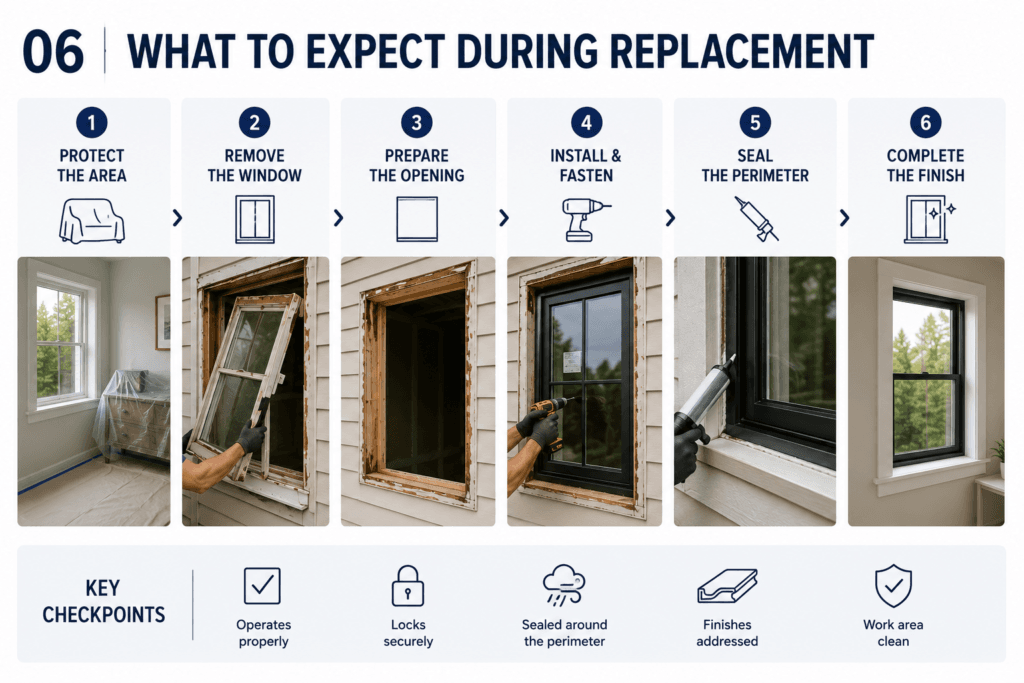
Window replacement usually involves protecting the work area, removing the existing window, preparing the opening, installing and fastening the new unit, sealing the perimeter and completing any interior or exterior finish work.
BEST FOR
Homeowners who want to understand the installation process, how disruptive the work may be and what should happen before the project is considered complete.
GOOD TO KNOW
The exact process depends on whether the project uses a retrofit or full-frame installation. Full-frame replacement can involve more demolition, flashing and finish repairs, while retrofit work is usually faster. Before the installer leaves, windows should operate properly, lock correctly, be sealed around the perimeter and have all disturbed finishes addressed.
QUICK COMPARISON
Compare Window Replacement Options at a Glance
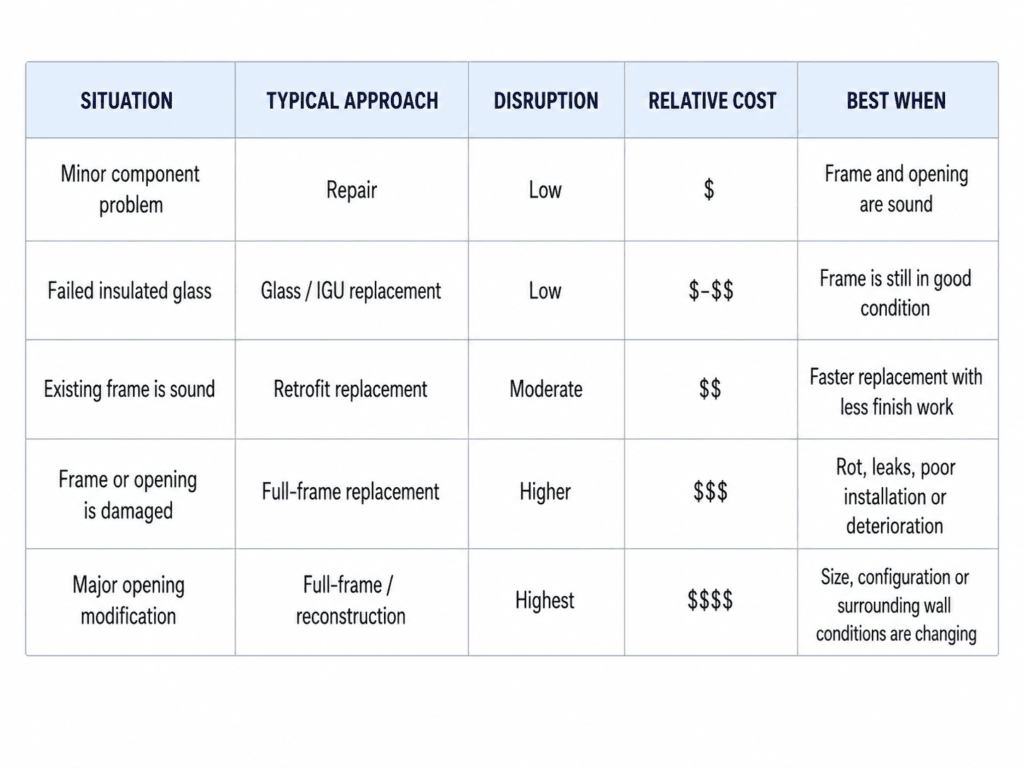
Replacement approaches and relative costs are provided for general comparison only. Actual scope, pricing and installation requirements vary based on existing conditions, window size, product selection, wall construction, access, finish work, location and project requirements.