Metal Roof vs. Shingles: Cost, Lifespan, Noise & Maintenance
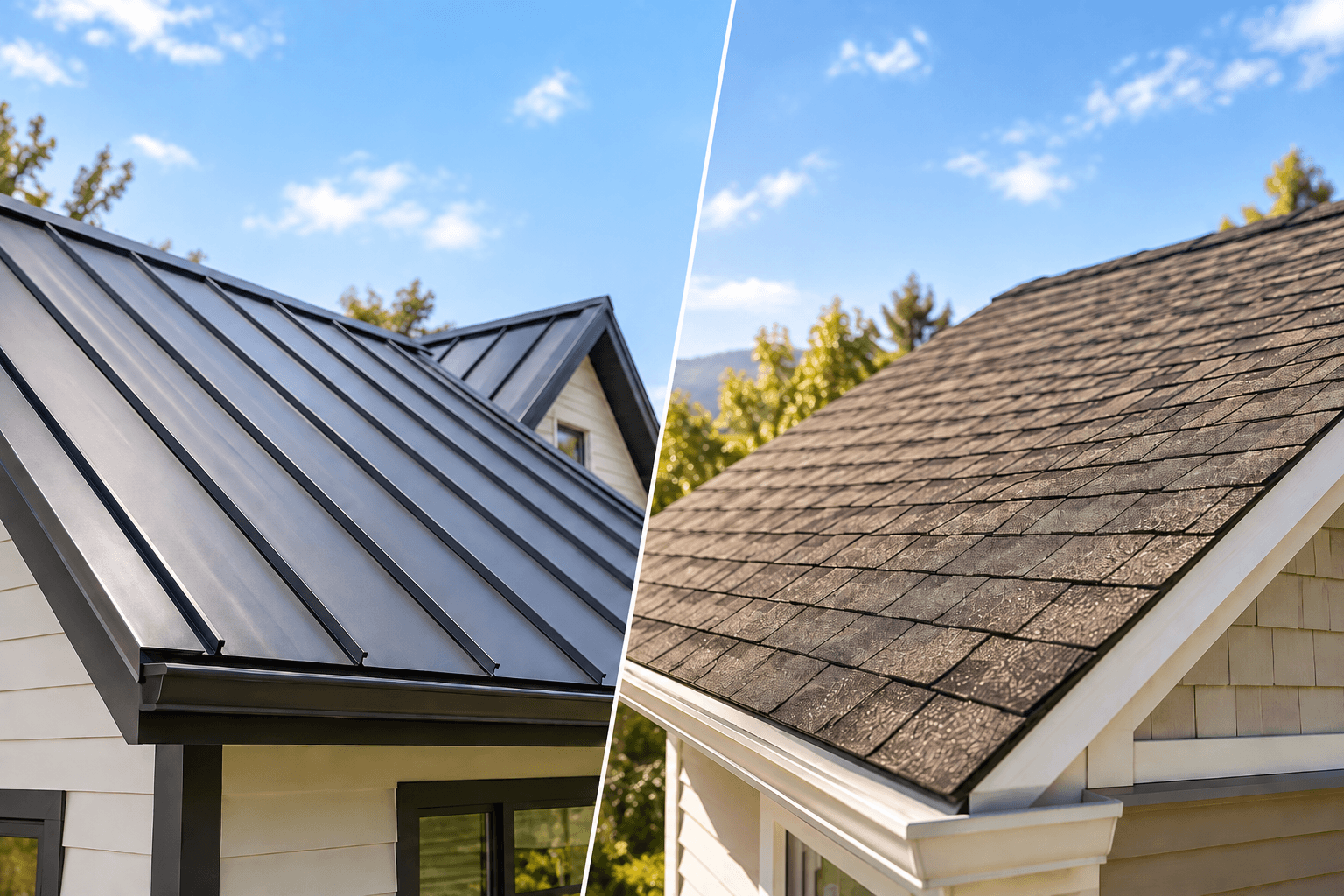
If you are comparing a metal roof vs shingles, the decision usually comes down to a tradeoff between upfront cost and long-term performance.
Asphalt shingles are familiar, widely available and generally less expensive to install. Metal roofing costs more initially, but a well-installed system can last considerably longer and may need fewer major repairs over its service life.
Neither option is automatically better for every house.
Roof shape, budget, climate, how long you expect to own the home and even the availability of experienced installers can all change which material makes more sense.
If you are still comparing other roofing materials as well, start with Builzee’s Roof Types & Materials guide.
Metal Roof vs Shingles at a Glance
| Category | Metal Roofing | Asphalt Shingles |
|---|---|---|
| Upfront cost | Higher | Lower |
| Typical lifespan | 40–70+ years | 20–30+ years |
| Maintenance | Generally low | Low to moderate |
| Repairs | More specialized | Usually easier |
| Rain noise | Usually modest with a complete roof assembly | Generally quiet |
| Wind resistance | Can be excellent when properly installed | Varies by shingle and installation |
| Fire resistance | Excellent for many metal systems | Good with rated products |
| Installation | More specialized | Widely available |
| Appearance | Modern to traditional | Very broad selection |
| Replacement frequency | Usually less frequent | Usually more frequent |
Those are broad differences, not guarantees. Product quality and installation matter just as much as the material itself.
Which Costs More: Metal Roofing or Shingles?
Asphalt shingles usually win on initial cost.
The material is widely available, crews are familiar with it, and installation is relatively fast on a straightforward residential roof.
Metal roofing generally carries a higher installed price because the panels, trim, flashing and fastening system can cost more, and the installation often requires crews with more specialized experience.
The gap can become even larger on complicated roofs with dormers, valleys, short panel sections or unusual transitions.
But the upfront bid does not tell the whole story.
A metal roof may remain in service through the time period when an asphalt roof would otherwise need replacement. That does not automatically make metal cheaper over a homeowner’s lifetime, but it changes the comparison.
If you are reviewing real estimates, Builzee’s Roof Replacement & Cost guide explains why roof area, pitch, tear-off, decking repairs, flashing and access can change the final price so much.
Do Not Compare Material Price Alone
Two roofing bids can use completely different scopes.
One may include tear-off, upgraded underlayment, flashing replacement and ventilation work while another carries allowances or excludes those items.
That matters regardless of whether the roof is metal or asphalt.
When comparing prices, look at the complete installed system rather than the price of the visible roofing material.
How Long Does a Metal Roof Last Compared With Shingles?
This is where metal roofing has its clearest advantage.
A residential asphalt shingle roof commonly provides around 20 to 30 years of service, although premium products and favorable conditions can extend that range.
A quality metal roofing system can often reach 40 to 70 years or longer.
That is a big difference if you expect to own the property for decades.
But the numbers should not be treated as expiration dates.
A poorly detailed metal roof can have problems early. A well-installed asphalt roof on a properly ventilated home can perform very well for many years.
Installation quality, climate, maintenance, roof geometry and drainage all affect actual life expectancy.
For a broader comparison of roof life by material, see Builzee’s How Long Does a Roof Last? guide.
The Metal Roofing Alliance also maintains homeowner information about metal roof longevity, maintenance and performance.
What About Maintenance?
Neither roofing system should require constant attention.
Most maintenance involves keeping debris off the roof, keeping drainage paths clear and checking vulnerable details such as flashing and penetrations.
Asphalt Shingles
Shingle repairs are usually familiar to residential roofers.
Individual shingles can often be replaced when wind or impact causes localized damage. Pipe boots, flashing and small damaged sections are also common repairs.
The challenge comes as the roof gets older.
Aging shingles can become brittle enough that lifting one for a repair damages the surrounding material. Color matching also becomes harder as the original roof fades.
Metal Roofing
Metal panels themselves tend to require relatively little maintenance, but that does not mean every component lasts forever.
Depending on the roofing system, inspections may still need to cover:
- flashings
- sealants
- penetrations
- panel seams
- coatings
- fasteners or clips
Standing-seam roofs often conceal most of their fastening system, which helps protect fasteners from direct weather exposure.
Exposed-fastener metal systems work differently and may require more attention to fasteners and washers as the roof ages.
For either material, Builzee’s Roof Repair & Maintenance guide covers the areas homeowners should inspect periodically.
Is a Metal Roof Noisy When It Rains?
This is probably one of the most common concerns homeowners have about metal roofing.
A metal roof on a house usually does not sound like rain hitting the roof of a shed or barn.
Why?
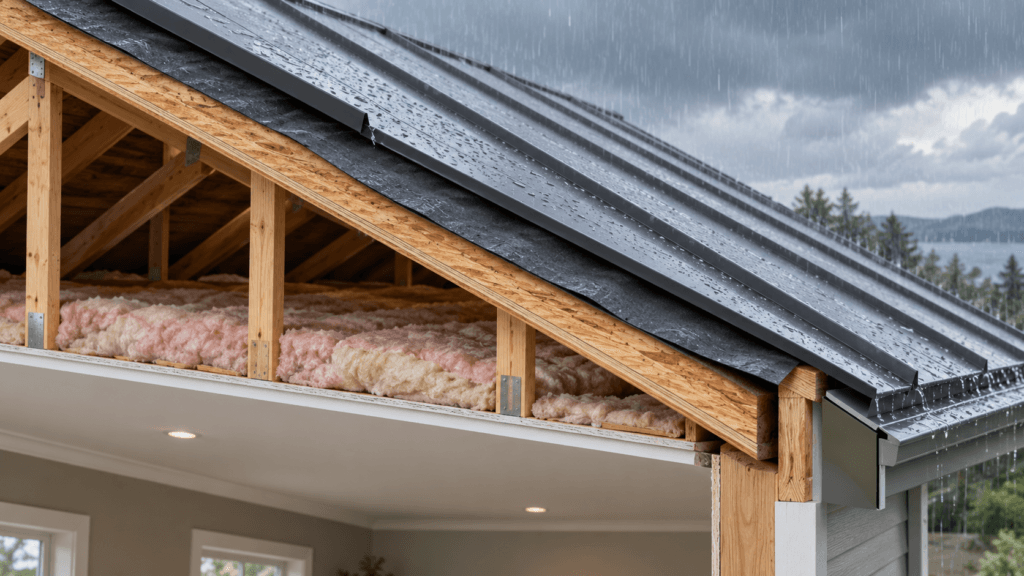
Because residential roofing is normally installed over a complete roof assembly.
Between the metal panel and the room below you may have roof decking, underlayment, an attic cavity, insulation and finished ceilings.
Those layers absorb a substantial amount of sound.
A metal roof installed directly over open framing is a different situation. That is where the classic loud “rain on a tin roof” sound is more noticeable.
On a conventional insulated home, the difference is usually much less dramatic.
Some homeowners may still notice a different sound during heavy rain, particularly in vaulted-ceiling areas or roof assemblies with limited insulation, but noise is rarely as extreme as people imagine.
Which Handles Wind and Severe Weather Better?
Both metal roofing and asphalt shingles can perform well in severe weather when the correct product is installed properly.
Metal roofing has some natural advantages.
Large panels and mechanically connected seams can provide excellent wind performance when the system is designed and fastened correctly.
Metal also will not crack or lose granules in the way asphalt shingles can.
That does not make metal indestructible.
Large hail can dent some metal roofing. Improperly secured panels can fail in high winds. Poor flashing can leak regardless of how strong the panels are.
Asphalt shingles also vary considerably.
Higher-rated shingles installed according to the manufacturer’s fastening pattern may resist substantial wind, while older, brittle or improperly nailed shingles may lift much more easily.
After major storms, the condition of the actual roof matters more than assumptions based solely on material.
What About Hail?
Hail affects the two systems differently.
Asphalt shingles can lose granules or sustain impact damage that is not always immediately obvious from the ground.
Metal roofing generally will not crack from hail in the same way, but larger hail can leave cosmetic dents.
Whether those dents affect performance depends on the panel, thickness, metal type and severity of the impact.
Some homeowners are comfortable with minor cosmetic changes. Others may care more about appearance, particularly on highly visible roof planes.
When hail resistance matters, compare the impact rating of the specific product instead of assuming all metal or all shingles perform identically.
Is Metal Roofing Better for Fire Resistance?
Metal is noncombustible and can be an excellent roofing choice where fire exposure is a concern.
Asphalt shingles can also achieve strong fire ratings as part of an approved roof assembly, so this is another area where the actual product and system matter.
Homeowners in wildfire-prone areas should look beyond the roof covering as well.
Gutters filled with dry debris, exposed roof edges, vents and nearby vegetation can all affect vulnerability.
The roofing material is only one part of the building’s exterior fire strategy.
Does Metal Roofing Make the House Hotter?
Another common assumption is that metal gets hot in the sun and therefore must make the home hotter.
The real answer is more complicated.
Roof temperature and indoor temperature are not the same thing.
Roof color, solar reflectance, attic ventilation, insulation and the entire roof assembly affect how much heat eventually reaches the living space.
Some metal roofing products use reflective coatings that can reduce solar heat absorption compared with darker roofing surfaces.
The U.S. Department of Energy explains how solar reflectance, thermal performance and climate affect the cooling benefits of reflective roofing.
A dark metal roof can still become hot in direct sun. So can a dark asphalt shingle roof.
The key question is how effectively the entire assembly manages that heat.
If attic conditions are a concern, see Builzee’s Roof Ventilation & Moisture guide.
Which Is Easier to Install?
Asphalt shingles generally have the advantage here.
There are far more residential roofing crews experienced with asphalt shingles, and most contractors can obtain the material quickly.
Installation methods are also highly standardized.
Metal roofing requires more specialized detailing.
Panel layout matters. Seams have to line up properly. Penetrations, valleys, ridges and roof-to-wall transitions require metal-specific flashing details.
Metal panels also expand and contract as temperatures change, so the attachment system must allow the roof to move as intended.
The quality of the installer becomes especially important.
A beautiful premium metal roof installed poorly can create more problems than a conventional asphalt roof installed correctly.
Builzee’s Roof Installation guide explains the preparation, decking, underlayment and flashing work that needs to happen before either finished material goes down.
Can Metal Roofing Be Installed Over Existing Shingles?
Sometimes, but that does not mean it is always the right approach.
Local requirements, manufacturer instructions and the condition of the existing roof all matter.
Installing over the old roof may reduce tear-off, but it also means the roof deck is harder to inspect directly.
If there is rot, moisture damage or poor decking beneath the existing shingles, covering the roof does not correct the problem.
The additional layer can also affect flashing, roof edges, penetrations and other details.
Before agreeing to any overlay system, understand exactly what will and will not be inspected underneath.
Which One Looks Better?
That is mostly personal preference.
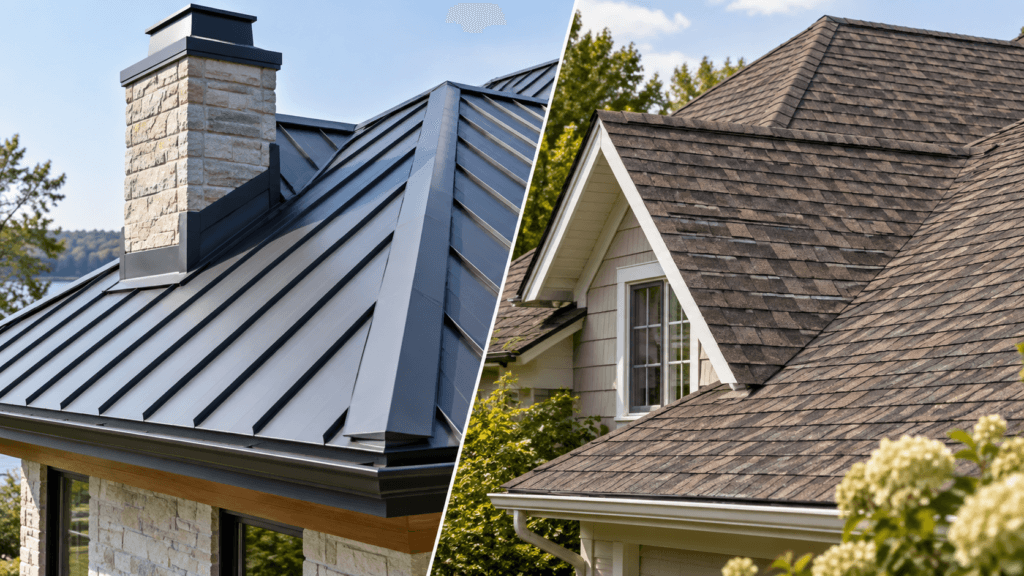
Asphalt shingles are available in a huge range of colors and profiles, which makes them easy to match with nearly any residential style.
Architectural shingles can provide shadow lines and texture without calling much attention to the roof itself.
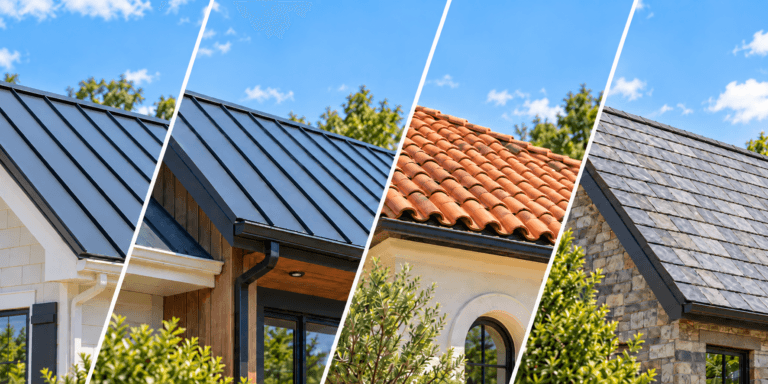
Metal roofing used to be associated mostly with agricultural buildings, but residential products now cover a much wider range of designs.
Standing-seam metal works especially well on modern, contemporary, farmhouse and mountain-style homes.
Metal shingles and other formed products can create more traditional appearances.
One thing worth considering is how visible the roof is from the street.
A dramatic standing-seam roof can become a major architectural feature. On another home, the owner may prefer roofing that visually recedes into the rest of the exterior.
Which Is Easier to Repair?
For ordinary localized repairs, asphalt shingles usually have the edge.
Roofers can often replace a handful of damaged shingles or repair flashing without disturbing a large section of roof.
Metal repairs may require someone familiar with the specific panel system.
A damaged standing-seam panel can be much larger than an individual shingle, and replacing it may affect seams or trim around adjacent areas.
That does not mean metal roofs are difficult to maintain. They simply require different skills.
Availability matters too.
If only a small number of contractors in your area install a particular metal system, service may be harder to schedule years later.
That is worth considering before choosing an unusual panel or specialty system.
Does a Metal Roof Add More Home Value?
A long-lasting roof can certainly be attractive to a future buyer, but it is difficult to assign a universal dollar value to the upgrade.
Real estate markets vary.
A premium metal roof may be highly desirable in one region and relatively uncommon in another.
The value also depends on the condition of the roof at the time the home is sold.
A newer asphalt roof can still be a strong selling feature because buyers know they are unlikely to face replacement soon.
For homeowners planning to sell within a few years, recovering the entire additional cost of metal roofing should not be assumed.
For someone expecting to remain in the home for decades, avoiding an additional roof replacement later may matter more.
When Asphalt Shingles Make More Sense
Shingles remain popular for good reasons.
They may be the better fit when:
- keeping upfront cost down is a priority
- the home may be sold in the near future
- local contractors have extensive shingle experience
- straightforward repairs are important
- the homeowner prefers a traditional roof appearance
A properly installed architectural shingle roof is not a low-quality choice simply because metal lasts longer.
For many homes, shingles offer a very practical balance of cost, appearance and service life.
When Metal Roofing Makes More Sense
Metal becomes more attractive when long-term durability matters more than minimizing the initial price.
It may make sense when:
- you expect to stay in the home for decades
- avoiding another future roof replacement is important
- wind or fire resistance is a major concern
- the architectural style suits standing-seam or another metal system
- you are comfortable paying more upfront for longer expected service life
The installer matters here as much as the material.
Before choosing metal, make sure qualified contractors in your area regularly install the type of system you are considering.
Metal Roof vs Shingles: Which Should You Choose?
There is no universal winner in the metal roof vs shingles comparison.
Asphalt shingles generally cost less upfront, are easier to source and repair, and provide decades of service when installed properly.
Metal roofing usually costs more initially but can last considerably longer and offers excellent durability with relatively low routine maintenance.
If your priority is lower upfront cost, shingles are usually difficult to beat.
If your priority is long service life and fewer full roof replacements, metal becomes much more compelling.
The right choice comes down to how long you expect to own the house, what you are comfortable spending now, the complexity of your roof and the quality of installers available in your market.
Most importantly, do not let the material decision distract from the rest of the roof.
Decking, underlayment, flashing, ventilation and installation quality ultimately determine whether either system performs the way it should.
Planning a Roofing Project?
Explore Builzee’s Roofing Guides for practical help with roof types, ventilation, installation, repairs, maintenance, replacement and cost planning.