
Flooring Types & Materials: Six Options Compared
Compare hardwood, engineered wood, vinyl plank, laminate, tile and carpet before buying. Flooring types and materials should be chosen for room conditions, daily wear, maintenance and installation requirements.
Explore the guide ↓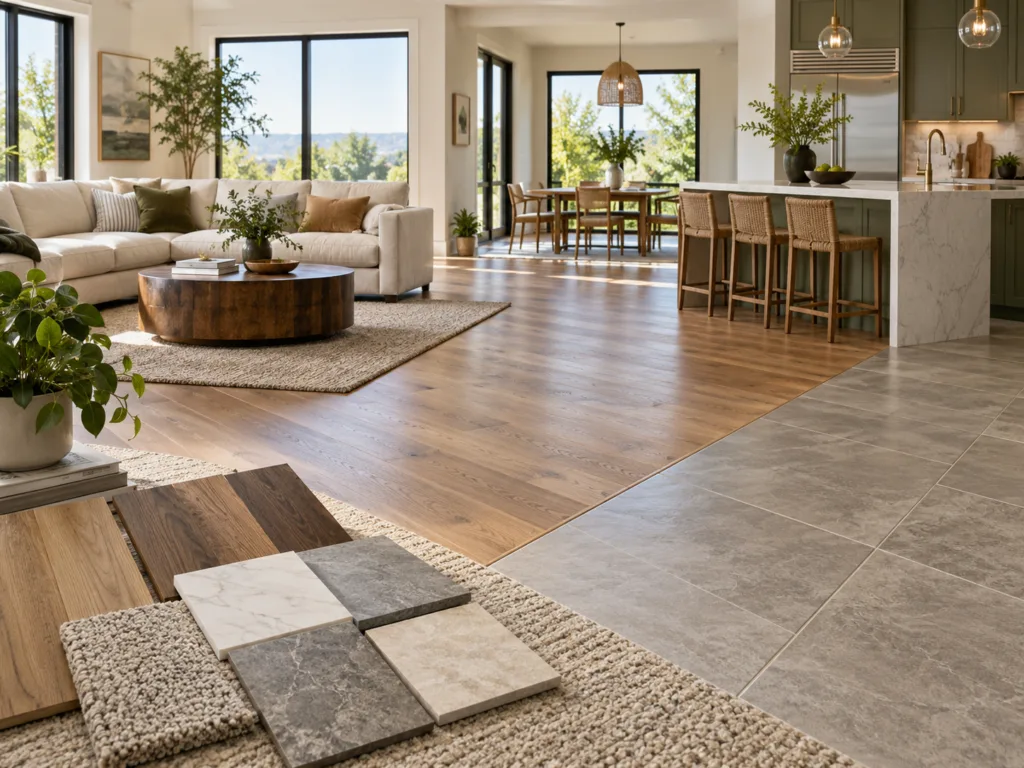
Six Common Flooring Types and Materials
Flooring types and materials differ in construction, moisture resistance, feel, repairability and installation method. Begin by looking at the actual room and your priorities, then compare materials that can perform in those conditions.
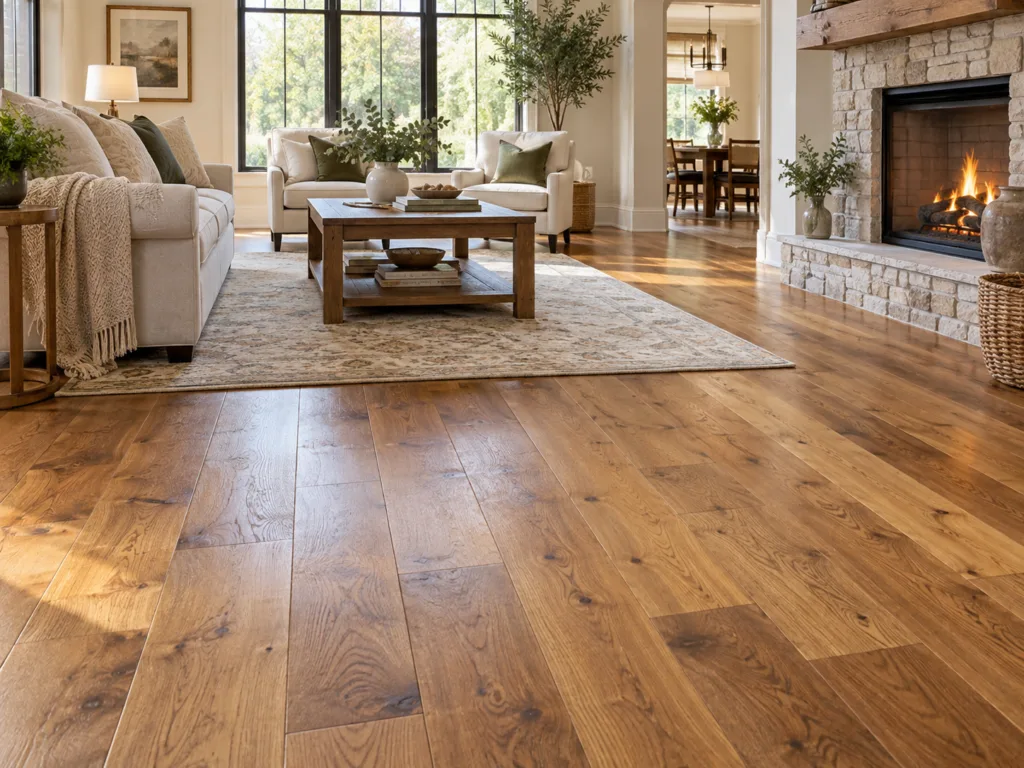
01. Solid hardwood
Milled from solid timber with a refinishable wood surface. Species, width and finish affect hardness, movement and wear. Traditionally fastened to suitable wood subfloors.
Living and dining rooms, bedrooms and other dry above-grade spaces.
Wood responds to humidity; verify subfloor moisture and the manufacturer’s acclimation and installation rules.
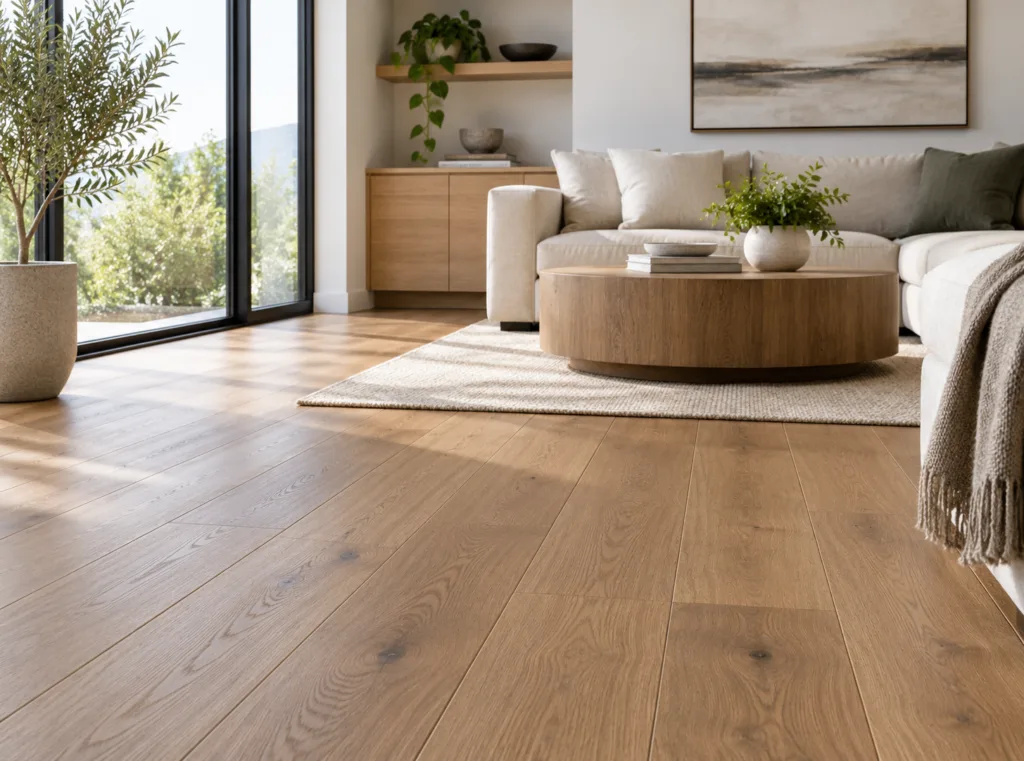
02. Engineered hardwood
A real-wood surface bonded to a layered core. Its construction generally offers more dimensional stability and can accommodate approved glue-down, floating or fastening methods.
Living areas or slab installations where genuine wood and additional installation flexibility matter.
Wear-layer thickness determines whether full sanding and refinishing may be possible. It is not waterproof.
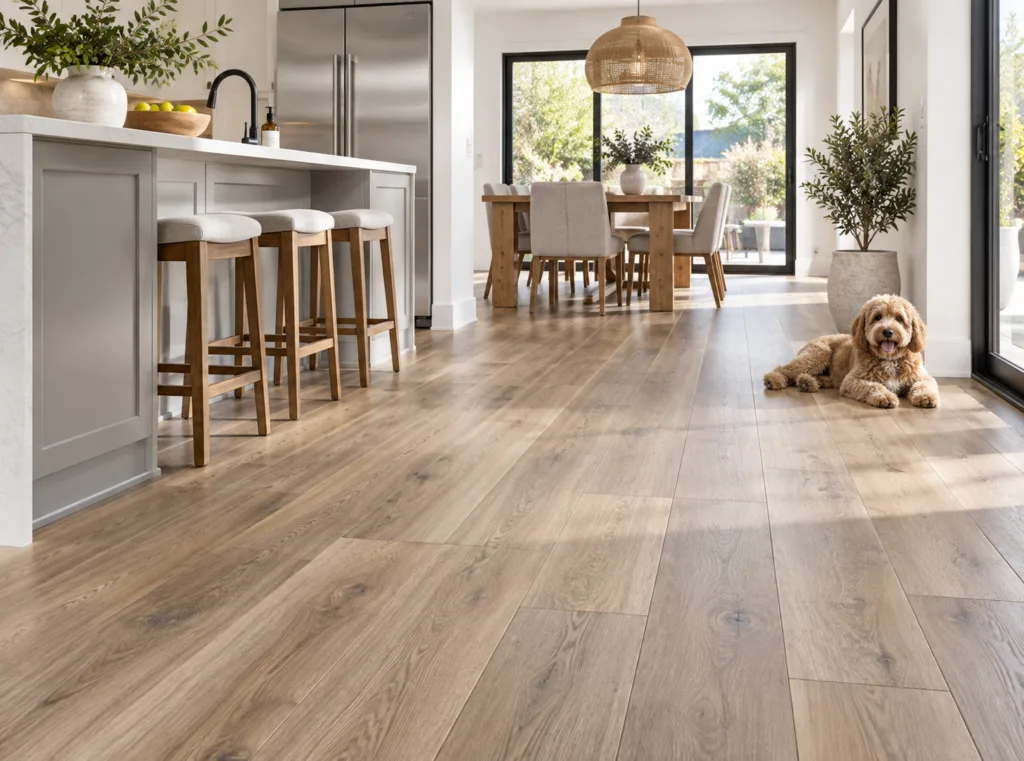
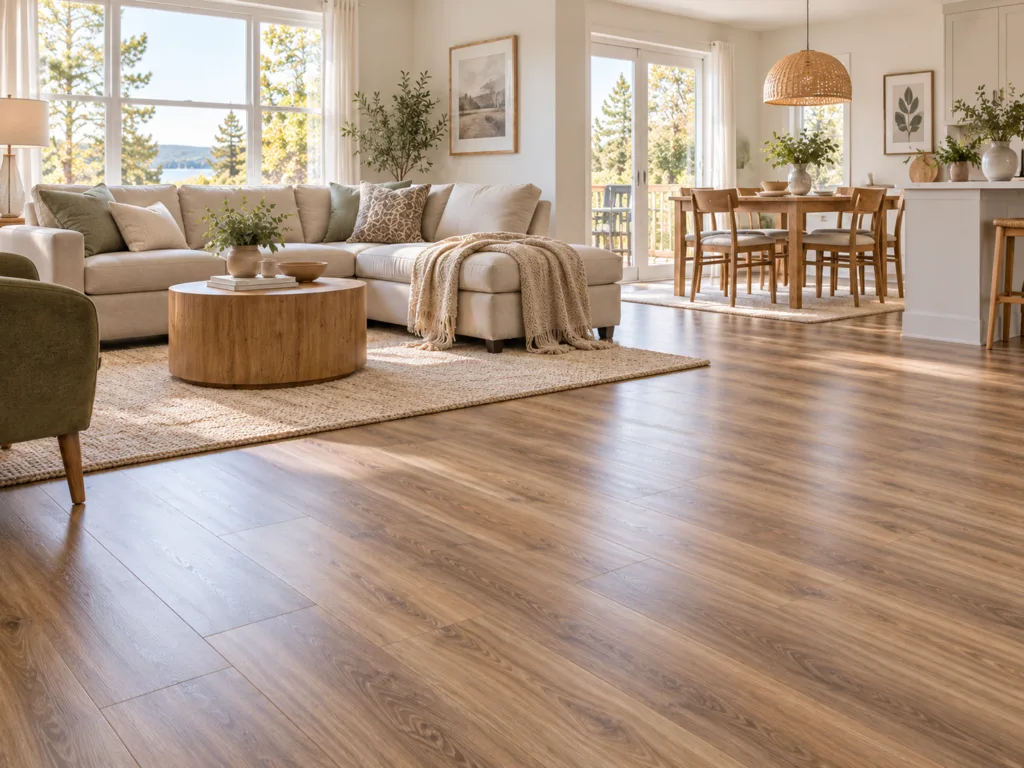
03. Luxury vinyl plank (LVP)
A resilient synthetic plank that often uses a rigid core, printed wood appearance and protective wear surface. Offered in click-lock and glue-down formats.
Busy households, kitchens and many basement applications with suitable substrate preparation.
“Waterproof plank” does not mean a waterproof floor assembly. Check locking joints, edges, transitions and substrate conditions.
04. Laminate
Typically uses a wood-based manufactured core, image layer and protective top surface. Click-together floating installation is common and many products mimic wood texture convincingly.
Bedrooms, living spaces and cost-conscious projects in appropriate moisture conditions.
Water resistance varies by product; prolonged moisture at seams can swell vulnerable cores.
05. Tile
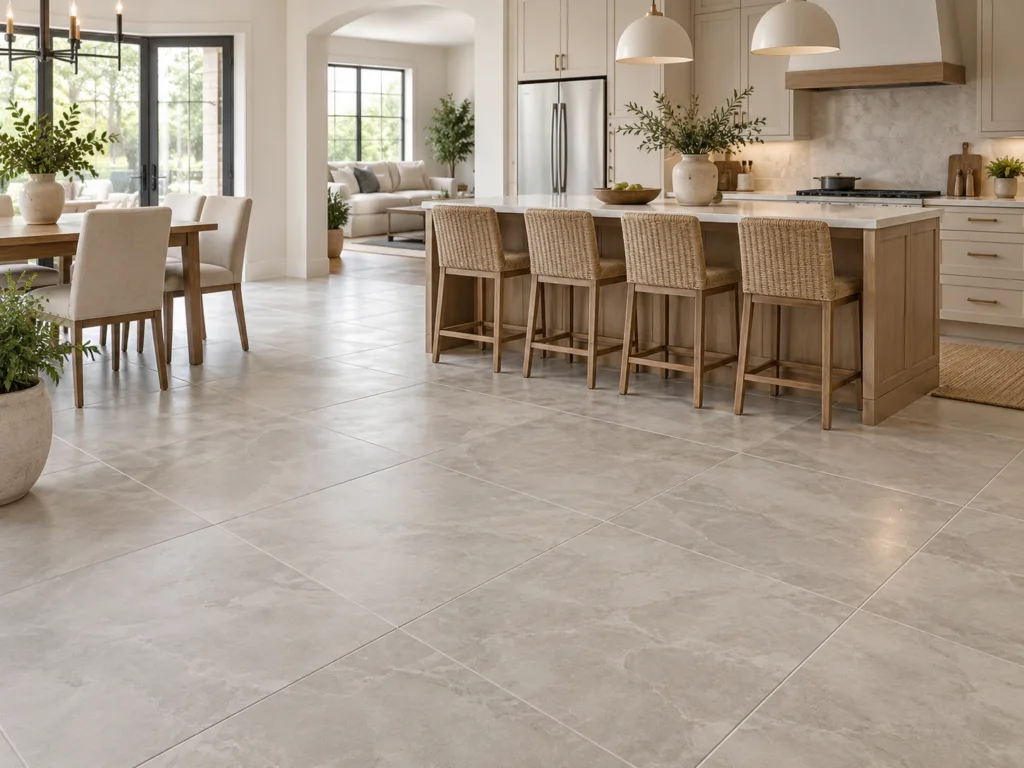
Porcelain and ceramic are highly moisture-resistant surfaces; natural stone is another option with different maintenance needs. Tile relies on a rigid, well-prepared substrate and compatible mortar.
Bathrooms, kitchens, laundry rooms and entries where moisture resistance matters.
Substrate movement, mortar coverage, lippage and movement joints matter. Tile itself is not a substitute for required waterproofing.
06. Carpet
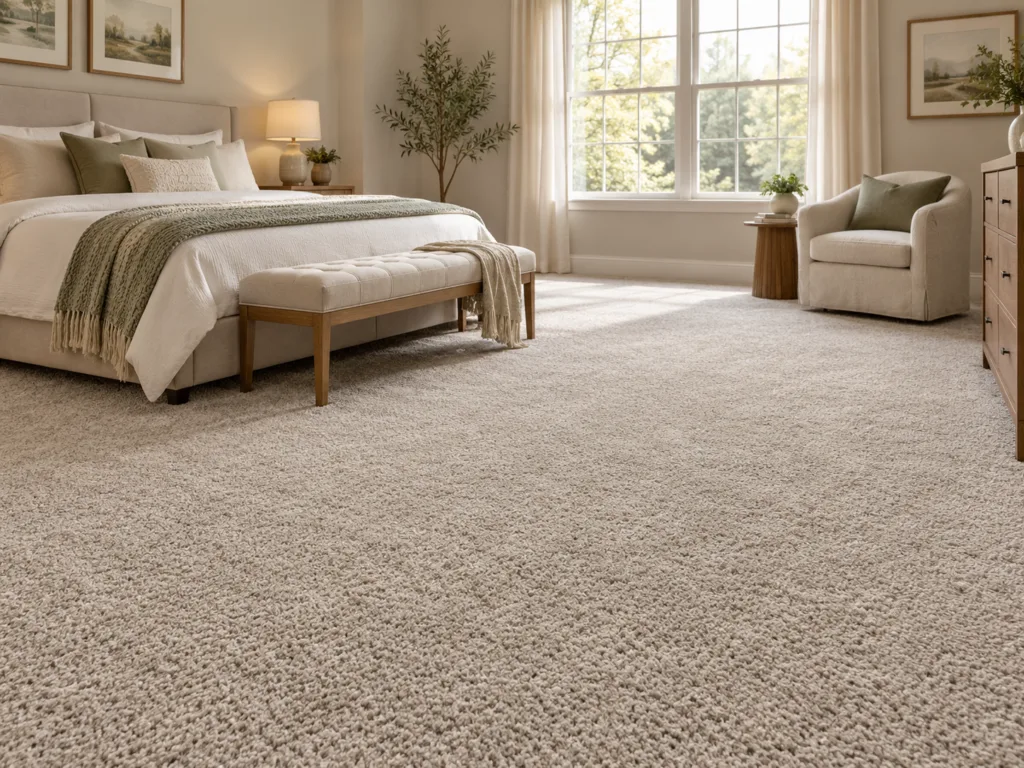
A textile surface with pile and backing supported by an appropriate pad. It offers warmth and sound absorption but collects soil and needs regular cleaning.
Bedrooms, upstairs spaces, media rooms and dry areas emphasizing comfort and quiet.
Fiber, density, pad and cleaning requirements affect long-term durability; avoid chronic moisture exposure.
Flooring Materials Comparison Table
These are general tendencies, not guarantees. Specific product construction, certification, subfloor and installation requirements can change the performance picture.
| Floor type | Common applications | Moisture considerations | Long-term care |
|---|---|---|---|
| Solid hardwood | Dry, above-grade living areas | Sensitive to moisture swings | Sweep, protect finish, possible refinishing |
| Engineered wood | Living spaces, some approved slabs | More stable than solid; not waterproof | Finish care; refinishing depends on wear layer |
| LVP | Kitchens, family rooms, some basements | Material usually water resistant; seams and substrate still matter | Routine cleaning; replace damaged planks where feasible |
| Laminate | Dry bedrooms and living rooms | Water tolerance varies by product | Dry cleaning and prompt spill removal |
| Tile | Baths, kitchens, laundry and entries | Tile resists water; assembly may need waterproofing | Grout and movement-joint maintenance |
| Carpet | Bedrooms, offices and quiet spaces | Not intended for wet areas | Vacuum and periodically deep clean |
Five Questions to Ask Before Choosing Flooring
Where will it go?
A bedroom may favor warmth and softness; a bathroom or basement calls for greater moisture scrutiny. Start with the room conditions, not a showroom sample.
What is underneath?
Wood, concrete, old tile or another existing substrate can limit installation choices. A suitable subfloor is the foundation for every material.
How much wear will it see?
Pets, children, rolling chairs, dirt and repeated traffic can make finish durability, cleanability and individual-piece replacement more important.
How do you want it to feel?
Hardness, acoustic performance, temperature, traction and underfoot comfort vary significantly among materials.
What happens in ten years?
Consider upkeep, refinishing potential, discontinued materials, future repairs and whether you can store extra matching flooring.
How will it meet adjacent rooms?
Compare overall thickness, thresholds, door clearance, stair risers and transitions before committing to a product.
For a room-by-room approach, continue to Choosing Flooring by Room. For pets specifically, Best Flooring for Dogs & Pets explains everyday practical trade-offs.
Measure Your Area and Allow for Cuts
Record every room’s finished dimensions and deduct openings or areas only where material truly will not be installed. Waste depends on plank size, tile pattern, room geometry, diagonal layouts and how many short offcuts can be reused.
Use the Flooring Quantity Calculator to combine multiple spaces and explore a reasonable waste allowance. Flooring is generally sold in whole cartons, so round the order up to the package quantity and retain a small amount for future repairs when practical.
Types & Materials Checklist
Use these practical checks to make sure the conditions, material and installation scope are understood before committing.