
Door Cost and Buying: Compare the Complete Project
Understand door cost and buying by comparing door packages, glass and hardware upgrades, installation scope and published planning ranges before placing an order.
Explore the guide ↓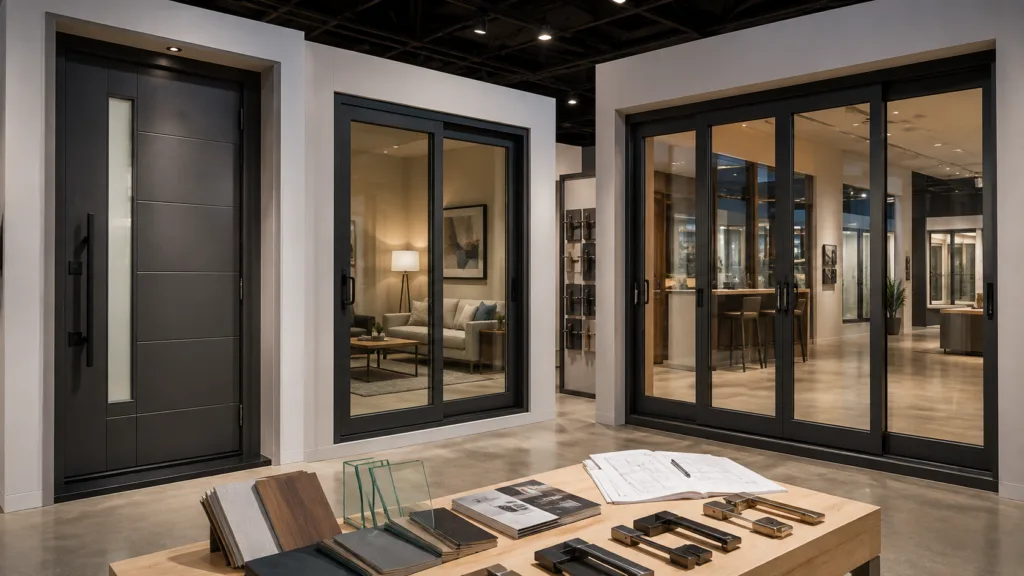
Door Cost and Buying Depends on More Than the Product
Door cost and buying decisions should start with what the finished opening needs, not only a catalog price. Two doors of the same size may have very different costs because of frame material, panel count, glass construction, hardware, finish and installation scope.
Replacing a conventional entry unit inside a sound existing opening can be relatively straightforward. Enlarging a wall for a large folding or sliding system may add structural framing, electrical relocation, flashing, floor transitions and finish repairs.
The most useful comparison is the complete installed opening, with a defined list of included and excluded work.
Door package
Size, operation, materials, glass, handles, locks and screens.
Opening preparation
Measurements, framing, substrate repair, sill support and waterproofing.
Finish and handover
Interior trim, exterior cladding repairs, disposal, testing and warranty.
Typical Installed Door Cost Ranges
The ranges below are broad U.S. planning figures currently presented in Builzee’s existing Door Cost & Buying guide. They are not live quotes and may be inaccurate for a particular location or product. Request current local proposals for budgeting.
| Door type | Published indicative installed range | Context |
|---|---|---|
| Single entry door | $330–$2,750 | Basic replacements to upgraded entry units |
| French / double | $650–$5,600 | Material, glass and finish vary |
| Standard sliding patio | $1,200–$4,000 | Size and site conditions matter |
| Entry with sidelights | $1,600–$4,600+ | Broader frame and glazing package |
| Folding / bi-fold patio | $5,000–$20,000+ | Wide variation by spans and hardware |
| Premium multi-slide / architectural | Custom quote | Often requires specialized site scope |
Six Major Door Cost Drivers
Type and movement
A hinged entry system generally uses fewer panels and operating components than multi-slide or folding doors.
Size and panel count
Wider openings and oversized glass require more material, stronger hardware and sometimes more installation labor.
Frame material
Standard steel and fiberglass entry systems differ from custom wood and architectural aluminum packages.
Glass specifications
Low-E, laminated, triple glazing or specialty glass may add cost and panel weight.
Hardware and finish
Rollers, locks, screens, special handles, coatings and concealed tracks affect product pricing.
Jobsite conditions
Access, demolition, waterproofing, finishing and structural changes can dominate the difference between quotes.
See Frames & Materials and Glass, Energy & Security for performance criteria that help assess whether an upgrade adds value.
Read Contractor Door Quotes Line by Line
| Scope item | Questions for the proposal |
|---|---|
| Field measure | Who verifies final dimensions and approves fabrication? |
| Product specification | Does the quote identify manufacturer, product, frame, glass and hardware? |
| Removal and disposal | Are existing door and debris removal included? |
| Sill and flashing | Who provides substrate repairs, sill support and drainage integration? |
| Structural work | Are headers, framing and engineering included or excluded? |
| Interior / exterior finishes | Who repairs drywall, tile, siding, stucco and paint? |
| Completion | Does it include adjustment, testing, punch list and documentation? |
A proposal with a low total may simply cover fewer activities. Identify allowance items and unit-cost assumptions before choosing. Where opening enlargement is contemplated, the Patio Door Project Cost scenario shows how surrounding construction can expand the budget.
Make Final Product and Delivery Decisions
Before releasing a door for manufacture, verify every detail that is hard or costly to change later: handedness, swing or stack side, frame depth, threshold type, finish, glass composition and hardware. Confirm rough-opening versus frame dimensions explicitly.
Ask about fabrication lead time, site delivery restrictions, protective storage, warranty conditions and who is responsible for receiving damage. If the project has a critical schedule, identify long-lead finishes, screens or custom handles separately.
Keep the manufacturer’s installation instructions and approved quote together. If the opening or finish changes, review whether the selected product remains suitable before ordering.
Product schedule
List dimensions, handing, finish, glass, locking and accessories.
Site readiness
Confirm substrate condition, framing, sill elevation and access for installation.
Document retention
Keep order acknowledgments, manuals, change orders, invoices and warranties.
Why the Door Price and Project Budget Can Be Far Apart
A standard door replacement inside the existing frame may require mostly product, removal and installation labor. A wider or taller opening can become a wall renovation. Structural headers, relocated outlets, drywall, patio surfaces, flashing and weather-barrier work may become part of the scope.
A premium multi-slide or folding door also changes handling and installation requirements. Panels can be heavy, tracks need accurate support and adjusted hardware, and recessed sills may require modifications to floor slabs or waterproofing. None of these surrounding items is necessarily included in the manufacturer’s base product price.
Ask for separate lines in the proposal for product, freight, demolition, structural work, flashing, installation, interior repair and exterior repair. This helps distinguish a true price difference from a scope difference.