
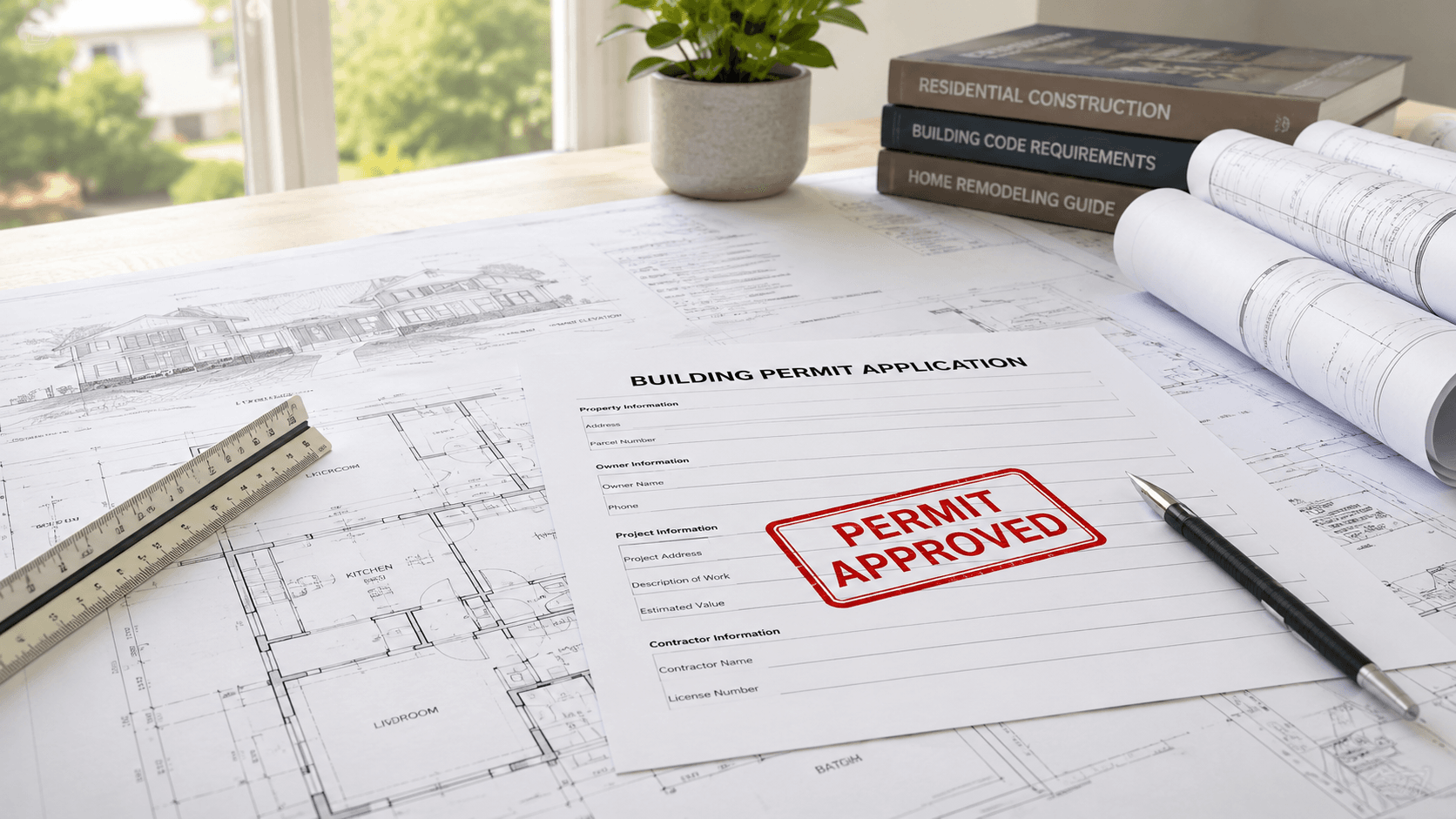
Do You Really Need a Permit for That Home Project?
Intro
Home renovation permits are not only required for major additions or new construction. Smaller projects can also require approval when they involve structural changes, electrical work, plumbing, mechanical systems or other regulated work. Because permit requirements vary by jurisdiction, it is important to confirm local rules before starting a project rather than assuming a permit is unnecessary..
Permit and code requirements vary by jurisdiction. Always verify current requirements with your local building department before beginning work.
Projects That Commonly Require Permits
Permit requirements vary by city, county and state, but certain types of work commonly require approval because they affect structure, safety or major building systems.
Projects that often require permits include:
- Building additions or expanding living space
- Removing or modifying load-bearing walls
- Structural framing changes
- Major electrical work or new circuits
- Plumbing alterations or relocation
- HVAC installation or replacement
- Roof replacement in many jurisdictions
- New decks, balconies or exterior stairs
- Garage conversions and ADUs
- Significant window or door opening changes
- Changes that affect fire-rated assemblies or means of egress
Even relatively small projects can require permits if they involve structural, electrical, plumbing or mechanical work.
Projects That Often Do Not Require Permits
Many cosmetic improvements can usually be completed without a building permit.
Examples may include:
- Interior painting
- Replacing flooring
- Installing cabinets or countertops
- Minor drywall repairs
- Replacing trim or molding
- Basic finish upgrades
- Like-for-like fixture replacement in some jurisdictions
The important distinction is that “small project” does not automatically mean “no permit.” Requirements depend on what is actually being changed.
Why Permit Requirements Vary by Location
Building regulations are enforced locally, which means the same project may require a permit in one city but not another.
Requirements can also be affected by:
- Local building codes
- Zoning regulations
- Historic districts
- Coastal zones
- Wildfire hazard areas
- Flood zones
- HOA rules
- Energy-efficiency requirements
For that reason, general online guidance should be treated as a starting point rather than a final answer.
What Happens If You Skip a Required Permit?
Doing work without a required permit can create problems during or long after construction.
Possible consequences include:
- Stop-work orders
- Fines or penalties
- Required demolition or rework
- Delayed inspections
- Problems selling the property
- Disclosure issues
- Insurance complications
- Difficulty obtaining future permits
Sometimes the cost of correcting unpermitted work is significantly higher than the original permit fee.
How to Check Before You Start
Before beginning a project, clearly define what work will actually be performed.
Then:
- Identify your local building department.
- Describe the project scope accurately.
- Ask which permits and inspections are required.
- Confirm whether separate electrical, plumbing or mechanical permits are needed.
- Determine who will pull the permit.
- Keep copies of approved plans, permits and inspection records.
If a contractor says a permit is unnecessary, it is still reasonable to verify that with the local authority.
Who Is Responsible for the Permit?
Depending on the project and jurisdiction, either the homeowner or contractor may obtain the permit.
For larger projects, contractors commonly handle the process as part of their scope. However, homeowners should still confirm that the permit was actually issued and that required inspections were completed.
A permit appearing in the contract does not necessarily mean it has already been obtained.
Bottom Line
Permit requirements can seem inconvenient, but they exist to help ensure construction complies with applicable safety and building standards.
If you are unsure whether a project requires a permit, checking with the local building department before starting is usually much easier and less expensive than correcting unpermitted work later.
Planning a Home Project?
Explore Builzee’s guides to compare materials, understand installation, evaluate costs and make better decisions before the work begins.