
Painting Cost: Estimate Materials, Labor & Budget
Painting cost is about more than the price of a gallon. Room size, wall condition, coats, protection, trim and labor can change the budget substantially. This guide explains the numbers behind interior painting so you can estimate materials, plan DIY work or compare professional quotes fairly.
See painting cost ranges ↓ COST GUIDE · 06 / 06
How Much Does Interior Painting Cost?
For a typical room, a national price reference is roughly $300–$1,000 for professionally painted walls only. Adding ceilings and trim broadens the scope, and a homeowner doing the work may spend much less in cash while contributing their own labor. These figures are broad US planning ranges, not a price quotation for your specific room.
Typical room, varying by size, preparation, region and work scope.
Broader room repaint with more surface area and detail work.
Paint and ordinary supplies; your time and optional tool purchases are additional.
US reference: HomeGuide’s February 2026 room-painting cost guide. Scope and prices vary; major wall repairs, specialty products, unusually tall rooms and access needs can push costs outside these ranges.
Painting cost by scope
| Scope | Typical benchmark | What to clarify |
|---|---|---|
| Room walls only | $300–$1,000 per room | Number of coats, minor patching and masking; ceiling and trim often excluded. |
| Walls + ceiling + trim | $600–$2,000 per room | Separate products, detailed brushwork, prep and more drying time. |
| Wall-surface pricing | About $1–$3 per sq ft | Published national reference for surface area, not floor size; minimum charges and local rates can be higher. |
| DIY typical room | $150–$300 materials & basic supplies | Tool ownership, primer, substrate repairs and personal time affect the result. |
Prices in higher-cost cities may exceed national averages. For instance, Angi’s 2026 Los Angeles room-painting survey reports a higher local average. Treat any guide price as a screening number, then compare actual proposals using the same scope.
Six Factors That Change Painting Cost
A larger room uses more material, but labor-intensive details often matter even more. Before evaluating a painting quote, look for these drivers in the scope of work.
Repairs and wall preparation
Filling minor holes, correcting damaged tape, spot priming, caulking and sanding add work before a finish coat begins. Larger repairs should be identified separately. See the Drywall Repair guide.
Height, corners and obstacles
Vaulted ceilings, stairwells, occupied rooms and hard-to-reach walls require more setup, protection and equipment than an empty bedroom with an 8-foot ceiling.
Coverage and color changes
A major dark-to-light color change, porous surface or difficult color may need primer or additional coats. More coats mean more paint and labor. Follow the actual product specifications.
Different coating systems
Premium washable finishes, stain-blocking primer or specialty coatings cost more per gallon. The least expensive material is not always the best value if extra coats or earlier repainting follow.
Ceilings, trim and doors
Painting four walls is not equivalent to painting walls, ceiling, baseboards, door casings and interior doors. Detailed trim work can add substantial labor relative to its area.
Setup, protection and cleanup
Moving furniture, masking, floor coverings, dust control and final cleanup all take time. A small project may also carry a contractor minimum charge.
Before budgeting specialty primer or a more durable paint, read Builzee’s Paint, Primer & Sheens guide. Product selection should match the condition of the substrate and the needs of the room, rather than only its price.
Calculate Paint Quantity Before Calculating Painting Cost
Room floor area is not wall area. For a simple rectangular room, calculate the wall perimeter, multiply by wall height, subtract openings you are not painting and then account for the number of coats.
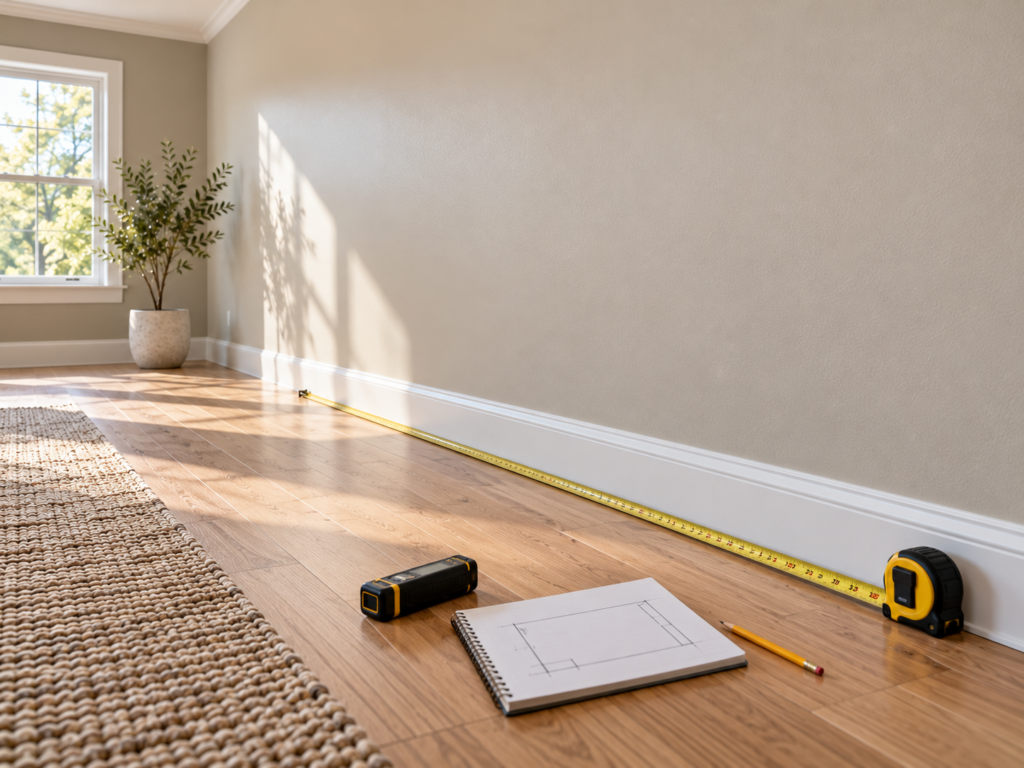
Example: a 12 × 12 ft room with 8 ft walls
Four walls measured around the room, not the 144-square-foot floor.
| Calculation | Result |
|---|---|
| Gross wall surface | 384 sq ft |
| Less assumed door/window openings | −40 sq ft |
| Net wall surface | 344 sq ft |
| Two finish coats | 688 coated sq ft |
| At 350 sq ft/gallon/coat | 1.97 gallons |
This is a mathematical estimate, not a guarantee of coverage. In this example, two gallons are theoretically sufficient. Surface texture, waste, touch-ups and product coverage may justify extra material. If primer is needed, calculate it separately.
Record wall lengths and heights, including varied ceiling heights.
Subtract larger door and window openings that will not be painted.
Multiply the net wall area by the intended finish coats.
Divide by the product’s listed square feet per gallon per coat.
Many interior paints cover approximately 350–400 square feet per gallon per coat under suitable conditions, according to Sherwin-Williams’ paint calculator guidance. Read the exact product label, especially when covering new drywall, heavy texture or a major color change.
Painting Cost Breakdown: Materials, Supplies and Labor
Professional painting costs reflect more than the paint itself. Labor includes preparation, protection, setup, multiple coats, detail work and cleanup. DIY projects reduce paid labor but still require tools and time.
What to include in your estimate
- Finish paint: gallons, colors, sheen, specified coats and application method.
- Primer: additional product where new drywall, repairs, stains or adhesion require it.
- Prep materials: patching compound, sandpaper, caulk and cleaning materials.
- Application supplies: brushes, roller frames, covers, trays and extension poles.
- Protection: drop cloths, masking film, tape and furniture coverings.
- Labor and equipment: preparation, cutting in, rolling, ladders or special access and cleanup.
Published 2026 retail planning references commonly put basic interior paint near $15–$50 per gallon, although premium and specialty products can cost more. Do not assume the cheapest can will provide the same coverage or finish quality as another product. See HomeGuide’s material pricing.
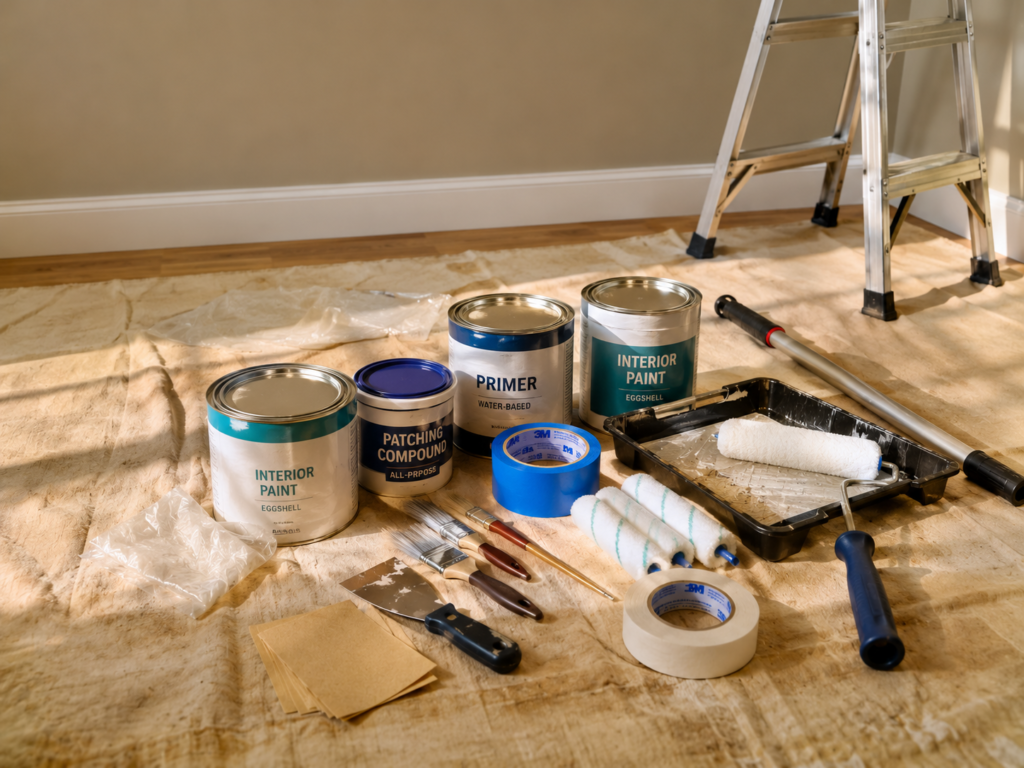
Example Material Budget for a Small Room
Using the two-gallon room example above, this sample shows how expenses can add up. The assumed unit prices are for demonstrating budget arithmetic, not guaranteed current retail prices.
| Item | Assumption | Example amount |
|---|---|---|
| Finish paint | 2 gallons × $45 | $90 |
| Rollers, brushes & tray | Basic starter tools | $45 |
| Tape, drop cloths & protection | Consumables | $35 |
| Minor patch & sanding supplies | Small repairs | $20 |
| Primer if required | Illustrative allowance | $30 |
| Material subtotal with primer | All example items | $220 |
| Contingency | About 15% of subtotal | $33 |
Primer is conditional; if not needed, remove that line and recalculate. Additional material, ladder rental, tax, repair complexity and labor are excluded. A bigger project may require different container sizes or tool purchases.
DIY vs. Professional Painting: Which Is Worth It?
DIY painting is often practical for a straightforward room with sound surfaces and easy access. Professional work becomes more appealing when protection, significant repairs, complicated trim, tall spaces or a tight schedule dominate the job.
Lower direct cost, more personal time
You buy the materials and do the work. You control scheduling, but quality and speed depend on preparation and experience.
- Often economical for one simple room with minor patching.
- Good when ceilings are standard height and the space can be cleared.
- Allow time for masking, cutting in, drying between coats, cleanup and touch-ups.
- Tools, mistakes and rework can reduce the apparent savings.
Best fit: Accessible walls, manageable scope and enough time to follow the coating instructions.
Higher cash cost, less hands-on work
A properly scoped contractor proposal should cover the agreed preparation, protection, coating system, application and cleanup.
- Useful for several rooms, complex trim and high or difficult-to-reach areas.
- May be a better option for substantial repairs or demanding finish expectations.
- Provides a crew and established tools; verify licensing, insurance and workmanship terms as applicable.
- Compare included work rather than choosing the lowest headline number.
Best fit: Larger or more detailed jobs where schedule, access and consistency matter.
For the application sequence, see Builzee’s How to Paint a Room tutorial covering surface preparation, edging, roller technique and coats.
Plan Your Painting Budget and Compare Contractor Quotes
A fair comparison starts with one written scope. A low proposal for walls only is not less expensive than another quote that includes ceilings, trim, significant repairs and two finish coats until you normalize the work.
Define the surfaces
Identify every room and whether the price includes walls, ceilings, trim, doors or closets. State approximate areas and ceiling heights.
List repair expectations
Separate small nail-hole repairs from cracking, water damage, drywall replacement or removal of existing coatings.
Specify the coating system
Ask for primer conditions, paint brand or performance level, sheen, colors and intended number of coats.
Confirm responsibilities
Clarify furniture moving, floor protection, access equipment, cleanup, schedule, touch-ups and workmanship terms.
Pre-Paint Budget Checklist
Check these items as you plan; selections are temporary and are not saved to your account.
Builzee publishes general homeowner planning guidance. Cost benchmarks change by market, season, product and project scope. The example budget is illustrative, not an estimate or price commitment. Verify actual quantities, written quotes, manufacturer instructions and applicable safety requirements before purchasing or starting work.
Measure the Work Before You Price the Paint
A realistic painting cost starts with accurate wall area and a clear scope. Add the right primer and finish coats, account for repairs and protection, then compare the full cost of DIY time and materials against a professional quote. Use the Paint Calculator to finalize your material plan.