
KITCHEN COUNTERTOPS & SURFACES
Choose Surfaces That Fit How You Cook and Live
Kitchen countertops and surfaces need to balance appearance, durability, maintenance and cost. Compare countertop materials, edge details, backsplashes and other finish options before choosing what works best for your kitchen.
START WITH THE BASICS
Choose Surfaces for How the Kitchen Is Used
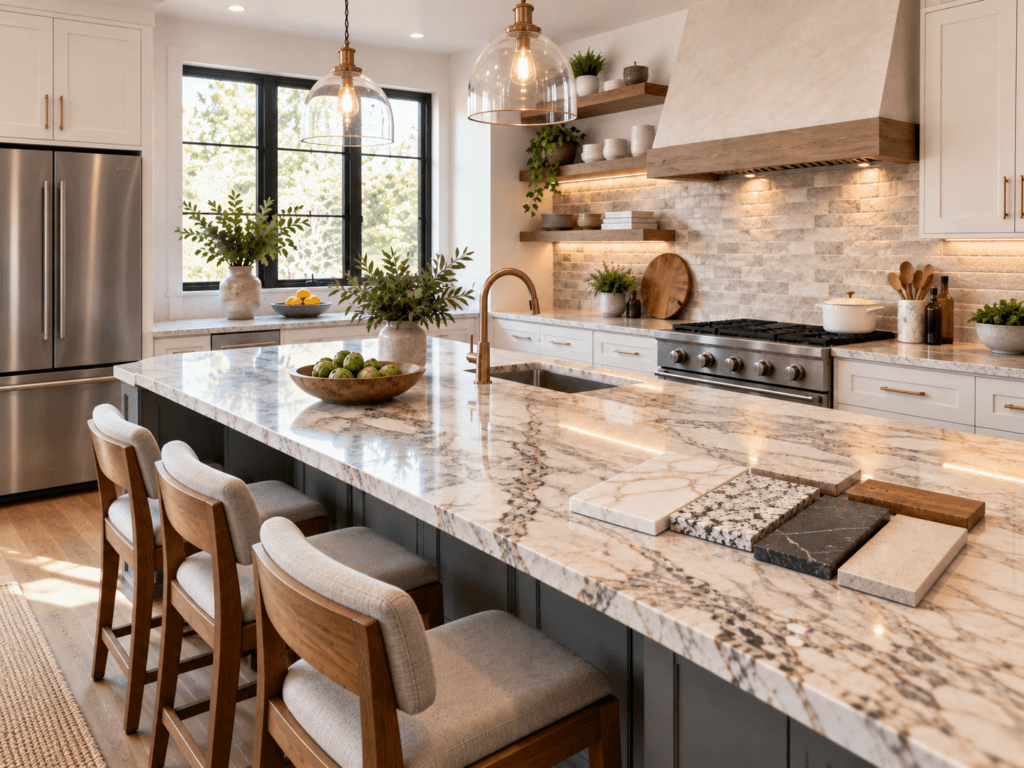
Kitchen countertops need to handle daily prep, spills, heat, cleaning and wear while still fitting the overall design of the room. The right material depends on how heavily the kitchen is used, how much maintenance you are comfortable with and the look you want.
Before choosing a surface, think about where it will be installed, how often it will be used and whether durability, stain resistance, heat resistance or low maintenance matters most. No countertop material is best at everything, so the goal is to match the material to the way the kitchen actually functions.
COUNTERTOP MATERIALS
Compare the Most Common Kitchen Countertop Options
Countertop materials differ in appearance, maintenance, heat resistance, stain resistance and durability. Compare how each surface performs in everyday use before deciding which one fits your kitchen best.
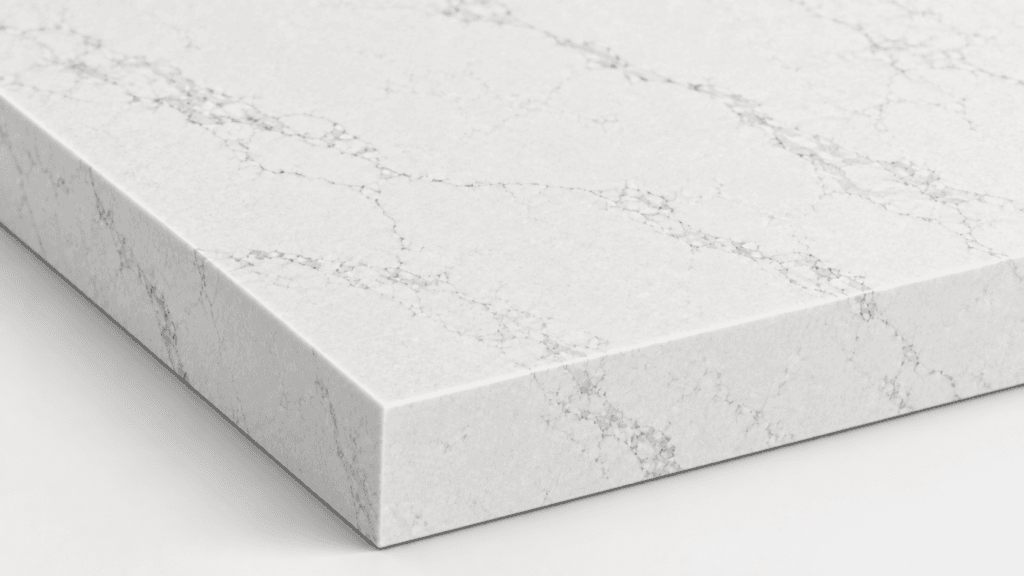
01 — QUARTZ
Why is quartz so popular in kitchens?
Engineered quartz offers consistent color and pattern, low maintenance and good resistance to staining. It does not require sealing, but direct high heat can damage the resin used in the material.
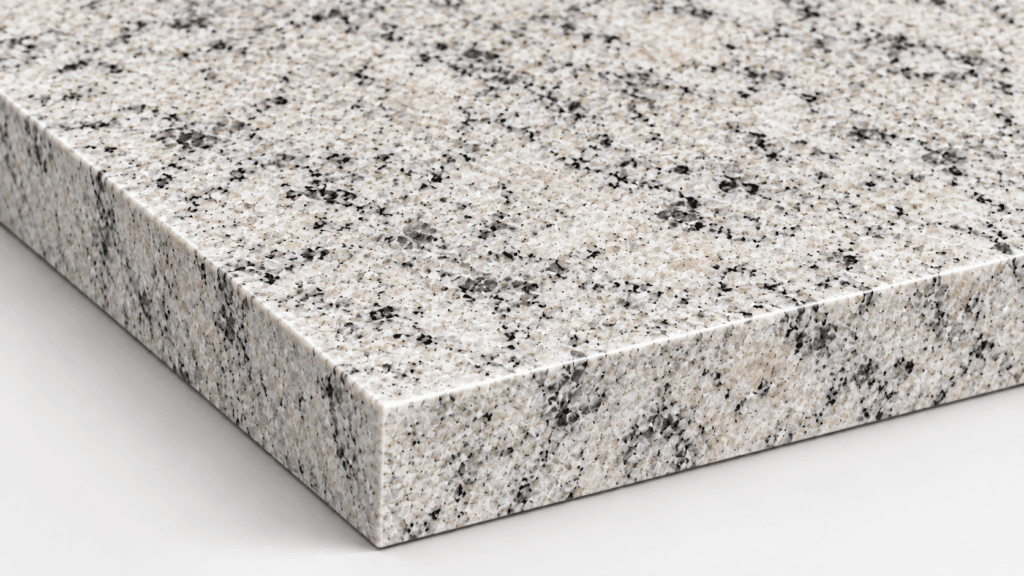
02 — GRANITE
What makes granite different from engineered surfaces?
Granite is a natural stone with unique movement, color and pattern from slab to slab. It is durable and heat resistant, but most installations benefit from periodic sealing to reduce staining.
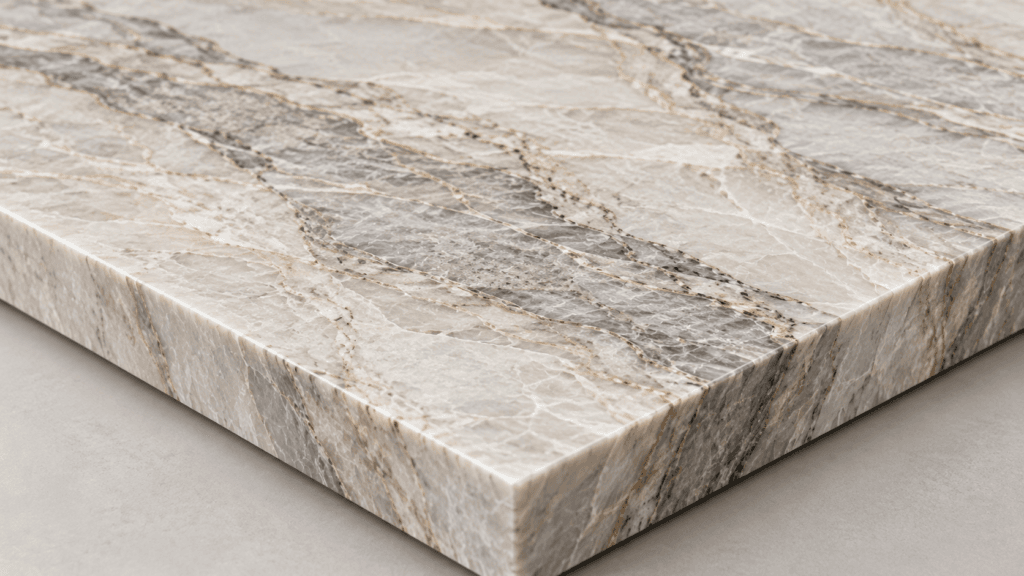
03 — QUARTZITE
Is quartzite the same thing as quartz?
No. Quartzite is a natural stone, while quartz is engineered. Quartzite can provide dramatic veining and strong heat resistance, but it may require sealing and can vary considerably in porosity and performance.
04 — PORCELAIN
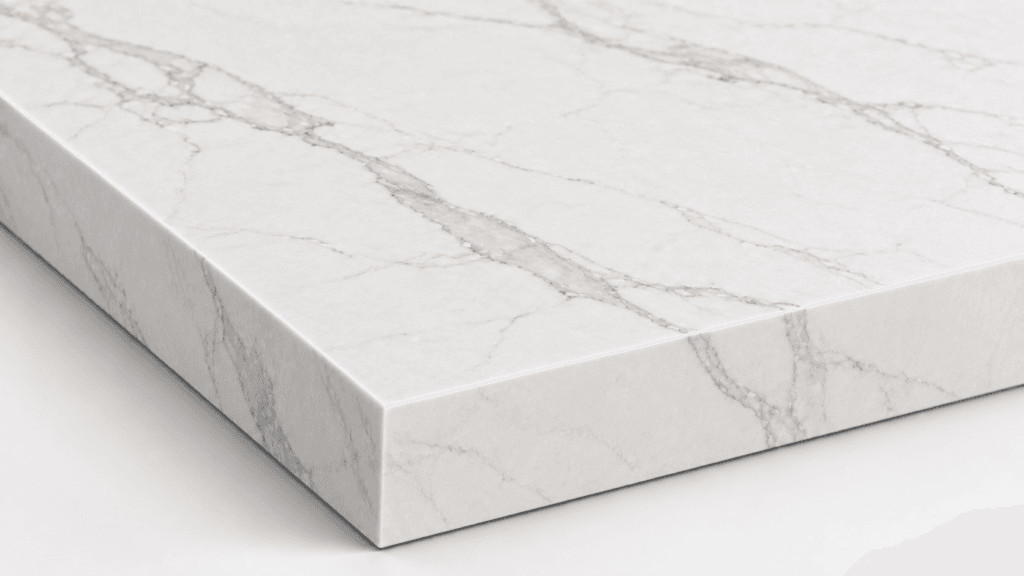
Why are porcelain countertops becoming more common?
Porcelain slabs are thin, dense and highly resistant to heat, stains and UV exposure. They can reproduce stone-like patterns well, although edge fabrication and installation require experienced fabricators.
05 — SOLID SURFACE
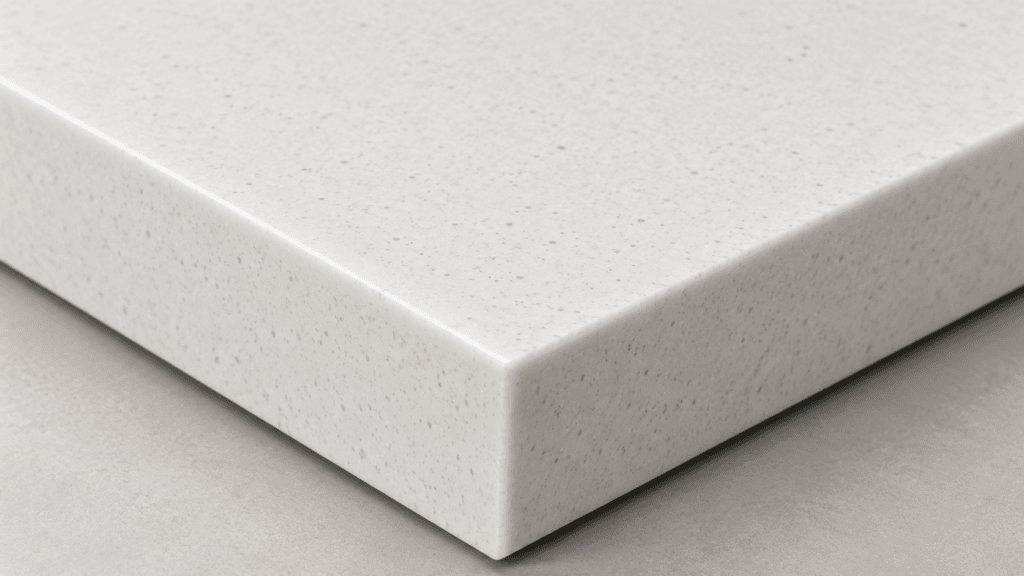
Where does solid surface make sense?
Solid-surface materials provide a consistent appearance and can often be fabricated with nearly invisible seams. Minor scratches can usually be repaired, but the material is softer and more heat-sensitive than many stone surfaces.
06 — BUTCHER BLOCK
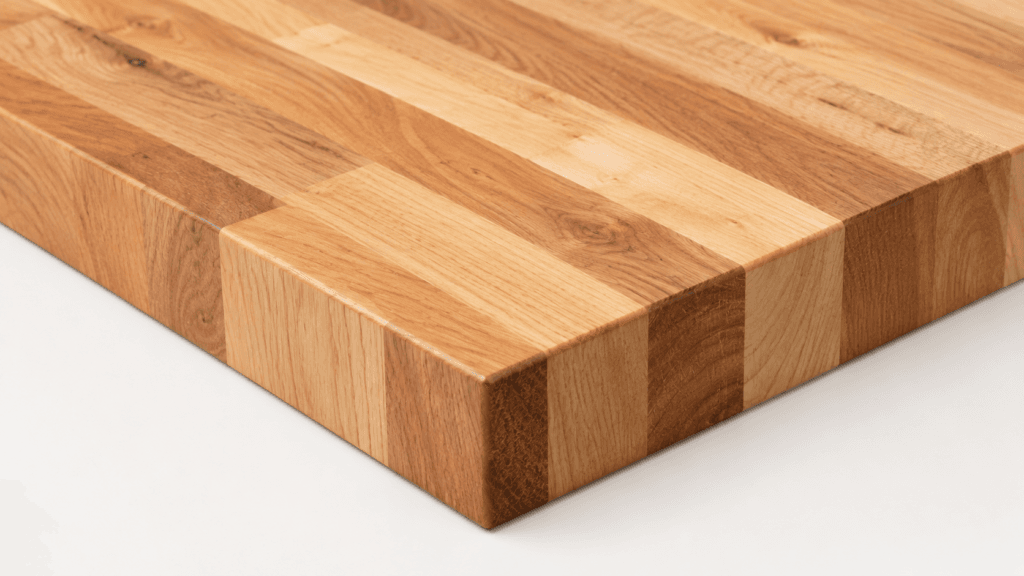
When is wood a practical countertop material?
Butcher block brings warmth and natural character to the kitchen. It can be sanded and refinished, but it requires more maintenance and protection from standing water, stains and heat.
GOOD TO KNOW
Countertop performance can vary within the same material category. Natural stone varies by slab, while engineered products vary by manufacturer, composition and finish. Always review the actual product specifications before ordering.
QUICK COMPARISON
Kitchen Countertop Materials at a Glance
Every countertop material involves tradeoffs. Use this comparison as a general planning guide, then review the specifications and care requirements for the exact product you are considering.
| Material | Maintenance | Heat Resistance | Stain Resistance | Scratch / Wear Resistance | Typical Cost Level |
|---|---|---|---|---|---|
| Quartz | Low | Moderate | Very good | Very good | $$–$$$ |
| Granite | Moderate | Very good | Good when properly sealed | Very good | $$–$$$ |
| Quartzite | Moderate | Very good | Good when properly sealed | Very good | $$$–$$$$ |
| Porcelain | Low | Excellent | Excellent | Very good | $$$–$$$$ |
| Solid Surface | Low | Fair | Very good | Moderate, but repairable | $$–$$$ |
| Butcher Block | Higher | Fair | Moderate | Moderate, but refinishable | $–$$$ |
GOOD TO KNOW
These are general comparisons, not product guarantees. Natural stone varies from slab to slab, engineered materials vary by manufacturer, and fabrication quality can significantly affect the finished countertop. Pricing also varies by material selection, slab size, edge details, cutouts, location and installer.
NATURAL VS. MANUFACTURED
Natural Stone vs. Manufactured Countertops
Natural stone and manufactured surfaces can both perform well in a kitchen, but they behave differently. The biggest differences usually come down to variation, maintenance, heat resistance, consistency and how much control you want over the final appearance.
NATURAL STONE
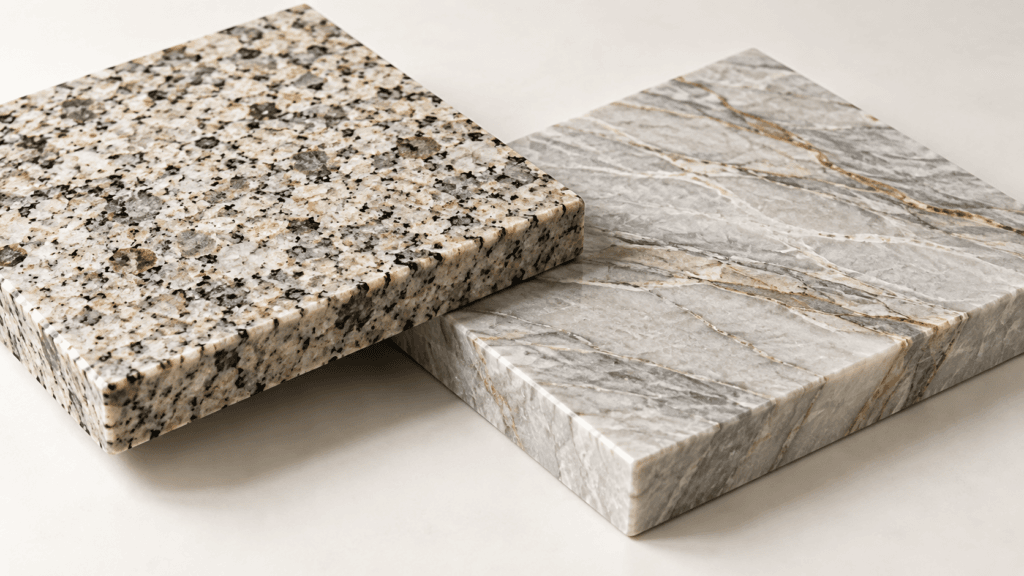
What should you expect from granite and quartzite?
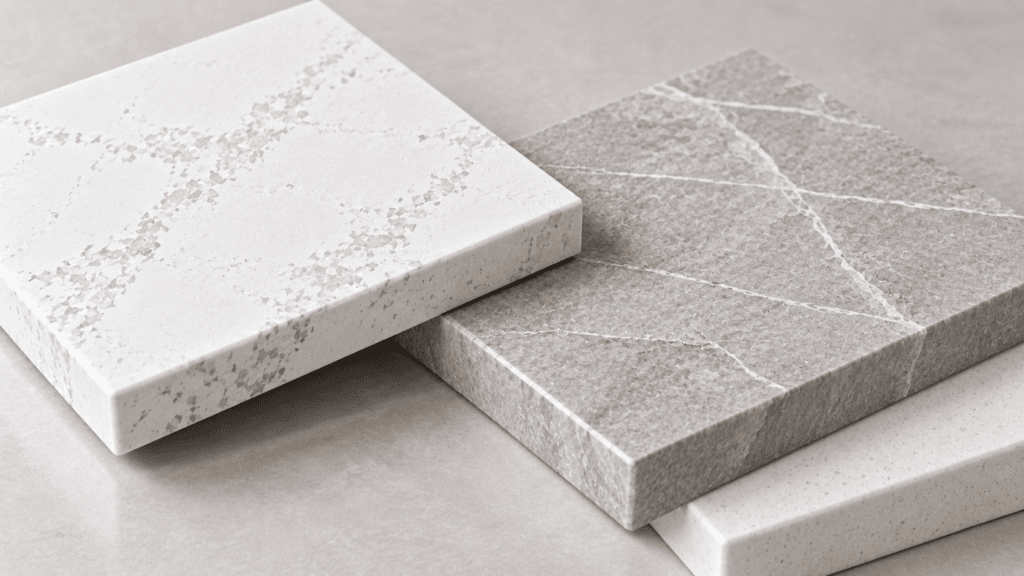
Granite and quartzite are quarried from natural stone, so every slab has its own color, veining and mineral pattern. That variation is part of the appeal, but it also means the slab you select should be reviewed before fabrication.
Natural stone generally handles heat well and can be very durable, but many slabs benefit from sealing to help resist staining. Porosity and performance can vary, even within the same stone category.
MANUFACTURED SURFACES
Why do homeowners choose quartz, porcelain and solid surface?
Manufactured surfaces offer greater control over color, pattern and consistency from one piece to another. Quartz provides a dense, low-maintenance surface, porcelain offers strong heat and stain resistance, and solid surface can provide nearly seamless joints and easier repair of minor damage.
Performance varies by material, so manufactured does not automatically mean stronger or lower maintenance in every category.
GOOD TO KNOW
“Natural” and “manufactured” describe how the material is produced, not its overall quality. Fabrication, installation and the specific product selected can matter just as much as the material category.
EDGE DETAILS
Countertop Edges and Thickness Matter More Than They Look
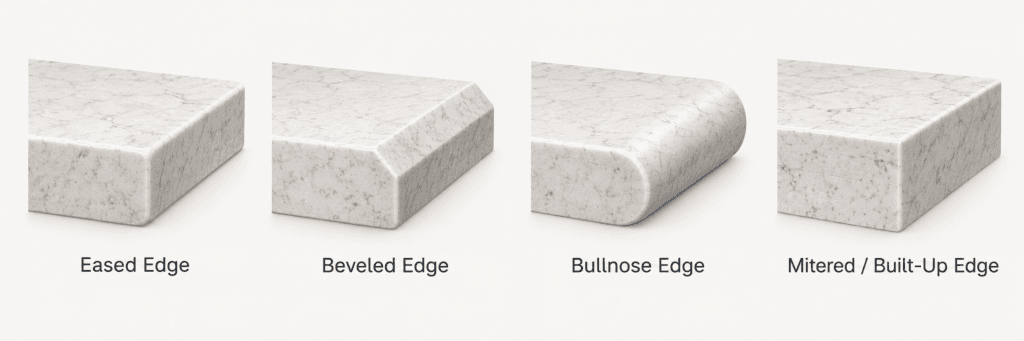
The countertop edge affects appearance, durability and how thick the finished surface appears. Edge options also depend on the material, slab thickness and fabrication method.
01 — EASED EDGE
Why is an eased edge so common?
An eased edge is mostly square with the sharp corners slightly softened. It works with nearly every kitchen style, keeps the countertop looking clean and simple, and is one of the easiest profiles to maintain.
02 — BEVELED EDGE
What does a beveled edge add to the design?
A beveled edge cuts the upper corner at an angle, creating a more defined shadow line. It adds detail without becoming overly decorative and works well with both traditional and contemporary kitchens.
03 — BULLNOSE EDGE
When does a rounded edge make sense?
A bullnose profile rounds the countertop edge for a softer appearance. The rounded shape eliminates sharp corners, although its more traditional look may not fit every modern kitchen.
04 — MITERED / BUILT-UP EDGE
How do countertops get the look of a much thicker slab?
A mitered edge joins an additional piece of material at the perimeter to create the appearance of a thicker countertop. It is commonly used on islands and waterfall designs where a substantial edge is part of the overall look.
GOOD TO KNOW
The visible edge thickness does not always equal the actual slab thickness. Mitered and built-up edges can make a thinner slab appear much thicker, while materials such as porcelain may use different fabrication methods than stone or quartz.
BACKSPLASH OPTIONS
Choose a Backsplash for More Than Just Looks
A kitchen backsplash protects the wall while also becoming one of the most visible finish decisions in the room. Compare maintenance, joints, installation and how much visual impact you want before choosing the material.
01 — TILE
Why is tile still the most common backsplash choice?
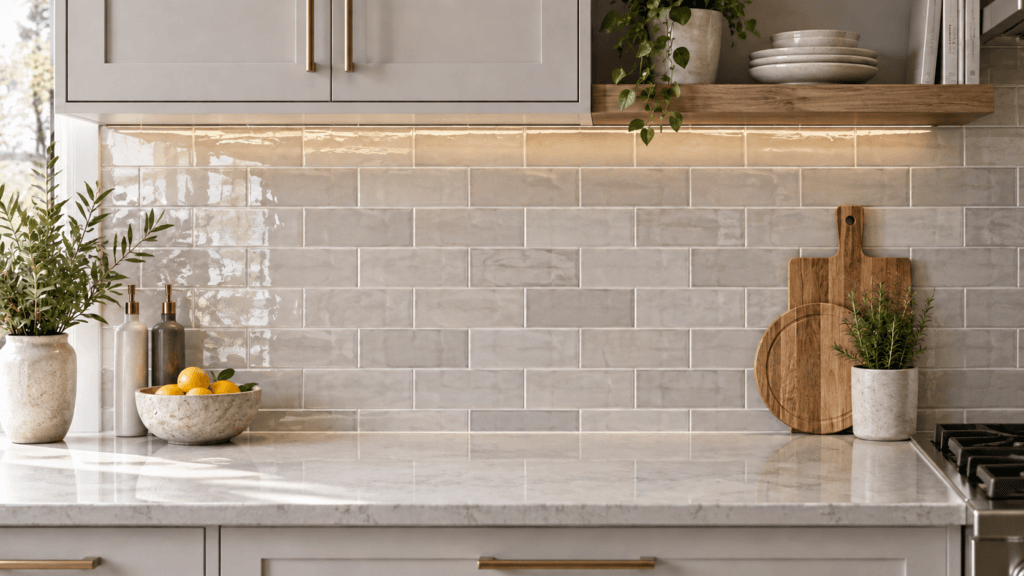
Tile offers the widest range of colors, sizes, patterns and price points. It is durable and easy to clean, but grout lines add maintenance and the installation quality has a big effect on the finished appearance.
02 — SLAB BACKSPLASH
When does a full-height slab make sense?
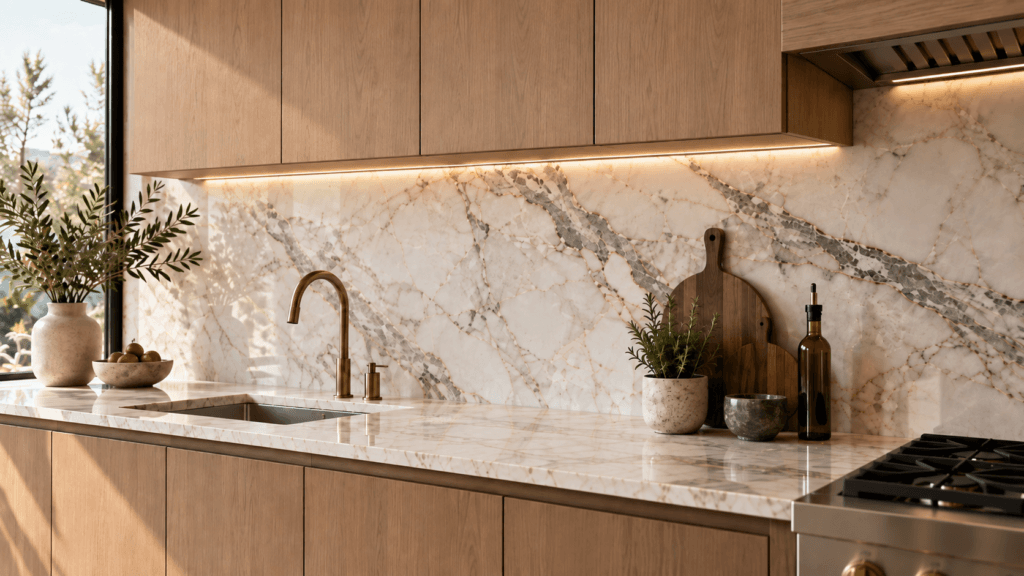
A slab backsplash can create a clean, continuous look with very few joints. Quartz, porcelain and natural stone can all be used, especially when you want the backsplash to coordinate with the countertop.
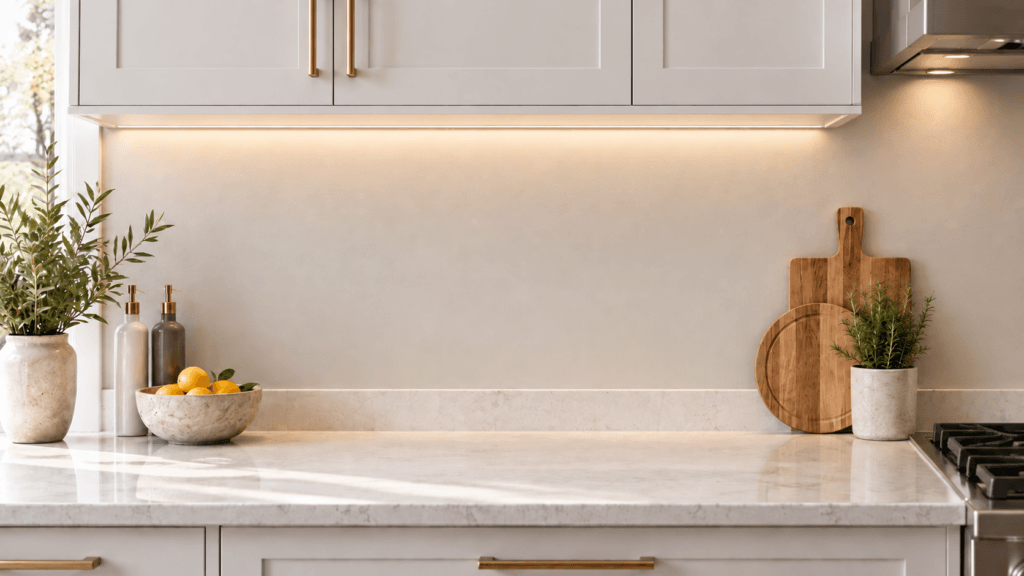
03 — PAINTED OR SIMPLE WALL FINISH
Do you always need a full backsplash?
Not necessarily. In lower-splash areas, a painted wall or simple washable finish can keep the kitchen lighter and less expensive. Use a durable, cleanable coating and consider more protection behind sinks and cooking areas.
GOOD TO KNOW
A 4-inch countertop backsplash and a full-height backsplash solve different design and maintenance goals. Think about where water, grease and food splatter are most likely before deciding how much wall protection you need.
AVOID THESE
Common Countertop Problems to Plan Around
Many countertop problems come from fabrication, installation or everyday use rather than the material alone. Check these issues before templates are made and again before installation is complete.
01 — UNSUPPORTED OVERHANGS
Large island and seating overhangs may need brackets or other support depending on the material, thickness and projection. Do not assume the slab can safely cantilever any distance.
02 — POOR SEAM PLACEMENT
Seams are sometimes unavoidable, especially on long runs or large islands. Their location should be planned so they are structurally sound, visually acceptable and away from weak or highly visible areas when possible.
03 — HEAT DAMAGE
Even durable countertops can be damaged by extreme heat. Quartz and solid-surface materials are especially sensitive, so hot cookware should not be placed directly on the surface unless the manufacturer specifically allows it.
04 — STAINS AND ETCHING
Natural stone, butcher block and some other surfaces can stain if spills are left too long. Certain stones can also react to acidic foods, so care requirements should be understood before choosing the material.
05 — CHIPPED EDGES
Edges around sinks, dishwashers, corners and busy work areas can be vulnerable to impact. Thin or highly detailed edge profiles may be less forgiving than simpler profiles.
06 — BAD SINK OR COOKTOP CUTOUTS
Sink and cooktop openings create some of the weakest areas in a countertop. Accurate templates, proper clearances and experienced fabrication are especially important around these cutouts.
GOOD TO KNOW
A high-quality slab can still perform poorly if it is templated, fabricated or installed incorrectly. Material selection and fabrication quality should be considered together.
BEFORE YOU ORDER
Countertop & Surface Checklist
Before fabrication begins, confirm the material, slab selection, dimensions, edge details, appliance openings and backsplash decisions. Changes become much harder once the countertop has been templated or cut.
□ Countertop material is finalized
□ Actual slab or product color is approved
□ Finish is confirmed, such as polished, honed or matte
□ Countertop thickness is selected
□ Edge profile is confirmed
□ Island and seating overhangs are checked for support
□ Sink model and mounting style are finalized
□ Faucet and accessory hole locations are confirmed
□ Cooktop or range dimensions are verified
□ Appliance clearances are coordinated
□ Seam locations are reviewed
□ Backsplash type and height are selected
□ Countertop-to-backsplash transitions are planned
□ Wall and cabinet conditions are ready for templating
□ Natural stone sealing requirements are understood
□ Cleaning and maintenance requirements are reviewed
□ Heat limitations are understood
□ Delivery access is confirmed for large slabs
□ Fabrication and installation responsibilities are clear
□ Final field measurements will be taken before fabrication
Bottom Line
Kitchen countertops and surfaces should be selected for both appearance and everyday performance. Material, maintenance, heat resistance, edge details, backsplash choices and fabrication quality all affect how the finished kitchen looks and functions.
Compare the actual products you are considering, understand their limitations and finalize sinks, appliances and edge details before fabrication begins. Good coordination before templating can prevent many of the most expensive countertop problems.