
ROOF REPAIR & MAINTENANCE
Know What to Repair Before Small Problems Get Worse
Roof problems often begin with small failures such as damaged shingles, deteriorated flashing, clogged drainage or worn seals around penetrations. Regular inspection and maintenance can help catch these issues before they lead to larger leaks or structural damage. This guide explains what to look for, what can usually be repaired and when a broader roof evaluation may be needed.
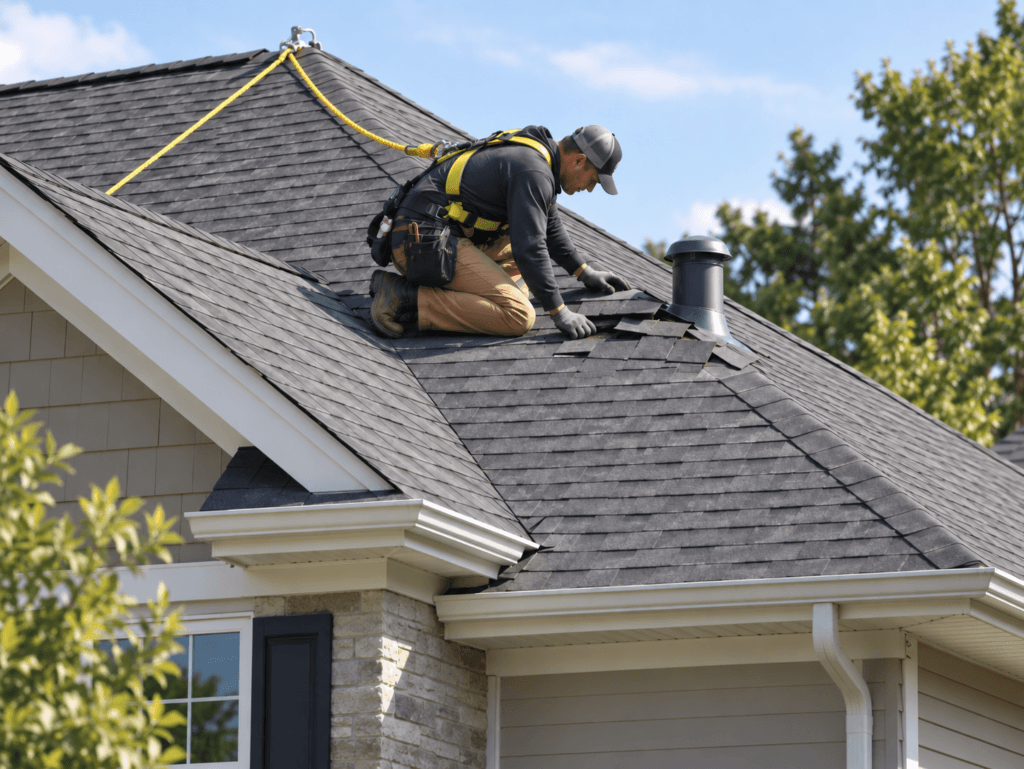
ROUTINE ROOF INSPECTION
Look for Problems Before They Turn Into Leaks
Regular roof inspections can help identify wear, damage and drainage problems early. Most homeowners can safely observe many conditions from the ground, windows or attic without walking on the roof.
01 — ROOF SURFACE
Look across the roof for obvious changes in the finished material.
WATCH FOR
- Missing or lifted shingles
- Cracked or broken tiles
- Loose metal panels
- Excessive granule loss
- Uneven or sagging areas
- Debris collecting in valleys
02 — FLASHING & PENETRATIONS
Pay close attention to chimneys, vents, skylights and wall transitions because these areas contain joints and flashing details that are more vulnerable to water intrusion.
WATCH FOR
- Loose or bent flashing
- Cracked pipe boots
- Failed sealant Rust or corrosion
- Gaps around penetrations
- Previous patch repairs that are deteriorating
03 — EDGES & DRAINAGE
Roof edges, gutters and downspouts should move water away from the roof and building without allowing it to back up or spill behind the fascia.
WATCH FOR
- Clogged gutters
- Loose or sagging gutters
- Water staining on fascia or soffits
- Damaged drip edge
- Downspouts that do not discharge properly
- Standing debris near roof edges
GOOD TO KNOW
You do not need to walk on the roof to perform a useful visual inspection. Binoculars, upper-story windows and attic access can reveal a lot without creating a fall hazard or damaging roofing materials.
COMMON ROOF PROBLEMS
Know the Issues That Most Often Lead to Repairs
Roof failures usually start at a specific weak point rather than across the entire roof at once. Damaged roofing, failed flashing, penetration problems and poor drainage are some of the most common causes.
01 — DAMAGED ROOFING MATERIALS
Shingles, tiles and panels can crack, lift, loosen or break from age, wind, impact or foot traffic.
WATCH FOR
- Missing shingles
- Curled or lifted edges
- Cracked tiles
- Loose panels
- Bald or heavily worn shingle areas
02 — FLASHING FAILURES
Flashing protects joints and transitions where water is more likely to enter. When flashing loosens, corrodes or is installed poorly, leaks can develop even when the surrounding roofing looks fine.
WATCH FOR
- Bent or loose metal
- Gaps at walls or chimneys
- Failed counterflashing
- Rust or corrosion
- Heavy reliance on roofing cement
03 — PENETRATION FAILURES
Roof vents, pipe boots, skylights and other penetrations require watertight detailing around the opening.
WATCH FOR
- Cracked rubber boots
- Loose vent flashing
- Failed sealant
- Water staining near penetrations
- Improperly added equipment or mounts
04 — DRAINAGE & DEBRIS
Leaves, branches and other debris can block valleys, gutters and roof drains, allowing water to back up where it normally should flow freely.
WATCH FOR
- Clogged gutters
- Debris packed into valleys
- Standing water
- Overflowing downspouts
- Water staining along fascia or soffits
GOOD TO KNOW
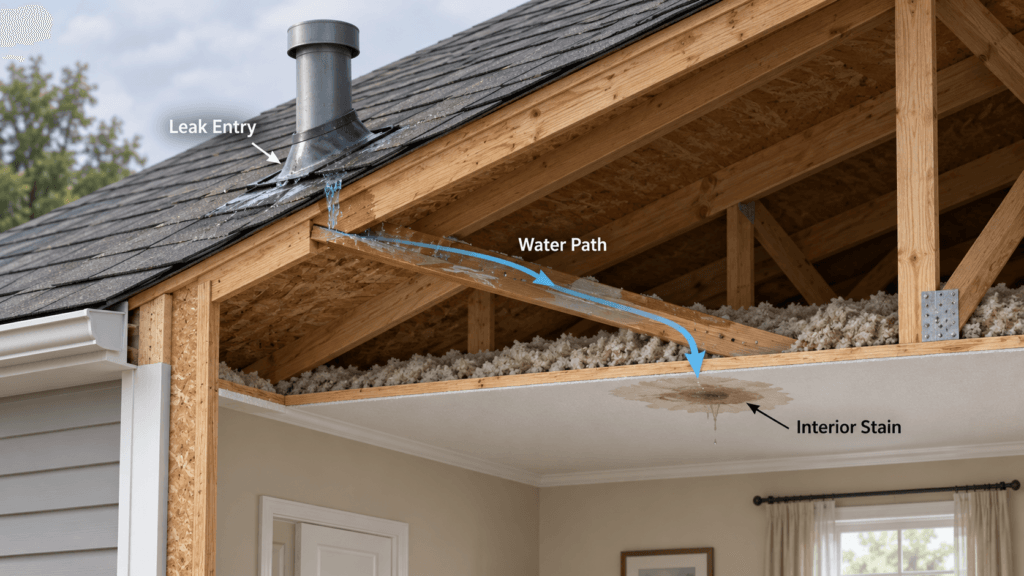
Visible damage does not always show the full extent of the problem. Water can travel along roof decking, framing or underlayment before appearing inside the home, so the source of a leak may be several feet away from the interior stain.
FINDING A ROOF LEAK
Trace the Water Path Instead of Guessing From the Stain
Roof leaks can be difficult to locate because water may travel along sheathing, rafters, fasteners or underlayment before it becomes visible inside the home. The best clues usually come from comparing exterior roof conditions with attic or interior evidence.
EXTERIOR CLUES
Start by looking uphill from the area where moisture appears inside. Pay particular attention to penetrations, flashing, valleys and damaged roofing materials.
WATCH FOR
- Missing or lifted shingles
- Cracked tiles or panels
- Damaged pipe boots
- Loose flashing
- Open joints near chimneys or walls
- Debris blocking valleys or drains
ATTIC & INTERIOR CLUES
Inside the attic, water staining can help show where moisture is entering and how far it has traveled before reaching the ceiling below.
WATCH FOR
- Dark stains on roof sheathing
- Wet or compressed insulation
- Water tracks along rafters
- Rusted nails or fasteners
- Damp framing around vents or chimneys
- Ceiling stains that worsen after rain
GOOD TO KNOW
The location of an interior stain does not always identify the roof leak directly above it. Water can travel downhill or sideways before dripping, especially along framing members or beneath underlayment.
COMMON ROOF REPAIRS
Match the Repair to the Actual Source of the Problem
Localized roof damage can often be repaired without replacing the entire roof, but the repair needs to address the underlying failure rather than only covering the visible symptom.
01 — SHINGLES & ROOFING MATERIALS
Individual shingles, tiles or small sections of roofing can sometimes be replaced when damage is limited and the surrounding material is still in good condition.
WATCH FOR
- Brittle or heavily aged surrounding materials
- Color or profile mismatches
- Hidden damage beneath the affected area
- Fasteners placed where they remain exposed
- Repairs that disturb adjacent roofing
02 — FLASHING & PENETRATIONS
Leaks around chimneys, vents, skylights and walls often require repairing or replacing flashing rather than simply applying more sealant.
WATCH FOR
- Loose step flashing
- Cracked pipe boots
- Failed counterflashing
- Corroded metal
- Sealant-only patches
- Improper overlaps
03 — LOCALIZED DECK REPAIRS
If a leak has damaged the roof deck, the affected sheathing may need to be removed and replaced before the roof covering is restored.
WATCH FOR
- Soft or rotted decking
- Delaminated plywood or OSB
- Unsupported patch edges
- Wet insulation below the damaged area
- Repairs that cover moisture damage without replacing it
GOOD TO KNOW
A good repair should restore the original water-shedding path. Temporary patches can help stop active water entry, but long-term repairs should rebuild the flashing, underlayment and roof covering in the correct sequence.
ROOF MAINTENANCE
Small Maintenance Tasks Can Prevent Bigger Problems
Routine maintenance helps keep drainage paths clear, reduces wear around vulnerable areas and makes it easier to catch damage before water gets inside.
01 — KEEP GUTTERS CLEAR
Gutters and downspouts should move water away from the roof edge without backing up onto the fascia or under the roofing materials.
WATCH FOR
- Leaves and debris
- Standing water
- Loose gutter sections
- Overflow during rain
- Downspouts that discharge too close to the home
02 — REMOVE ROOF DEBRIS
Leaves, branches and other debris can trap moisture and block valleys, drains and other runoff paths.
WATCH FOR
- Debris collecting in valleys
- Leaves behind chimneys or skylights
- Moss or organic buildup
- Blocked low-slope roof drains
- Branches resting directly on the roof
03 — MANAGE OVERHANGING TREES
Tree limbs can scrape roofing materials, drop heavy debris and create damage during wind events.
WATCH FOR
- Branches touching the roof
- Dead or unstable limbs overhead
- Heavy leaf accumulation
- Abrasion on shingles or metal
- Areas that remain shaded and damp
04 — INSPECT PERIODICALLY
Regular visual inspections make it easier to identify changes before they turn into major leaks. A closer inspection is also worthwhile after severe wind, hail or other weather events.
WATCH FOR
- New missing or lifted materials
- Loose flashing
- Cracked pipe boots
- Damaged gutters
- Interior stains or attic moisture
GOOD TO KNOW
Maintenance does not require walking on the roof. Many problems can be spotted from the ground, from upper-story windows or from inside the attic. Steep roofs, fragile tile and wet roofing surfaces should be left to qualified professionals with proper fall protection.
STORM & WEATHER DAMAGE
Check the Roof After Severe Weather
Wind, hail and falling debris can damage roofing materials even when the roof still looks mostly intact from the ground. After a significant storm, a visual inspection can help identify problems before the next rain exposes them.
01 — WIND DAMAGE
Strong winds can lift shingles, loosen ridge caps, bend flashing and damage exposed roof edges.
WATCH FOR
- Missing shingles
- Lifted or creased tabs
- Loose ridge or hip caps
- Bent flashing
- Damaged fascia or gutters
- Roofing debris around the property
02 — HAIL & IMPACT DAMAGE
Hail and other impacts can bruise asphalt shingles, crack tile, dent metal roofing and damage vents or flashing.
WATCH FOR
- Dents in metal components
- Cracked or broken tile
- Localized granule loss
- Damaged vent caps
- Small impact marks across multiple roof areas
- New leaks after the storm
03 — FALLING DEBRIS
Branches and other falling objects can cause concentrated damage to the roof surface, deck and structural components below.
WATCH FOR
- Broken or punctured roofing
- Cracked decking
- Damaged gutters
- Bent flashing
- Tree limbs resting on the roof
- Interior water entry near the impact area
GOOD TO KNOW
Storm damage is not always obvious from the ground. If you suspect significant impact or wind damage, avoid climbing onto the roof yourself. A professional inspection can document the condition safely and determine whether the damage is limited to individual areas or affects a larger portion of the roof.
REPAIR OR REPLACE?
Know When a Local Repair May Be Enough
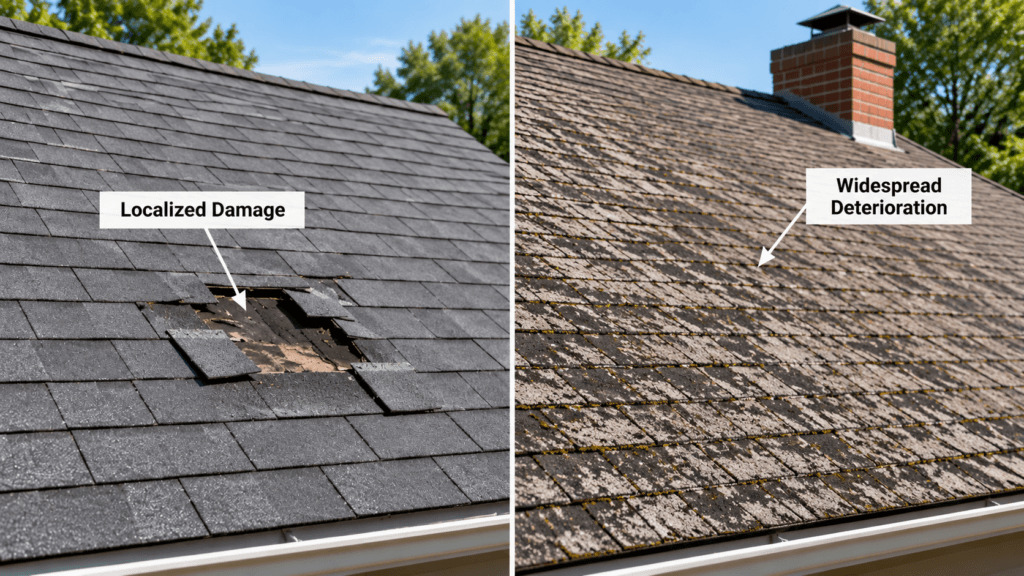
Not every roof problem requires a full replacement. The decision usually comes down to the age and overall condition of the roof, how widespread the damage is, and whether the surrounding materials are still reliable enough to support a lasting repair.
WHEN REPAIR MAY MAKE SENSE
A localized repair can be a good option when the problem is limited and the rest of the roof is still in serviceable condition.
TYPICAL SITUATIONS
- A small number of missing or damaged shingles
- One failed pipe boot or vent flashing
- Localized flashing failure
- Minor storm damage confined to one area
- A small section of damaged decking
- A relatively young roof with otherwise consistent wear
WHEN REPLACEMENT MAY MAKE MORE SENSE
Replacement becomes more practical when problems are widespread, repeated repairs are no longer lasting, or the roof is approaching the end of its expected service life.
TYPICAL SITUATIONS
- Widespread cracking, curling or material deterioration
- Multiple active leak locations
- Large areas of damaged decking
- Repeated repairs in different parts of the roof
- Significant storm damage across several roof planes
- Roofing materials that are brittle or difficult to repair without disturbing adjacent areas
- A roof already near the end of its expected lifespan
GOOD TO KNOW
Age alone should not determine whether a roof needs replacement. A newer roof can fail early because of installation or ventilation problems, while an older roof may still have useful service life if the materials and underlying system remain in good condition. A contractor recommending full replacement should be able to explain what is failing, how widespread the problem is, and why a localized repair would not be expected to last.
FINAL CHECK
Roof Repair & Maintenance Checklist
Use this as a practical review when inspecting the roof periodically or after severe weather.
□ Roofing materials are intact with no obvious missing, cracked or lifted areas
□ Valleys are clear of leaves and debris
□ Chimney, wall and skylight flashing appears secure
□ Plumbing vent boots are not cracked or deteriorated
□ Ridge and hip materials are secure
□ Gutters are clear and draining properly
□ Drip edge, fascia and soffits show no obvious water damage
□ Tree branches are not contacting or hanging dangerously over the roof
□ Roof-mounted vents and equipment remain properly flashed
□ Attic sheathing shows no new staining or moisture
□ Insulation is dry
□ Ceilings and walls show no new water stains
□ Roof condition is checked after significant wind or hail events
□ Small problems are documented and repaired before they spread
GOOD TO KNOW
Keeping a simple photo record can make roof maintenance easier. Photos taken from the same locations every year can help you spot changes in shingles, flashing, roof edges and other components that may be difficult to notice from memory alone.
Bottom Line
Routine roof repair and maintenance can extend the useful life of a roofing system and reduce the chance that a small problem turns into widespread water damage.
Focus on the areas most likely to fail: damaged roofing materials, flashing, penetrations, valleys and drainage. Inside the home, attic moisture and ceiling stains can provide additional clues that something has changed above.
When damage is localized and the surrounding roof remains in good condition, repair may be practical. When deterioration becomes widespread or problems keep returning in different areas, it may be time to evaluate replacement instead.