
Deck Cost and Buying: Materials, Scope and Ordering
Plan deck cost and buying with a clear picture of materials, structure, labor and site conditions. Compare quotes, avoid missed components, and estimate deck boards before ordering.
Explore the guide ↓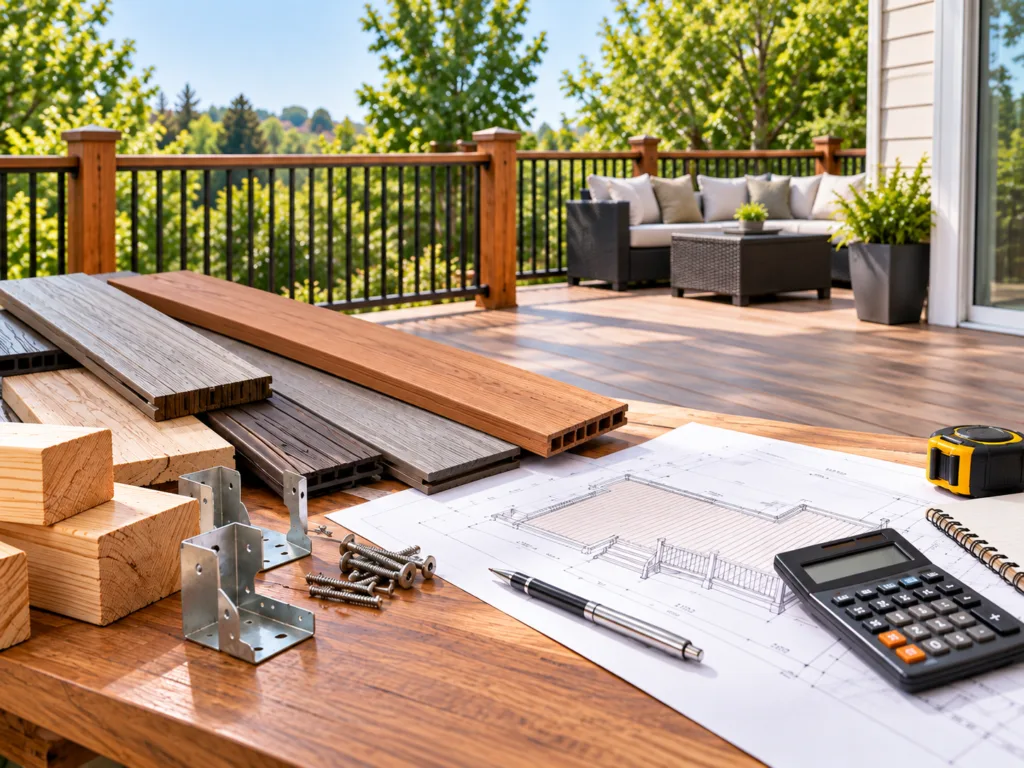
What Really Changes Deck Cost and Buying Decisions?
Deck cost and buying decisions depend on the full scope, not simply the price of a square foot of boards. Structural support, access, elevation, finish material, labor and details can all change the final investment.
Compare the work being provided before comparing the total numbers. A modest deck with difficult foundations and expensive railing can cost more than a larger, simpler structure.
Size and geometry
More area increases quantities, while curves, angles and levels increase waste and labor.
Deck material
Pressure-treated lumber and premium boards differ in purchase price and upkeep.
Structure and grade
Higher decks, slopes, constrained sites and foundations can increase work.
Finishes and features
Stairs, guards, fascia, lighting and integrated shade can change the overall scope.
Budget for the Whole Deck, Not Just the Boards
Deck cost and buying planning should separate the main materials into clear groups so an estimate does not omit supports or finishing components.

| Cost category | What it includes | Common omission |
|---|---|---|
| Foundations | Excavation, concrete, anchors, post bases | Ground or access complications |
| Framing | Posts, beams, joists, blocking, ledger | Connection and bracing hardware |
| Decking | Main field boards, clips or screws | Borders, cut waste and end trims |
| Stairs and railing | Stringers, treads, guards, handrails | Finish components and landing |
| Labor and services | Installation, demo, hauling, inspections | Site protection and access |
Estimate Deck Boards and Separate the Special Pieces
Measure the footprint and select actual board width and standard stocked lengths. Plan orientation, end joints, borders and cuts before deciding how many pieces to buy.
The Deck Board Calculator can help estimate surface board counts and waste. It does not replace a structural framing takeoff or a supplier-confirmed bill of materials.
Stairs, fascia, borders, blocking, framing connectors and hidden fasteners should be counted as their own items. Check delivery access, lead times and return rules before you place the order.
Make Sure Contractor Bids Describe the Same Deck
| Item to compare | Questions worth asking |
|---|---|
| Dimensions and elevation | Are the plan size, finished height and stair locations the same? |
| Decking specifications | Is the brand, line, profile and color named? |
| Framing and foundation | Are post, beam, joist, footing and ledger requirements defined? |
| Guards and stairs | What railing, handrail, tread and landing details are included? |
| Extra work | Who handles demolition, disposal, permits, inspections, and unforeseen repairs? |
| Schedule and warranty | What is the anticipated lead time, workmanship coverage and change process? |
Six Buying Checks Before Choosing a Decking Product
Surface appearance
Compare real samples in the outdoor lighting where the deck will be used.
Heat and exposure
Evaluate barefoot temperature, wet conditions and likely weathering.
Maintenance
Determine if routine cleaning or periodic refinishing fits your expectations.
Compatible assembly
Check joist spacing, gaps, clips and trim profiles in the installation guide.
Warranty terms
Read what is covered, required care and installation conditions.
Replacement availability
Consider stocking a few matching boards for repairs if appropriate.
Include Maintenance, Delivery and Change Risks in the Buying Decision
An installed deck has costs beyond the initial material order. Wood finishes may need renewal, deck surfaces need cleaning, and guard or fastening systems may require replacement parts after years of exposure. Compare those likely responsibilities before choosing between product categories.
Material availability is another risk. Long lead times, limited stock colors and custom lengths can affect the schedule. Ask whether matching trim, starter clips and spare boards are available now, and whether leftover full-length stock can be returned.
Finally, define the process for concealed conditions and scope changes before work begins. If removal uncovers damaged wall framing or footings, a written change procedure helps distinguish necessary repair from optional upgrades and makes costs easier to understand.