
Types of Windows: Compare Styles and Uses
Compare types of windows including single-hung, double-hung, casement, sliding, awning, picture, bay and specialty windows, with practical pros, limitations and buying checks.
Explore the guide ↓
Eight Common Window Types
The best window type depends on how you use the room, whether you need ventilation, available swing and cleaning clearance, and the proportions of the opening. These eight residential configurations are a practical starting point.

Single-hung
The lower sash slides vertically while the upper sash remains fixed.
Best forBudget-conscious rooms and straightforward residential replacements.
Good to knowOne operating sash keeps hardware simple, but cleaning the outside of the upper pane may be less convenient.

Double-hung
Both upper and lower sashes move, adding ventilation choices.
Best forBedrooms, upper stories and rooms where cleaning access matters.
Good to knowTilt-in cleaning varies by model; two operating sashes usually add hardware and cost.

Casement
A side-hinged sash swings outward, often with a crank.
Best forKitchens, bedrooms and locations prioritizing ventilation and compression seals.
Good to knowCheck exterior swing clearance, screens, hinges and accessible operation.

Sliding
One or more sashes move horizontally on a track.
Best forWide openings and rooms with no space for a projecting sash.
Good to knowTracks need cleaning and the remaining fixed or parked sash affects clear opening.

Awning
A top-hinged sash projects outward at the bottom.
Best forBathrooms and higher wall positions where ventilation and privacy matter.
Good to knowThe open sash offers some protection in light rain, not reliable protection in severe weather.
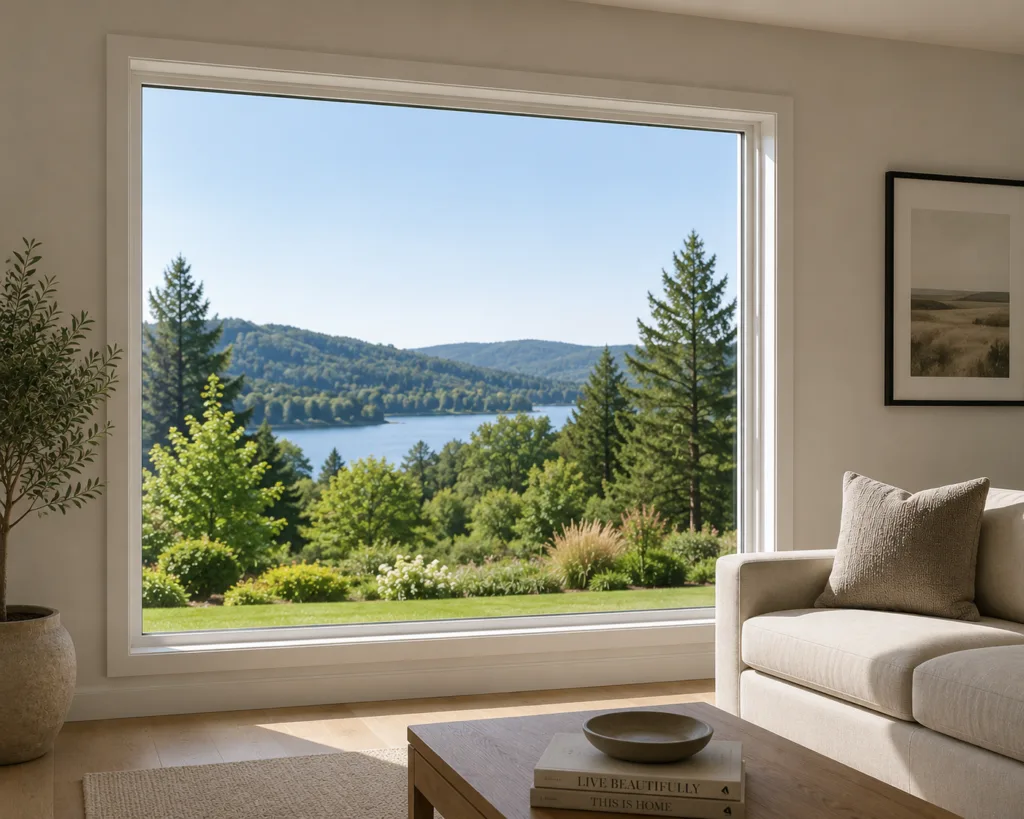
Fixed / picture
A non-operable glazed opening designed primarily for daylight and views.
Best forViews, tall walls and combinations with nearby operable units.
Good to knowAirtight simplicity does not provide fresh air or an emergency escape opening.

Bay & bow
Projecting window assemblies widen views and may form an interior seat or ledge.
Best forLiving and dining spaces where architectural depth matters.
Good to knowProjection requires careful roof, flashing and structural support detailing.

Specialty
Custom arches, circles, triangles and other shaped openings.
Best forEntryways, vaulted spaces and distinctive elevations.
Good to knowCustom fabrication, trim and installation commonly have longer lead times and higher costs.
Window Types Comparison Table
Unlike a picture chart, this table can be read on a phone, selected, copied and updated when product options change.
| Type | Opens? | Best use | Main trade-off |
|---|---|---|---|
| Single-hung | Lower sash | Budget-friendly bedrooms | One operating sash |
| Double-hung | Upper and lower sashes | Flexible ventilation | More hardware and cost |
| Casement | Side swing | Airflow and compression seal | Needs exterior clearance |
| Sliding | Horizontal track | Wide openings | Track cleaning and partial opening |
| Awning | Top hinge | Baths and privacy | Projects outward |
| Fixed / picture | No | Daylight and views | No ventilation |
| Bay & bow | Often mix of fixed + operable | Projecting feature windows | Support and waterproofing |
| Specialty | Often fixed | Distinctive shapes | Custom fabrication and lead time |
Match Operation to the Actual Opening
Clear opening and airflow
Consider whether the room needs a fully open egress-style sash, a smaller ventilation opening, or only daylight.
Screen and cleaning access
Confirm insect screens, sash removal or tilt cleaning before choosing a configuration for upper stories.
Wall and sill exposure
Projecting windows, bay assemblies and other specialty shapes need careful flashing and drainage detailing.
Whole-window performance
Compare NFRC-rated assemblies, not just the way the sash opens. Glazing, frame and weather seals matter.
Window shapes that look similar from the street can function very differently. A fixed unit is often the simplest choice when a room already has enough operable ventilation nearby, while a casement or awning can be useful when the intent is to direct air into a living space. The exact air leakage, water rating and wind resistance still depend on the tested product, not the name of the style.
Also ask where the screen sits, whether window treatments block access to the operator, and how the room will be cleaned. For projecting windows, consider adjacent walkways and landscaping. For bay or bow assemblies, the projection itself can introduce support and roof-like waterproofing details outside the basic window price.