
SIDING & EXTERIOR GUIDE
Know When It’s Time to Replace Siding and What Affects the Cost
Siding replacement cost depends on the material, home size, tear-off, trim, repairs and installation conditions. Learn when replacement makes more sense than continued repairs and what factors can push the total project cost up or down.
START WITH THE CONDITION
Decide Whether Repair or Replacement Makes More Sense
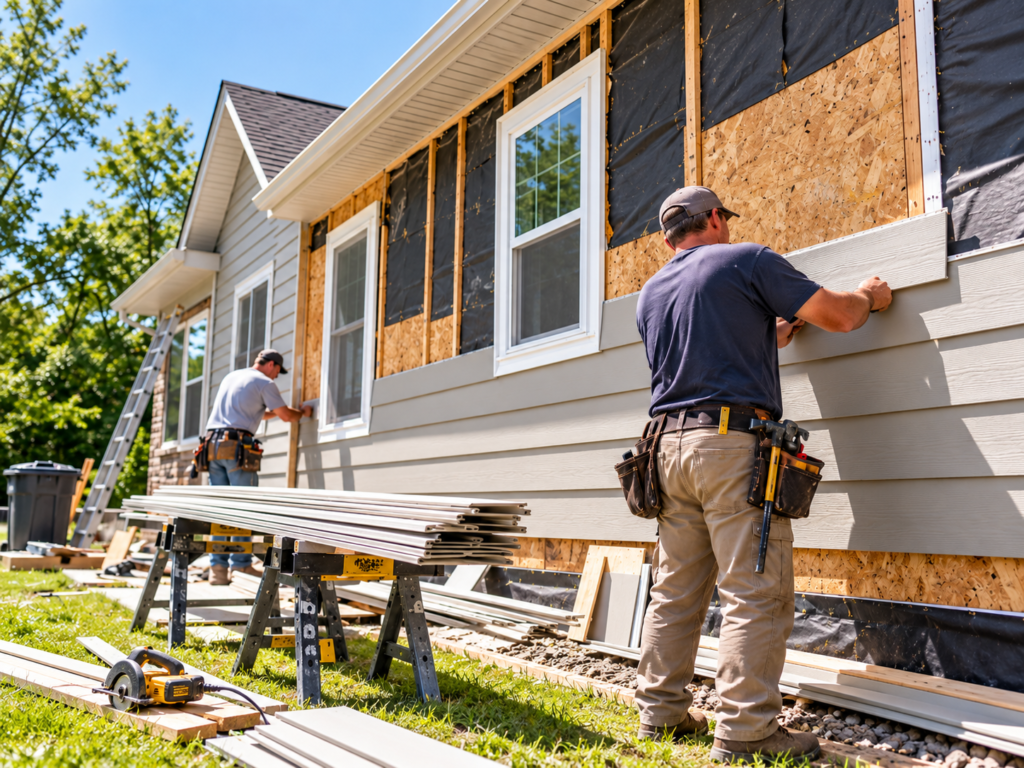
Siding replacement cost only matters once you know the existing exterior has reached the point where continued repairs are no longer practical. Age, widespread damage, moisture problems and difficulty matching old materials can all push a project toward full replacement.
01 — LOCALIZED DAMAGE
A few cracked, loose or rotted boards may still be worth repairing if most of the siding is sound and the wall behind it is in good condition.
02 — WIDESPREAD DETERIORATION
Replacement becomes more practical when damage appears across multiple walls, finishes are failing throughout the exterior or repairs are becoming frequent.
03 — HIDDEN WALL PROBLEMS
Moisture damage, deteriorated sheathing, failed flashing or other concealed conditions can expand the scope once old siding is removed. These repairs should be included when planning the replacement budget.
GOOD TO KNOW
The cheapest option today is not always the least expensive over time. Repeated repairs can add up quickly if the siding is already near the end of its useful life.
WHAT AFFECTS THE COST
Four Factors That Drive Siding Replacement Cost
The total price is shaped by more than the siding itself. Material choice, labor, tear-off and the condition of the wall underneath can all change the final project cost.
01 — SIDING MATERIAL
Vinyl is generally one of the more economical choices, while fiber cement, wood, engineered wood and metal can cost more depending on product quality and finish.
02 — LABOR & ACCESS
Two-story walls, steep grades, tight side yards and complex architectural details can increase labor because installation takes longer and may require additional equipment or staging.
03 — TEAR-OFF & DISPOSAL
Removing old siding adds labor and disposal costs, especially when multiple layers or heavy materials are involved. Some projects may also uncover older materials that require special handling.
04 — TRIM & WALL REPAIRS
Replacing corner boards, window trim, fascia or damaged sheathing can add significantly to the scope. Hidden moisture or rot discovered after tear-off is one of the most common reasons final costs increase.
GOOD TO KNOW
Square footage is only the starting point. A smaller home with difficult access and extensive repair work can cost more than a larger, simpler exterior.
BUDGET DETAILS
Costs That Are Easy to Miss
The main siding and labor numbers usually get the most attention, but smaller scope items can add up quickly and change the final siding replacement cost.
01 — WASTE & EXTRA MATERIAL
Siding projects need an allowance for cuts, damaged pieces, pattern matching and future repairs. Complex walls with many corners, windows or short sections usually create more waste than simple rectangular elevations.
02 — PERMITS & ACCESSORIES
Depending on the location and scope, permits may be required. Starter strips, flashing, fasteners, water-resistive barrier (WRB), mounting blocks, vents and other accessories should also be included rather than treating the siding panels as the entire material cost.
03 — TEMPORARY & FINISH WORK
Scaffolding, protection, cleanup, painting, caulking and reinstalling exterior fixtures can add labor that is easy to overlook during early budgeting.
GOOD TO KNOW
Material quantity and wall area are only part of the estimate. Corners, openings, trim, penetrations and architectural details can have a noticeable effect on both labor and material use.
COMPARE SIDING OPTIONS
How Siding Materials Compare for Replacement Projects
Material choice affects more than the initial price. Maintenance, durability, appearance and installation difficulty can all change the long-term value of a siding replacement project.
| Siding Material | Relative Cost | Maintenance | Durability | Best Fit |
|---|---|---|---|---|
| Vinyl | $ | Low | Moderate | Budget-focused, low-maintenance projects |
| Engineered Wood | $$ | Low to Moderate | Good | Wood appearance with easier upkeep |
| Fiber Cement | $$–$$$ | Low to Moderate | Very Good | Durable, painted-wood appearance |
| Wood | $$$ | Moderate to High | Good with maintenance | Traditional or natural appearance |
| Stucco | $$–$$$ | Low to Moderate | Very Good | Warm climates and continuous finishes |
| Metal | $$$–$$$$ | Low | Excellent | Modern design and long-term durability |
Relative cost can vary significantly by product, region, wall complexity and labor requirements.
GOOD TO KNOW
The lowest-cost siding is not automatically the cheapest over the life of the home. Maintenance, repainting, repair frequency and expected service life should be considered along with the initial installation price.
PLAN THE QUANTITY & BUDGET
Estimate Materials Before Finalizing the Budget
A good siding replacement estimate starts with the wall area, but the final quantity should also account for openings, trim, waste and the complexity of the exterior.
01 — ESTIMATE SIDING QUANTITY
Measure the exterior wall area and subtract major openings such as large windows and doors where appropriate. Then account for the siding profile, panel coverage and expected waste. Complex elevations with many corners and short runs usually need a larger waste allowance.
Use the Siding Quantity Calculator to estimate the amount of siding needed based on wall dimensions and project conditions.
02 — KEEP A CONTINGENCY
Replacement projects can uncover damaged sheathing, failed flashing, hidden rot or other conditions that were not visible before tear-off. Keeping some room in the budget for concealed repairs can make the project easier to manage once work begins.
GOOD TO KNOW
A material takeoff and a project budget are not the same thing. The calculator helps estimate siding quantity, but labor, trim, flashing, disposal, access and repairs still need to be considered separately.
REPLACEMENT PROCESS
What Happens During a Siding Replacement?
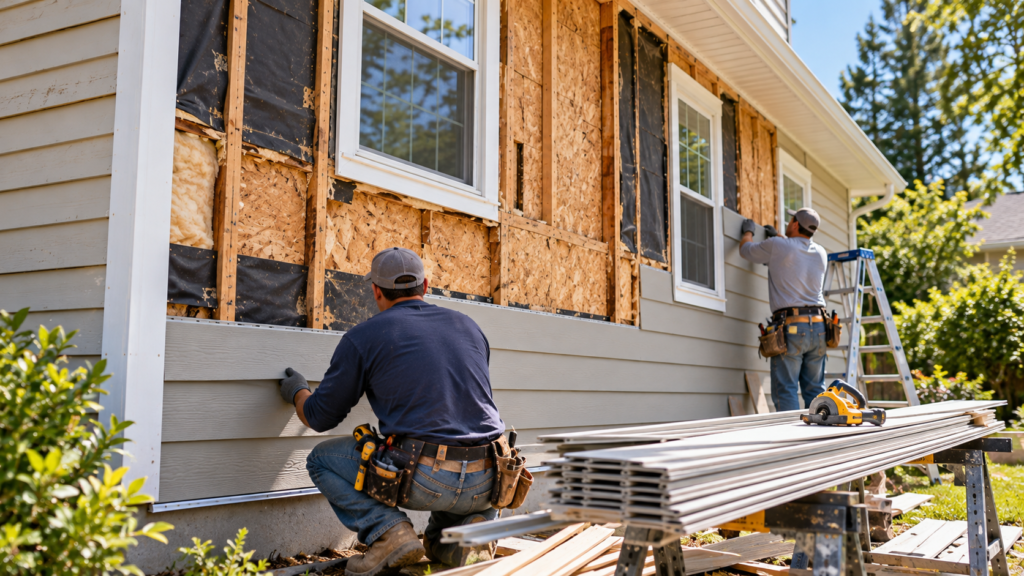
A full siding replacement involves more than removing old material and installing new panels. The process typically includes protecting the site, removing the existing siding, inspecting and repairing the wall, restoring weather protection, installing the new siding and completing the final finish work.
01 — PROTECT & PREP THE SITE
Protect landscaping, windows, doors and nearby surfaces. Plan access, staging and disposal before tear-off begins.
02 — REMOVE EXISTING SIDING
Remove the old siding and trim as required so the underlying wall can be inspected.
03 — INSPECT & REPAIR THE WALL
Check sheathing, framing and other exposed conditions for rot, moisture damage or deterioration and make necessary repairs.
04 — COMPLETE WRB & FLASHING
Repair or install the water-resistive barrier, flashing and drainage details before the wall is covered again.
05 — INSTALL NEW SIDING & TRIM
Install the siding, corners and trim using the required fastening, joints, clearances and movement allowances for the material.
06 — FINISH & INSPECT
Complete sealant, coatings, exterior fixtures and cleanup, then inspect the finished installation for drainage, clearances and overall workmanship.
GOOD TO KNOW
The best opportunity to inspect hidden wall conditions is after the old siding has been removed and before the new siding is installed. Once the wall is covered again, sheathing, flashing and drainage details become much harder to evaluate.
BEFORE YOU COMMIT
Siding Replacement Checklist
Before moving forward with full siding replacement, confirm the scope includes both the new exterior finish and the underlying wall details that affect long-term performance.
☐ Existing siding condition has been fully evaluated
☐ Repair versus replacement has been considered
☐ Wall area and material quantities have been estimated
☐ Waste allowance is included
☐ Tear-off and disposal are included in the scope
☐ Trim, corners and accessories are accounted for
☐ Weather barrier and flashing will be inspected during tear-off
☐ Allowance is included for damaged sheathing or hidden repairs
☐ Required clearances and drainage details are understood
☐ Labor and access conditions are reflected in the budget
☐ Material maintenance requirements are understood
☐ Final scope includes cleanup, finish work and exterior fixtures
Bottom Line
Siding replacement cost depends on much more than the price of the siding itself. Material choice, labor, tear-off, trim, access, waste and hidden wall repairs can all have a major effect on the final project cost.
Start with the condition of the existing exterior, estimate quantities carefully and leave room in the budget for conditions that may only become visible after the old siding is removed. A well-planned replacement project should address the wall system behind the siding, not simply cover it with new material.