
SIDING & EXTERIOR GUIDE
Know When Siding Needs Maintenance, Repair, or Replacement
Siding repair and maintenance can help extend the life of your exterior and catch small problems before they spread. Learn how to identify cracks, loose panels, fading, rot and moisture damage, handle routine upkeep, and decide when localized repairs are enough.
START WITH THE CONDITION
Identify the Problem Before You Repair the Siding
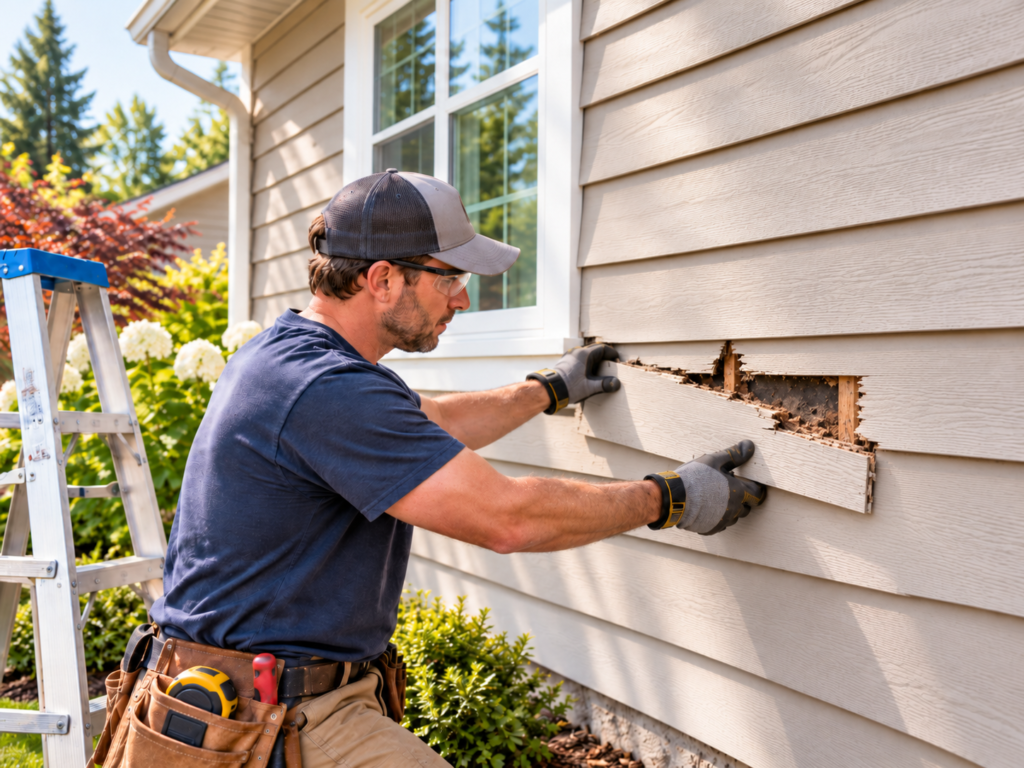
Siding repair and maintenance starts with figuring out whether the issue is cosmetic, localized or a sign of moisture behind the wall. Cracks, loose panels and fading may be surface-level problems, while soft material, staining or repeated damage can point to something deeper.
01 — SURFACE DAMAGE
Fading, chalking, minor dents, scratches and peeling finishes usually affect appearance first. These issues may be handled with cleaning, touch-up work, repainting or localized panel replacement depending on the siding material.
02 — LOOSE OR DAMAGED PANELS
Cracked, warped, broken or loose siding can allow more water and wind behind the exterior. Individual pieces can often be repaired or replaced if the surrounding wall and flashing remain in good condition.
03 — MOISTURE & ROT
Soft wood, swelling, staining, mold or repeated paint failure may indicate water is getting behind the siding. Before replacing damaged material, find and correct the leak, flashing problem or drainage issue causing it.
GOOD TO KNOW
The visible damage is not always the source of the problem. Siding near windows, roof intersections, gutters and penetrations should be inspected carefully because water can enter in one location and show up somewhere else.
COMMON SIDING PROBLEMS
Problems You’re Most Likely to See
Different siding materials fail in different ways, but most issues fall into a few common categories. Knowing what you are looking at helps determine whether the problem needs cleaning, repair, refinishing or replacement.
01 — CRACKS & IMPACT DAMAGE
Hail, ladders, lawn equipment and other impacts can crack or dent siding. Small isolated damage may only require replacing one or two pieces, while widespread cracking can point to aging or brittle material.
02 — WARPING & BUCKLING
Panels that bow, ripple or pull away from the wall may have been fastened too tightly, exposed to excessive heat or installed without enough room for movement. The cause should be corrected before damaged pieces are replaced.
03 — FADING & FINISH FAILURE
Sun exposure, age and weather can cause siding colors to fade or painted finishes to chalk, peel or blister. Cleaning or repainting may restore some materials, while others may require panel replacement if the finish cannot be renewed.
04 — ROT & MOISTURE DAMAGE
Wood and wood-based siding can soften, swell or decay when water remains trapped against the material. Moisture damage around windows, roof intersections and lower wall areas should be investigated before new siding is installed.
GOOD TO KNOW
Repeated damage in the same location usually means the underlying cause has not been fixed. Look for drainage, flashing, gutter or clearance problems before treating the siding itself.
ROUTINE MAINTENANCE
Keep Siding Clean, Sealed and Protected
Regular maintenance helps siding last longer and makes it easier to catch small problems before they turn into larger repairs. The exact upkeep depends on the material, but cleaning, finish care and periodic inspection apply to most exterior systems.
01 — CLEANING & WASHING
Dirt, pollen, mildew and environmental buildup can collect on siding over time. Use gentle cleaning methods appropriate for the material, and avoid forcing water behind laps, joints or trim during washing.
02 — PAINT, CAULK & FINISH UPKEEP
Painted siding and trim should be checked for peeling, cracking or exposed material. Sealant around joints and penetrations should also be inspected, but caulk should only be used where intended and should not block drainage paths.
GOOD TO KNOW
Pressure washing can damage some siding materials or drive water behind the exterior if used too aggressively. Start with the least aggressive cleaning method that will do the job.
REPAIR OPTIONS
Match the Repair to the Damage
Not every siding problem requires a full replacement. Small, isolated issues can often be repaired successfully as long as the surrounding wall is sound and the source of the damage has been corrected.
01 — REPLACE DAMAGED PANELS
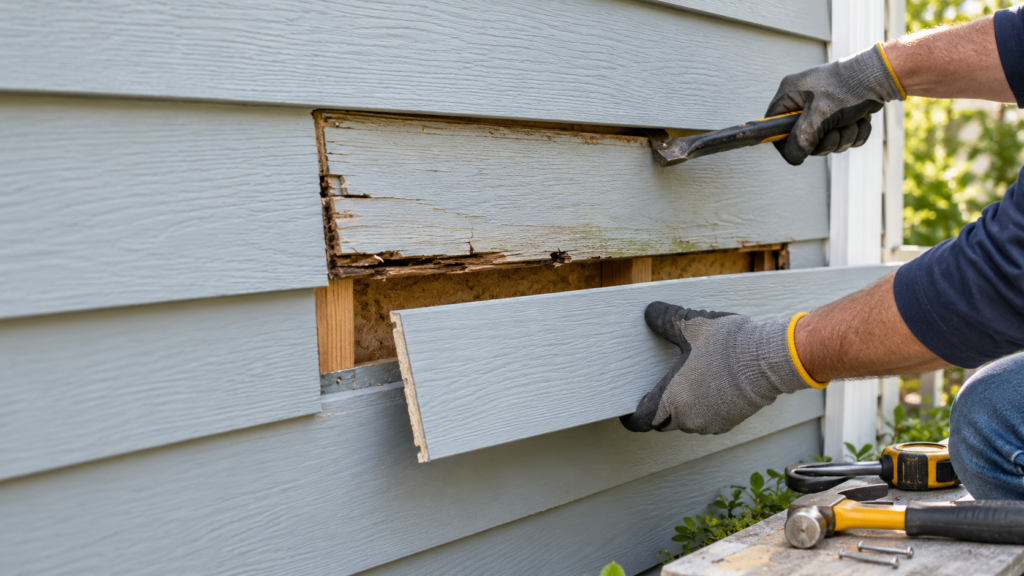
Cracked, broken, warped or rotted pieces can often be removed and replaced individually. Matching the existing profile, thickness, texture and color may be the biggest challenge on older siding.
02 — PATCH & REFINISH
Minor holes, dents, surface defects or finish damage may be repaired with approved patching products, touch-up coatings or repainting. The repair method should be compatible with the siding material and its existing finish.
03 — FIX THE SOURCE FIRST
If damage was caused by a roof leak, failed flashing, overflowing gutter, poor clearance or trapped moisture, correct that condition before installing new material. Otherwise the replacement siding may fail again.
GOOD TO KNOW
Localized repairs make the most sense when the majority of the siding is still in good condition. If damage is widespread, recurring or affecting the wall behind the siding, replacement may be the better long-term solution.
REPAIR OR REPLACE?
When Is Siding Repair Still Enough?
Localized repairs usually make sense when the damage is limited and the surrounding wall is still in good condition. Replacement becomes more practical when problems are widespread, repeated or tied to aging materials.
01 — REPAIR MAKES SENSE
Repair is usually appropriate when only a few boards or panels are cracked, loose, dented or damaged and the surrounding siding, flashing and wall assembly remain sound.
02 — WATCH FOR REPEATED PROBLEMS
If the same areas keep failing after repair, the issue may be coming from poor flashing, trapped moisture, installation problems or material movement rather than the siding surface itself.
03 — REPLACEMENT MAY BE BETTER
Widespread rot, brittle panels, extensive fading, recurring moisture damage or siding near the end of its service life may make full replacement more cost-effective than continuing with isolated repairs.
GOOD TO KNOW
Matching old siding can become difficult as colors fade and product lines change. Even when a small repair is technically possible, replacement may be worth considering if the patched area will remain very noticeable.
BEFORE YOU FINISH
Siding Repair & Maintenance Checklist
Before wrapping up a repair or maintenance project, confirm the visible problem and the underlying cause have both been addressed.
☐ Cracked or damaged siding has been repaired or replaced
☐ Loose panels are properly secured
☐ Rotten or soft material has been removed
☐ Moisture-damaged areas have been investigated
☐ Gutters and roof runoff are not directing water onto the wall
☐ Siding clearances remain open above roofs, grade and hard surfaces
☐ Failed paint or coatings have been renewed where needed
☐ Sealant is intact only where it is supposed to be used
☐ Flashing around windows, doors and penetrations is sound
☐ Replacement pieces match the existing profile as closely as possible
☐ Drainage and ventilation paths remain open
☐ Recurring damage has been traced to its source
Bottom Line
Siding repair and maintenance is most effective when small problems are handled early and the cause of the damage is corrected before new material goes back on the wall.
Cracks, fading, loose panels and localized rot can often be repaired without replacing the entire exterior. But widespread deterioration, repeated moisture damage or aging siding may signal that replacement is the better long-term choice.