
← BACK TO DECKS & OUTDOOR LIVING
DECK COST & BUYING
Know What You’re Paying For Before You Buy
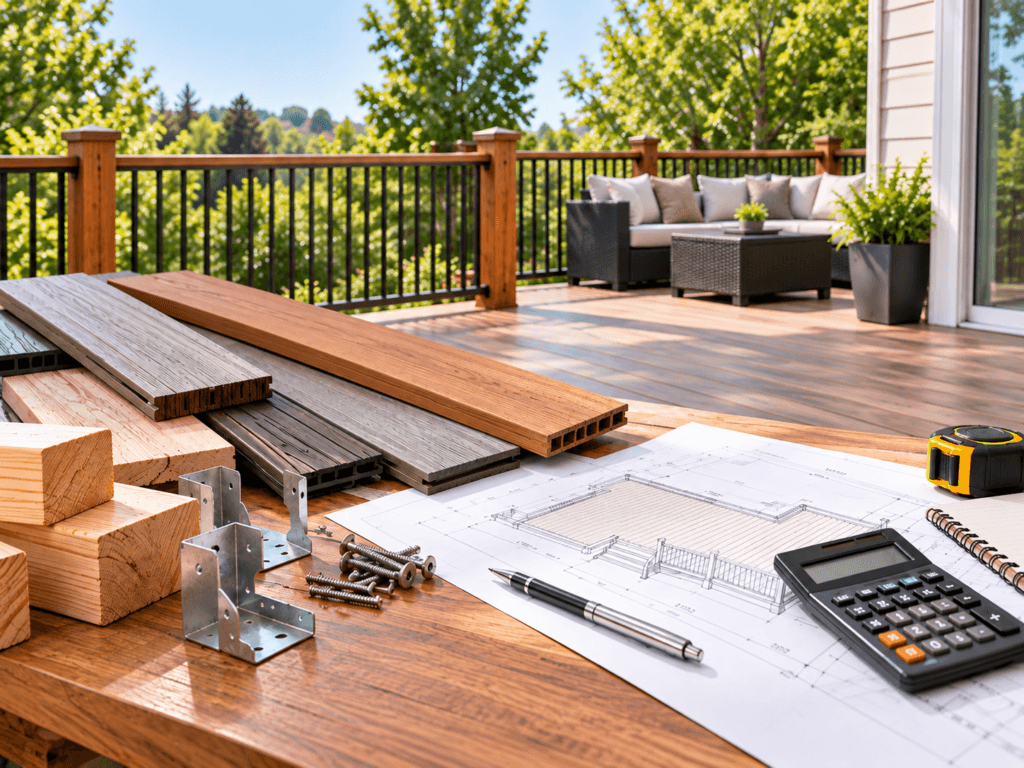
Deck cost depends on much more than the price of the boards. Size, material, framing, stairs, railings, site conditions, labor and finish details can all change the final number. Understanding what goes into the project makes it easier to compare materials, review bids and order the right amount without paying for things you do not need.
START WITH THE BIG PICTURE
What Actually Drives Deck Cost?
Deck cost is shaped by more than the price of the decking. Size, structure, site conditions, stairs, railing and finish details can all change the amount of material and labor required.
01 — SIZE & SHAPE
Larger decks require more framing, decking, footings and hardware. Angled edges, multiple levels and unusual shapes can also increase cutting, waste and labor.
02 — DECKING MATERIAL
Pressure-treated wood is usually the lower-cost starting point, while cedar, hardwood, composite, PVC and aluminum move into progressively different price ranges.
03 — STRUCTURE & SITE
Deck height, footing conditions, slopes, difficult access and complex house connections can add substantial work below the finished surface.
04 — STAIRS, GUARDS & FEATURES
Stairs, railing systems, lighting, pergolas, built-in seating and other features can materially change the total project cost.
GOOD TO KNOW
The decking itself may be the most visible material, but it is only one part of the project. A lower-priced deck board does not automatically mean a lower-cost finished deck.
MATERIAL COST
Compare More Than the Price Per Board
Material price matters, but it does not tell you the full cost of owning or installing the deck. Maintenance, fasteners, framing requirements and expected service life can all change the real value of one option versus another.
WOOD
Pressure-treated lumber is usually the most budget-friendly starting point, while cedar, redwood and tropical hardwoods move higher depending on species, grade and availability. Wood also brings ongoing maintenance costs for cleaning, staining or sealing.
COMPOSITE & PVC
Composite and PVC decking usually cost more upfront than pressure-treated wood, but they reduce routine refinishing. Product lines vary widely in appearance, surface texture, heat retention, warranty coverage and installation requirements.
PREMIUM & SPECIALTY MATERIALS
Tropical hardwood, aluminum and other specialty products can carry significantly higher material costs. They are usually chosen for appearance, durability, low maintenance or demanding exposure conditions rather than lowest initial price.
GOOD TO KNOW
Two deck boards with similar purchase prices may not cost the same to install. Hidden fasteners, tighter joist spacing, special trim pieces or proprietary accessories can all affect the final project cost.
QUANTITIES & WASTE
Order Enough Without Guessing
Deck boards are only part of the material order. Board layout, cut locations, trim details and waste allowance all affect how much material you actually need.
DECK BOARDS
Calculate the deck area and board coverage using the actual board width and planned spacing. Board length also matters because shorter stock can create more joints and more waste.
WASTE & CUTS
Allow extra material for trimming, damaged boards, color selection and layout changes. Simple rectangular decks usually create less waste than angled, picture-framed or multilevel layouts.
TRIM & SPECIALTY BOARDS
Picture-frame borders, breaker boards, fascia and stair treads may use different lengths or profiles from the main field decking. Count these separately instead of assuming they are covered by the basic deck-area calculation.
ESTIMATE DECK BOARDS
Use the Deck Board Calculator to estimate how many boards your project may require based on deck dimensions, board size, spacing and waste allowance.
WHAT YOU’RE REALLY BUYING
A Deck Is More Than Deck Boards
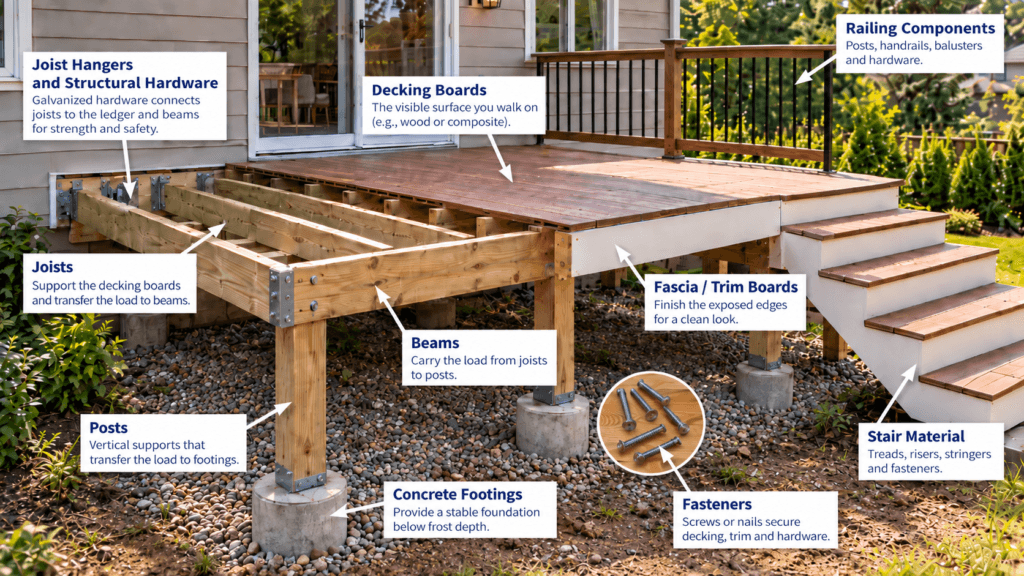
The finished surface gets most of the attention, but a complete deck requires framing, foundation materials, structural hardware and finish components. Those supporting materials can represent a meaningful part of the overall project cost.
FRAMING
Joists, beams, posts, blocking and ledger material form the main structural system. Lumber size, spacing and span requirements affect both quantity and cost.
FOUNDATION
Concrete, footings, post bases and anchors support the deck and transfer loads into the ground. Slopes, soil conditions and deck height can all influence what is required.
HARDWARE
Joist hangers, structural screws, bolts, post caps and other connectors should be included in the material budget. Exterior-rated, corrosion-resistant hardware can add cost but is a critical part of the structure.
FINISH COMPONENTS
Decking, fascia, stairs, railing, trim and accessories complete the visible portion of the deck. These items can vary widely in price depending on material and design.
GOOD TO KNOW
A decking quote that only covers boards does not represent the cost of a complete deck. When comparing material packages, make sure the framing, hardware, railing and finish pieces are accounted for too.
BUYING DECKING
What to Compare Before Choosing a Product
Decking products can look similar in a showroom while performing very differently once installed. Compare the material itself, but also pay attention to maintenance, heat, moisture exposure and the installation system that comes with it.
01 — APPEARANCE
Look at color, grain pattern, board variation and how the material is expected to weather. Some products maintain a more uniform appearance while natural wood changes more noticeably over time.
02 — MAINTENANCE
Consider how often the surface needs cleaning, staining, sealing or other upkeep. Lower-maintenance materials usually reduce long-term work but may cost more upfront.
03 — HEAT & SUN EXPOSURE
Dark decking can become noticeably hotter in direct sun. Surface temperature matters more on decks with strong afternoon exposure or areas where people frequently walk barefoot.
04 — MOISTURE PERFORMANCE
Think about rain, pool exposure, shaded areas and how quickly the deck can dry. Materials with stronger moisture resistance may be worth considering in consistently wet conditions.
05 — INSTALLATION REQUIREMENTS
Check joist spacing, fastener type, board gaps, end spacing and any special framing requirements. Product-specific installation rules can affect both labor and material cost.
06 — WARRANTY & PRODUCT LINE
Compare what the warranty actually covers, how long the product line has been available and whether matching boards or trim are likely to remain available for future repairs.
GOOD TO KNOW
Do not compare decking products by color and price alone. Installation requirements, maintenance expectations and long-term availability can matter just as much as the board itself.
COMPARING BIDS
Make Sure Contractors Are Pricing the Same Deck
Two bids can have very different totals because they are not actually pricing the same scope. Compare the materials, structural assumptions and included work before deciding that one contractor is simply less expensive.
SCOPE TO CONFIRM
- Overall deck dimensions and elevation
- Decking manufacturer and product line
- Framing material and joist spacing
- Footing and foundation scope
- Stair construction and landing
- Guard and railing system
- Fascia, trim and picture-frame details
- Demolition and disposal
- Permit and inspection responsibilities
DETAILS THAT CAN CHANGE THE NUMBER
- Difficult site access
- Existing damage at the house
- Sloped terrain or excavation
- Poor soil or unusual footing conditions
- Custom railing systems
- Multiple deck levels
- Picture-frame or specialty board layouts
- Lighting or electrical work
- Hidden conditions uncovered during demolition
WATCH FOR
A lower bid is not necessarily the same project for less money. Make sure the material specifications, structural scope and finish details are comparable before looking only at the total price.
BEFORE YOU ORDER
Deck Buying Checklist
Before placing the material order, confirm that the deck layout, product selections and supporting components have all been accounted for.
□ Overall deck dimensions are confirmed
□ Decking material and product line are selected
□ Board width and available lengths are known
□ Board layout and direction are planned
□ Waste allowance is included
□ Picture-frame and breaker boards are counted
□ Stair tread material is included
□ Fascia and trim quantities are confirmed
□ Framing quantities are established
□ Fasteners match the selected decking
□ Connectors are compatible with treated lumber
□ Railing components are included
□ Delivery access has been planned
□ Lead times have been checked
□ Return policies are understood
□ Extra matching material is considered for future repairs
Bottom Line
A realistic deck budget starts with a complete scope, not just the price of the decking. Size, structure, site conditions, stairs, railing, hardware and labor can influence the finished cost just as much as the boards themselves.
Compare products by what they require to install and maintain, calculate quantities before ordering, and make sure competing bids describe the same work before comparing totals.