
ROOFING TYPES GUIDE
Which Roofing Material Is Right for Your Home?
Different roof types vary considerably in lifespan, weight, weather resistance, maintenance and cost. Compare the most common residential roofing options so you can understand the tradeoffs before choosing a roof for your home.
ROOFING TYPES
Which Roofing Type Is Right for Your Home?
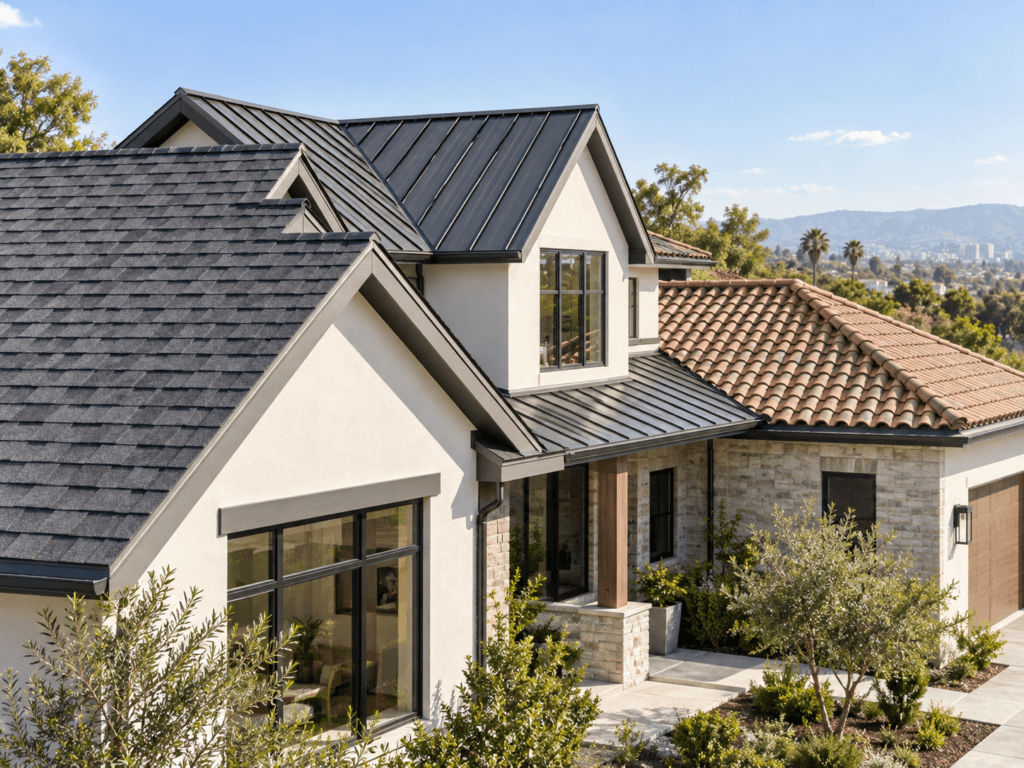
Choosing a roofing material involves more than appearance. Each option differs in lifespan, weight, weather resistance, maintenance, installation requirements and cost. The right choice depends on your home’s structure, climate, roof slope, design goals and budget.
Some materials are lightweight and widely available, while others offer longer service life or a more distinctive architectural look. Understanding the strengths and tradeoffs of each roofing type makes it easier to compare options before requesting bids or planning a replacement.
01 — ASPHALT SHINGLES
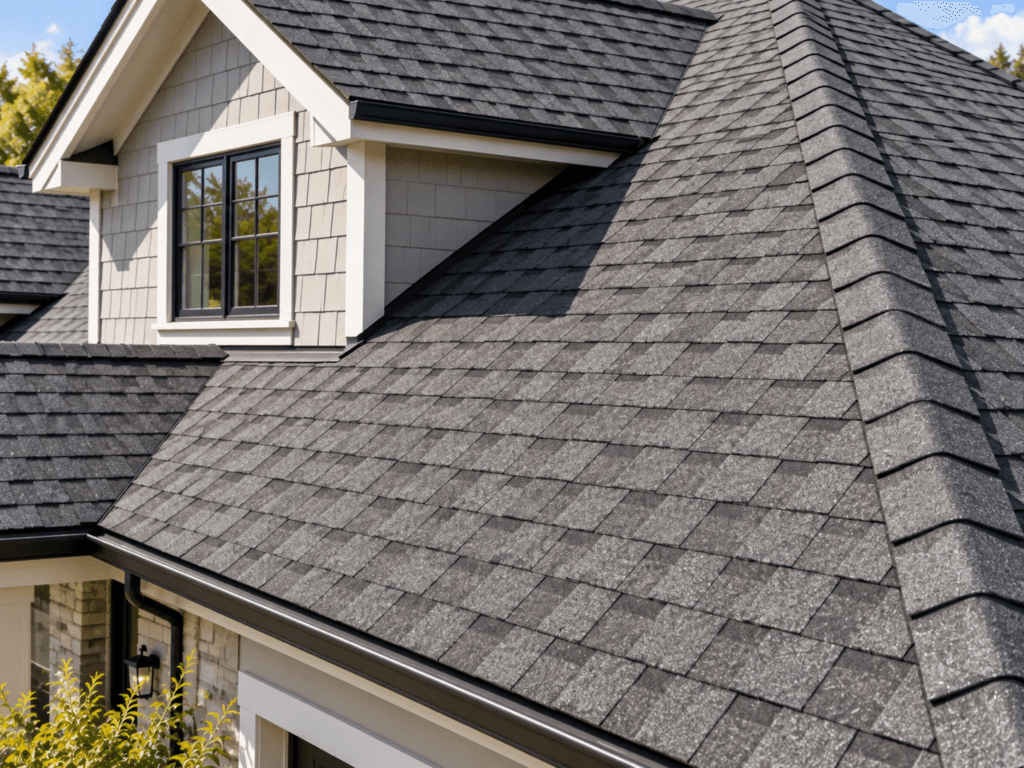
Asphalt shingles are the most common roofing material used on residential homes in the United States. They are relatively lightweight, widely available and offered in a large range of colors and styles. Architectural shingles are especially popular because they create more depth and texture than traditional three-tab shingles. Asphalt roofing works well on many pitched residential roofs and is generally easier and faster to install than heavier materials such as tile or slate.
BEST FOR
Most single-family homes, homeowners looking for a familiar and versatile roofing system, and projects where material availability and straightforward installation are important.
GOOD TO KNOW
Shingle quality can vary considerably between product lines. Roof slope, attic ventilation, underlayment, flashing and installation quality all affect how well an asphalt roof performs. Darker shingles may also absorb more heat, while impact-resistant or reflective products may be worth considering in certain climates.
02 — METAL ROOFING
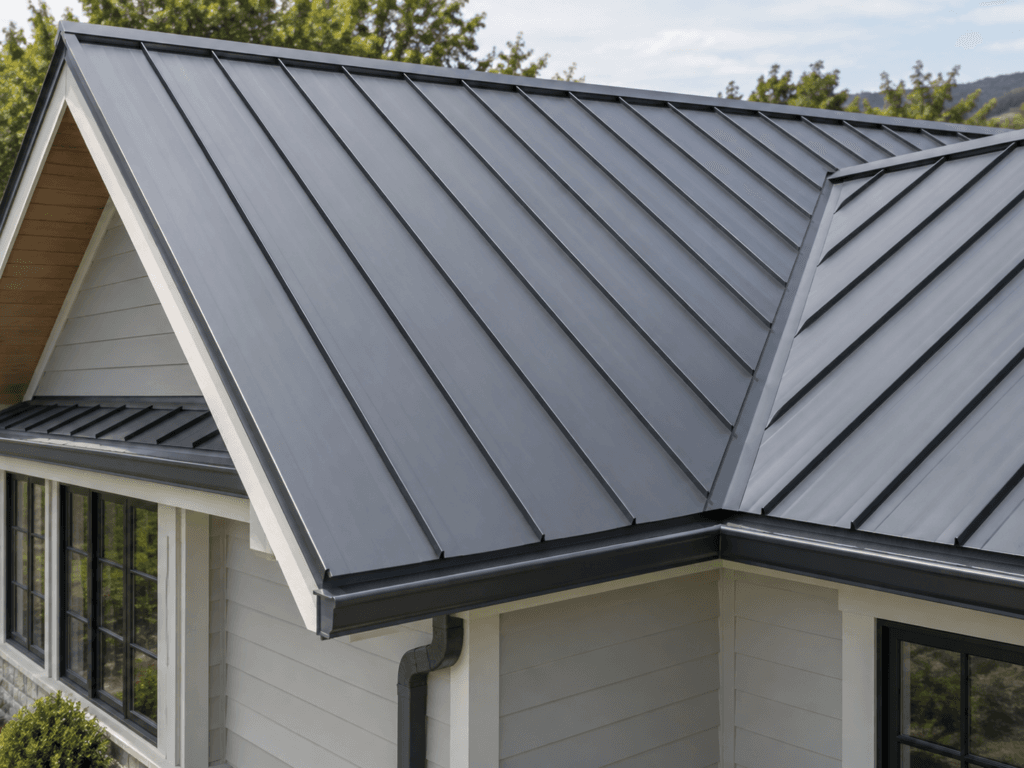
Metal roofing is known for durability, low maintenance and a clean architectural appearance. Residential systems are available in several styles, including standing-seam panels, exposed-fastener panels and metal shingles designed to resemble traditional roofing materials. Standing-seam metal roofs are especially popular on modern and contemporary homes because the raised seams create a simple, consistent pattern while concealing most fasteners. Metal roofing can also perform well in areas with heavy rain, snow, wind or wildfire exposure when the system is properly designed and installed.
BEST FOR
Homeowners looking for long service life, low routine maintenance and a roof that works well with modern, farmhouse or contemporary architecture.
GOOD TO KNOW
Metal roofs generally cost more upfront than asphalt shingles, and installation quality is especially important around seams, penetrations, valleys and flashing. Expansion and contraction also need to be accounted for in the system design. Different metals and coatings vary in corrosion resistance, appearance and price, so not all metal roofing performs the same.
03 — CLAY & CONCRETE TILE
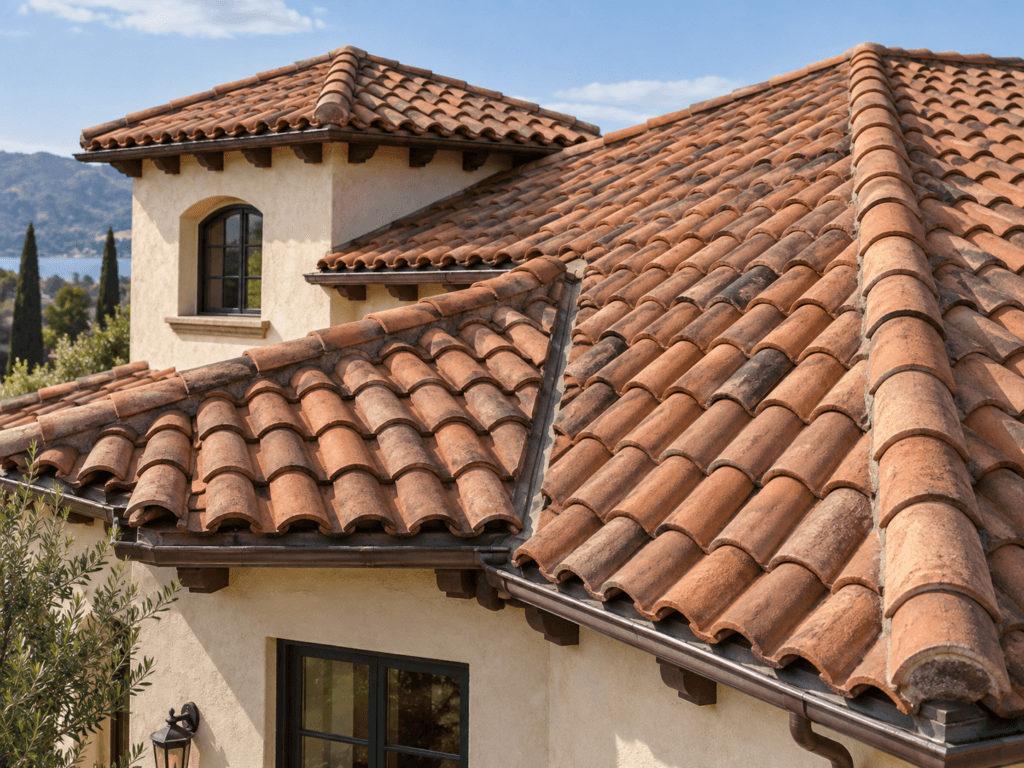
Clay and concrete tile roofing is known for its distinctive appearance, durability and ability to handle intense sun and heat. Tile roofs are especially common on Mediterranean, Spanish, Southwestern and coastal-style homes, but newer profiles can also work with more contemporary designs. Clay tiles are typically made from natural fired clay, while concrete tiles are molded from cement-based materials. Both are available in a range of shapes, textures and colors, including traditional curved barrel profiles and flatter designs.
BEST FOR
Homes where long service life, heat resistance and a strong architectural appearance are priorities, especially Mediterranean, Spanish, Southwestern and similar designs.
GOOD TO KNOW
Tile roofing is much heavier than asphalt shingles or many metal systems, so the roof structure must be able to support the additional weight. Individual tiles can also crack if walked on improperly. The waterproofing system beneath the tile is especially important because the tiles themselves are not the only layer protecting the home from water.
04 — SLATE ROOFING
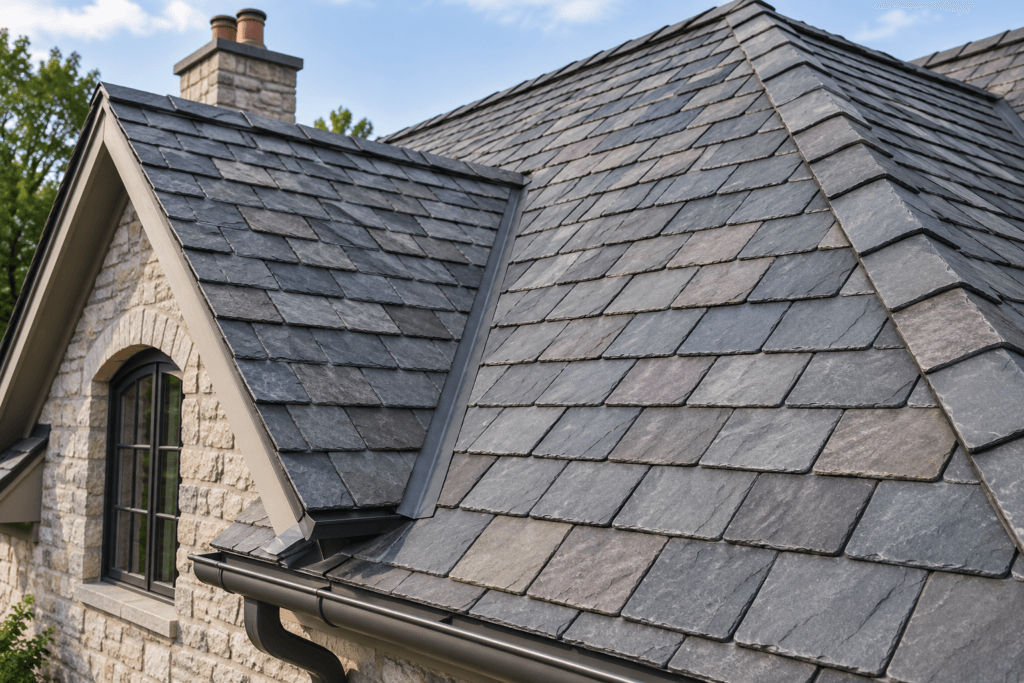
Slate roofing is a premium natural stone roofing material known for exceptional durability, fire resistance and a distinctive high-end appearance. Individual slate tiles are split from stone and installed in overlapping courses, creating a roof that can last for many decades when properly installed and maintained. Because slate is a natural material, color and texture can vary from piece to piece. Common tones include gray, black, green, purple and red, depending on the quarry and stone source.
BEST FOR
Historic homes, high-end residential projects and homeowners who want a natural roofing material with very long service life and a classic architectural appearance.
GOOD TO KNOW
Slate is one of the heaviest roofing materials, so the roof structure must be capable of supporting the load. Installation is specialized and typically more expensive than asphalt, metal or tile roofing. Individual slate pieces can also crack if walked on improperly, and repairs should usually be handled by contractors experienced with slate systems.
05 — SYNTHETIC & COMPOSITE ROOFING
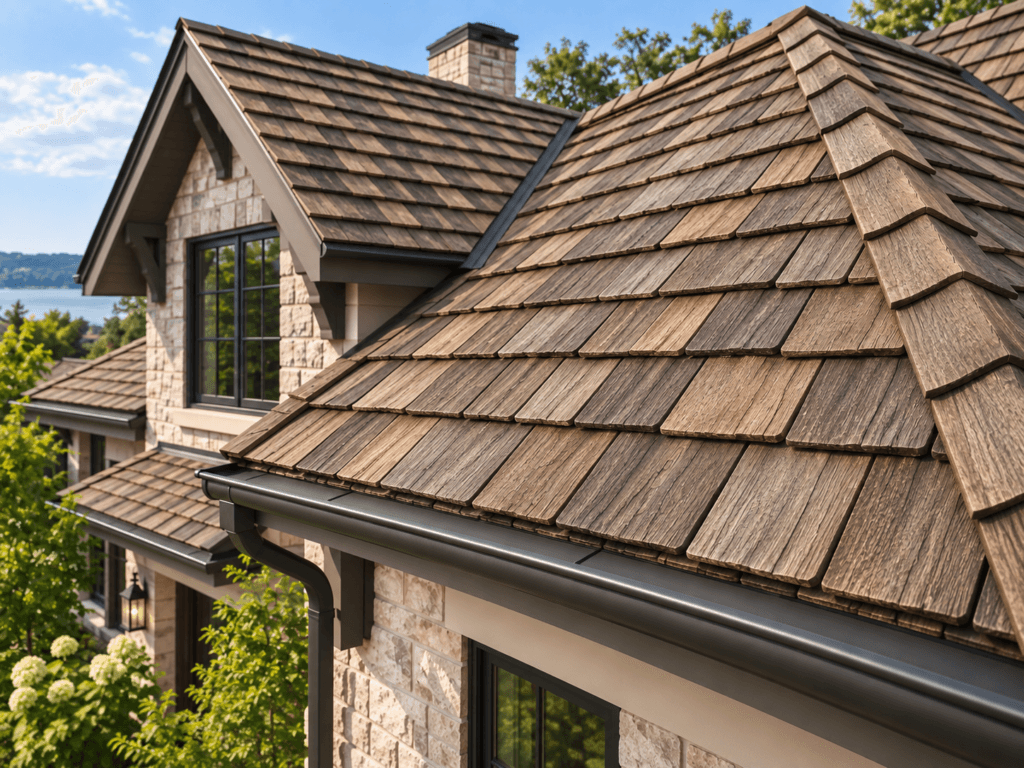
Synthetic and composite roofing products are designed to reproduce the appearance of natural materials such as slate, cedar shake or traditional shingles while using engineered materials that are lighter and often easier to install. Depending on the product, these roofs may be made from polymers, recycled materials, rubber blends or other composites. Higher-quality systems can provide a very convincing natural appearance while reducing some of the weight and maintenance concerns associated with real slate or wood.
BEST FOR
Homeowners who want the appearance of slate, shake or other premium roofing materials without the same structural weight, maintenance requirements or installation complexity.
GOOD TO KNOW
Performance can vary significantly between manufacturers and product lines, so warranties, fire ratings, impact resistance, UV stability and approved installation methods should be compared carefully. Synthetic products may also have a shorter track record than traditional materials such as slate, tile or asphalt shingles.
06 — FLAT & LOW-SLOPE ROOFING
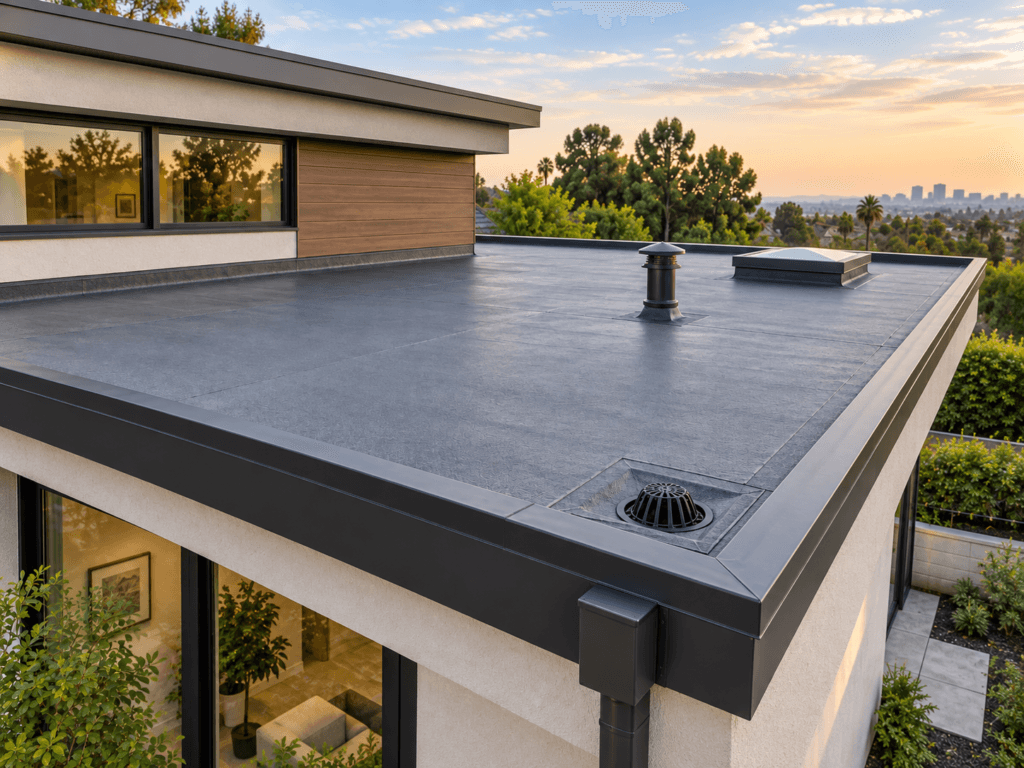
Flat and low-slope roofs use different materials and drainage strategies than steep-slope roofs because water does not run off as quickly. These systems are commonly found on modern homes, additions, porches, garages and some multifamily or mixed-use residential buildings. Common residential low-slope systems include modified bitumen, built-up roofing, single-ply membranes such as TPO or PVC, and certain liquid-applied systems. The best option depends on roof slope, drainage, climate, detailing and how the roof area is used.
BEST FOR
Modern homes, additions, garages, porch roofs and other roof areas with limited slope where traditional shingles are not appropriate.
GOOD TO KNOW
Drainage and flashing are especially important on low-slope roofs because standing water can shorten the life of the system and expose weak details around penetrations, parapets and edges. These roofs also require materials specifically approved for low-slope applications, so asphalt shingles should not be used where the roof pitch is below the manufacturer’s minimum requirements.
COMPARE ROOF TYPES
Compare Roof Types at a Glance
| Roofing Type | Best For | Typical Lifespan* | Maintenance |
|---|---|---|---|
| Asphalt Shingles | Most residential homes and moderate budgets | 20–30+ years | Low to Moderate |
| Metal Roofing | Long-term durability and modern or farmhouse designs | 40–70+ years | Low |
| Clay & Concrete Tile | Hot climates and Mediterranean or Spanish-style homes | 50–100+ years | Moderate |
| Slate Roofing | Historic and premium homes where longevity is a priority | 75–150+ years | Low to Moderate |
| Synthetic & Composite | Slate or shake appearance with less weight and maintenance | 30–50+ years | Low |
| Flat & Low-Slope Roofing | Modern homes, additions, garages and low-slope roof areas | 15–30+ years | Moderate |
*Actual service life varies considerably based on product quality, climate, roof design, installation, ventilation and maintenance.
ESTIMATE MATERIALS
Once you’ve narrowed down the roofing material, use the Roofing Material Calculator to estimate roof surface area, roofing squares, waste and approximate material quantities based on your roof dimensions and pitch.
GOOD TO KNOW
Roofing materials should not be selected on appearance or lifespan alone. Roof slope, structural capacity, climate, drainage, fire and wind exposure, local building requirements and installation details can all affect which system is appropriate for a particular home. A material with a long potential lifespan can still perform poorly if the roof deck, underlayment, flashing, ventilation or drainage system is not designed and installed correctly.