
KITCHEN COST & BUYING
Build the Budget Before You Start Buying
Kitchen remodeling cost and buying depend on much more than cabinet and appliance prices. Labor, installation, countertops, electrical, plumbing, finishes and hidden conditions can all affect the final total. Understand where the money goes before comparing products and contractor quotes.
START WITH THE BASICS
Build the Budget Around the Whole Project
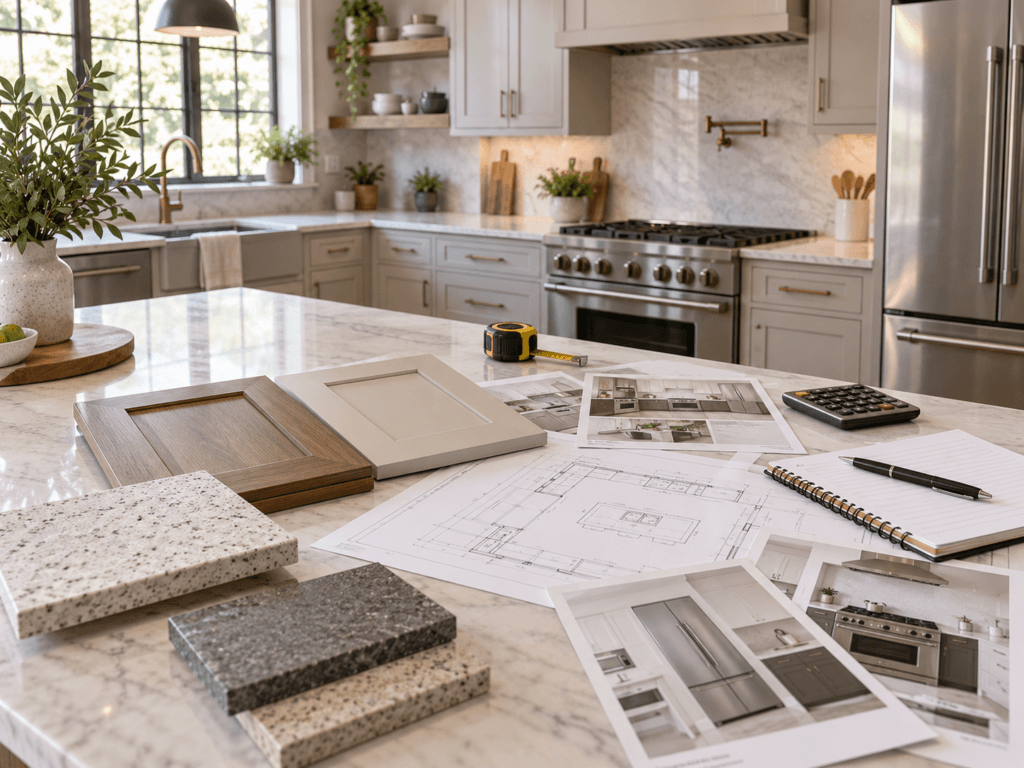
A kitchen remodel budget should include more than cabinets, countertops and appliances. Labor, demolition, plumbing, electrical, ventilation, flooring, backsplash, painting, delivery, permits and finish work can all add to the final cost.
Start with the total amount you are comfortable spending, then divide that budget across the major parts of the project. Leave room for items that are difficult to price perfectly in advance, especially hidden conditions uncovered during demolition or changes required once construction begins.
A realistic budget also makes product decisions easier because you can see where upgrading one category may require saving somewhere else.
BUDGET BREAKDOWN
Where Does the Money Go in a Kitchen Remodel?
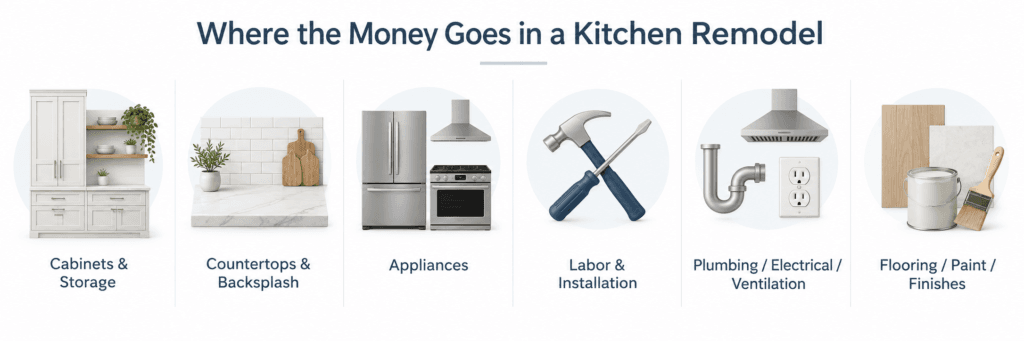
Kitchen remodeling costs are spread across several parts of the project. The balance changes depending on the size of the kitchen, how much of the layout changes and the level of products selected.
01 — CABINETS & STORAGE
Why can cabinetry take such a large part of the budget?
Cabinet cost depends on construction, materials, door style, finish, hardware, storage accessories and how much customization is required. Installation, fillers, panels and trim should also be included when comparing cabinet pricing.
02 — COUNTERTOPS & BACKSPLASH
What affects the cost of kitchen surfaces?
Material selection is only part of the price. Slab quantity, fabrication, edge details, sink and cooktop cutouts, seams, delivery and backsplash installation can all affect the finished cost.
03 — APPLIANCES
How much should you allow for appliances?
Appliance budgets can vary dramatically depending on brand, size and features. Refrigeration, cooking, ventilation, dishwashing and specialty appliances should be considered together rather than one purchase at a time.
04 — LABOR & INSTALLATION
Why does labor vary so much between projects?
A simple replacement kitchen may require limited trade work, while a remodel involving walls, plumbing, electrical or custom finishes can require several specialized contractors. Complexity and local labor rates often have a major effect on the total.
05 — PLUMBING, ELECTRICAL & VENTILATION
What happens when the kitchen layout changes?
Moving sinks, appliances or cooking equipment can require new plumbing, circuits, gas lines or ductwork. Costs usually increase when systems need to be relocated rather than simply reconnected.
06 — FLOORING, PAINT & FINISH WORK
Why are the smaller finish items easy to underestimate?
Flooring, drywall repair, painting, trim, hardware, lighting, caulk and other finishing work may seem minor individually, but together they can represent a meaningful part of the project.
GOOD TO KNOW
The percentage spent in each category is not fixed. One homeowner may spend heavily on cabinetry and use modest appliances, while another keeps the cabinets simple and invests more in appliances or stone. Build the budget around your priorities rather than trying to force every project into the same formula.
PROJECT LEVELS
Refresh, Partial Remodel or Full Remodel?
Not every kitchen project needs the same scope. Understanding whether you are refreshing the room, replacing major components or rebuilding the kitchen helps set a more realistic budget from the start.
01 — COSMETIC REFRESH
What if the kitchen layout already works?
A cosmetic refresh may keep the existing cabinets, appliances and plumbing locations while updating paint, hardware, lighting, backsplash or selected finishes.
This usually involves less demolition and fewer trades, so the budget is driven more by finish choices than by major construction.
02 — PARTIAL REMODEL
What if some major components need to change?
A partial remodel may replace cabinets, countertops or appliances while keeping much of the existing layout and infrastructure.
Costs increase when plumbing, electrical or flooring need adjustment, but avoiding major structural changes can help keep the scope more controlled.
03 — FULL REMODEL
When does the project become a full renovation?
A full remodel may include new cabinets, countertops, appliances, flooring, lighting and finishes along with changes to walls, plumbing, electrical or ventilation.
These projects involve more coordination, more trades and a greater chance of hidden conditions, so they typically need more contingency and planning.
GOOD TO KNOW
Two kitchens of the same size can have very different budgets if one keeps the existing layout and the other moves walls, plumbing and appliances.
SPEND VS. SAVE
Spend More Where Performance Matters Most
A kitchen budget does not need to be upgraded evenly across every category. Some choices affect daily function and long-term durability more than others, while other areas can often be simplified without hurting the overall result.
WHERE IT CAN MAKE SENSE TO SPEND MORE
Which upgrades can have the biggest everyday impact?
Consider investing more in items that are difficult or expensive to replace later, especially when they affect how the kitchen functions.
- Cabinet construction and drawer hardware
- Frequently used appliances
- Quality countertop fabrication
- Range-hood ventilation
- Functional storage features
- Plumbing fixtures used every day
- Electrical and lighting infrastructure
WHERE YOU MAY BE ABLE TO SAVE
Which choices can often be simplified?
Some finishes can be selected more economically without compromising the basic performance of the kitchen.
- Decorative cabinet hardware
- Simple backsplash tile
- Standard cabinet door styles
- Less expensive countertop materials in secondary areas
- Decorative lighting fixtures
- Open shelving instead of additional upper cabinets
- Finish upgrades that can be changed later
GOOD TO KNOW
Saving money does not necessarily mean choosing the cheapest product. A simpler material or design that is installed well can be a better value than an expensive product with poor installation.
WATCH THE DETAILS
Understand What Is Included Before Comparing Prices
Two kitchen estimates can look similar at first and still include very different scopes. Allowances, exclusions and hidden conditions can all change the final cost after work begins.
01 — ALLOWANCES
What does an allowance actually mean?
An allowance is a placeholder amount for an item that has not been fully selected yet, such as tile, lighting, plumbing fixtures or appliances.
Check whether the allowance is realistic for the products you expect to buy. If your final selection costs more than the allowance, the difference becomes an added project cost.
02 — EXCLUSIONS
What might not be included in the quoted price?
Some estimates exclude demolition, permits, painting, appliance installation, delivery, disposal, electrical upgrades or finish repairs outside the immediate work area.
Read the exclusions carefully so you are comparing the full scope rather than just the bottom-line number.
03 — HIDDEN CONDITIONS
Why can the budget change after demolition?
Existing kitchens can hide damaged framing, outdated wiring, leaking plumbing, uneven floors or other conditions that were not visible during estimating.
A reasonable contingency can help absorb these surprises without disrupting the entire project budget.
GOOD TO KNOW
The lowest initial quote is not always the lowest final cost. A higher quote may simply include work that another estimate leaves out.
COMPARE QUOTES
Compare the Scope, Not Just the Total Price
Kitchen remodeling quotes can vary because contractors may be pricing different products, labor, exclusions and finish work. Normalize the scope before deciding which proposal is actually the better value.
| Compare | Quote A | Quote B | Quote C |
|---|---|---|---|
| Cabinets | Included / brand & level | Included / brand & level | Included / brand & level |
| Countertops | Material + fabrication | Material + fabrication | Material + fabrication |
| Appliances | Included / excluded | Included / excluded | Included / excluded |
| Demolition | Included / excluded | Included / excluded | Included / excluded |
| Plumbing | Scope included | Scope included | Scope included |
| Electrical | Scope included | Scope included | Scope included |
| Ventilation | Included / excluded | Included / excluded | Included / excluded |
| Flooring | Included / excluded | Included / excluded | Included / excluded |
| Backsplash | Included / excluded | Included / excluded | Included / excluded |
| Painting / finish repairs | Included / excluded | Included / excluded | Included / excluded |
| Permits | Included / excluded | Included / excluded | Included / excluded |
| Disposal / delivery | Included / excluded | Included / excluded | Included / excluded |
| Allowances | Amounts listed | Amounts listed | Amounts listed |
| Warranty | Terms | Terms | Terms |
| Total | $ | $ | $ |
For a deeper breakdown, see Builzee’s guide on [How to Compare Contractor Quotes Before Starting a Home Renovation].
GOOD TO KNOW
A lower quote can still be the right choice, but only if the scope is truly comparable. If one proposal excludes permits, painting, disposal, appliance installation or electrical upgrades, those costs may simply appear later.
AVOID THESE
Common Kitchen Buying & Budget Mistakes
Kitchen budgets often get stretched by decisions that seem small at first. Check these issues early so product selections, allowances and contractor pricing stay aligned with the total project budget.
01 — SPENDING TOO MUCH IN ONE CATEGORY
It is easy to overspend on cabinets, appliances or countertops before the rest of the project is priced. Set a target budget for each major category so one upgrade does not consume money needed elsewhere.
02 — IGNORING INSTALLATION COST
The product price is only part of the cost. Delivery, fabrication, installation, plumbing, electrical, trim and finish work can significantly increase the final amount.
03 — USING UNREALISTIC ALLOWANCES
A low allowance can make an estimate look attractive while pushing costs into change orders later. Make sure allowances are realistic for the level of products you actually expect to select.
04 — BUYING BEFORE MEASUREMENTS ARE FINAL
Flooring thickness can affect dishwashers, refrigerators, toe kicks and cabinet elevations. Coordinate the finished floor before cabinets and appliances are locked in.
05 — CHASING THE LOWEST QUOTE
A lower price may reflect excluded work, lower allowances or a different level of product and installation. Compare scope and specifications before comparing totals.
06 — FORGETTING CONTINGENCY
Hidden conditions, small upgrades and last-minute changes can all affect the budget. Leaving a reasonable contingency helps prevent one surprise from disrupting the entire project.
GOOD TO KNOW
A good kitchen budget should be flexible enough to absorb normal project changes without losing control of the overall plan.
BEFORE YOU BUY
Kitchen Cost & Buying Checklist
Before signing contracts or ordering major products, confirm the total budget, included scope, allowances, lead times and installation requirements. The goal is to understand the full project cost before money is committed.
□ Total project budget is established
□ A contingency is included for unexpected conditions
□ Cabinet budget and construction level are confirmed
□ Countertop material and fabrication costs are understood
□ Appliance budget includes all major equipment
□ Delivery and installation charges are included
□ Plumbing and electrical work are accounted for
□ Range hood and ventilation costs are included
□ Flooring and backsplash costs are budgeted
□ Painting, trim and finish repairs are included
□ Permit and inspection costs are understood
□ Demolition and debris disposal are included
□ Contractor allowances are realistic
□ Quote exclusions have been reviewed
□ Contractor scopes have been normalized before comparison
□ Product warranties are reviewed
□ Contractor workmanship warranty is understood
□ Product and cabinet lead times are confirmed
□ Payment schedule is clearly defined
□ Change-order process is understood
Bottom Line
A kitchen budget works best when it accounts for the entire project, not just the products that are easiest to price.
Cabinets, countertops and appliances may be the most visible purchases, but labor, installation, plumbing, electrical, ventilation, finish work and hidden conditions can have just as much impact on the final cost.
Compare complete scopes, use realistic allowances and leave room for unexpected conditions before committing to major purchases or signing a remodeling contract.