
Kitchen Cabinets and Storage: Construction, Materials and Organization
Kitchen cabinets and storage should be planned around actual daily use. Compare framed and frameless construction, box materials, cabinet grades, pullouts and the storage features worth buying.
Explore the guide ↓
Kitchen Cabinets and Storage Start Behind the Doors
Good kitchen cabinets and storage are defined by the cabinet boxes, drawer systems, hardware and functional layout, not only the visible door style. Start by listing everyday items and the locations where each is used.
Well-planned cabinets make cookware, dishes, food and cleaning supplies easier to reach. Extra cabinet count does not always mean extra usable storage; accessible drawers and pullouts often matter more than total volume.
Framed Versus Frameless Kitchen Cabinets
Both construction methods can make excellent cabinets, but they affect access and installation details. Framed cabinets use a face frame at the front of the box; frameless cabinets use the cabinet-box sides as the door attachment points.


| Feature | Framed | Frameless |
|---|---|---|
| Front construction | Face frame attached to cabinet box | No face frame |
| Interior access | Opening slightly reduced | Generally wider access |
| Common door style | Inset, partial or full overlay | Usually full overlay |
| Hinge location | On face frame | On cabinet box side |
| Installation | Face frame aids alignment | Box alignment is especially important |
| Appearance | Traditional to contemporary | Often contemporary, but many finishes possible |
What Makes Kitchen Cabinetry Durable?
Look past marketing labels and ask how the box, shelves, doors, drawer boxes and hardware are made. Cabinets are difficult to replace once the kitchen is finished, so basic construction matters.
Cabinet box
Review thickness, panel material, joinery and overall rigidity; cabinet boxes should stay square and hold shelves securely.
Drawer construction
Look at joints, bottom support and how heavily loaded drawers will operate. Full extension improves access.
Hinges and slides
Confirm adjustment capability, load rating and smooth operation. Soft-close is useful, but proper support comes first.
Finish and edges
Inspect exposed ends and edge sealing, especially near sinks, dishwashers and other moisture-prone locations.
Four Common Kitchen Cabinet Materials
Most cabinet systems mix materials in one assembly. A box may use plywood or engineered panels while doors use solid wood or MDF for a painted finish. The right material depends on location and manufacturer details.

Plywood
Layered veneers offer useful strength and screw holding. Often used for boxes and shelves; finish and grade matter.

MDF / HDF
Consistent smooth panels are useful for painted doors and detailed profiles. Seal edges against prolonged moisture.

Particleboard
Furniture-grade panels are common in manufactured cabinets. Density, thickness and edge protection determine suitability.

Solid wood
Used frequently for doors, frames and decorative pieces; natural movement with humidity should be expected.
Stock, Semi-Custom and Custom Cabinet Choices
Stock cabinets
Standard dimensions, finish choices and accessories can suit straightforward layouts; check fillers and fit.
Semi-custom cabinets
More sizes, finishes, storage features and factory modifications for layouts with a little extra complexity.
Custom cabinets
Built for unusual spaces and detailed requirements; greater flexibility usually means longer lead time and higher cost.
Six Kitchen Storage Features That Actually Help
Make storage decisions based on the objects going into each cabinet. Large deep drawers and full-extension shelves are useful for heavy cookware; vertical dividers are better for trays and boards.

Deep drawers
Keep pots, pans, dishes and containers visible and within easy reach.
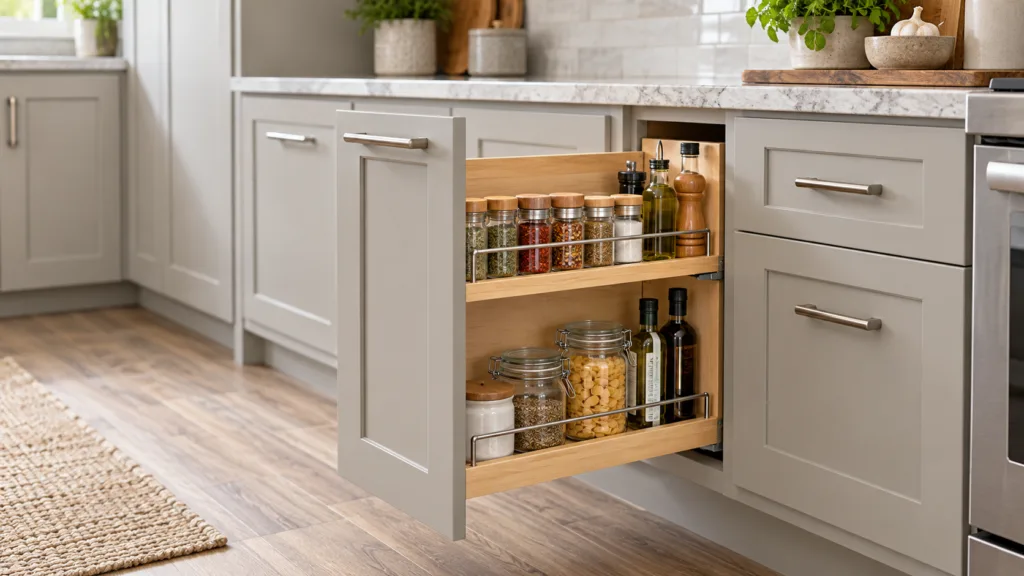
Pull-out shelves
Bring pantry items and supplies forward instead of reaching into deep cabinets.

Tall pantry storage
Use vertical cabinet space with adjustable shelves and optional full-extension pullouts.
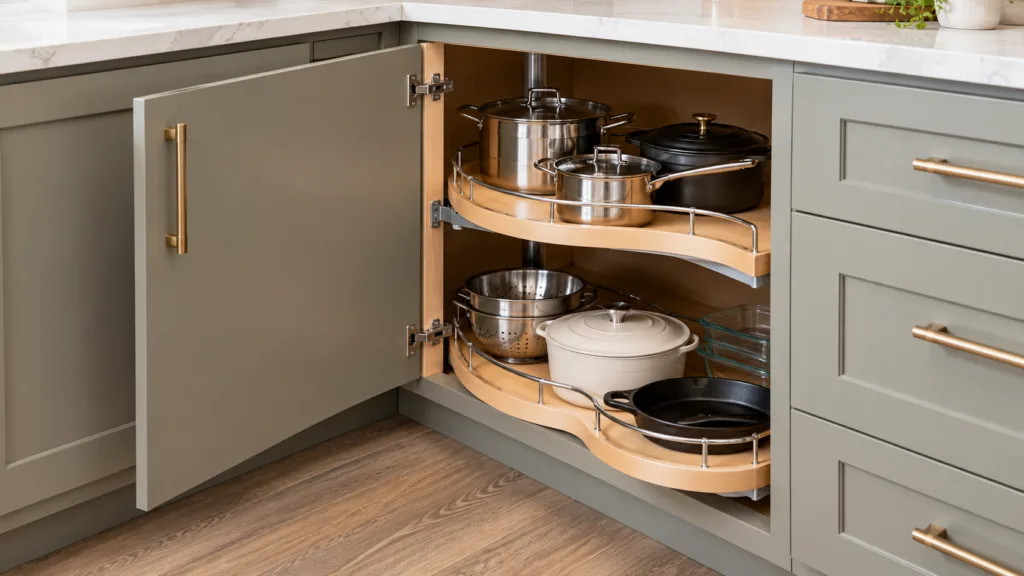
Corner access
Specialty trays, lazy Susans and articulated pullouts can improve otherwise awkward corners.

Trash and recycling
Put bins near prep and cleanup while allowing the cabinet to open without blocking circulation.

Tray and pan dividers
Store baking sheets, cutting boards and serving trays upright so they can be removed individually.
Where Drawers Beat Cabinet Doors
Wide, full-extension base drawers are often easier to use for cookware and dishes because items move toward you. Traditional doors are still useful under sinks, around plumbing and where tall or unusual objects need flexible vertical clearance.
Avoid forcing one cabinet type throughout the entire kitchen. Mix drawers, doors and specialized accessories based on the intended contents.
What to Check in Cabinet Shop Drawings and Delivery
Even a carefully chosen cabinet line can produce a frustrating kitchen if the shop drawings omit fillers, appliance panels, finished ends or required access. Review elevations and plans together. Confirm actual cabinet widths, drawer stacks, sink-base clearance and island support rather than relying on a perspective rendering alone.
Ask how the contractor will verify walls and floor levels before final cabinet order. A straight, level cabinet run may require scribing at existing walls, appropriate shims or additional backing. If you are ordering painted cabinets, confirm whether any site-finished components will match the factory finish.
Delivery and storage matter. Cabinet finishes can be scratched or swollen by rough handling and exposure to jobsite moisture. Confirm a clean, secure, reasonably conditioned storage location and document visible damage before installation begins.
Shop drawing review
Check every cabinet, filler, decorative panel, appliance opening, door swing and island support.
Field preparation
Verify framing backing, floor levels, plumbing locations and clearance for the actual hardware.
Delivery inspection
Check quantities, labeled parts, finish consistency and shipping damage before installers are scheduled.
Six Common Kitchen Cabinet Planning Mistakes
Too many base doors
Frequent-use items become hard to reach at the back of deep cabinets.
Wasted corners
Corner storage needs a deliberate strategy, not just a deep closed box.
Poor pantry planning
Shelves that are too deep hide items and make inventory difficult.
Ordering before appliances
Appliances determine opening, hinge, ventilation, power and clearance requirements.
Choosing looks first
Drawer slides, box construction and edges drive performance behind the finished door.
Forgetting trash storage
Trash and recycling locations affect everyday use and circulation.
Kitchen Cabinet and Storage Checklist
Confirm construction and storage functions before cabinets enter production.