
DOOR FRAMES & MATERIALS
Choose a Door Material That Fits the Opening and Exposure
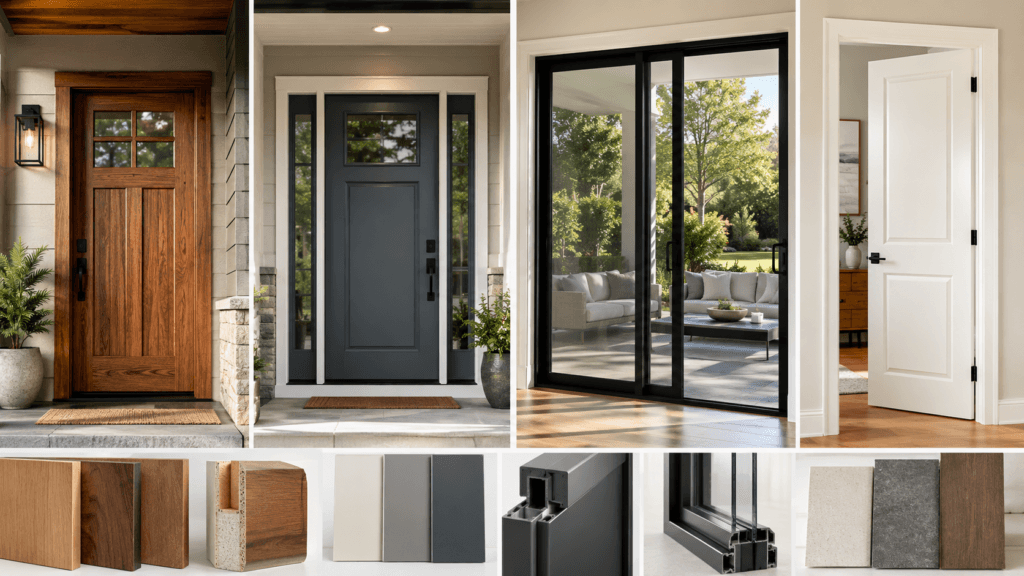
Door materials affect appearance, durability, maintenance, insulation, weather resistance and cost. Compare the most common residential door and frame materials before deciding which system fits your project.
DOOR MATERIALS
Compare Common Door and Frame Materials
Door materials differ in strength, maintenance, insulation, weather resistance and appearance. The best choice depends on whether the door is an entry system, patio door, interior door or large glazed opening.
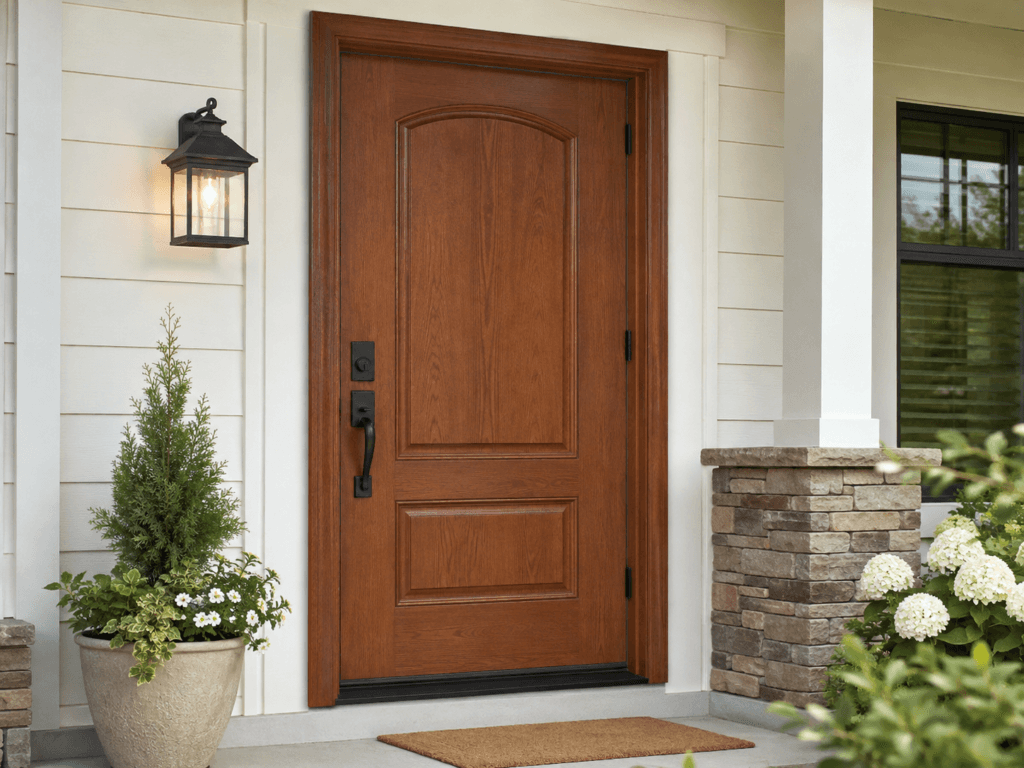
01 — FIBERGLASS DOORS
Fiberglass doors are commonly used for residential entry doors because they can resist moisture, temperature changes and everyday wear while requiring relatively little maintenance. Many fiberglass doors use an insulated core and can be manufactured with smooth or wood-grain finishes.
BEST FOR
Exterior entry doors where durability, energy performance and lower maintenance are priorities.
GOOD TO KNOW
Fiberglass can imitate the appearance of painted or stained wood without requiring the same level of maintenance, but quality varies significantly between products. The frame, threshold, weather stripping and glass package also affect overall door performance.
02 — WOOD DOORS
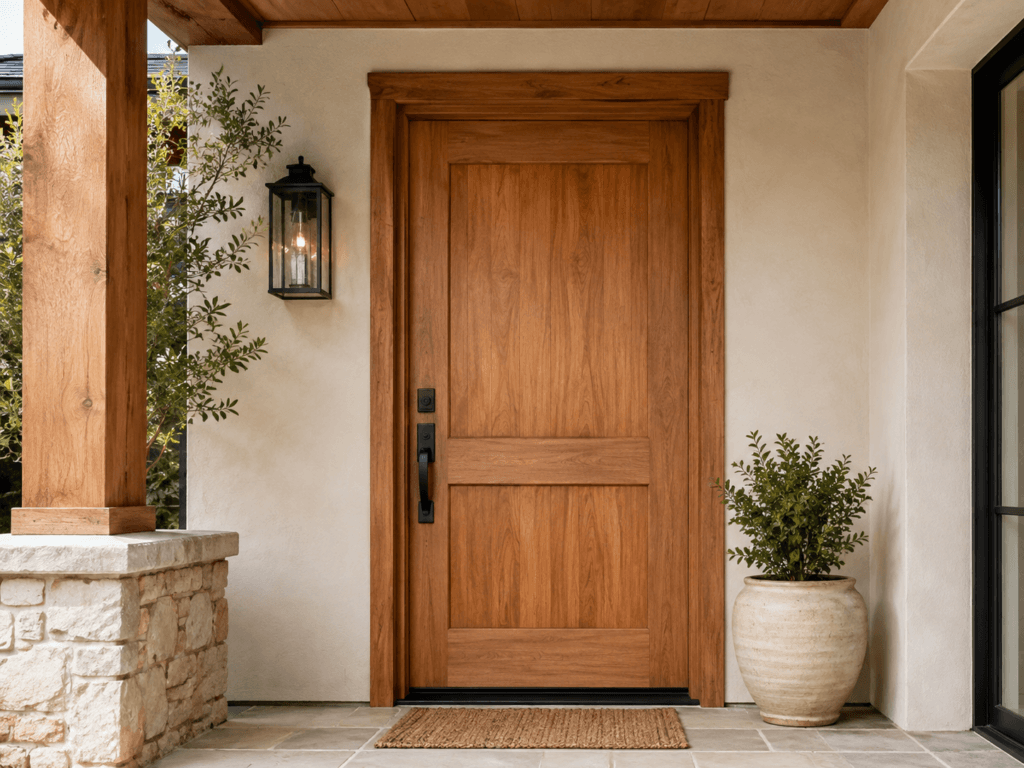
Wood doors are valued for their natural appearance, warmth and ability to be customized with different species, stains, profiles and panel designs. They can work especially well in higher-end entryways where appearance is a major priority.
BEST FOR
Front entrances, custom homes and projects where natural material, craftsmanship and a premium appearance are more important than minimizing maintenance.
GOOD TO KNOW
Wood can expand, contract, fade or weather when exposed to moisture, heat and direct sunlight. Exterior wood doors usually need more maintenance than fiberglass or steel, and performance depends heavily on finish quality, overhang protection and ongoing care.
03 – STEEL DOORS
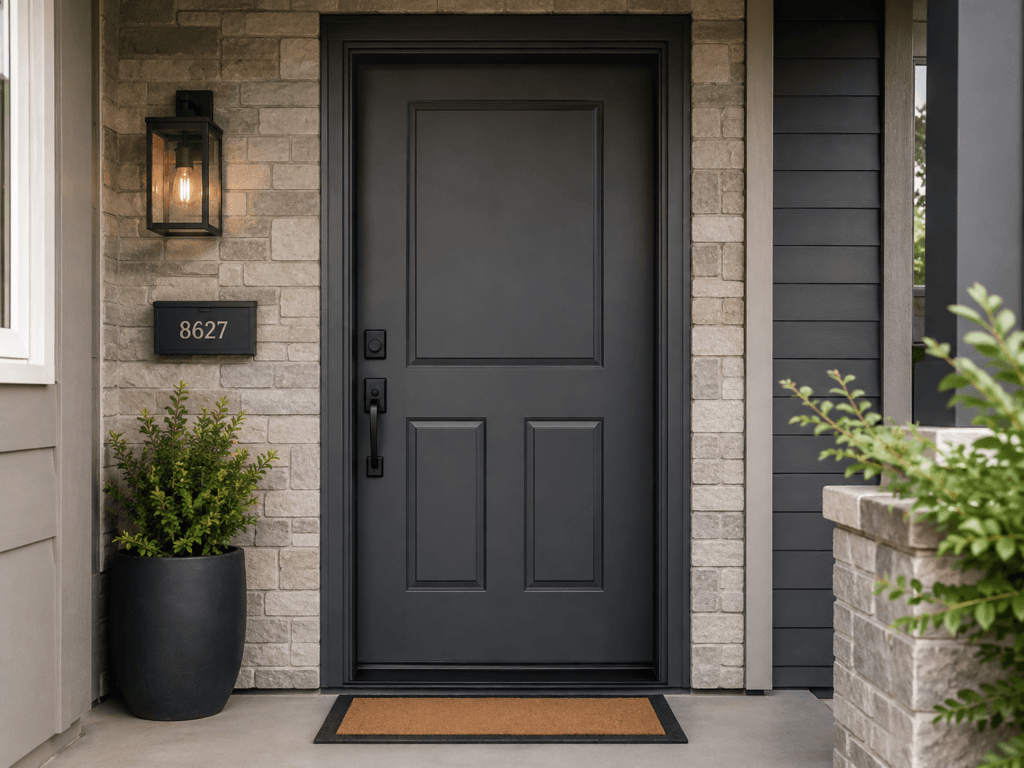
Steel doors use a metal exterior skin over an internal core, giving them a strong, secure feel with relatively low maintenance. They are commonly used for exterior entry doors, service doors and other locations where durability and value are priorities.
BEST FOR
Exterior entrances, side doors, garages and projects where strength, security and affordability are more important than a natural wood appearance.
GOOD TO KNOW
Steel can dent, scratch or develop corrosion if the protective finish is damaged. Quality varies by gauge, core construction, frame design and coating, so compare the complete door system rather than the metal skin alone.
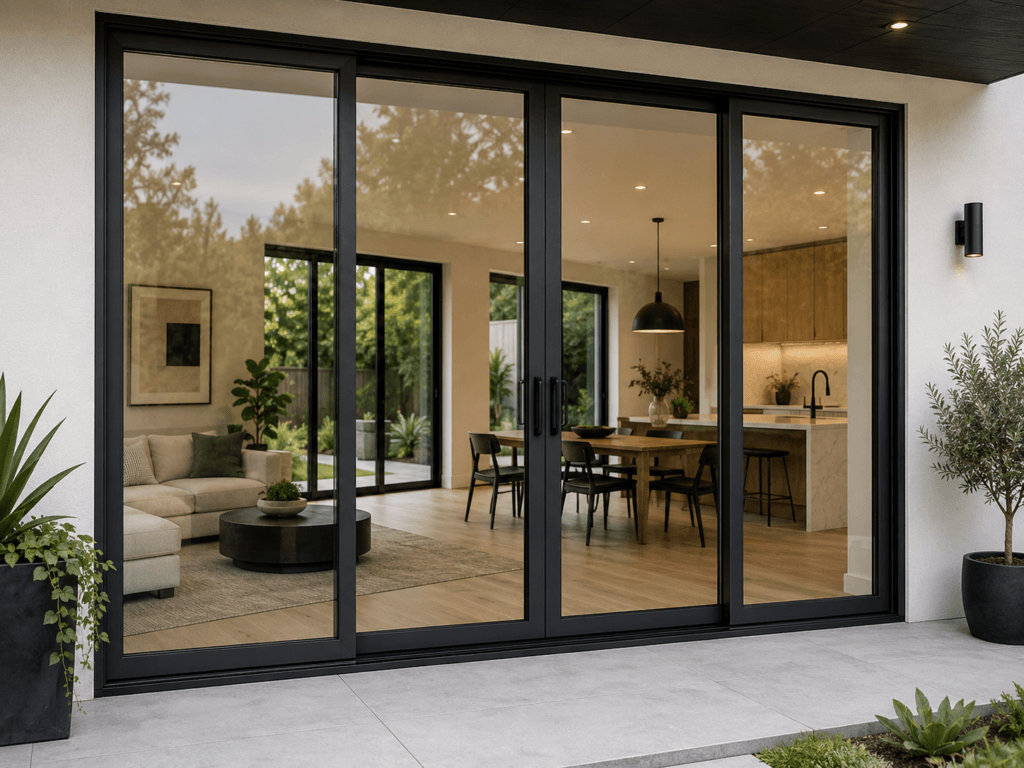
04 – ALUMINUM DOORS
Aluminum doors are commonly used for large glazed patio doors, multi-slide systems and contemporary entrances because the material is strong, dimensionally stable and can support relatively slim frame profiles.
BEST FOR
Modern homes, large glass openings, sliding or folding patio systems and projects where slim sightlines and low maintenance are priorities.
GOOD TO KNOW
Aluminum conducts heat more readily than materials such as fiberglass or vinyl, so exterior systems often rely on thermal breaks, insulated glass and well-designed frames to improve energy performance. Finish quality and corrosion resistance also matter in exposed environments.
05 – VINYL DOORS
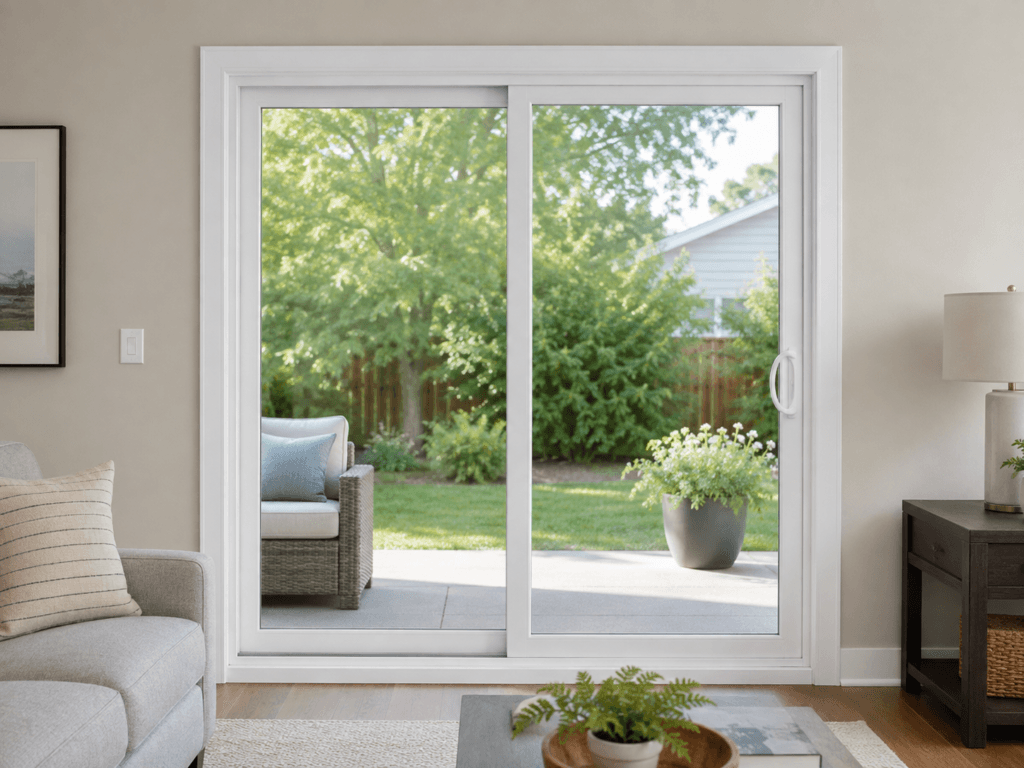
Vinyl doors are most commonly used for sliding patio doors rather than traditional front entry doors. The frame material is low maintenance, resists moisture and does not need painting, which makes it a practical option for many residential exterior openings.
BEST FOR
Sliding patio doors, balconies and projects where low maintenance, energy efficiency and moderate cost are priorities.
GOOD TO KNOW
Vinyl frames are typically wider than slim aluminum systems and may have more limited finish options. Quality, reinforcement, glass package and frame construction can significantly affect stiffness, durability and long-term operation.
06 – CLAD / COMPOSITE DOOR SYSTEMS
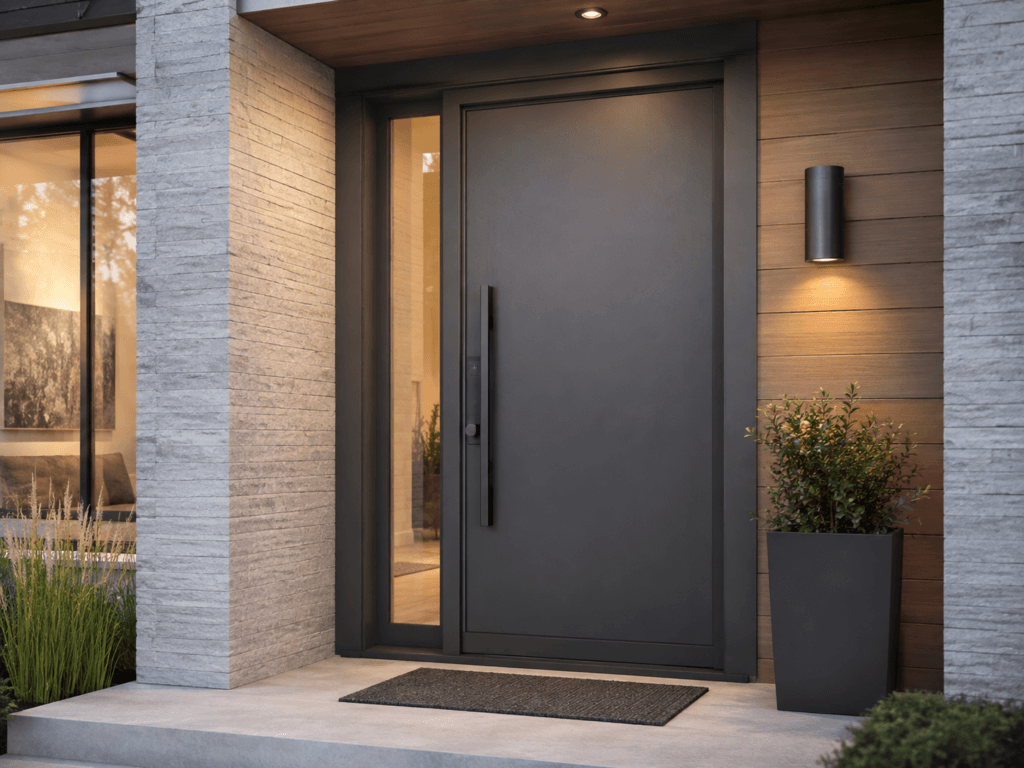
Clad and composite door systems combine different materials so each part of the door can serve a specific purpose. A common example is a wood interior surface paired with an aluminum or composite exterior that helps protect the door from weather while preserving a warmer interior appearance.
BEST FOR
Higher-end entry doors, patio doors and large glazed systems where homeowners want the appearance of wood with improved exterior durability and lower maintenance.
GOOD TO KNOW
The exact construction varies by manufacturer. Some products use true exterior cladding over a wood structure, while others use engineered or composite materials throughout the frame or panel. Compare the actual cross-section, finish system and warranty rather than relying only on the product category name.
COMPARE DOOR MATERIALS
Compare Door Materials at a Glance
| Material | Best Use | Maintenance | Main Strength |
|---|---|---|---|
| Fiberglass | Entry doors | Low | Durable and energy efficient |
| Wood | Entry and custom doors | High | Natural appearance and customization |
| Steel | Entry and service doors | Low–Moderate | Strength and value |
| Aluminum | Patio and large glazed systems | Low | Slim profiles and large openings |
| Vinyl | Sliding patio doors | Low | Affordable and low maintenance |
| Clad / Composite | Premium entry and patio systems | Low–Moderate | Combines appearance with exterior durability |
GOOD TO KNOW
The door panel material is only part of the system. Frame construction, glass, weather stripping, sill design, hardware and installation quality can have just as much impact on durability, energy performance and long-term operation.
Bottom Line
Choose a door material based on where the door will be used, how much weather exposure it receives, the amount of maintenance you are comfortable with and the appearance and performance you want. Entry doors and large glazed patio systems often use very different materials because they solve different problems.