
DOOR TYPES GUIDE
Which Door Type Is Right for Your Home?
Different door types solve different needs. Some prioritize security and privacy, while others maximize glass, ventilation or indoor-outdoor access. Compare how each configuration operates, where it works best and what to consider before choosing.
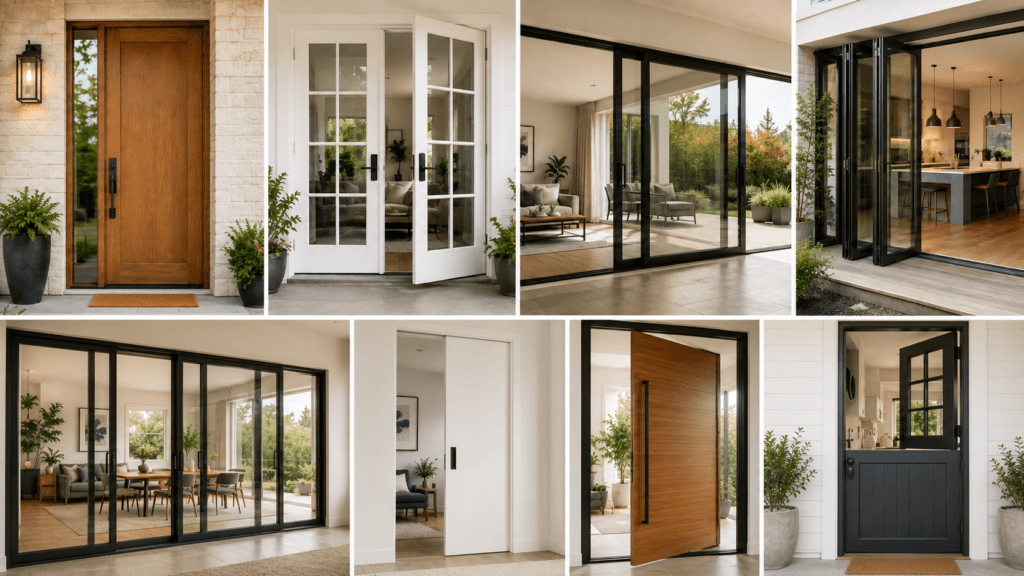
DOOR TYPES
Compare Common Residential Door Styles
Doors differ in how they open, operate, secure an opening and connect indoor and outdoor spaces. Start by comparing the most common residential door types and where each one works best.
01 — SINGLE HINGED / ENTRY DOORS
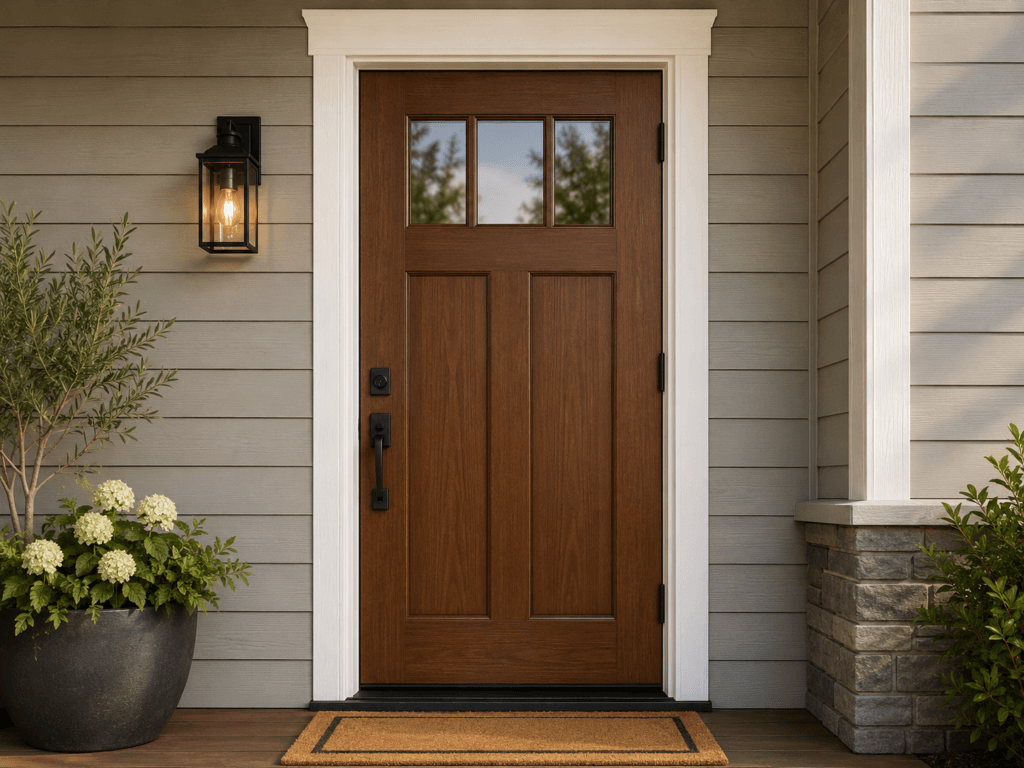
A single hinged door is attached to one side of the frame and swings open on hinges. It is the most common residential door configuration and can be used for exterior entrances or interior rooms depending on the door construction and hardware.
BEST FOR
Front entrances, side doors, bedrooms, offices and other standard openings where a simple swing operation works well.
GOOD TO KNOW
The door needs clear floor space in the direction it swings. Before choosing an inswing or outswing configuration, consider nearby walls, furniture, switches, steps and weather exposure.
02 — FRENCH / DOUBLE DOORS
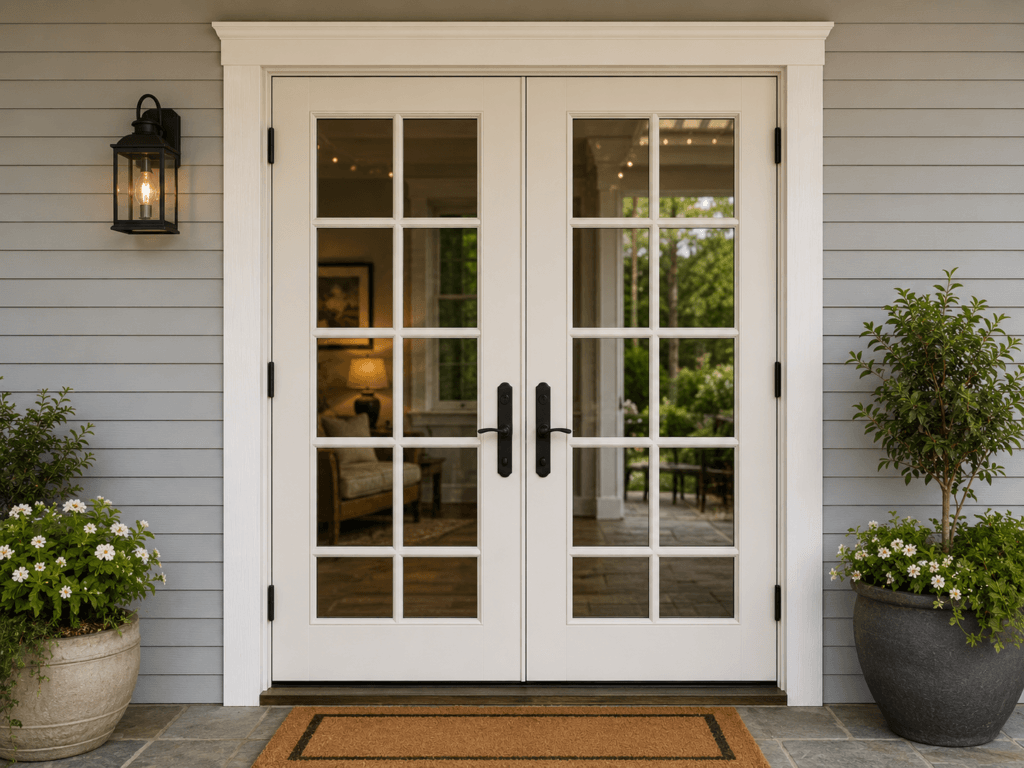
French or double doors use two hinged door panels that meet in the center. They can create a wider opening than a single door and are commonly used where homeowners want more glass, symmetry or a stronger connection between rooms and outdoor spaces.
BEST FOR
Patios, dining rooms, home offices, balconies and larger openings where a wider hinged opening is useful.
GOOD TO KNOW
Traditional French doors usually need clear swing space for both panels. One panel may serve as the primary active door while the second remains secured until a wider opening is needed.
03 – SLIDING PATIO DOORS
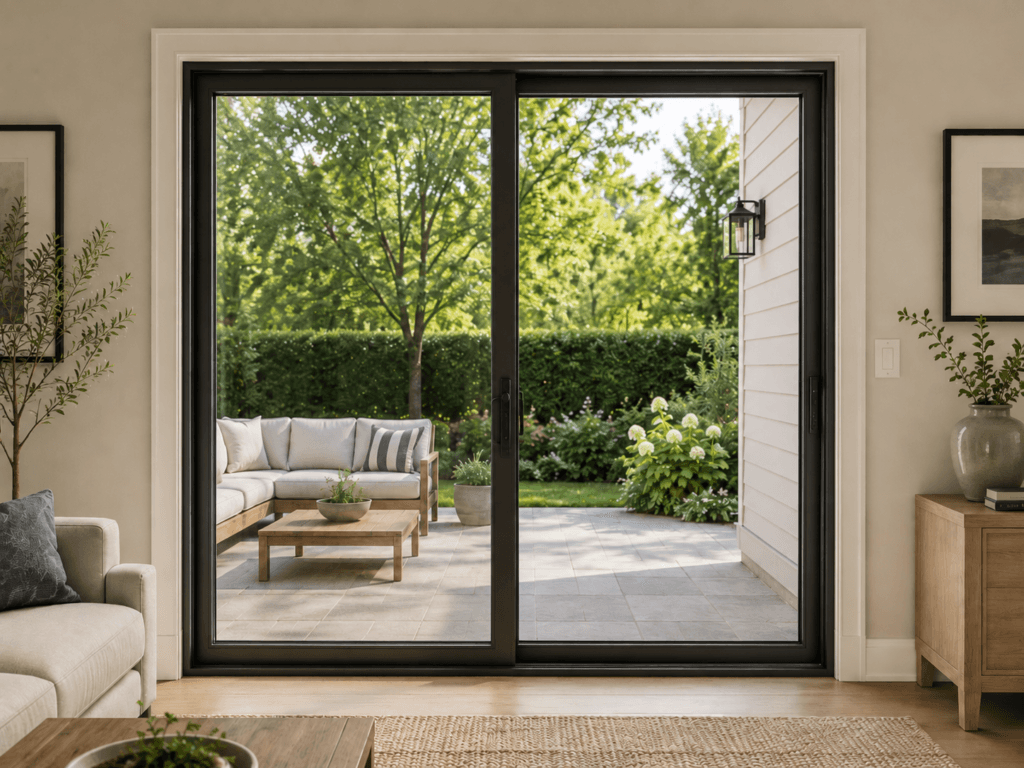
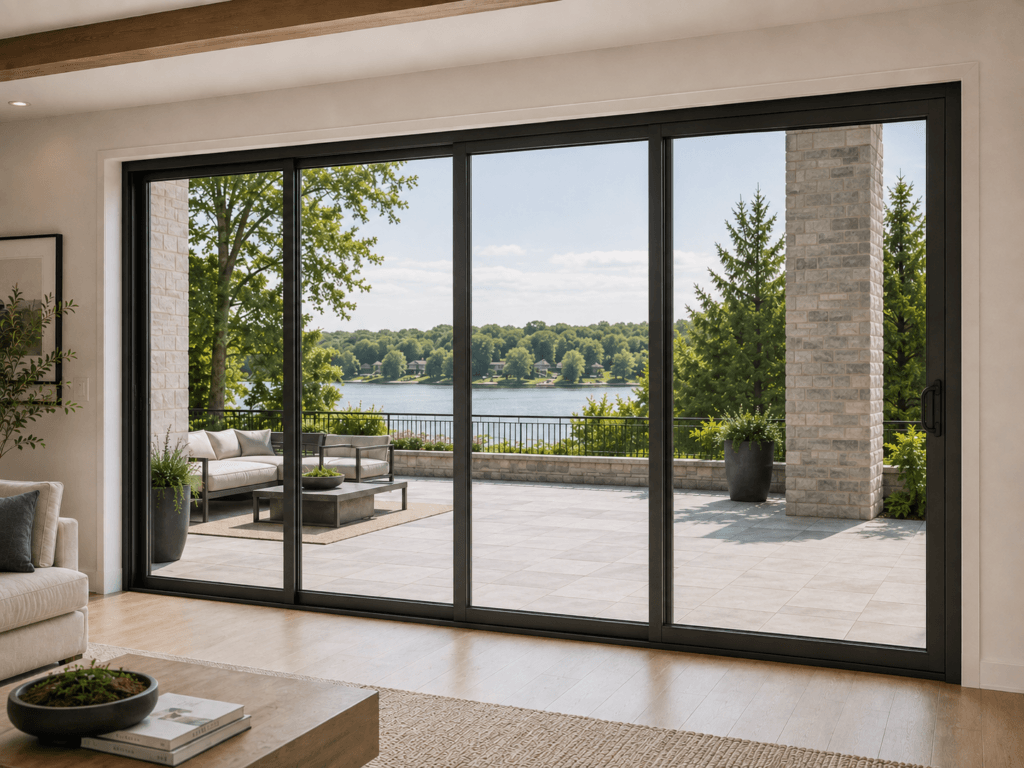
A sliding patio door uses one or more panels that move horizontally along a track rather than swinging into the room. Large glass areas provide natural light and outdoor views while using very little interior or exterior floor space.
BEST FOR
Patios, decks, balconies and rooms where a wide glazed opening is wanted without the swing clearance required by hinged doors.
GOOD TO KNOW
Traditional sliding doors usually have at least one fixed panel, so the usable opening is smaller than the total frame width. Track condition, rollers, sill design and drainage can all affect long-term operation.
04 – FOLDING / BI-FOLD DOORS
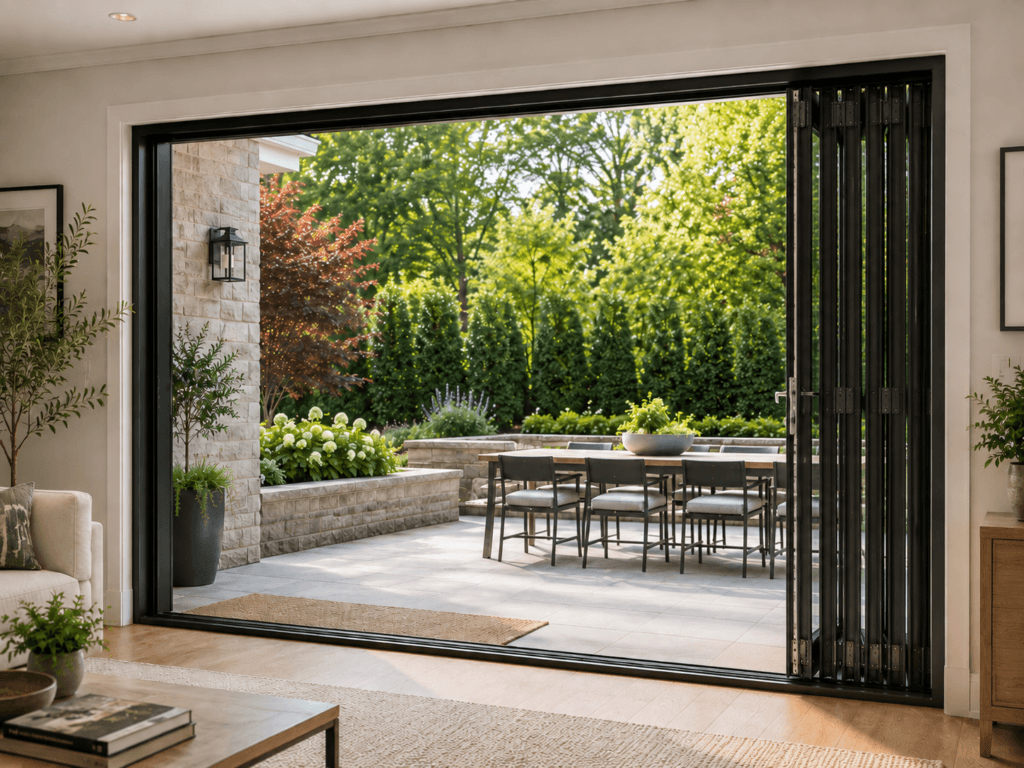
Folding or bi-fold doors use multiple hinged panels that fold and stack toward one or both sides of the opening. When fully open, they can create a much wider connection between indoor and outdoor spaces than a conventional sliding patio door.
BEST FOR
Patios, decks, entertaining areas and large openings where maximizing the clear opening is more important than keeping the system simple.
GOOD TO KNOW
Folding systems require space for the stacked panels and typically use more hinges, rollers and hardware than a standard slider. Panel size, sill design, drainage, structural support and weather exposure should all be considered before selecting the system.
05 – MULTI-SLIDE / POCKETING PATIO DOORS
Multi-slide doors use several large glass panels that move horizontally along multiple tracks. Some systems stack the panels together at one side, while pocketing versions slide completely into a wall pocket to create a much wider unobstructed opening.
BEST FOR
Large patios, luxury renovations and indoor-outdoor living spaces where wide openings, expansive views and minimal visual interruption are priorities.
GOOD TO KNOW
Multi-slide systems usually require more wall width, deeper tracks and more structural coordination than a standard patio slider. Pocketing systems need enough concealed wall space to receive the panels, and sill drainage and weather performance should be planned carefully.
06 – POCKET & BARN DOORS
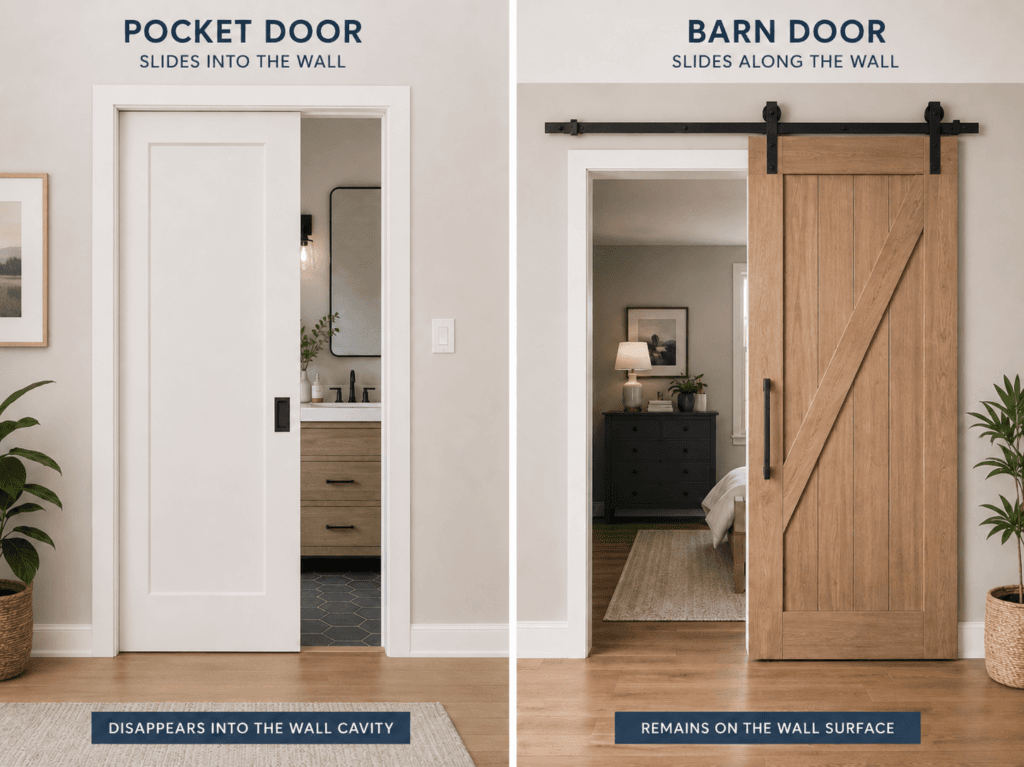
Pocket and barn doors both slide horizontally instead of swinging into the room, which can help save floor space. The main difference is where the door goes when it opens: a pocket door slides into the wall, while a barn door stays visible and moves along the face of the wall.
BEST FOR
Bedrooms, bathrooms, closets, pantries and other interior openings where swing clearance is limited or a sliding door fits the design better.
GOOD TO KNOW
Pocket doors require a wall cavity that is wide and clear enough to receive the panel, so framing, plumbing and electrical work can limit where they can be installed. Barn doors are easier to retrofit but need clear wall space beside the opening and do not seal as tightly as a conventional hinged door.
07 – PIVOT DOORS
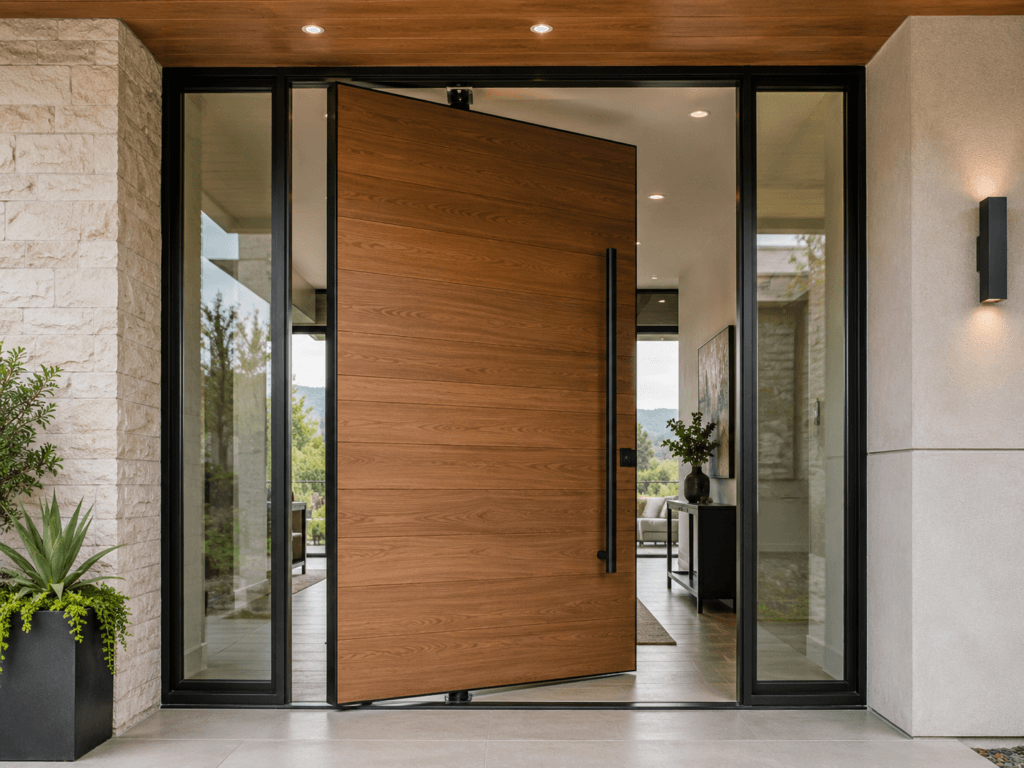
Pivot doors rotate on pivot hardware positioned at the top and bottom of the door rather than conventional side hinges. Because the pivot point can be located inward from the edge, the door can support larger, heavier panels and create a distinctive architectural entrance.
BEST FOR
Modern entryways, oversized openings and custom homes where a large statement door and contemporary appearance are priorities.
GOOD TO KNOW
A pivot door swings through space on both sides of its pivot point, so the opening layout and nearby walls or furniture need to be considered carefully. Larger pivot doors may also require specialized framing, hardware, thresholds and weather-sealing details.
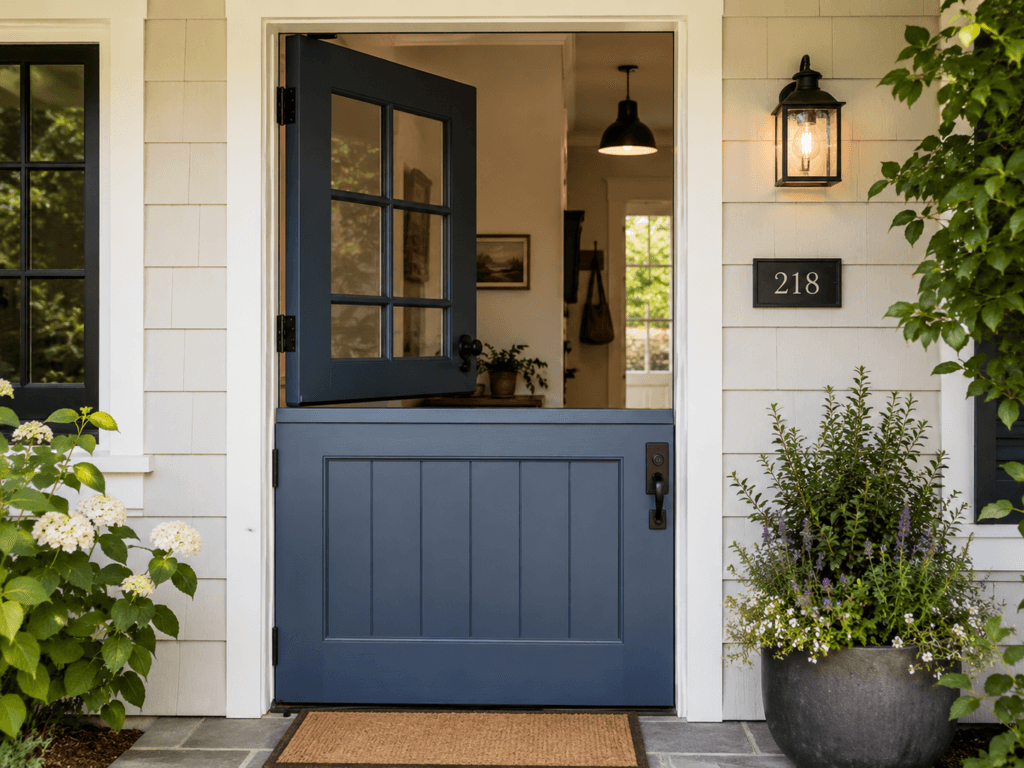
08 – DUTCH DOORS
Dutch doors are divided horizontally so the upper and lower sections can operate independently. The lower half can remain closed while the upper half opens for ventilation, daylight or communication, while both sections can also be secured together and used like a conventional hinged door.
BEST FOR
Kitchens, mudrooms, side entrances, cottages and homes where ventilation or visibility is useful without fully opening the doorway.
GOOD TO KNOW
Because the door is split into two operating sections, alignment, weather sealing and hardware become more important than on a standard hinged door. Exterior Dutch doors should be detailed carefully to control air and water at the horizontal joint.
COMPARE DOOR TYPES
Compare Door Types at a Glance
| Door Type | Operation | Best For | Space Needed |
|---|---|---|---|
| Single Hinged / Entry | Swings on side hinges | Entry and standard openings | Swing clearance |
| French / Double | Two hinged panels | Patios, dining rooms, wider openings | Swing clearance |
| Sliding Patio | Panels slide horizontally | Patios and decks | Minimal floor space |
| Folding / Bi-Fold | Panels fold and stack | Large indoor-outdoor openings | Stack space at side |
| Multi-Slide / Pocketing | Multiple panels slide on tracks | Large premium openings | Track / pocket space |
| Pocket & Barn | Slides horizontally | Interior space-saving applications | Wall cavity or clear wall |
| Pivot | Rotates on offset pivots | Oversized modern entrances | Clearance on both sides |
| Dutch | Upper/lower sections operate separately | Kitchens, mudrooms, side entries | Swing clearance |
GOOD TO KNOW
Door type is only one part of the decision. Frame material, glass, hardware, weather exposure, threshold design and installation conditions can have just as much impact on performance and cost.