
WINDOW COST & BUYING GUIDE
How Much Should New Windows Cost?
Understand what affects window replacement cost, how frame material, glass, size and installation influence pricing, and what to compare before buying.
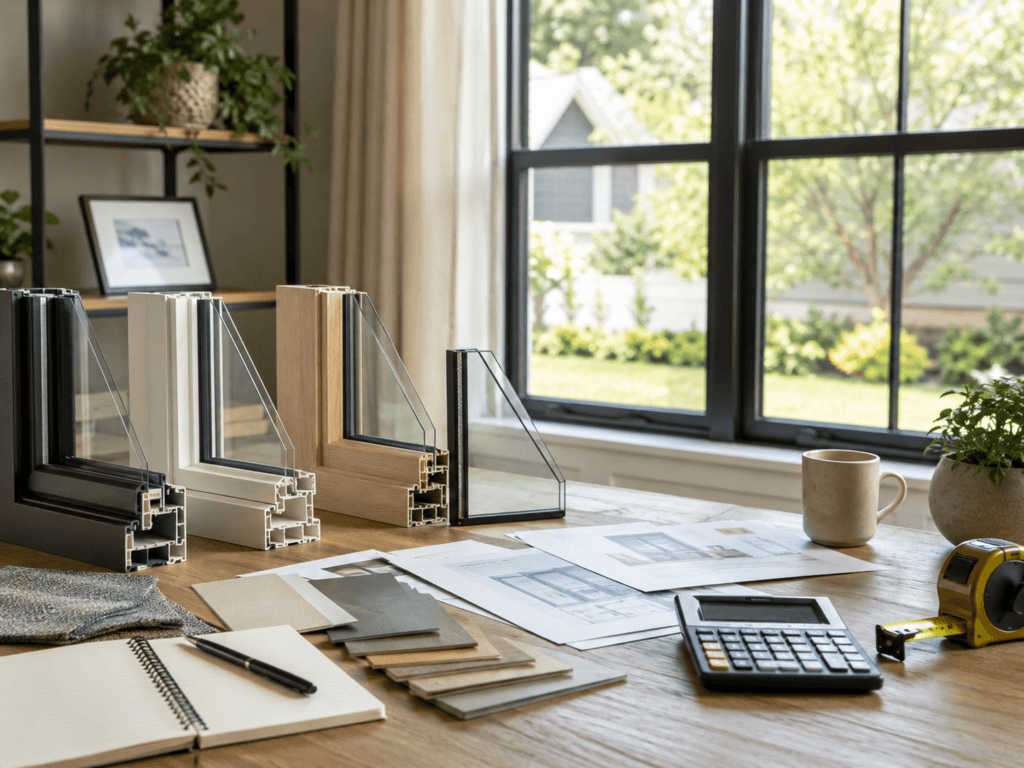
WINDOW COST & BUYING
Understand What You’re Paying For
The cost of a window is more than the product itself. Materials, glass options, installation, access, demolition, finish work and project conditions can all affect the final price. Comparing the complete scope helps you evaluate quotes more accurately.
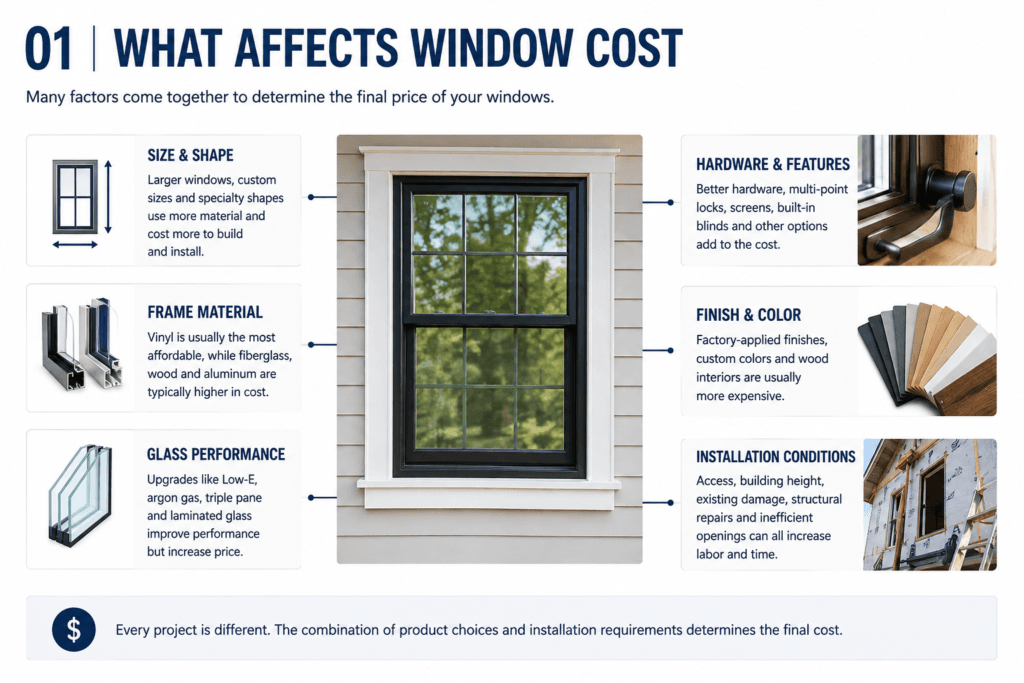
01 – WHAT AFFECTS WINDOW COST
Window cost can vary significantly based on size, style, frame material, glass configuration, hardware, brand, finish options and installation conditions. Larger openings, specialty shapes and higher-performance products generally cost more than standard-size windows with basic features.
BEST FOR
Homeowners trying to understand why two windows that look similar can have very different prices.
GOOD TO KNOW
The window itself is only part of the total cost. Labor, access, demolition, flashing, interior and exterior finish work, permits and repairs to the existing opening can all affect the final installed price. Comparing complete scope is usually more useful than comparing product price alone.
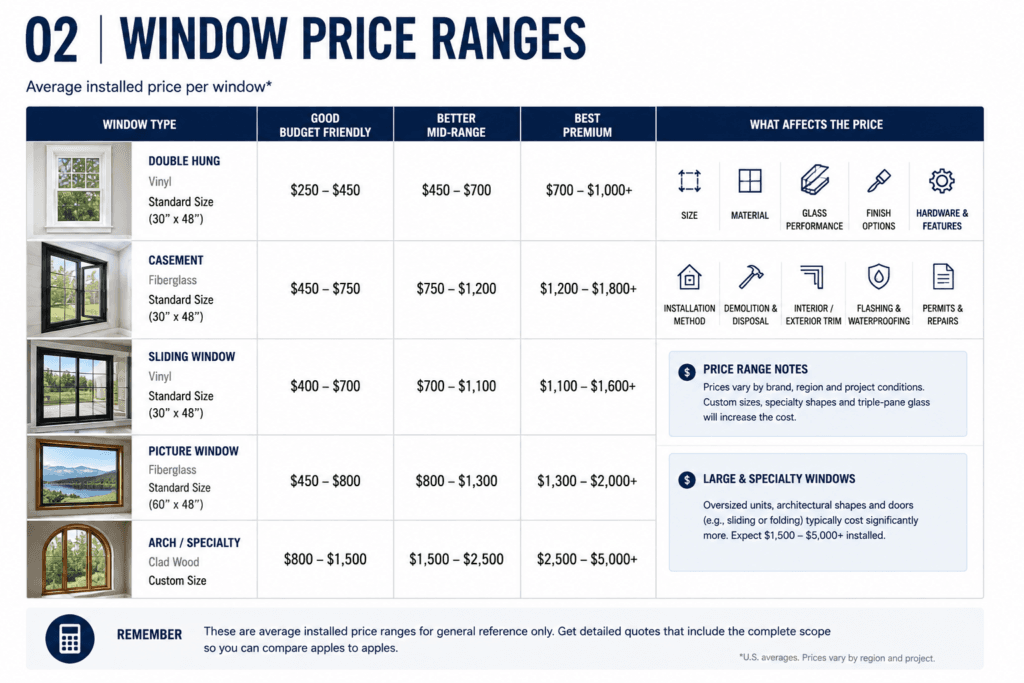
02 – WINDOW PRICE RANGES
Window prices can vary widely depending on the product, size, frame material, glass package, brand and installation requirements. Standard-size vinyl windows are generally at the lower end, while fiberglass, wood, clad wood, large openings and specialty products typically cost more.
BEST FOR
Homeowners setting a realistic budget before requesting quotes or comparing different levels of window products.
GOOD TO KNOW
Published window prices often refer to the product only and may not include installation, removal of the existing window, flashing, trim, disposal, permits or repairs. Use price ranges as a starting point, then compare the complete installed scope before deciding which option offers the best value.
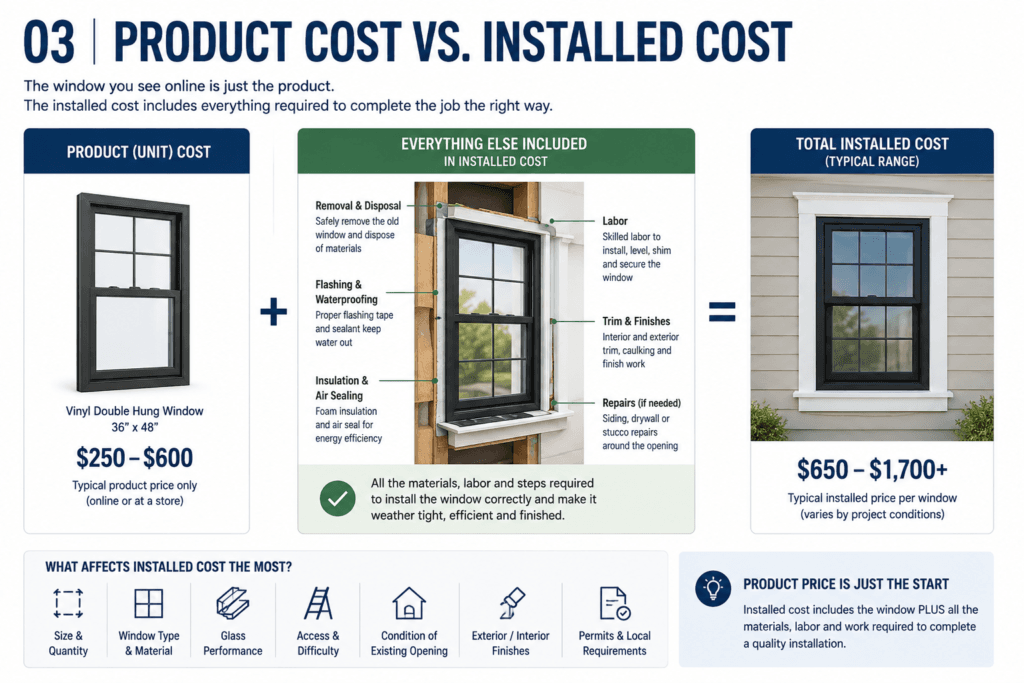
03 – PRODUCT COST VS. INSTALLED COST
The price of the window itself is only one part of the total project cost. Installed cost can also include removal of the existing window, labor, flashing, sealants, insulation, disposal, trim repairs, permits and other work required to complete the opening.
BEST FOR
Homeowners comparing online product prices with contractor quotes or trying to understand why installed pricing is higher than the window unit alone.
GOOD TO KNOW
A lower product price does not always mean a lower total project cost. Difficult access, full-frame replacement, exterior repairs, interior finish work and unexpected opening conditions can add significant labor and material costs. When comparing quotes, make sure each proposal includes the same scope of work.
04 – COMPARING WINDOW QUOTES
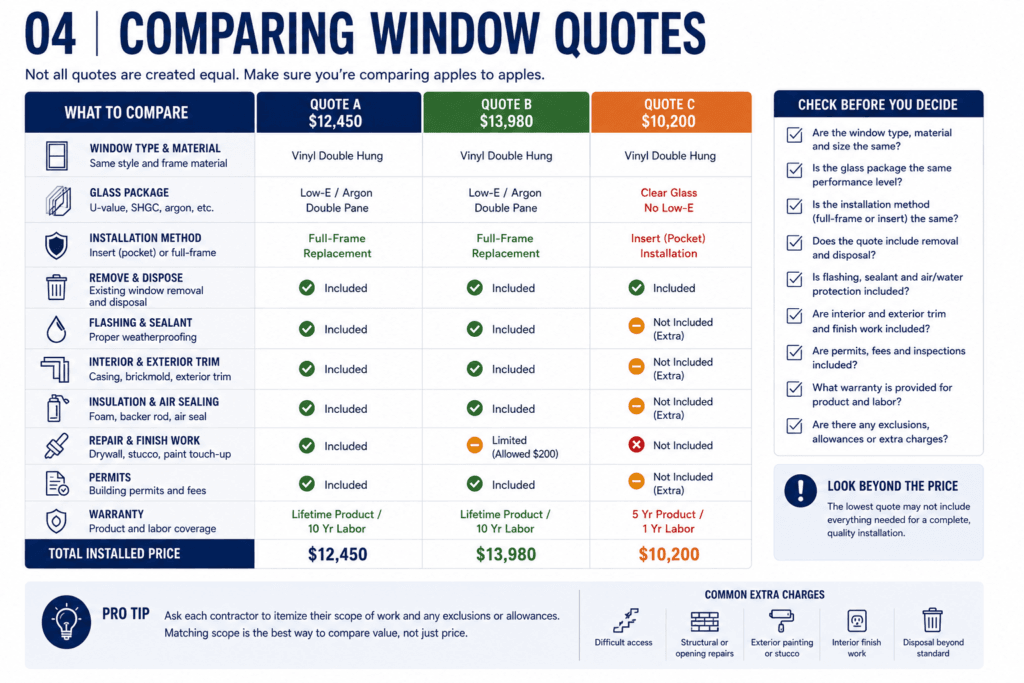
Window quotes can look very different even when they appear to cover the same project. Product specifications, glass options, installation method, removal, flashing, trim, disposal, warranty and exclusions should all be reviewed before comparing the final price.
BEST FOR
Homeowners comparing bids from multiple window companies and trying to understand whether each contractor is pricing the same scope of work.
GOOD TO KNOW
Do not compare quotes by total price alone. Confirm that each proposal includes the same window type, frame material, glass package, installation method, finish work and warranty coverage. Also look closely at allowances, exclusions and extra-charge items that could increase the final project cost.
05 – WHERE TO SPEND MORE
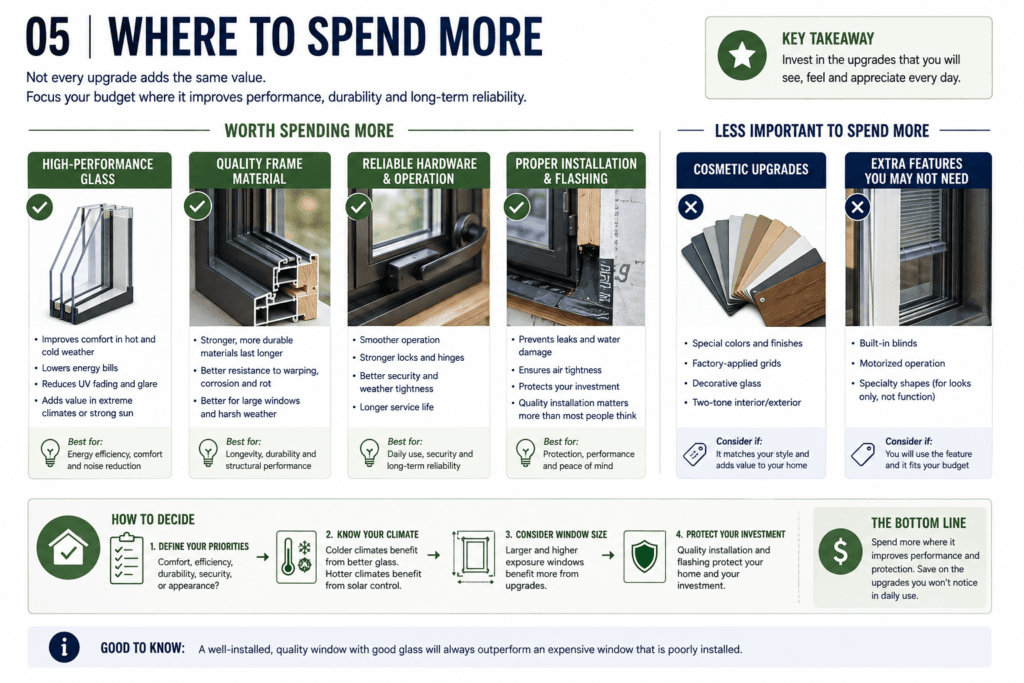
Spending more on a window can make sense when the upgrade improves performance, durability or long-term reliability. Better glass packages, stronger frame materials, quality hardware and proper installation usually provide more value than purely cosmetic upgrades.
BEST FOR
Homeowners deciding which upgrades are worth the extra cost and where a limited project budget will have the biggest impact.
GOOD TO KNOW
Prioritize the parts of the window that affect comfort, water resistance, operation and longevity. Higher-performance glass may be worthwhile in harsh climates or strong sun exposure, while upgraded frames and hardware can matter more for large or frequently operated windows. Avoid sacrificing installation quality just to afford a more expensive product.
06 – QUESTIONS TO ASK BEFORE YOU BUY
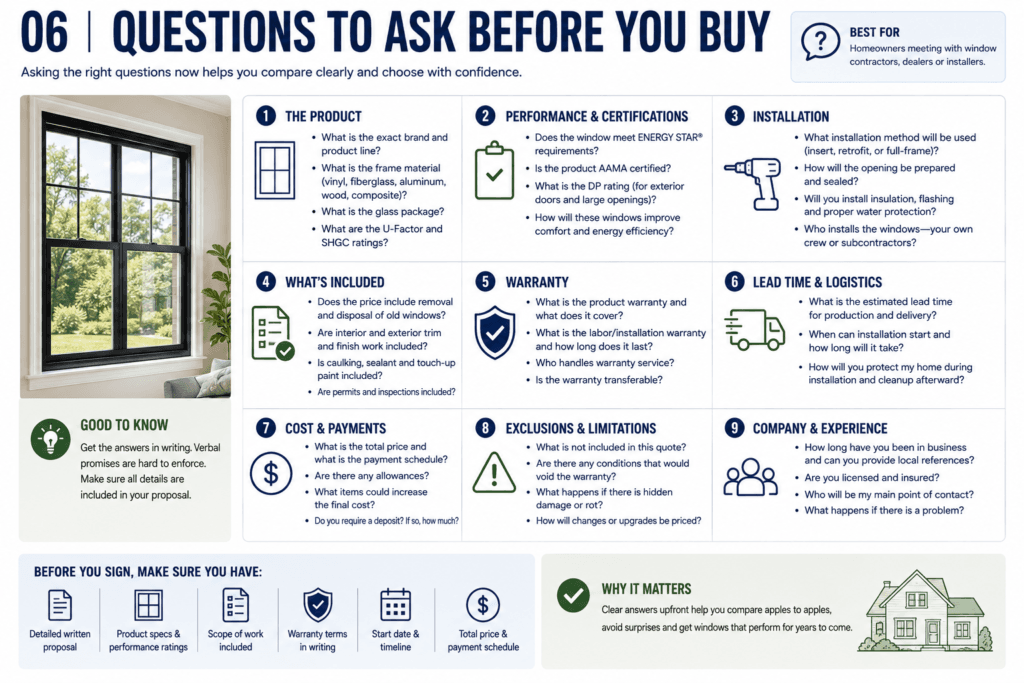
Before buying new windows, ask what product is being proposed, how it will be installed, what performance ratings it carries, what is included in the price and who is responsible for warranty service. Clear answers upfront make it easier to compare options and avoid surprises later.
BEST FOR
Homeowners preparing to meet with window contractors, dealers or installers and wanting to compare products and proposals more confidently.
GOOD TO KNOW
Ask for the exact manufacturer and product line, frame material, glass package, U-Factor and SHGC, installation method, warranty terms, lead time, permit responsibility and any exclusions or potential extra charges. Make sure these details are documented in the final proposal rather than relying only on verbal explanations.
QUICK COMPARISON
Compare Window Buying Levels at a Glance
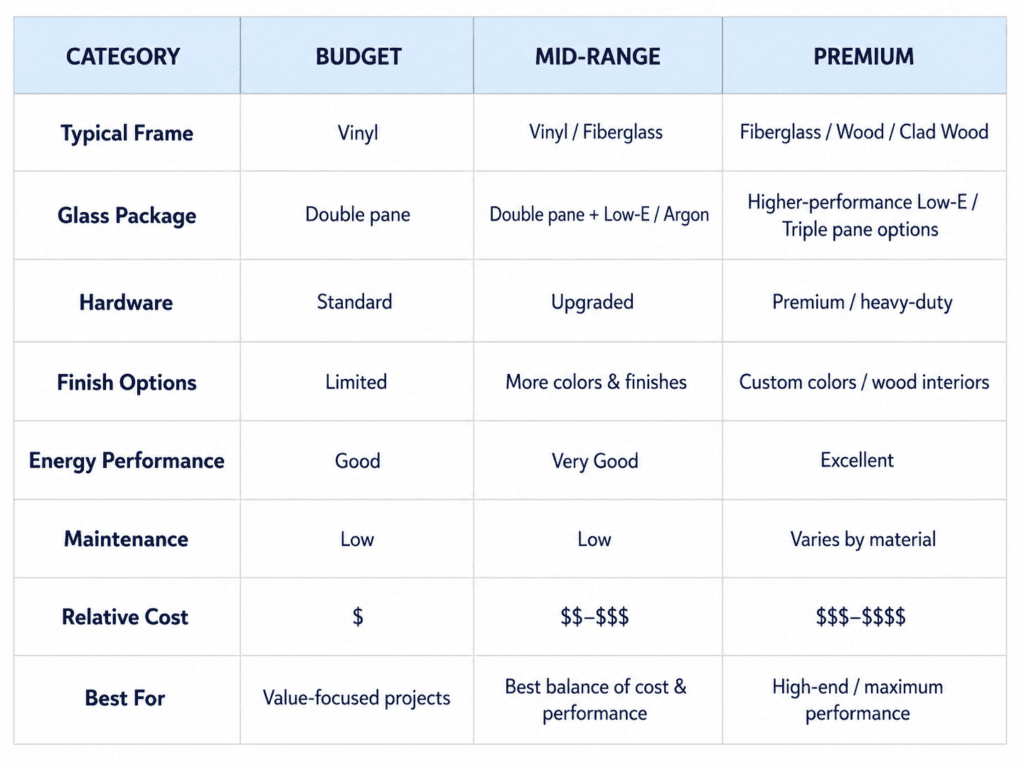
Product features, performance and relative costs are provided for general comparison only. Actual pricing and available options vary by manufacturer, product line, window size, glass configuration, installation requirements, location and project conditions.