
FLOORING MAINTENANCE
How Do You Keep Flooring Looking Good Over Time?
Different flooring materials wear in different ways. Hardwood can be refinished, tile may need grout or cracked-tile repairs, vinyl can be damaged by gouges, and laminate often has more limited repair options.
This guide explains routine care, common repairs, refinishing options and how to decide when damaged flooring should be repaired or replaced.
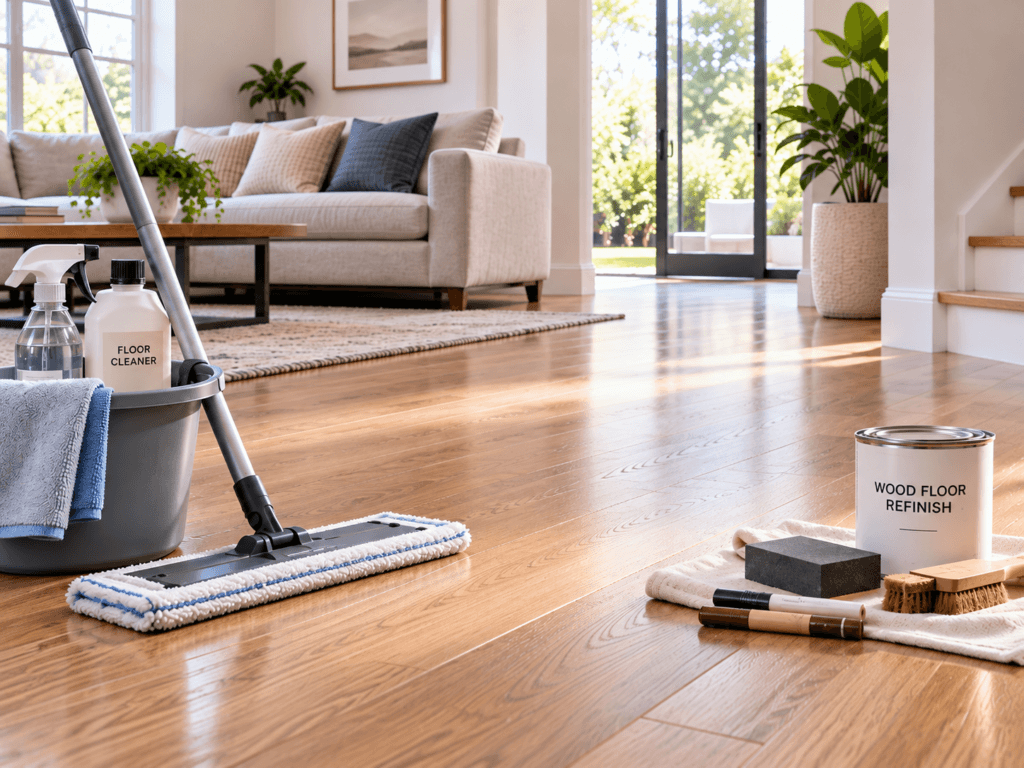
ROUTINE FLOORING CARE
Different Flooring Materials Need Different Maintenance
The basic goal is the same for every floor: remove grit, control moisture and avoid products or tools that can damage the surface. But the best cleaning method depends on the flooring material.
FLOATING HARDWOOD & ENGINEERED WOOD
How do you protect a wood floor’s finish?
Routine care should focus on minimizing scratches and excess moisture.
Common maintenance includes:
- Vacuuming or sweeping with a soft-floor attachment
- Using a lightly damp microfiber mop
- Cleaning spills promptly
- Using floor protectors beneath furniture
- Keeping pet nails trimmed
- Avoiding standing water and steam cleaning unless specifically approved
Use cleaning products recommended for the floor’s finish rather than general-purpose household cleaners.
VINYL & LAMINATE
How should resilient and floating floors be cleaned?
These floors are generally easy to maintain but can still be damaged by excessive water, abrasive tools or harsh chemicals.
Common maintenance includes:
- Sweeping or vacuuming regularly
- Damp mopping with an approved cleaner
- Wiping spills before moisture reaches seams
- Using mats at high-traffic entrances
- Avoiding abrasive scrubbers
- Avoiding waxes or polishes unless specifically recommended
Laminate requires particular care around seams because prolonged moisture exposure can cause swelling.
TILE & GROUT
How do you maintain the tile and the joints between it?
Tile surfaces are durable, but grout and some natural stone products may need more attention.
Common maintenance includes:
- Sweeping or vacuuming loose debris
- Damp mopping with a suitable cleaner
- Cleaning grout before heavy buildup develops
- Repairing cracked or missing grout
- Checking flexible sealant at movement joints
- Using products compatible with the specific tile or stone
Natural stone may require cleaners and sealing practices different from ceramic or porcelain tile.
CARPET
How do you control dirt and wear in carpeted areas?
Regular soil removal helps reduce matting and premature wear.
Common maintenance includes:
- Vacuuming high-traffic areas frequently
- Blotting spills promptly
- Using entry mats to reduce tracked-in dirt
- Treating stains with carpet-approved products
- Moving furniture periodically where practical
- Deep cleaning as recommended for the carpet type
Avoid aggressively scrubbing spills, which can spread the stain or damage carpet fibers.
GOOD TO KNOW
The safest cleaner is not always the strongest cleaner. Check the flooring manufacturer’s care instructions before using steam, wax, polish, acidic cleaners or heavy-duty chemicals.
PREVENTING EVERYDAY DAMAGE
Small Habits Can Extend the Life of Your Flooring
Most flooring damage happens gradually. Dirt, moisture, furniture movement and repeated traffic can wear down a floor long before a major repair is needed.
SCRATCHES & SCUFFS
How do you reduce surface damage?
Simple protection measures can prevent a lot of visible wear.
Use:
- Felt pads beneath furniture legs
- Rugs or runners in high-traffic areas
- Soft wheels on rolling furniture
- Entry mats to catch grit
- Protective pads when moving heavy items
- Regular sweeping or vacuuming
Avoid dragging furniture or heavy objects directly across the floor.
WATER & MOISTURE
How do you prevent moisture-related damage?
Water can affect flooring differently depending on the material, but standing moisture is rarely a good thing.
Watch for:
- Spills left sitting on the surface
- Leaks near appliances or plumbing
- Wet shoes at entrances
- Excess water during mopping
- Moisture around exterior doors
- Repeated wetting at seams or joints
Clean up water promptly and correct the source if moisture keeps returning.
HIGH-TRAFFIC WEAR
Which areas usually show wear first?
Entryways, kitchens, hallways and paths between major rooms often take the most abuse.
Help reduce wear by:
- Using runners or area rugs
- Rotating rugs and furniture periodically
- Cleaning high-traffic areas more often
- Keeping grit and debris off the floor
- Using protective mats where appropriate
- Addressing small damage before it spreads
Wear patterns are easier to manage when they are caught early.
PROTECTIVE HABITS THAT HELP
A few simple habits can reduce damage across nearly every flooring type:
- Remove grit before it is walked across the floor
- Use furniture protection
- Clean spills promptly
- Avoid harsh or unapproved cleaners
- Maintain stable indoor conditions where practical
- Check high-wear areas regularly
GOOD TO KNOW
Protective mats and rugs can help, but some flooring manufacturers have restrictions on rubber, latex or other backing materials. Check compatibility before leaving a rug or mat in place long-term.
COMMON FLOORING REPAIRS
Some Damage Can Be Repaired Without Replacing the Entire Floor
Small scratches, isolated damage and loose materials can often be corrected without a full replacement. The key is matching the repair to the flooring type and the extent of the damage.
HARDWOOD & ENGINEERED WOOD
What kinds of wood-floor damage can be repaired?
Common repairs include:
- Touching up light scratches
- Filling small dents or gouges
- Replacing individual damaged boards
- Repairing loose boards
- Addressing minor finish wear
- Correcting small gaps where appropriate
Deep damage, widespread wear or moisture problems may require more extensive repair or refinishing.
VINYL & LAMINATE
Can damaged planks or tiles be replaced individually?
Depending on the flooring system, repairs may include:
- Replacing damaged planks
- Repairing loose edges
- Correcting separated joints
- Replacing chipped or gouged pieces
- Addressing minor surface marks
- Reinstalling loose transition pieces
Laminate and many vinyl products cannot be sanded or refinished like hardwood, so damaged pieces are often replaced instead.
TILE & GROUT
What can be repaired without replacing the whole floor?
Common repairs include:
- Replacing cracked tiles
- Regrouting deteriorated joints
- Repairing loose tiles
- Replacing failed sealant
- Cleaning stained grout
- Repairing isolated chipped areas where practical
Recurring cracks may indicate movement or substrate problems that should be addressed before replacing the tile.
CARPET
What kinds of carpet damage can be repaired?
Depending on the condition, repairs may include:
- Restretching loose carpet
- Patching small damaged areas
- Repairing seams
- Replacing damaged transition strips
- Treating isolated stains
- Correcting loose edges
Large stains, widespread wear or damaged backing may make replacement more practical.
CHECK THE CAUSE BEFORE REPAIRING THE SURFACE
Before making a cosmetic repair, determine whether the damage came from:
- Water intrusion
- Subfloor movement
- Loose installation
- Furniture damage
- Improper cleaning products
- Normal wear
Fixing the cause first helps prevent the same problem from coming back.
GOOD TO KNOW
A repair that matches the color and texture of the surrounding floor may still remain slightly visible. Saving leftover flooring from the original installation can make future repairs much easier.
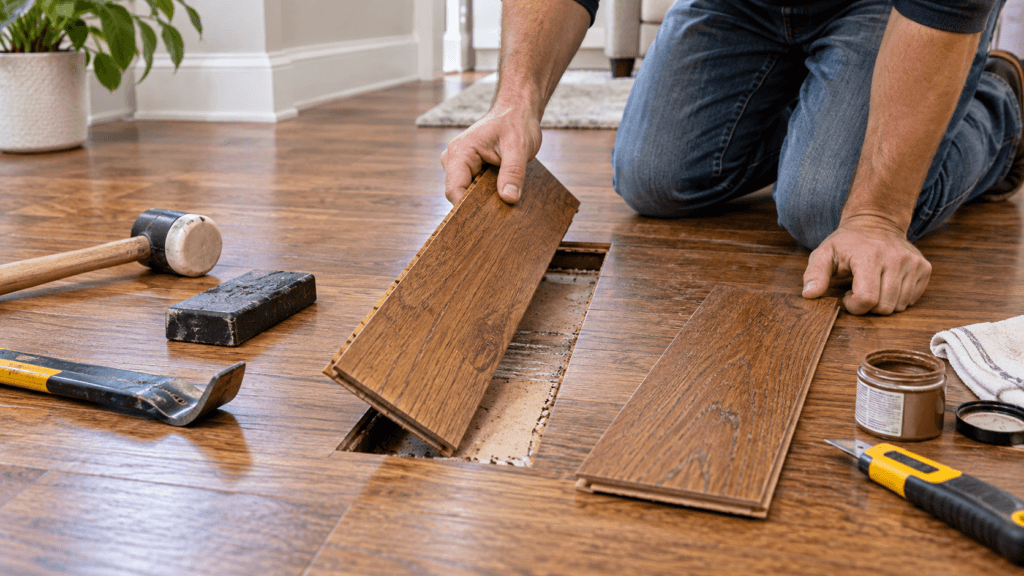
HARDWOOD REFINISHING
Refinishing Can Restore a Worn Wood Floor
Refinishing removes or renews the existing surface so scratches, dullness and finish wear can be corrected. But not every wood floor can be sanded and refinished the same way.
WHEN REFINISHING MAKES SENSE
Is there enough usable wood above the tongue or core?
Refinishing may be a good option when the floor has:
- Widespread surface scratches
- Dull or worn finish
- Minor discoloration
- Light surface damage
- Finish wear in high-traffic areas
- Enough remaining wood thickness for sanding
Solid hardwood can often be refinished multiple times, depending on its thickness and previous sanding.
WHEN REFINISHING MAY BE LIMITED
Can the flooring safely be sanded again?
Refinishing may be limited or inappropriate when:
- The wear layer is too thin
- Engineered wood has a very thin veneer
- The floor has already been sanded several times
- Boards are deeply damaged or structurally compromised
- Severe water damage is present
- Delamination or core damage has occurred
In these cases, board replacement or full flooring replacement may make more sense.
SCREENING, RECOATING & FULL REFINISHING
Not every worn floor needs aggressive sanding.
Depending on the condition, the floor may need:
- Cleaning and maintenance only
- Screening or light abrasion
- A new finish coat
- Full sanding and refinishing
- Individual board replacement before refinishing
The correct approach depends on the depth of the damage and the flooring construction.
GOOD TO KNOW
Engineered hardwood varies widely. Some products can be refinished, while others should not be sanded at all. Always confirm the wear-layer thickness and manufacturer guidance before refinishing.
STAINS, WATER DAMAGE & DISCOLORATION
Surface Damage Can Point to a Bigger Problem
Dark spots, fading and discoloration are not always just cosmetic. Before cleaning, sanding or replacing flooring, identify what caused the change and whether the source is still active.
STAINS & SPILLS
Can the mark be cleaned or treated at the surface?
The repair depends on the flooring material and what caused the stain.
Start by checking:
- What was spilled
- How long it remained
- Whether it penetrated the surface
- Whether the finish has been damaged
- Whether the flooring manufacturer recommends a specific cleaner
- Whether an inconspicuous test area is available
Avoid aggressive scrubbing or strong chemicals that may create a larger damaged area.
WATER DAMAGE
Has moisture affected the flooring or the material below it?
Signs of moisture damage may include:
- Swelling
- Cupping or warping
- Buckled planks
- Soft or loose flooring
- Dark staining
- Damaged seams or edges
Stop the water source and allow the area to dry before deciding whether the flooring can be repaired.
FADING & DISCOLORATION
Why has the floor changed color?
Color changes can come from:
- Direct sunlight
- UV exposure
- Rugs or furniture blocking light
- Chemical cleaners
- Moisture
- Natural aging of the material
Moving rugs and furniture periodically can help reduce uneven exposure, but some color change is a normal part of aging.
FIND THE SOURCE BEFORE FIXING THE FINISH
Before making a cosmetic repair, determine whether the problem came from:
- Plumbing or appliance leaks
- Exterior moisture
- Repeated spills
- Sunlight
- Cleaning products
- Material aging
Repairing the visible surface without correcting the cause can allow the damage to return.
GOOD TO KNOW
Water-damaged flooring may look dry at the surface while moisture remains underneath. If swelling, movement or repeated staining continues, the area may need to be opened or evaluated further.
REPAIR OR REPLACE?
Not Every Damaged Floor Needs Full Replacement
The right choice depends on how widespread the damage is, whether the flooring can be repaired or refinished, and whether the underlying cause has been corrected.
REPAIR MAY MAKE SENSE
Is the damage limited to a small area?
Repair is often practical when:
- Damage is isolated
- Matching replacement material is available
- The surrounding floor is still in good condition
- The subfloor is stable
- The cause of the damage has been corrected
- Individual boards, planks or tiles can be replaced
- Refinishing can restore the worn surface
Localized repairs can extend the life of a floor without replacing material that is still performing well.
REPLACEMENT MAY MAKE MORE SENSE
Is the problem widespread or difficult to match?
Replacement may be more practical when:
- Damage affects a large portion of the room
- Water damage is widespread
- Flooring is heavily worn throughout
- The material cannot be refinished
- Matching replacement pieces are unavailable
- Multiple repairs are already visible
- The subfloor or installation system needs major correction
At some point, repeated repairs can become less practical than replacing the floor.
LOOK AT THE WHOLE FLOOR, NOT JUST THE DAMAGED SPOT
Before deciding, consider:
- Age of the flooring
- Overall condition
- Availability of matching material
- Repair visibility
- Remaining service life
- Cost and disruption of repair versus replacement
- Whether adjacent rooms need to match
A technically possible repair is not always the best long-term choice if the rest of the floor is near the end of its useful life.
GOOD TO KNOW
If you have leftover flooring from the original installation, keep it. Matching color, texture and dimensions years later can be difficult, especially with discontinued products.
WHEN TO CALL A PROFESSIONAL
Some Flooring Problems Go Beyond a Simple Repair
Small scratches, loose transitions and isolated damage can often be handled as routine maintenance. Other conditions may involve moisture, structural movement or specialized refinishing work that is better evaluated before more damage occurs.
WIDESPREAD OR RECURRING DAMAGE
Does the problem keep coming back?
Professional help may make sense when you see:
- Repeated cracking
- Multiple loose boards or tiles
- Large areas of buckling
- Widespread finish failure
- Damage across several rooms
- Repairs that continue to fail
Recurring damage usually points to a condition that needs more than a cosmetic fix.
MOISTURE OR SUBFLOOR CONCERNS
Could the damage be coming from below the floor?
Consider professional evaluation when there is:
- Ongoing water intrusion
- Persistent dampness
- Swollen or soft subfloor areas
- Significant floor movement
- Large cracks
- Uneven areas that continue to worsen
The source should be corrected before damaged flooring is repaired or replaced.
REFINISHING & SPECIALTY REPAIRS
Does the work require specialized equipment or experience?
Professional work may be worthwhile for:
- Full hardwood sanding and refinishing
- Large-format tile repair
- Complex board replacement
- Carpet stretching or seam repair
- Matching stain or finish across large areas
- Repairs near stairs or detailed transitions
These jobs can be difficult to blend cleanly without the right tools and technique.
GET THE CAUSE IDENTIFIED FIRST
Before approving a major repair, make sure the underlying problem has been identified.
That may involve checking:
- Plumbing or appliance leaks
- Exterior water entry
- Subfloor condition
- Installation defects
- Movement beneath the flooring
- Environmental conditions
Fixing the cause first helps prevent the same damage from returning.
GOOD TO KNOW
A professional flooring contractor may not always be the only trade needed. Moisture, plumbing or structural problems can require another specialist before the flooring itself is repaired.
BEFORE YOU FINISH
Flooring Maintenance & Repair Checklist
Before deciding that a floor is fully maintained or repaired, check the condition of the surface, the source of any damage and whether future problems have been prevented.
□ Routine cleaning method matches the flooring type
□ Spills and moisture are cleaned promptly
□ High-traffic areas are protected where needed
□ Furniture pads and entry mats are in place
□ Scratches, chips or loose areas have been checked
□ Grout, seams and transitions are in good condition
□ Water damage or staining has been investigated
□ The source of recurring damage has been corrected
□ Repair materials are compatible with the flooring
□ Matching replacement pieces are available if needed
□ Refinishing is appropriate for the flooring construction
□ Engineered wood wear-layer limits have been checked
□ Damaged boards, tiles or carpet areas have been evaluated
□ Repair versus replacement has been considered
□ Professional help is planned where the work is specialized
□ Manufacturer care and maintenance instructions have been reviewed
Bottom Line
Good flooring maintenance is mostly about preventing small problems from becoming larger ones. Regular cleaning, moisture control, surface protection and early repairs can extend the life of nearly any flooring material.
When damage does occur, identify the cause before repairing the visible surface. Some floors can be refinished or repaired repeatedly, while others are better handled with individual piece replacement or, eventually, full replacement.