
SIDING & EXTERIOR GUIDE
Understand the Exterior Details That Finish and Protect the Home
Trim, soffit and fascia do more than complete the look of a home. These exterior components help protect roof edges, openings and transitions while tying the siding, roof and ventilation system together.

START WITH THE BASICS
How Trim, Soffit and Fascia Work Together
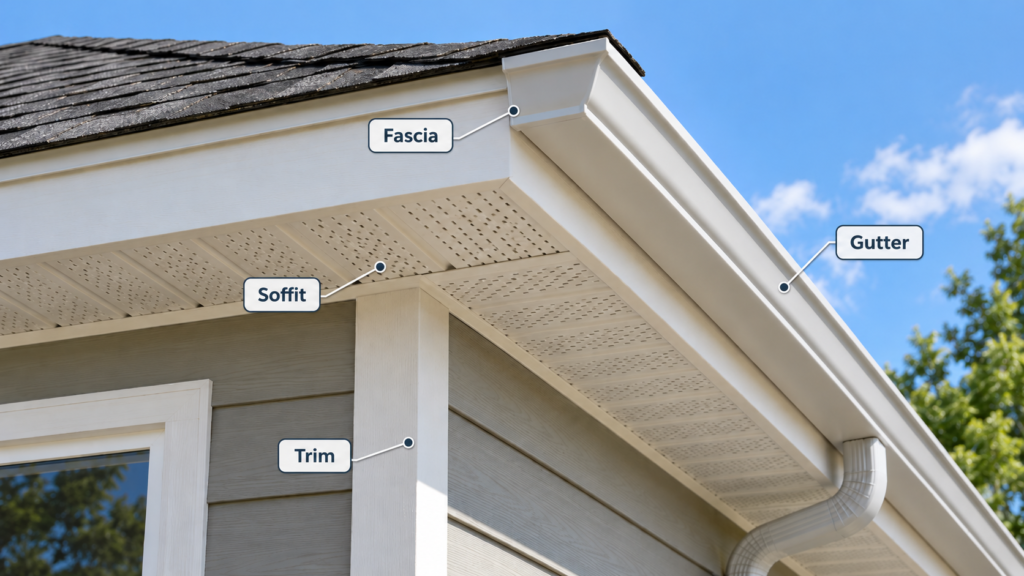
Trim, soffit and fascia are separate exterior components, but they work together around roof edges, openings and wall transitions. Understanding what each one does makes it easier to spot damage, choose materials and plan repairs or replacement.
01 — EXTERIOR TRIM
Exterior trim finishes edges around windows, doors, corners and transitions between materials. It helps create clean lines while covering joints and protecting vulnerable areas where siding or other finishes terminate.
02 — SOFFIT
Soffit covers the underside of roof overhangs and eaves. Depending on the roof design, it may also include ventilation openings that allow outside air to enter the attic as part of the home’s overall ventilation system.
03 — FASCIA
Fascia runs along the roof edge and typically provides the finished face behind gutters. It helps protect roof framing at the eaves while creating a clean transition between the roof, soffit and exterior wall.
GOOD TO KNOW
These components often fail together because they meet at the same roof and wall edges. Water from roof runoff, clogged gutters, failed paint or poor flashing can damage fascia, soffit and nearby trim at the same time.
COMMON MATERIALS
What Are Trim, Soffit and Fascia Made From?
Material choice affects appearance, maintenance, moisture resistance and how well these exterior components hold up over time.
01 — WOOD
Wood offers a traditional appearance and can be painted or stained to match the home. It is easy to work with but needs regular coating and good moisture protection to avoid rot, swelling and peeling paint.
02 — FIBER CEMENT
Fiber cement trim is durable, stable and resistant to rot and insects. It works well with many siding systems but is heavier and more brittle than wood, so proper cutting and fastening matter.
03 — VINYL
Vinyl is commonly used for soffits and some trim applications because it is low maintenance and available in vented and solid profiles. It does not need painting, but heat and impact can affect some products.
04 — ALUMINUM
Aluminum is often used for fascia covers and soffits because it resists rot and requires little upkeep. It can dent or scratch, but properly installed aluminum can provide long-lasting protection at roof edges.
GOOD TO KNOW
The best material is not always the same for every component. A home may use fiber cement or wood trim around openings, aluminum-clad fascia at the roof edge and vented vinyl or aluminum soffit under the eaves.
ROOF EDGE DETAILS
Why Soffit Ventilation and Fascia Matter
Soffit and fascia do more than finish the roofline. They help manage airflow, support gutters and protect vulnerable roof edges from weather and moisture.
01 — SOFFIT VENTILATION
Vented soffit can provide intake air for the attic, allowing cooler outside air to enter near the eaves while warmer air exits through ridge vents or other high roof vents. For the system to work, insulation and framing should not block the airflow path between the soffit and attic.
02 — FASCIA & GUTTERS
Fascia creates the finished vertical face at the roof edge and commonly serves as the attachment surface for gutters. Water overflowing from clogged or poorly pitched gutters can repeatedly wet the fascia and soffit, leading to peeling paint, rot or concealed damage.
GOOD TO KNOW
Ventilation and drainage problems often show up in the same area. Stained soffits, deteriorated fascia or peeling finishes may indicate a gutter leak, roof-edge flashing issue or blocked attic ventilation rather than a problem with the trim material alone.
COMMON PROBLEMS
Where Trim, Soffit and Fascia Often Fail
Damage usually starts where these components are repeatedly exposed to water, movement or poor ventilation. Catching the early signs can prevent a small exterior repair from turning into concealed roof-edge or wall damage.
01 — ROTTED OR SOFT FASCIA
Fascia can deteriorate when gutters overflow, roof edges leak or paint and protective coatings fail. Soft spots, peeling paint and staining often indicate that moisture has been reaching the wood for some time.
02 — STAINED OR DAMAGED SOFFIT
Dark stains, sagging panels or peeling finishes on soffits may point to roof leaks, gutter problems or trapped moisture above the eave. Vent openings should also remain clear so airflow is not restricted.
03 — CRACKED OR OPEN TRIM JOINTS
Trim around windows, doors and corners can separate as materials expand, contract or age. Open joints and failed sealant can allow water behind the exterior finish and should be repaired before surrounding materials are damaged.
GOOD TO KNOW
Visible damage is sometimes only the symptom. Before replacing a piece of trim, soffit or fascia, identify the source of moisture so the same problem does not return after the repair.
MAINTENANCE & REPAIR
Keep Exterior Trim and Roof Edges in Good Condition
Regular inspection and small repairs can help extend the life of trim, soffit and fascia while catching moisture problems before they spread into the wall or roof assembly.
01 — INSPECT REGULARLY
Check roof edges, corners, window and door trim, soffits and fascia for peeling paint, staining, soft spots, open joints and loose components. Pay extra attention after heavy rain or wind.
02 — KEEP GUTTERS CLEAR
Clogged gutters can overflow onto fascia and soffits, keeping these areas wet for long periods. Clean gutters and confirm downspouts move water away from the home.
03 — MAINTAIN FINISHES & SEALANTS
Painted wood and some engineered materials depend on intact coatings for moisture protection. Repaint deteriorated surfaces and replace failed sealant where appropriate around joints and transitions.
04 — REPLACE DAMAGED SECTIONS
Localized rot, cracked trim or damaged soffit panels can often be repaired without replacing the entire system. Remove compromised material, correct the moisture source and install compatible replacement components.
GOOD TO KNOW
Caulk should not be used to block intentional drainage or ventilation openings. Repair work should preserve soffit vents, flashing paths and clearances rather than sealing every visible gap.
BEFORE YOU FINISH
Trim, Soffit & Fascia Checklist
Before wrapping up a repair or replacement project, confirm the main exterior details are in good condition and working together properly.
☐ Fascia is solid with no soft or rotted areas
☐ Soffit panels are secure and free of staining
☐ Vent openings are clear and unobstructed
☐ Gutters are firmly attached and draining properly
☐ Window and door trim joints are tight
☐ Exterior coatings are not peeling or failing
☐ Open joints are sealed where appropriate
☐ Damaged trim has been replaced with compatible material
☐ Roof-edge flashing is intact
☐ Water is not being trapped behind trim or fascia
☐ Drainage and ventilation openings remain clear
☐ Moisture sources were corrected before cosmetic repairs
Bottom Line
Trim, soffit and fascia may look like finishing details, but they play an important role in protecting roof edges, openings and exterior transitions. When they are properly installed and maintained, they help manage water, support ventilation and keep vulnerable areas of the home protected.
Pay attention to staining, peeling finishes, soft wood, open joints and gutter problems. Repairing the source of moisture first is more important than simply replacing the damaged material.