
SIDING & EXTERIOR GUIDE
Compare Siding Types Before Choosing the Right Material
Compare the most common siding materials for your home, including vinyl, fiber cement, wood, engineered wood and metal. Learn how they differ in durability, maintenance, appearance, climate performance and cost before choosing the right option for your project.
SIDING MATERIALS
Which Siding Material Fits Your Home?
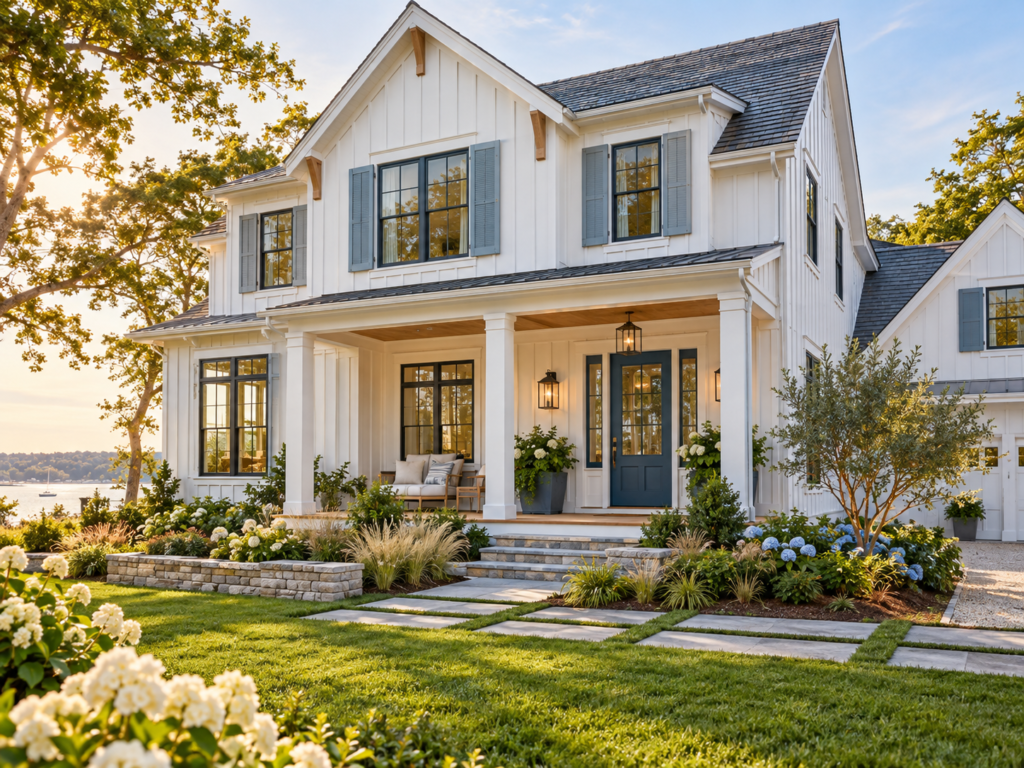
Choosing siding involves more than picking a color or style. Different siding types vary in durability, maintenance, moisture resistance, appearance and cost, and some materials perform better than others depending on climate and exposure.
Vinyl remains popular for its affordability and low maintenance, while fiber cement offers a more substantial look with strong durability. Wood provides natural character but requires more upkeep, engineered wood offers a lower-maintenance alternative, and metal siding can provide excellent longevity and weather resistance. Understanding these differences makes it easier to narrow down the right material for your home.
01 — VINYL SIDING
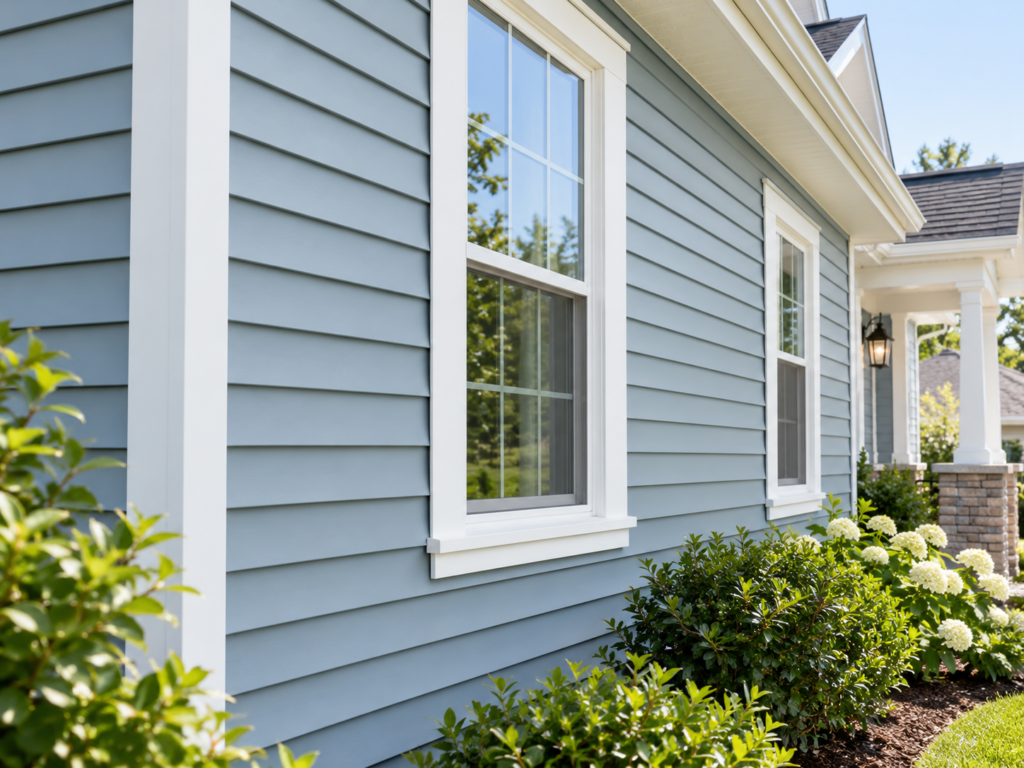
Vinyl siding is one of the most common siding materials because it is relatively affordable, low maintenance and available in a wide range of colors and profiles. It does not need painting, and routine cleaning is usually enough to keep it looking presentable over time. Most vinyl siding is installed as an interlocking panel system that allows for expansion and contraction with temperature changes, so proper fastening and clearances are important. Appearance and durability can vary by product thickness and quality, with some products offering better resistance to fading, cracking and impact damage.
BEST FOR
Homeowners looking for a cost-effective siding option with low routine maintenance and a broad range of color and profile choices.
GOOD TO KNOW
Vinyl siding is not maintenance-free. It should still be cleaned periodically, and damaged panels may need replacement if they crack or come loose. Proper installation is especially important because fastening panels too tightly can prevent movement and lead to warping or buckling.
02 — FIBER CEMENT SIDING
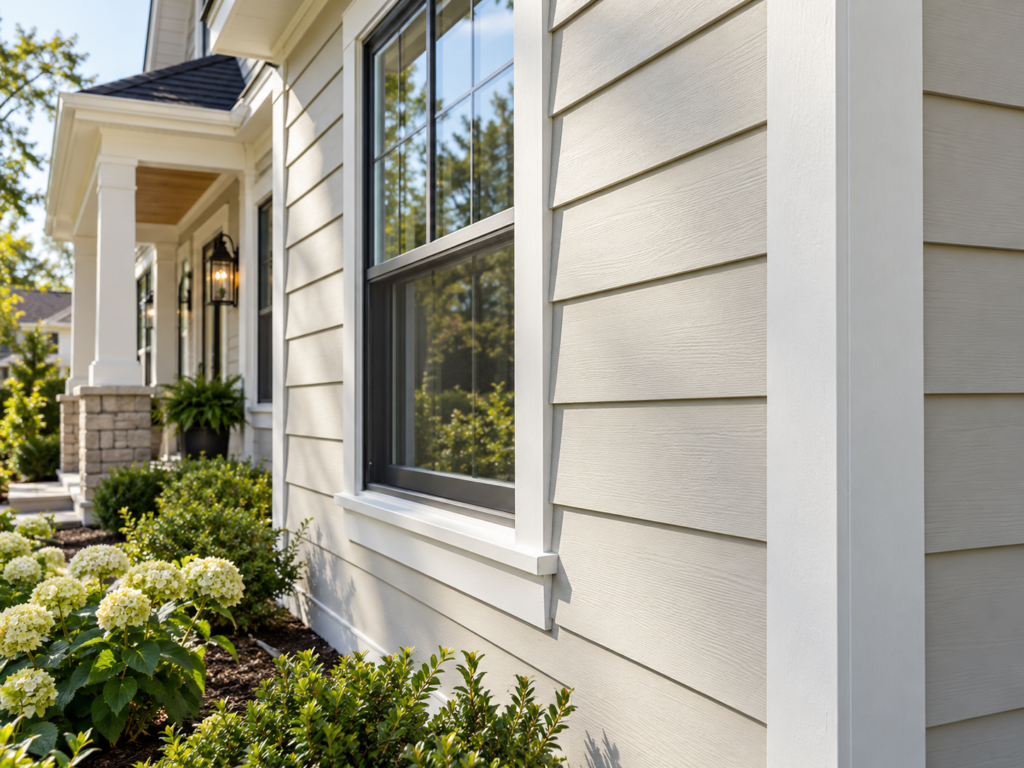
Fiber cement siding is made from a blend of cement, sand and cellulose fibers, giving it a dense, durable composition that can closely resemble painted wood siding. It is available in lap siding, panels, shingles and other profiles, and it holds paint well while resisting rot, insects and many forms of weather-related damage. Fiber cement is heavier and more labor-intensive to install than vinyl, but its durability and finished appearance make it a popular choice for homeowners who want a more substantial exterior material.
BEST FOR
Homeowners who want a durable, low-maintenance siding material with the look of painted wood and strong resistance to rot, insects and weather exposure.
GOOD TO KNOW
Fiber cement is heavier and more brittle than many other siding materials, so proper handling, cutting, fastening and clearances are important during installation. It still requires periodic painting or refinishing depending on the product and finish, and poor flashing or moisture detailing can create problems even when the siding itself is durable.
03 — WOOD SIDING
Wood siding offers a natural appearance that is difficult for manufactured materials to fully replicate, with options ranging from traditional clapboard and shingles to vertical boards and more modern profiles. Common species include cedar, redwood and pine, and the material can be stained or painted to achieve very different looks. Wood can perform well for many years when it is properly installed and maintained, but it is more vulnerable than vinyl or fiber cement to moisture, insects, rot and finish deterioration.
BEST FOR
Homeowners who value natural texture and character and are comfortable with periodic staining, painting and maintenance.
GOOD TO KNOW
Wood siding needs consistent moisture management and finish upkeep. Damaged coatings, poor flashing or prolonged water exposure can lead to swelling, splitting, rot or insect damage. Species, grade and installation details can also make a noticeable difference in durability and long-term appearance.
04 — ENGINEERED WOOD SIDING
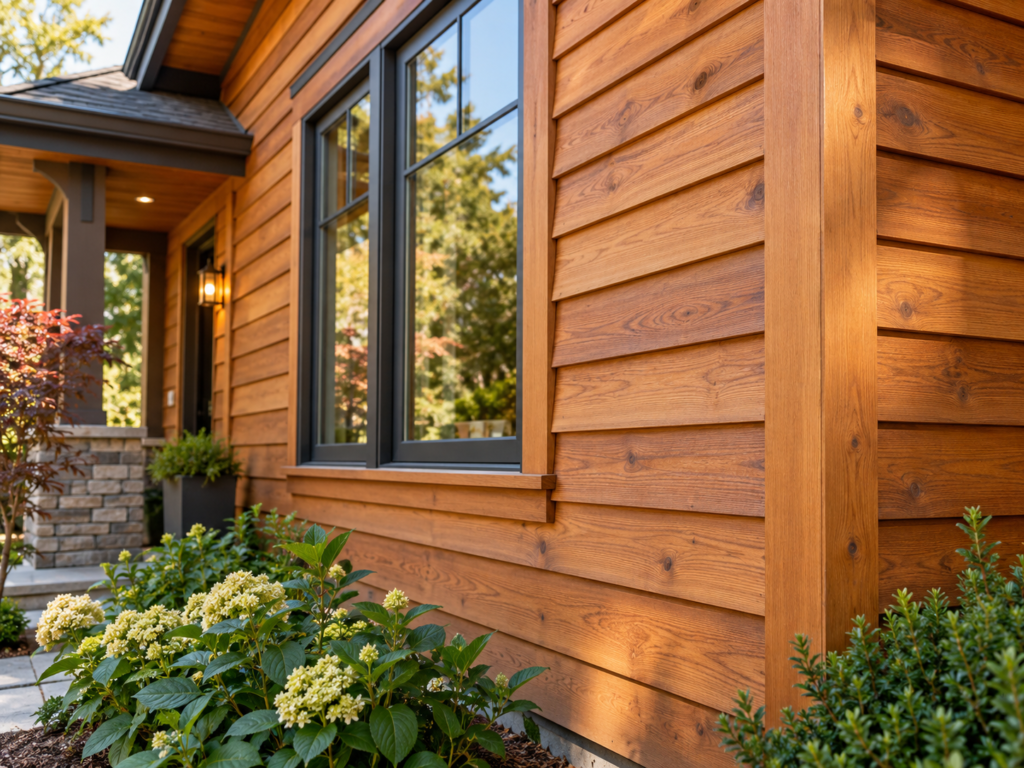
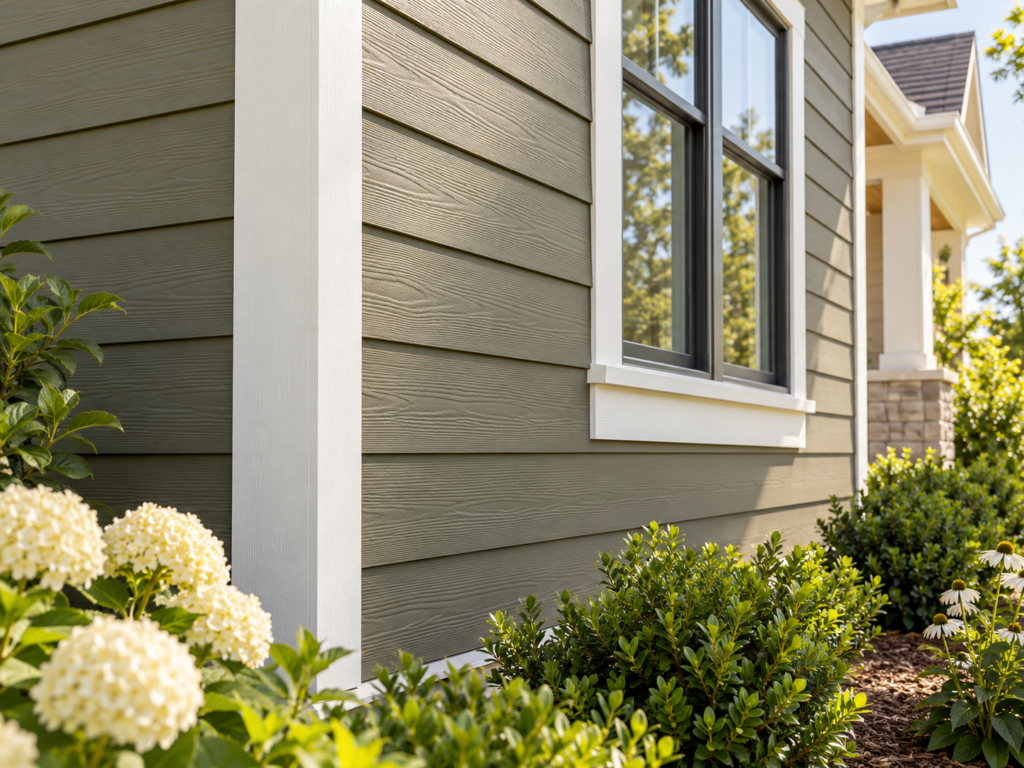
Engineered wood siding is made from wood fibers or strands combined with resins and protective treatments to create a more dimensionally stable siding product than traditional solid wood. It can closely mimic the texture and appearance of painted or stained wood while offering improved resistance to moisture, insects and warping. Engineered wood is generally lighter and easier to cut and install than fiber cement, which can make it attractive for projects that want a wood look without the same level of maintenance as natural wood.
BEST FOR
Homeowners who want the appearance of wood siding with lower maintenance, lighter weight and easier installation.
GOOD TO KNOW
Engineered wood still relies on proper flashing, sealing and edge treatment to perform well. Damaged coatings or exposed cut edges can allow moisture into the material, so following manufacturer installation requirements and maintaining the finish are important for long-term durability.
05 — METAL SIDING
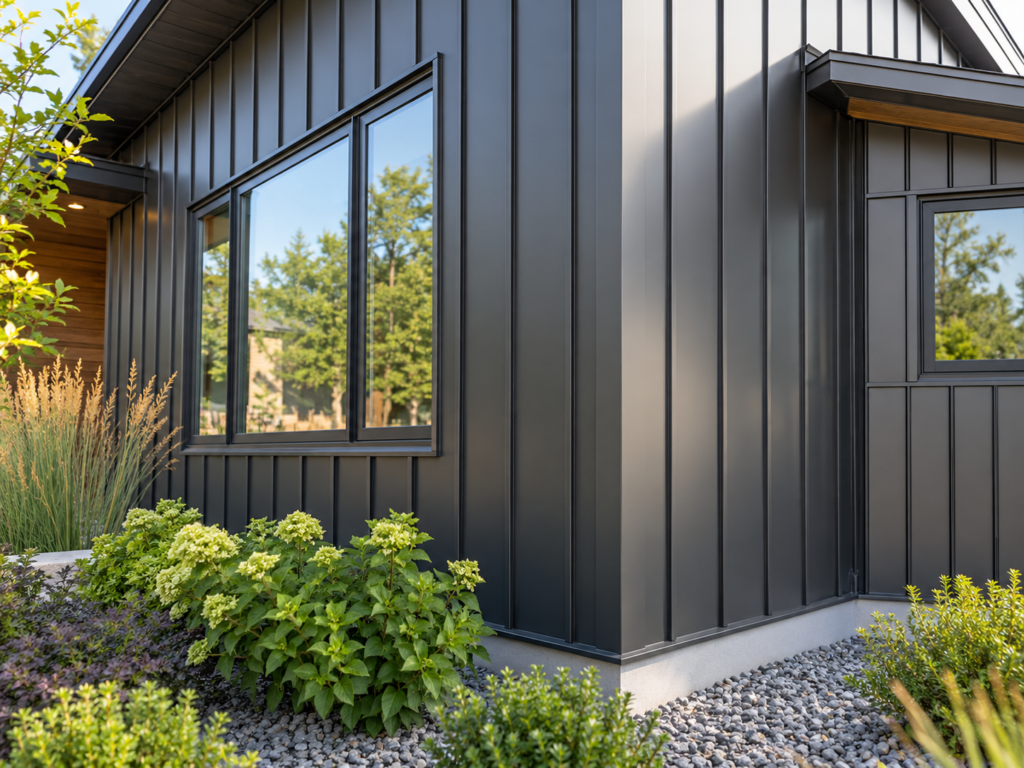
Metal siding is commonly made from steel or aluminum and is available in horizontal panels, vertical profiles and modern standing-seam-style designs. It offers strong resistance to moisture, insects, rot and fire, and many finishes are factory-applied for long-term color retention and weather protection. Metal siding can work especially well on contemporary homes or areas exposed to harsh weather, although the appearance and performance vary significantly depending on panel type, coating and installation method.
BEST FOR
Homeowners looking for durable, low-maintenance siding with strong weather resistance and a clean, modern appearance.
GOOD TO KNOW
Metal siding can dent from impact, and some finishes may scratch or fade over time. Proper flashing, fastener selection and detailing around openings are important to prevent water intrusion and corrosion. Steel and aluminum also behave differently, so product choice should account for climate, exposure and maintenance expectations.
06 — STUCCO & OTHER EXTERIOR FINISHES
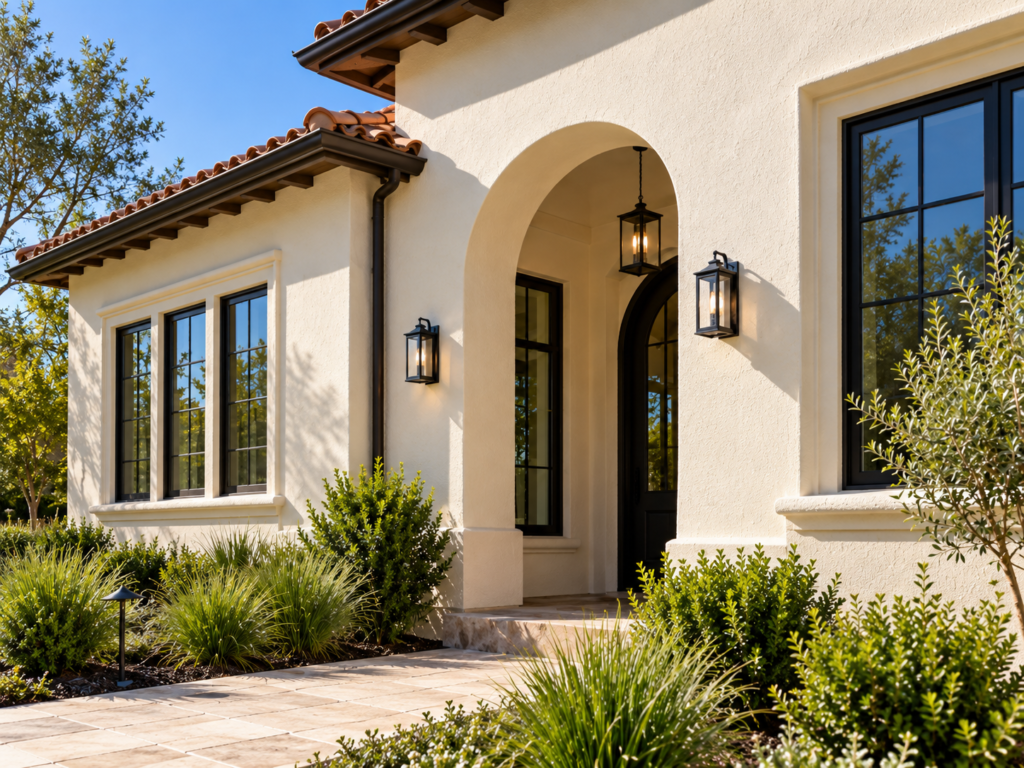
Stucco and other exterior finish systems can create a very different appearance from traditional lap siding while still serving as the home’s outer protective surface. Traditional stucco is a cement-based finish applied over a reinforced wall assembly, while synthetic systems and other claddings may use different layers, drainage details and installation methods. Stucco is especially common in warmer, drier climates and can provide a clean, seamless appearance with a wide range of textures and colors.
BEST FOR
Homeowners who want a solid, continuous exterior finish with a smooth or textured appearance, particularly on Mediterranean, Southwestern and contemporary homes.
GOOD TO KNOW
Stucco performance depends heavily on proper drainage, flashing, control joints and crack management. Small cracks can develop over time, and trapped moisture behind the finish can cause more serious problems if the wall assembly is not detailed correctly. Different stucco and synthetic systems also have different maintenance and repair requirements.
COMPARE SIDING MATERIALS
Compare Siding Materials at a Glance
| Siding Material | Best For | Maintenance | Relative Cost |
|---|---|---|---|
| Vinyl | Budget-conscious, low-maintenance homes | Low | $ |
| Fiber Cement | Durability and a painted-wood appearance | Low to Moderate | $$–$$$ |
| Wood | Natural appearance and traditional character | Moderate to High | $$$ |
| Engineered Wood | Wood appearance with easier maintenance | Low to Moderate | $$ |
| Metal | Long life and modern design | Low | $$$–$$$$ |
| Stucco | Seamless exterior finishes and warm climates | Low to Moderate | $$–$$$ |
Material cost, labor and maintenance requirements vary by product, region and installation conditions.
ESTIMATE SIDING MATERIALS
Once you know your exterior wall dimensions and siding type, use the Siding Quantity Calculator to estimate how much siding your project may require and include an allowance for waste.
GOOD TO KNOW
Siding should not be selected by appearance or initial price alone. Climate, moisture exposure, maintenance expectations, wall construction, installation requirements and long-term durability can all affect which material makes the most sense for a particular home.
Bottom Line
There is no single siding material that is best for every home. Vinyl can keep initial and maintenance costs low, fiber cement offers durability and a substantial appearance, wood provides natural character, engineered wood balances appearance and maintenance, metal offers excellent longevity, and stucco creates a distinctive continuous exterior finish.
Compare appearance, maintenance, climate performance, moisture resistance, installation requirements and budget together rather than choosing on price alone. The right siding material is the one that fits both the home and the conditions it will be exposed to.