
FLOORING COST & BUYING
How Much Does Flooring Cost and What Should You Buy?
Flooring prices can vary significantly depending on the material, product quality, room conditions and installation method. The lowest material price does not always result in the lowest completed project cost.
This guide explains the major costs to plan for, how flooring materials compare and what to look at before placing an order.
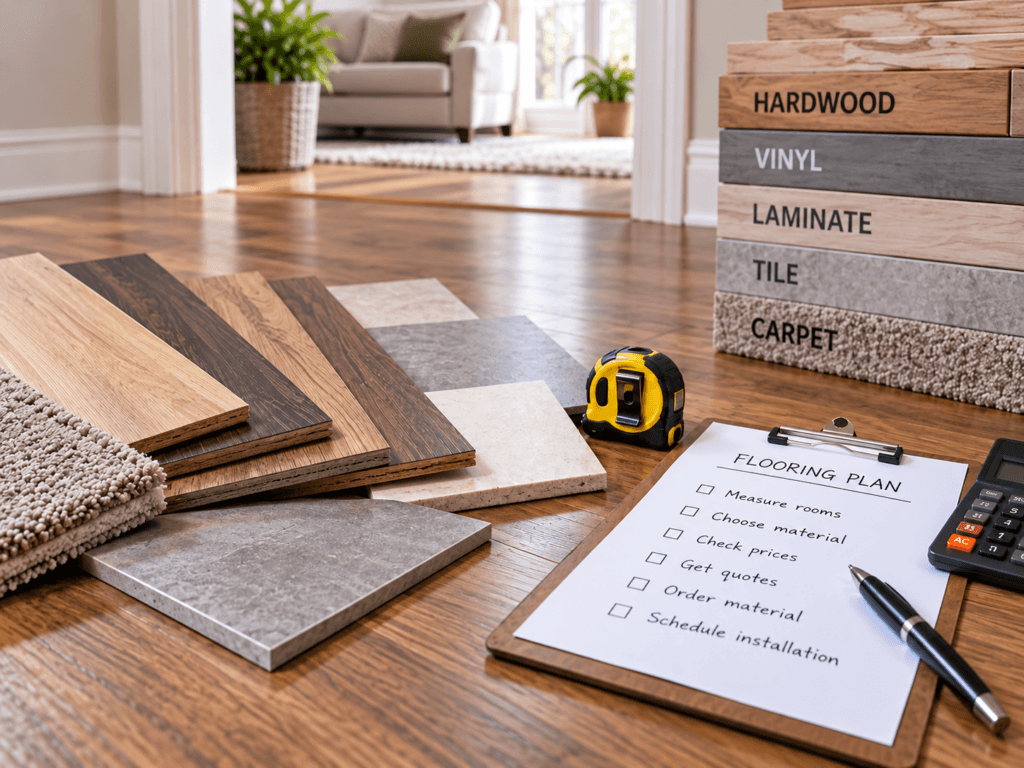
WHAT DRIVES FLOORING COST?
The Material Price Is Only Part of the Project
The cost of flooring can change significantly depending on what you buy, how it is installed and how much preparation the room needs before installation begins.
MATERIAL COST
What are you actually paying for?
Material pricing can vary based on:
- Flooring type
- Product thickness
- Wear layer or finish quality
- Species or visual grade
- Plank or tile size
- Brand and warranty
- Special finishes or textures
Two products in the same flooring category can have very different prices and performance levels.
INSTALLATION COST
How difficult is the flooring to install?
Labor cost is influenced by:
- Floating, glue-down or nail-down installation
- Tile setting and grout work
- Room size and shape
- Number of cuts and doorways
- Stairs
- Transitions
- Pattern complexity
A simple rectangular room is usually easier and faster to install than a space with multiple rooms, angles and detailed transitions.
PREP & EXTRA WORK
What has to happen before the new flooring goes down?
Additional cost may come from:
- Removing existing flooring
- Disposing of old materials
- Subfloor repairs
- Moisture mitigation
- Grinding or leveling
- Underlayment or membranes
- Moving appliances or furniture
- New baseboards or trim
Preparation costs can sometimes be just as important as the flooring itself.
LOOK AT THE COMPLETE PROJECT COST
When comparing flooring options, do not compare material price alone. A lower-priced product can still become more expensive if it requires more preparation, specialized installation or additional trim and transition work.
GOOD TO KNOW
Ask whether a flooring quote includes removal, prep, underlayment, transitions, trim and disposal. Those items are often priced separately and can change the final project total.
COMPARING FLOORING PRICES
Flooring Categories Can Have Very Different Total Costs
The price of the flooring itself is only one part of the comparison. Installation method, preparation, trim and long-term maintenance can change which option ultimately costs more.
LOWER-COST OPTIONS
Which materials usually start at the lower end?
More budget-friendly choices often include:
- Laminate
- Sheet vinyl
- Entry-level luxury vinyl
- Basic carpet
- Standard ceramic tile
These products can keep material costs down, but installation and preparation still need to be included in the total.
MID-RANGE OPTIONS
Where do many popular residential products fall?
Common mid-range choices may include:
- Better-quality luxury vinyl plank
- Upgraded laminate
- Engineered wood
- Porcelain tile
- Higher-grade carpet
Product quality, thickness, wear layers and finish can create a large price spread within this group.
HIGHER-COST OPTIONS
Which materials usually carry a higher upfront cost?
Higher-priced flooring often includes:
- Solid hardwood
- Premium engineered wood
- Natural stone
- Specialty tile
- Custom patterns or borders
- Wide-plank or specialty wood products
Higher material cost can also come with more expensive installation or finishing requirements.
DON’T COMPARE MATERIAL PRICE ALONE
A flooring product that costs less per square foot may still require:
- More subfloor preparation
- Additional underlayment
- Specialized adhesive
- More expensive installation
- Additional transitions or trim
- Higher long-term maintenance
Compare the complete installed system, not just the price shown on the material display.
GOOD TO KNOW
Prices can vary substantially even within the same flooring category. Product construction, finish, thickness, warranty and installation requirements often matter more than the category name alone.
ORDERING QUANTITY
Order More Than the Exact Room Area
Flooring projects almost always require some extra material for cuts, damaged pieces, layout adjustments and future repairs. Ordering exactly the measured square footage leaves very little room for error.
PLAN YOUR QUANTITY
Use the Flooring Quantity Calculator to calculate the total floor area for one or more rooms and add a waste allowance for cuts, layout and material variation.
MEASURE THE ACTUAL AREA
How much floor are you covering?
Start by measuring each room or section separately.
Include:
- Main room dimensions
- Closets
- Hallways
- Alcoves
- Connected spaces
- Areas under appliances where flooring will continue
Break irregular rooms into smaller rectangles, calculate each area and add them together.
ADD A WASTE ALLOWANCE
How much extra material should you plan for?
Waste depends on the flooring and layout.
Typical planning allowances may be around:
- 5% for simple rectangular plank layouts
- 7–10% for rooms with more cuts or multiple openings
- 10% or more for tile, diagonal layouts or complex patterns
- Additional material for herringbone, borders or highly irregular spaces
Manufacturer packaging, tile size and plank dimensions can also affect how much usable material remains after cuts.
KEEP EXTRA MATERIAL
Should you save flooring after installation?
Yes, if possible.
Extra flooring can be useful later for:
- Replacing damaged planks or tiles
- Matching discontinued colors
- Repairing water-damaged areas
- Reworking transitions
- Small renovations
- Future room changes
Store leftover material indoors in a dry, protected location.
ROUND UP TO FULL CARTONS
Flooring is usually sold by carton, bundle or box rather than by the exact square foot.
After calculating the required quantity:
- Add the waste allowance
- Divide by the coverage per carton
- Round up to the next full carton
- Confirm the total before ordering
Do not round down just because the difference appears small.
GOOD TO KNOW
Patterns, room shape and material size can change waste significantly. The more cuts and layout changes a project has, the more important it is to allow extra material.
PRODUCT QUALITY
Two Floors Can Look Similar but Perform Very Differently
Price differences are often tied to construction, finish quality, durability and warranty coverage. Looking beyond color and style can help explain why one product costs more than another.
THICKNESS & CONSTRUCTION
What is the flooring actually made of?
Compare details such as:
- Overall product thickness
- Core construction
- Number of layers
- Board or tile stability
- Edge profile
- Attached backing or pad
Thicker does not always mean better, but construction quality can affect stability and long-term performance.
WEAR LAYER & SURFACE FINISH
How much abuse can the surface handle?
Depending on the product, look at:
- Wear-layer thickness
- Scratch resistance
- Stain resistance
- Finish system
- UV protection
- Surface texture
For engineered wood and vinyl products, the usable surface layer can be an important part of the comparison.
SIZE, STYLE & VISUAL QUALITY
Are you paying more for appearance?
Price can also increase with:
- Wider or longer planks
- Large-format tile
- More realistic grain or stone patterns
- Fewer repeated print patterns
- Specialty textures
- Premium color selections
Higher-end products often put more emphasis on visual realism and consistency.
WARRANTY & PERFORMANCE RATINGS
What does the manufacturer actually stand behind?
Review:
- Residential warranty length
- Commercial-use coverage
- Waterproof or water-resistant claims
- Wear-through coverage
- Installation requirements
- Exclusions and limitations
A long warranty is only useful if the conditions and exclusions match how the floor will actually be used.
COMPARE THE DETAILS, NOT JUST THE SAMPLE
Two products may look almost identical on a display board but have very different construction and performance characteristics.
Before buying, compare:
- Technical specifications
- Installation requirements
- Maintenance needs
- Warranty terms
- Product reviews and history
- Availability of matching trim
GOOD TO KNOW
Do not assume the highest-priced product is automatically the best choice. The goal is to match the flooring quality to the room, expected traffic, moisture exposure and how long you expect the floor to remain in service.
SAMPLES & MATCHING
Check More Than One Piece Before You Buy
Flooring samples are useful, but a small display piece does not always show the full range of color, pattern or texture you will see across an entire room.
TAKE SAMPLES HOME
How will the flooring look in your actual space?
Before ordering, compare samples under the room’s real lighting conditions.
Check the material:
- In daylight
- At night under artificial lighting
- Next to cabinets and trim
- Beside wall colors
- Against nearby flooring
- In both shaded and bright areas
Color and texture can look very different outside the showroom.
CHECK LOTS & COLOR VARIATION
Will all of the material match closely enough?
Some flooring can vary between production runs, dye lots or natural batches.
Before installation:
- Check carton or lot numbers
- Compare material from multiple boxes
- Review the expected shade variation
- Mix pieces from different cartons where recommended
- Confirm special-order material before opening everything
- Inspect for obvious color inconsistencies
Natural wood, stone and some tile products may intentionally have more variation than manufactured flooring.
BUY EXTRA FOR FUTURE MATCHING
Will the same product still be available later?
Keeping extra material from the original purchase can make future repairs much easier.
Save enough for:
- Damaged plank replacement
- Broken tile replacement
- Small water-damage repairs
- Transition changes
- Minor remodeling
- Discontinued colors or patterns
Even products with the same name can change slightly over time.
INSPECT BEFORE INSTALLATION
Before the flooring is permanently installed, inspect the material for:
- Wrong color
- Wrong size
- Damaged edges
- Chipped tiles
- Manufacturing defects
- Excessive variation beyond what was expected
Once material is installed, returns or claims may become more difficult.
GOOD TO KNOW
Do not rely on a single small sample to predict the entire finished floor. Review several pieces whenever possible, especially with natural materials or products designed to have strong visual variation.
COMPARING FLOORING QUOTES
Make Sure You’re Comparing the Same Scope
Two flooring quotes can look very different even when they cover the same room. Before comparing the bottom-line price, check exactly what material, labor and preparation each quote includes.
MATERIAL & QUANTITY
Are both quotes pricing the same product and amount?
Confirm:
- Exact flooring product
- Color or finish
- Product grade or thickness
- Total square footage
- Waste allowance
- Number of cartons or bundles
- Underlayment or membranes
- Matching trim and transitions
A lower quote may simply include less material or a different product specification.
LABOR & INSTALLATION
What installation work is actually included?
Check whether labor covers:
- Flooring installation
- Layout and cuts
- Door jamb undercutting
- Transitions
- Baseboard or shoe molding
- Stairs, if applicable
- Appliance movement
- Cleanup after installation
Special patterns, stairs and detailed transitions may be priced separately.
PREP, REMOVAL & EXTRAS
What happens before the new floor goes down?
Look for charges related to:
- Existing flooring removal
- Disposal
- Subfloor repairs
- Grinding or leveling
- Moisture treatment
- Furniture moving
- Delivery
- Floor protection
- Permit or building requirements where applicable
These items can create a large difference between an initial quote and the final invoice.
ASK ABOUT ALLOWANCES & CHANGE ORDERS
Some conditions cannot be fully known until the existing floor is removed.
Before work begins, ask:
- What work is included in the base price?
- Which items are allowances?
- What could trigger an additional charge?
- How will unexpected subfloor work be priced?
- Will changes require approval before proceeding?
Clear expectations make it easier to understand why the final cost may differ from the original estimate.
GOOD TO KNOW
The lowest quote is not necessarily the least expensive project. A complete quote that includes preparation, transitions and finishing work may be easier to budget than a lower quote with several exclusions.
WHERE TO BUY
The Seller Matters Almost as Much as the Product
The same flooring category can be purchased through specialty flooring stores, big-box retailers or online sellers. The best option depends on how much product support, local service and ordering flexibility you need.
SPECIALTY FLOORING STORES
When does a dedicated flooring dealer make sense?
Specialty stores may offer:
- More product-specific guidance
- Access to higher-end brands
- Larger sample selections
- Installer referrals
- Help with trim and transition matching
- Better support for specialty products
They can be especially useful when the project involves hardwood, tile, stairs or more complex installations.
BIG-BOX & ONLINE RETAILERS
When is convenience the bigger priority?
These sellers may offer:
- Easy price comparison
- Broad product availability
- Frequent promotions
- Convenient pickup or delivery
- Straightforward ordering
- Accessible replacement material for common products
The tradeoff may be less product-specific guidance or more limited help with installation details.
RETURNS & SPECIAL ORDERS
What happens if you order too much or something arrives damaged?
Before purchasing, check:
- Return window
- Restocking fees
- Whether opened cartons can be returned
- Special-order return restrictions
- Damage claim procedures
- Delivery inspection requirements
- Minimum order quantities
- Cancellation policies
Special-order flooring may have much stricter return rules than stocked material.
CHECK AVAILABILITY BEFORE COMMITTING
Before placing the order, confirm:
- Enough material is available for the full project
- Matching trim is in stock or orderable
- Lead times fit the schedule
- Replacement cartons can still be obtained
- All material comes from compatible lots where needed
- Delivery dates are realistic
A product is not a good choice if half the accessories or replacement pieces cannot be sourced.
GOOD TO KNOW
If you are ordering close to the exact required quantity, confirm the seller can provide matching replacement material later. Buying a little extra from the original order is usually safer than assuming the same product will still be available months or years later.
BEFORE YOU BUY
Make Sure the Flooring Fits the Room, Not Just the Budget
Before placing the order, check whether the flooring actually matches how the room will be used, how it will be installed and how much maintenance you are willing to take on.
ROOM & TRAFFIC
Can the flooring handle how the space is used?
Consider:
- Foot traffic
- Pets
- Children
- Entryways
- Kitchens
- Bedrooms
- Home offices
A product that works well in a low-traffic bedroom may not be the best choice for a busy entry or kitchen.
MOISTURE & LOCATION
Is the flooring appropriate for the environment?
Check whether the product is approved for:
- Bathrooms
- Kitchens
- Laundry rooms
- Basements
- Concrete slabs
- Below-grade spaces
- Areas near exterior doors
Waterproof and water-resistant claims should always be checked against the manufacturer’s actual limitations.
INSTALLATION REQUIREMENTS
Does the product fit the installation you are planning?
Confirm:
- Approved subfloor
- Installation method
- Underlayment requirements
- Adhesive or fastener requirements
- Expansion clearances
- Acclimation requirements
- Whether professional installation is recommended
A product can be a poor fit if the installation requirements are more complicated than expected.
CARE & LONG-TERM USE
Are you comfortable with the maintenance it requires?
Think about:
- Routine cleaning
- Scratch resistance
- Stain resistance
- Refinishing options
- Repairability
- Availability of replacement pieces
- Expected service life
The best flooring choice is one you can realistically maintain over time.
MAKE THE FINAL COMPARISON
Before ordering, compare your top choices based on:
- Total project cost
- Appearance
- Durability
- Installation difficulty
- Maintenance
- Repair options
- Warranty
- Availability
The strongest choice is usually the product that fits the room and project as a whole, not simply the one with the lowest material price.
GOOD TO KNOW
Bring the decision back to the actual room. Flooring that performs well in one space may be a poor choice in another because of moisture, traffic, pets, sunlight or installation conditions.
BEFORE YOU ORDER
Flooring Cost & Buying Checklist
Before placing the order, confirm that the material, quantity, installation requirements and total project cost have all been reviewed.
□ Flooring type fits the room and expected traffic
□ Moisture and location requirements have been checked
□ Installation method is confirmed
□ Subfloor and preparation needs are understood
□ Material quantity has been measured □ Waste allowance has been added □ Order has been rounded up to full cartons or bundles
□ Extra material is planned for future repairs
□ Product thickness and construction have been compared
□ Wear layer or surface finish meets the project needs
□ Warranty terms have been reviewed
□ Samples have been checked in the actual room
□ Lot numbers or color variation have been considered
□ Trim, transitions and accessories are available
□ Quote inclusions and exclusions have been reviewed
□ Return, delivery and special-order policies are understood
Bottom Line
The best flooring purchase is not always the product with the lowest price per square foot. Material quality, installation, preparation, waste, trim and long-term maintenance all contribute to the real project cost.
Compare the complete flooring system, order enough material for cuts and future repairs, and make sure the product fits the room, installation method and level of maintenance you are comfortable with.