
← BACK TO DECKS & OUTDOOR LIVING
DECK REPAIR & MAINTENANCE
Know What to Repair, Maintain or Replace
Decks wear gradually, and not every problem means the entire structure needs to be replaced. Regular cleaning, inspections and small repairs can extend service life, while loose connections, rot, movement or structural damage may require more serious work. The key is knowing which conditions are cosmetic and which ones affect safety or performance.
START WITH AN INSPECTION
Look Beyond the Surface
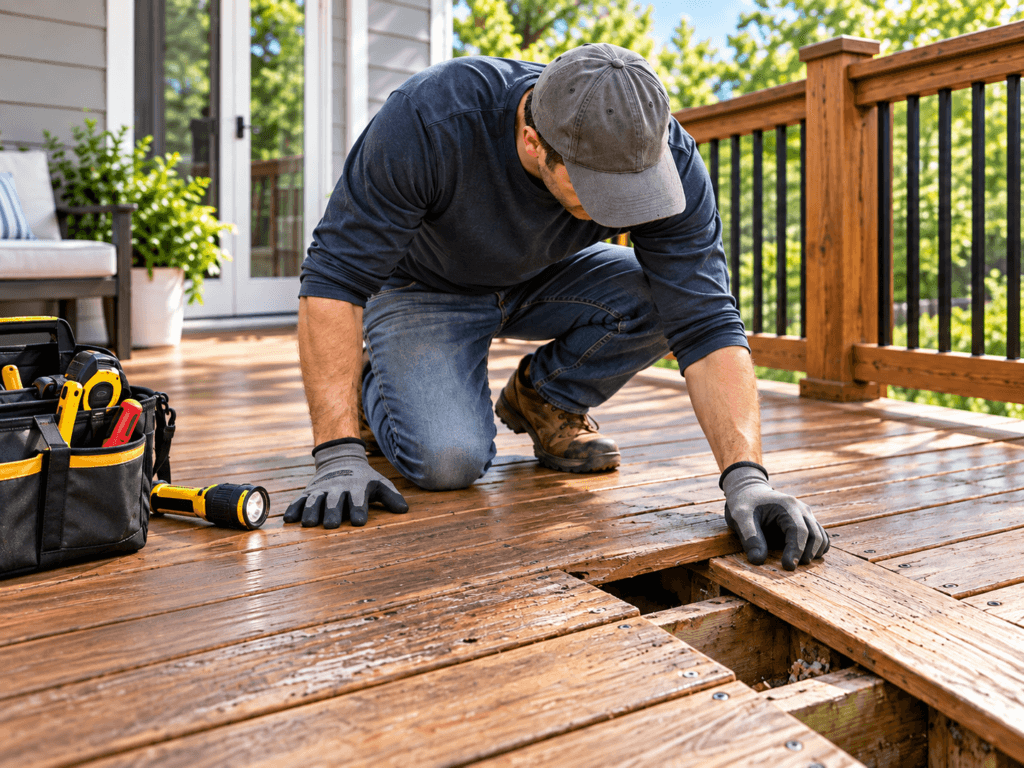
A deck can look fine from above while problems are developing underneath. Start by checking the walking surface, framing, connections, stairs and guards before deciding whether the deck needs routine maintenance, localized repair or more extensive work.
01 — DECKING
Look for cracked or split boards, raised fasteners, splinters, soft spots, staining and areas that stay wet longer than the rest of the deck.
02 — FRAMING
Inspect joists, beams and blocking for rot, splits, sagging, trapped debris and signs that moisture has been sitting against the wood.
03 — CONNECTIONS
Check ledger fasteners, joist hangers, post bases and other hardware for corrosion, looseness, missing fasteners or visible movement.
04 — STAIRS & GUARDS
Check stair treads, stringers, guard posts and handrails for looseness, cracking, uneven movement or connections that no longer feel solid.
WATCH FOR
Soft wood, repeated moisture staining, loose guards, excessive bounce or visible separation at structural connections deserve closer attention. Cosmetic repairs should not cover up a structural problem.
SURFACE MAINTENANCE
Cleaning and Finishing Depend on the Material
The right maintenance routine depends on what the deck is made from. Wood usually needs the most ongoing care, while composite, PVC and aluminum products are generally easier to maintain but still benefit from regular cleaning and inspection.
WOOD DECKING
Wood decks should be cleaned periodically to remove dirt, mildew and debris. Depending on the species, exposure and finish, sanding and a new coat of stain or water-repellent sealer may also be needed to control weathering and moisture absorption.
COMPOSITE & PVC
Composite and PVC decking usually need routine washing rather than sanding or refinishing. Use cleaners approved for the specific product, especially for grease, mildew or stubborn stains, and avoid aggressive methods that could damage the surface.
ALUMINUM & SPECIALTY PRODUCTS
Aluminum and other specialty decking materials generally require less maintenance, but dirt, debris and drainage areas should still be cleaned. Inspect coatings, fasteners and joints for damage or corrosion as part of regular upkeep.
GOOD TO KNOW
Pressure washing can damage wood fibers or manufactured decking if the pressure is too high or the nozzle is held too close. Follow the decking manufacturer’s cleaning recommendations before using power equipment.
COMMON REPAIRS
Small Problems Are Easier to Fix Early
Many deck repairs are manageable when the damage is localized and the surrounding structure is still sound. The important part is identifying why the problem developed before replacing the visible piece.
01 — DAMAGED DECK BOARDS
Cracked, split, badly cupped or soft boards can often be replaced individually. Check the joists below before installing a new board so hidden moisture or framing damage is not missed.
02 — LOOSE OR FAILED FASTENERS
Raised screws, loose nails or failed hidden fasteners can create movement and trip hazards. Replace them with fasteners appropriate for the decking material and framing rather than simply driving damaged hardware back into place.
03 — LOOSE GUARD POSTS
A loose guard post usually needs attention at the framing connection below the deck surface. Tightening visible railing screws may not solve the underlying problem if the post itself is not securely tied into the structure.
04 — STAIR MOVEMENT
Loose treads, moving stringers or unstable landings should be traced back to their connections and supports. Repeated movement can worsen over time if the cause is not corrected.
05 — CORRODED HARDWARE
Joist hangers, post bases, bolts and other connectors can lose strength as corrosion progresses. Severely rusted hardware should be replaced with compatible exterior-rated components.
06 — LOCALIZED ROT OR WATER DAMAGE
Small areas of damaged wood may be repairable if the surrounding framing remains solid and the moisture source is corrected. Widespread decay usually requires a more extensive evaluation.
WATCH FOR
Replacing a damaged board or connector without fixing the moisture, movement or drainage problem that caused the damage often leads to the same repair again later.
MOISTURE & ROT
Water Damage Usually Starts in Hidden Areas
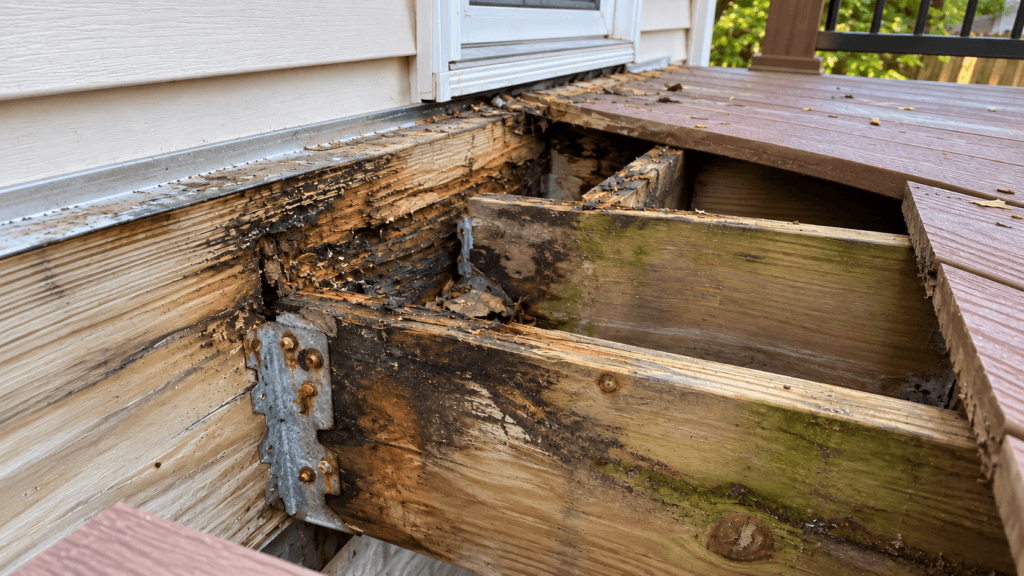
Moisture problems often develop where water sits against the framing, debris traps dampness or airflow is limited. Catching those conditions early can prevent a small repair from spreading into joists, beams or the house connection.
WHERE MOISTURE COLLECTS
Pay close attention to ledger areas, joist ends, beam tops, post bases, butt joints, shaded areas and places where leaves or dirt collect. These locations tend to stay wet longer and can hide deterioration from normal view.
WHAT DAMAGE CAN LOOK LIKE
Common signs include soft or punky wood, dark staining, surface checking, fungal growth, peeling finishes, rusted connectors and fasteners that no longer hold securely. Damage may be more advanced underneath than it appears from the surface.
GOOD TO KNOW
Wood does not need to look badly rotted to have lost strength. If a screwdriver or awl easily penetrates the surface, or the framing feels soft around a connection, that area deserves closer inspection before cosmetic repairs continue.
REPAIR OR REPLACE?
When Does Repair Stop Making Sense?
Not every damaged deck needs to be rebuilt, but repairs only make sense when the underlying structure is still sound. The decision should be based on how widespread the damage is, whether the load path is intact and whether the moisture or movement problem can actually be corrected.
REPAIR MAY MAKE SENSE WHEN
Damage is limited to a few boards, isolated hardware, localized rot or a small number of framing components. Repairs are also more practical when the ledger, footings, posts and most of the framing remain solid and stable.
REPLACEMENT MAY MAKE MORE SENSE WHEN
Rot or corrosion is widespread, major framing members are failing, the ledger connection is compromised, footings have shifted or multiple structural systems need correction. At that point, repeated repairs can become more expensive and less reliable than rebuilding the affected area.
GOOD TO KNOW
Surface appearance should not make the decision by itself. A weathered deck may still be structurally sound, while a deck that looks acceptable from above can have serious hidden damage underneath.
MAINTENANCE SCHEDULE
What to Check Through the Year
Deck maintenance does not need to be complicated. A few seasonal checks can help catch moisture, movement and surface wear before they turn into larger repairs.
SPRING
Clear leaves and debris, wash the deck surface and inspect areas that stayed wet through winter. Check fasteners, railings, stairs and visible framing for movement or damage.
SUMMER
Look for fading, surface checking, hot spots and board movement during dry weather. This is also a good time to complete cleaning, staining or sealing when the material and weather conditions are appropriate.
FALL
Remove leaves and organic debris from board gaps, corners and framing areas where moisture can collect. Make sure drainage paths remain open before wetter weather arrives.
WINTER / WET SEASON
Watch for standing water, slow-drying areas, slippery growth and moisture around ledgers, post bases and other vulnerable connections. Avoid letting debris remain trapped against the structure.
GOOD TO KNOW
The exact maintenance schedule depends on the decking material, climate and exposure. Use seasonal checks as a practical routine, then follow the manufacturer’s recommendations for cleaning and refinishing the specific product.
BEFORE YOU FINISH
Deck Repair & Maintenance Checklist
Before wrapping up repairs or routine maintenance, confirm that the visible surface, framing and connections have all been checked.
□ Deck boards checked for cracks, rot and soft areas
□ Raised or loose fasteners identified
□ Guards and handrails checked for movement
□ Stairs and landings checked for stability
□ Ledger area inspected for moisture or separation
□ Joists, beams and blocking reviewed
□ Post bases and footings checked
□ Hardware inspected for corrosion
□ Debris cleared from gaps and drainage areas
□ Moisture-prone areas reviewed
□ Cleaning method matches the decking material
□ Stain or sealer condition checked where applicable
□ Localized repairs separated from structural problems
□ Damaged components measured before replacement
□ Water sources corrected before repairs are closed up
□ Larger structural concerns evaluated before finish work
Bottom Line
Regular maintenance helps prevent small problems from becoming expensive ones, but cleaning and cosmetic repairs only go so far. Pay attention to moisture, movement, connections and the condition of the framing below the surface.
When damage is localized, timely repairs can extend the life of the deck. When deterioration is widespread or structural connections are compromised, replacement may be the more practical and reliable path.