
DOOR GLASS, ENERGY & SECURITY
Understand What Makes a Door Perform Better
Door glass, frame design, weather stripping and hardware all affect how a door performs. Learn how insulated glass, Low-E coatings, safety glazing, energy ratings, locks and security features work together before choosing a door system.
DOOR GLASS BASICS
Understand How Door Glass Is Built
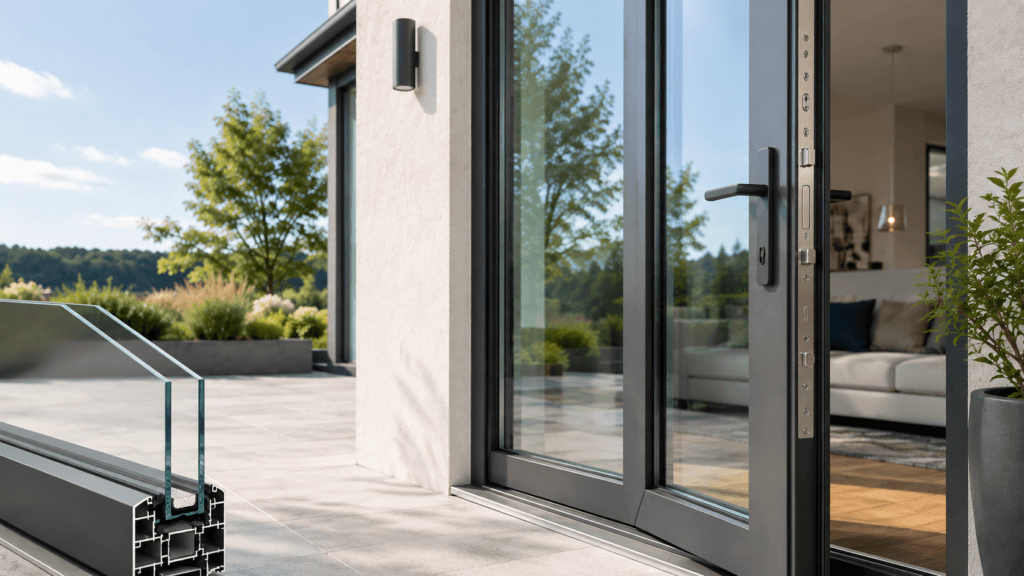
Glass doors can look simple, but exterior systems may combine multiple panes, sealed air spaces, coatings and edge seals to improve comfort and performance. Understanding the basic assembly makes the later energy and safety options easier to compare.
01 — GLASS PANES
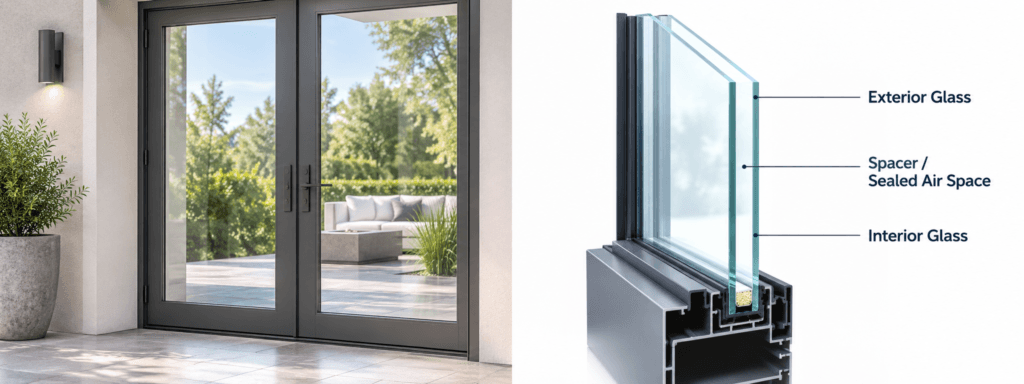
Exterior glazed doors commonly use two panes of glass sealed together as an insulated glass unit. Triple-pane configurations are also available in some higher-performance systems, while single glazing is more typical of interior or specialty applications.
02 — SEALED AIR SPACE
The space between panes helps reduce heat transfer through the glass. It may contain air or an insulating gas such as argon, depending on the product.
03 — SPACER & EDGE SEAL
A spacer separates the panes around the perimeter while edge seals keep the insulated unit closed. Spacer design and seal durability can affect thermal performance and long-term reliability.
GOOD TO KNOW
The number of panes alone does not determine how well a door performs. Glass coatings, spacer design, gas fill, frame construction and the amount of glass in the door all contribute to the complete system.
INSULATED GLASS & LOW-E
Improve Comfort With Better Glass Performance
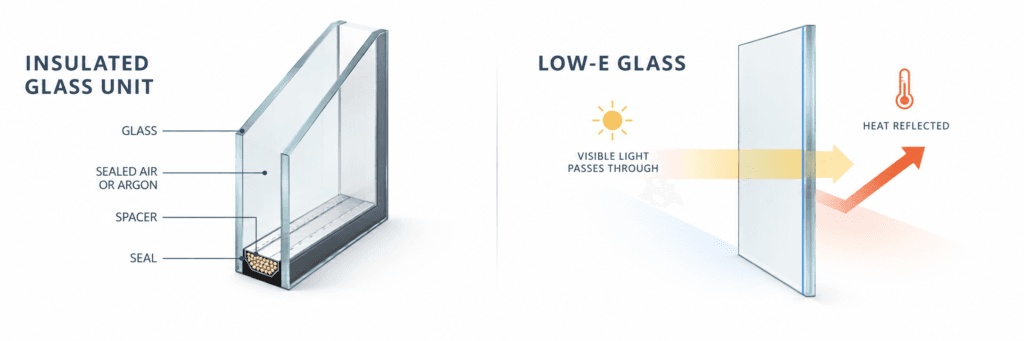
Insulated glass helps slow heat transfer through the glazed portion of a door, while Low-E coatings can further improve performance by reflecting certain wavelengths of heat. Together, they can help reduce heat gain, heat loss and temperature swings near large glass doors.
Insulated Glass Units
An insulated glass unit uses two or more panes separated by a sealed space. The space may contain air or an insulating gas such as argon to help reduce heat transfer through the glass.
BEST FOR
Exterior entry doors, patio doors and large glazed openings where comfort and energy performance matter.
Low-E Glass
Low-E coatings are microscopically thin layers applied to one of the glass surfaces within the insulated unit. They are designed to reduce radiant heat transfer while still allowing visible light through.
BEST FOR
Exterior glazed doors where controlling heat gain or heat loss is important, especially on openings with large glass areas or significant sun exposure.
GOOD TO KNOW
Not all Low-E coatings perform the same way. Climate, orientation, glass area and solar exposure should all be considered when selecting a glass package. Compare the complete door rating rather than judging performance from the glass alone.
SAFETY GLASS
Know the Difference Between Tempered and Laminated Glass
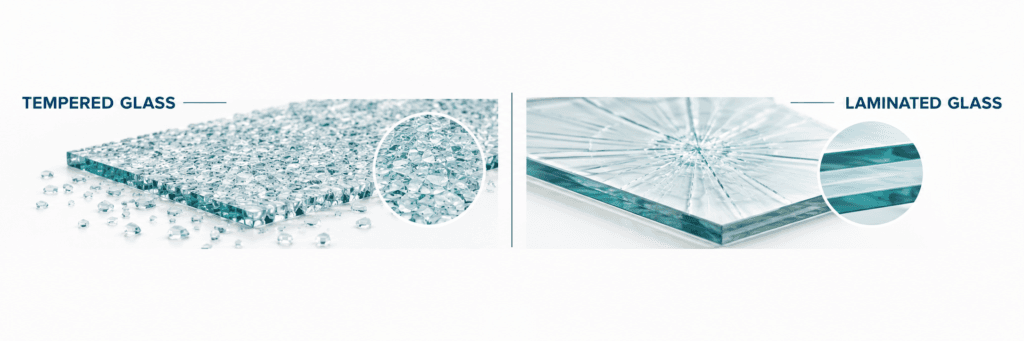
Glazed doors are often located where impact is more likely, so safety glazing is an important part of the system. Tempered and laminated glass behave differently when broken and may be selected based on safety, security, sound control and project requirements.
Tempered Glass
Tempered glass is heat-treated to increase its strength. If it breaks, it is designed to fracture into many small pieces rather than large sharp shards.
BEST FOR
Many residential door and patio-door applications where safety glazing is required and added security or post-breakage retention is not the main priority.
Laminated Glass
Laminated glass uses two layers of glass bonded to an interlayer. If the glass breaks, the interlayer helps hold the fragments together instead of allowing the opening to fall away immediately.
BEST FOR
Doors where additional security, sound reduction, UV control or glass retention after breakage is desirable.
GOOD TO KNOW
Tempered and laminated describe how the glass is constructed and behaves when broken. Either may be used as part of an insulated glass unit, and the correct safety-glazing configuration depends on the door location, product design and applicable requirements.
ENERGY PERFORMANCE
Read the Ratings Before Comparing Glazed Doors
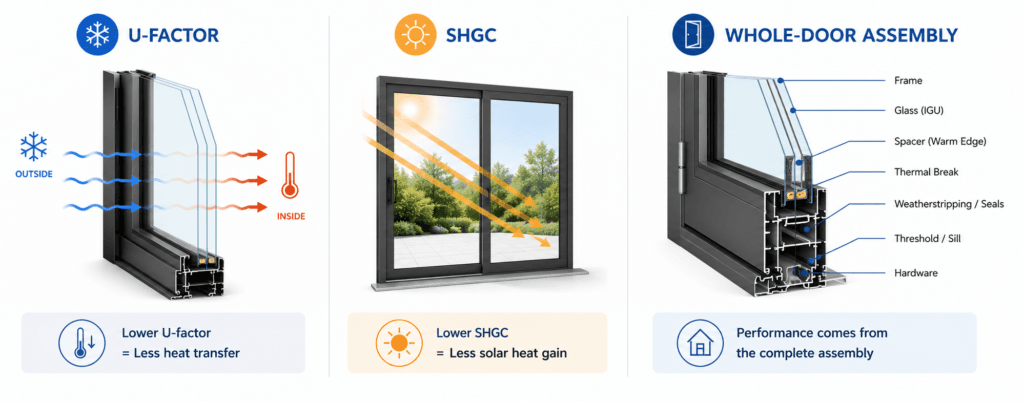
Large glazed doors can have a significant effect on indoor comfort because both the glass and frame transfer heat. Energy ratings help compare complete door systems more accurately than looking at glass type alone.
01 — U-FACTOR
U-factor measures how readily heat passes through the complete door assembly. A lower U-factor generally indicates better resistance to heat transfer.
BEST FOR
Comparing overall insulating performance between exterior door systems.
02 — SHGC
Solar Heat Gain Coefficient, or SHGC, measures how much solar heat enters through the glazed system. A lower SHGC allows less solar heat through, while a higher value allows more.
BEST FOR
Comparing doors with significant glass area, especially where direct sun exposure affects indoor temperatures.
03 — WHOLE-DOOR PERFORMANCE
Frame material, glass area, spacers, thermal breaks and weather stripping all influence the final rating. Two doors using similar glass can still perform differently as complete assemblies.
BEST FOR
Evaluating the actual installed product rather than comparing individual components.
GOOD TO KNOW
For rated products, look for whole-product performance information rather than relying only on the center-of-glass value. The most appropriate U-factor and SHGC depend on climate, orientation, glass area and project requirements.
LOCKS & HARDWARE
Understand How Door Hardware Affects Security and Operation
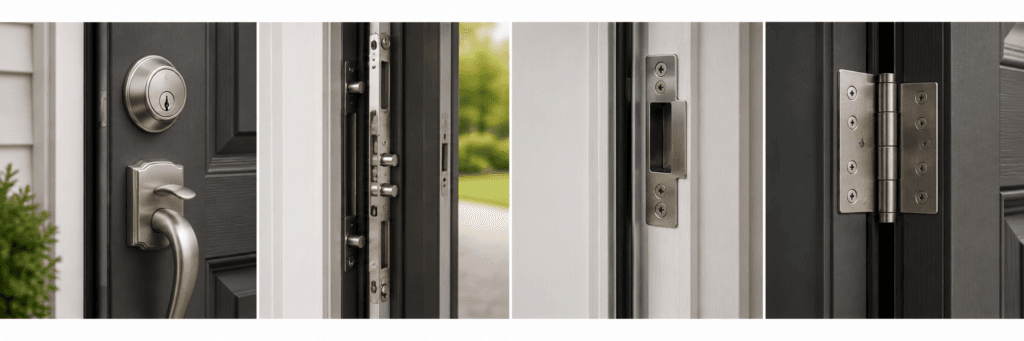
Door security depends on more than the glass or panel material. Locks, latches, strike plates, hinges and multipoint systems all help keep the door aligned, sealed and secured when closed.
01 — DEADBOLT / PRIMARY LOCK
A conventional deadbolt secures the door at one main point near the handle. Quality hardware, proper alignment and a securely fastened strike plate all affect how well the lock performs.
02 — MULTIPOINT LOCK
Multipoint hardware engages the frame at several locations along the door edge, often near the top, center and bottom. It can improve security while also helping pull taller doors more evenly against the weather seals.
03 — STRIKE & FRAME
The lock is only as effective as the frame and strike it engages. Fasteners, reinforcement and proper alignment help transfer loads into the surrounding door frame instead of relying only on trim or thin material.
04 — HINGES & PANEL SUPPORT
Hinges and other support hardware carry the weight of the door and keep the panel aligned with the frame. Larger or heavier doors may require additional or specialized hardware.
GOOD TO KNOW
Multipoint locking can improve security and weather sealing, but it does not automatically make every door high-security. Glass, frame strength, hardware attachment, installation and the surrounding wall opening all contribute to the complete system.
SECURITY CONSIDERATIONS
Think About the Complete Door System, Not Just the Lock
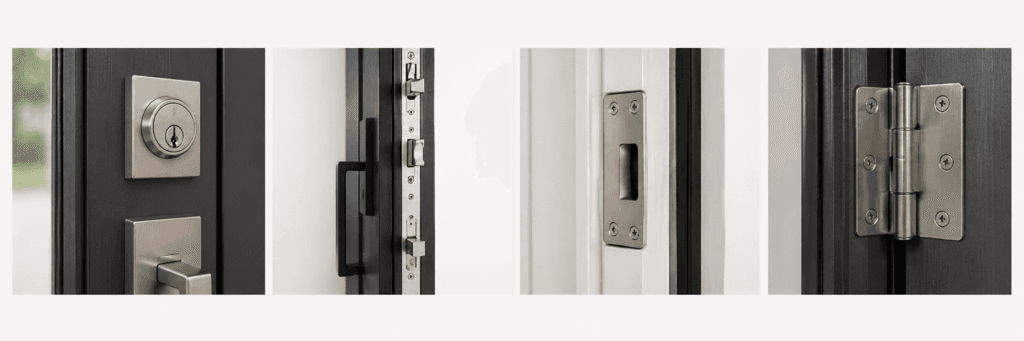
A strong lock alone does not make a door secure. Glass, frame construction, hardware, attachment and installation all work together to determine how well the opening resists forced entry.
01 — GLASS RETENTION
Large glazed doors should be evaluated for what happens if the glass is damaged. Laminated glass can help keep broken glass bonded together and may make it more difficult to create an immediate opening through the panel.
02 — FRAME & STRIKE STRENGTH
Locks transfer force into the surrounding frame. A stronger frame, properly secured strikes and appropriate fasteners help distribute those loads into the door system and surrounding construction.
03 — LOCKING POINTS
Deadbolts and multipoint locks secure the operating panel to the frame. Additional locking points can help resist movement and keep larger doors engaged more evenly along their height.
04 — INSTALLATION & ATTACHMENT
Even a well-built door can perform poorly if the frame is not properly anchored, aligned or supported. Installation should follow the product requirements and account for the surrounding wall construction.
GOOD TO KNOW
Security should be evaluated as a complete system. Door material, glass type, frame strength, locking hardware, hinges, anchors and installation all contribute, and no single feature guarantees resistance to forced entry.
BEFORE YOU BUY
Door Glass, Energy & Security Checklist
Before ordering a glazed exterior door, confirm the complete product specifications rather than focusing on one feature such as glass type or lock style.
☐ Glass type and number of panes are confirmed
☐ Low-E coating is appropriate for the climate and exposure
☐ U-factor and SHGC are reviewed
☐ Safety glazing requirements are confirmed
☐ Tempered or laminated glass is specified where needed
☐ Frame material and thermal performance are understood
☐ Locking system and hardware are identified
☐ Strike plates and frame reinforcement are appropriate
☐ Weather stripping and seals are included
☐ Threshold and sill configuration are reviewed
☐ Door size and glass area match the performance goals
☐ Installation and anchoring requirements are understood
GOOD TO KNOW
Performance ratings, security features and glass options can vary significantly between products that look similar. Review the actual manufacturer specifications for the complete door system before ordering.
Bottom Line
Door glass, energy performance and security should be evaluated as a complete system. The right combination of glazing, frame construction, weather seals, hardware and installation can improve comfort, durability and security far more than focusing on any single feature.
For exterior glazed doors, compare whole-product ratings and manufacturer specifications, then choose the glass and hardware package that fits the climate, exposure, opening size and security needs of the project.