
← BACK TO DECKS & OUTDOOR LIVING
DECK TYPES GUIDE
Which Decking Material Is Right for Your Home?
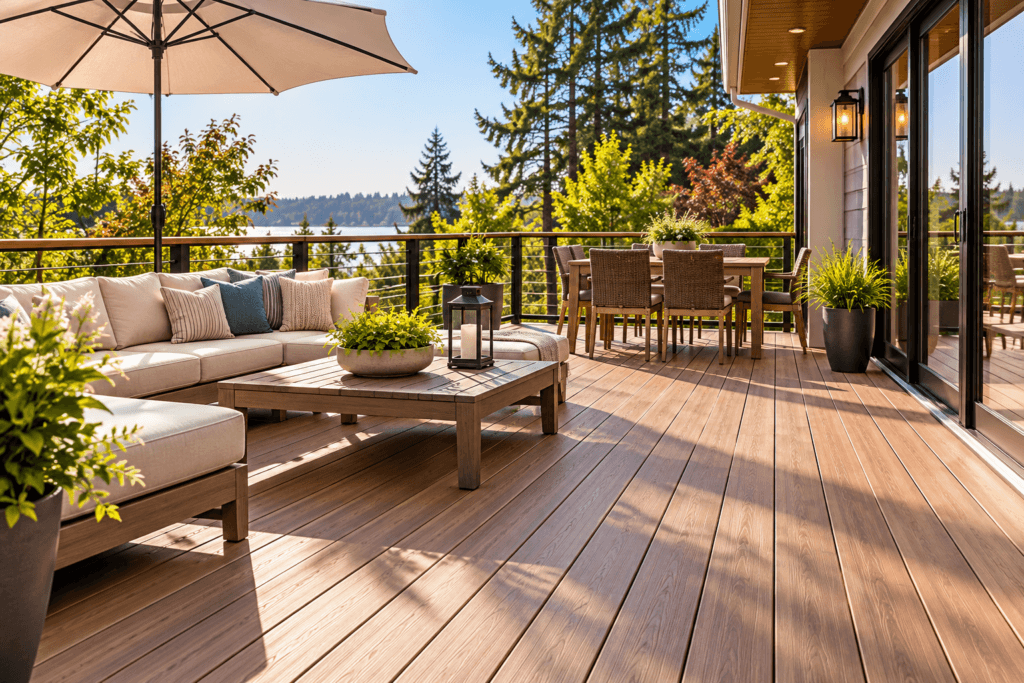
Decking materials differ considerably in appearance, maintenance, durability, heat retention and cost. Compare the most common wood, composite, PVC and specialty decking options so you can understand the tradeoffs before choosing a material for your deck.
DECK MATERIALS
Which Decking Material Fits Your Project?
Choosing decking involves more than picking a color. Each material behaves differently in sun, rain and daily use, and the amount of maintenance required over the life of the deck can vary substantially.
Wood remains a popular choice for its natural appearance and broad range of price points, while composite and PVC products trade some of that natural variation for lower routine maintenance. Understanding how the materials differ makes it easier to narrow the options before comparing specific product lines.
01 — PRESSURE-TREATED WOOD
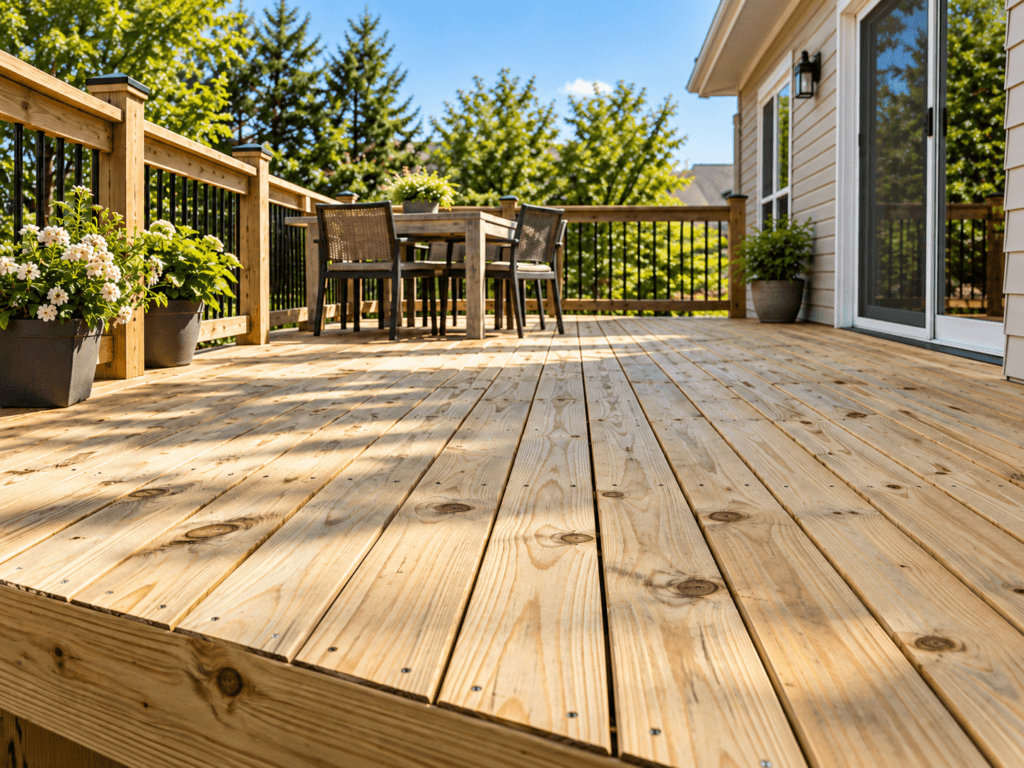
Pressure-treated lumber is one of the most common decking materials because it is widely available, relatively affordable and treated to resist decay and insect damage. Southern yellow pine is commonly used, although available species vary by region. The boards are often installed while they still contain some treatment moisture, so they can shrink, check or twist as they dry. Appearance also varies more than manufactured decking, which makes board selection important when buying material.
BEST FOR
Homeowners looking for an economical wood deck, projects where material availability matters, and decks where periodic cleaning and refinishing are acceptable.
GOOD TO KNOW
Pressure-treated decking is not maintenance-free. Once the wood has dried sufficiently, a penetrating stain or water-repellent finish can help reduce moisture absorption and weathering. Fasteners and connectors should also be compatible with treated lumber because the treatment chemicals can accelerate corrosion in unsuitable metals.
02 — CEDAR & REDWOOD
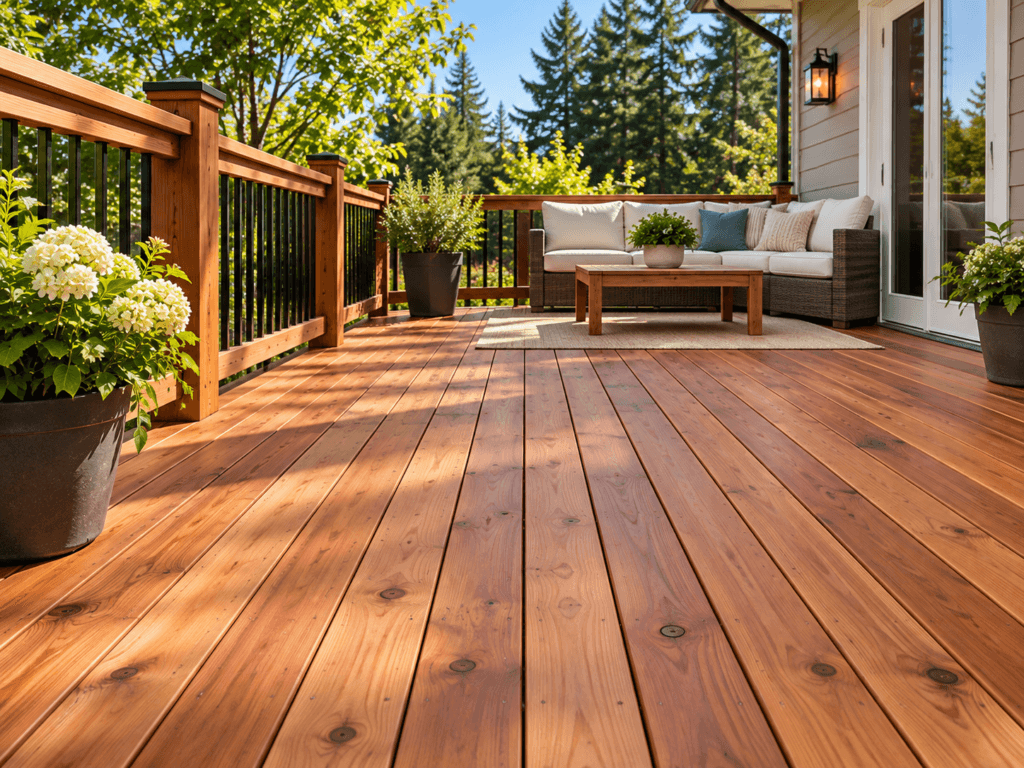
Cedar and redwood are naturally durable softwoods valued for their warm color, visible grain and resistance to decay. They are lighter and generally more stable than pressure-treated pine, which can make them easier to work with and more consistent in appearance. Both can weather to a silvery gray if left unfinished, or they can be stained and sealed to preserve more of their original color.
BEST FOR
Homeowners who want a natural wood deck with a more refined appearance than pressure-treated lumber and are comfortable with periodic cleaning and refinishing.
GOOD TO KNOW
Cedar and redwood are softer than tropical hardwoods and many composite products, so they can dent and scratch more easily. Quality also varies by grade, and heartwood typically offers better natural decay resistance than sapwood. Availability and price can differ significantly by region.
03 — TROPICAL HARDWOOD
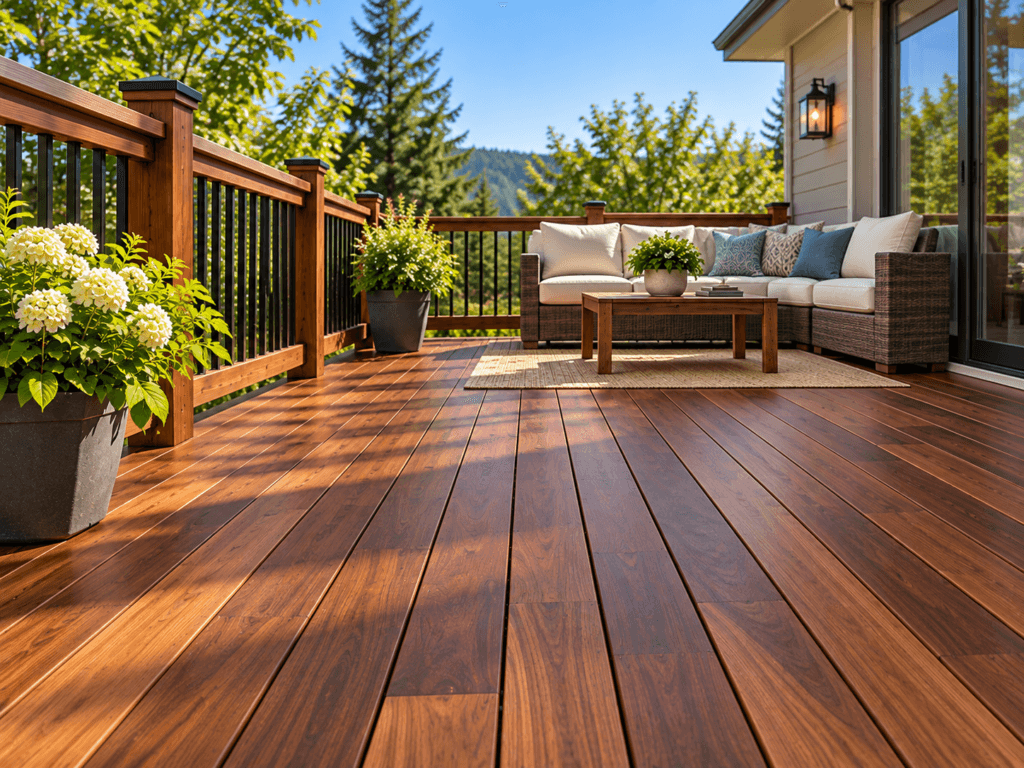
Tropical hardwoods such as ipe, cumaru and tigerwood are dense, durable decking materials known for rich color, tight grain and excellent resistance to wear, decay and insects. Properly installed hardwood decking can last for decades, but the boards are heavier and harder than common softwoods, which makes cutting, drilling and fastening more demanding. Left unfinished, many tropical hardwoods gradually weather to a silver-gray color.
BEST FOR
Homeowners who want a premium natural wood deck with long service life, high durability and a distinctive appearance.
GOOD TO KNOW
Tropical hardwoods typically cost more than pressure-treated wood, cedar or many composite products. Pre-drilling is often required, and hidden-fastener systems may need manufacturer-specific clips or grooved boards. If maintaining the original brown or reddish color matters, periodic oiling or refinishing is usually necessary.
04 — COMPOSITE DECKING
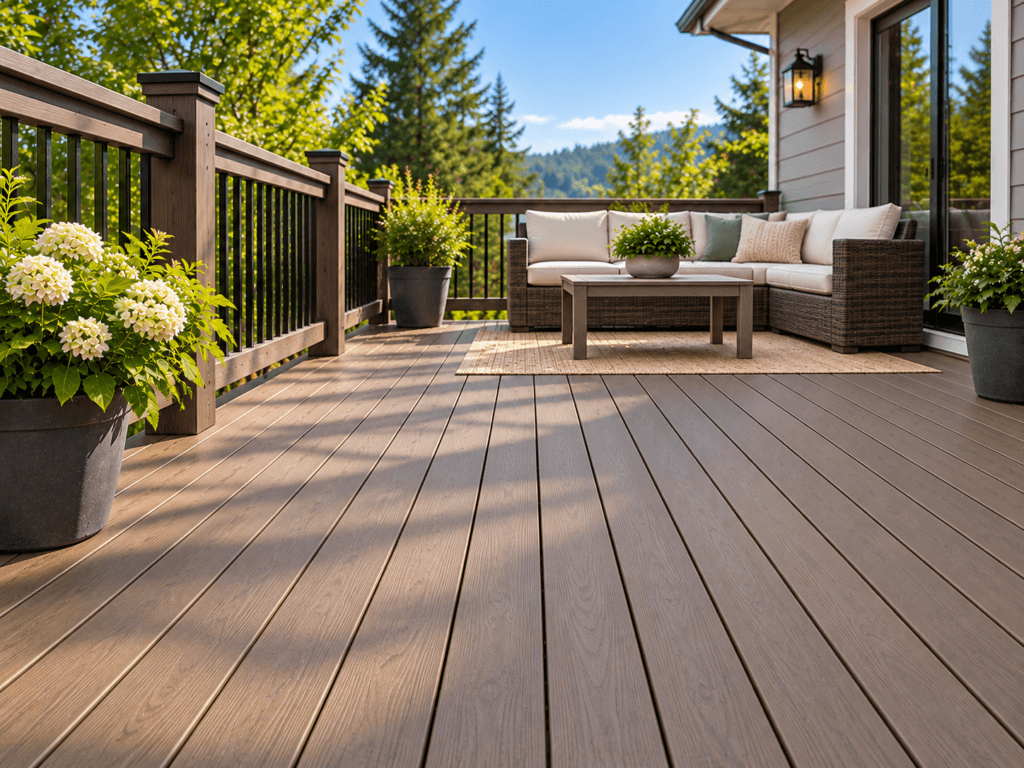
Composite decking is made from a blend of wood fiber and plastic, with many modern products using a protective cap around the board to improve stain, moisture and fade resistance. It offers the look of wood with much less routine maintenance and is available in a wide range of colors, grain patterns and board profiles. Quality, heat retention and surface texture can vary significantly between product lines.
BEST FOR
Homeowners who want a low-maintenance deck with consistent appearance, broad color choices and no need for regular staining or sealing.
GOOD TO KNOW
Composite decking usually costs more upfront than pressure-treated wood, and darker colors can become noticeably hot in direct sun. Framing spacing, fastener systems and expansion requirements vary by manufacturer, so installation instructions for the specific product should be followed closely.
05 — PVC DECKING
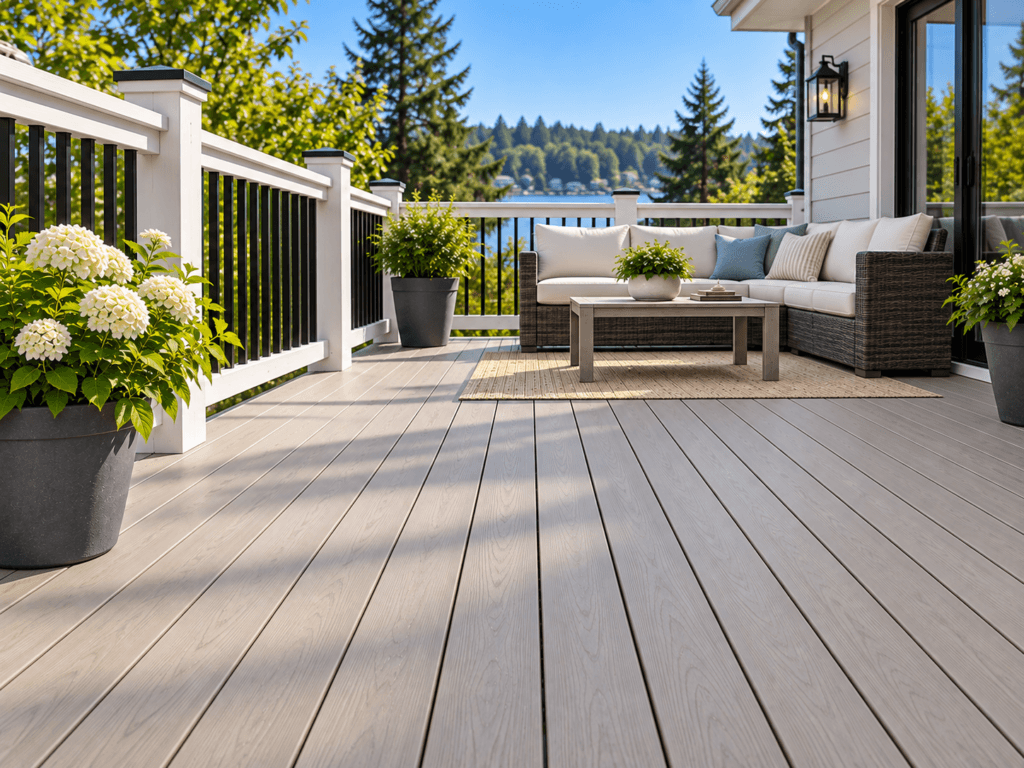
PVC decking is made entirely from synthetic material and contains no wood fiber, giving it excellent resistance to moisture, rot, insects and staining. It is especially well suited to wet or humid environments and is available in a wide range of colors and wood-look textures. Many PVC boards are also lighter than composite decking, which can make handling easier during installation.
BEST FOR
Homeowners who want very low maintenance, strong moisture resistance and a deck surface that will not rot or absorb water.
GOOD TO KNOW
PVC decking can cost more than many composite products, and some boards can feel less natural underfoot
06 — ALUMINUM DECKING
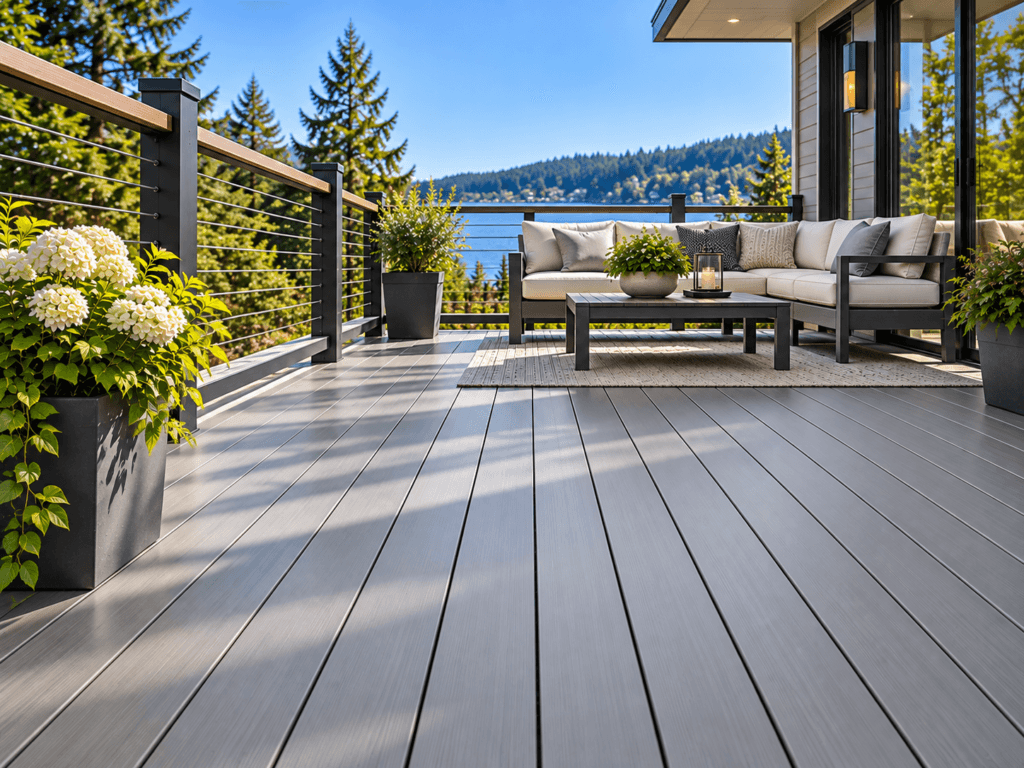
Aluminum decking is a durable, noncombustible option that resists rot, insects, warping and moisture damage. The boards are typically powder-coated and formed with interlocking or concealed-fastener profiles, giving the finished surface a clean, uniform appearance. Aluminum is also lighter than many wood and composite products and can perform well in demanding wet or coastal environments.
BEST FOR
Homeowners who want maximum durability, very low maintenance and strong resistance to moisture, fire and insect damage.
GOOD TO KNOW
Aluminum decking is usually one of the more expensive options and has a more manufactured appearance than wood or composite. It can also sound different underfoot and may require proprietary framing, clips or drainage components depending on the system. Product-specific installation instructions are especially important.
COMPARE DECK MATERIALS
Compare Decking Materials at a Glance
| Decking Material | Best For | Maintenance | Relative Cost |
|---|---|---|---|
| Pressure-Treated Wood | Budget-friendly wood decks | Moderate to High | $ |
| Cedar & Redwood | Natural appearance and warmer wood tones | Moderate | $$ |
| Tropical Hardwood | Premium natural wood and long service life | Moderate | $$$$ |
| Composite | Low-maintenance residential decks | Low | $$–$$$$ |
| PVC | High moisture resistance and very low maintenance | Low | $$$–$$$$ |
| Aluminum | Maximum durability and specialty applications | Very Low | $$$$ |
Material cost, availability and maintenance requirements vary by product, region and installation conditions.
ESTIMATE DECK BOARDS
Once you know your deck dimensions and board size, use the Deck Board Calculator to estimate how many deck boards your project may require and include an allowance for waste.
GOOD TO KNOW
Decking should not be selected on appearance or initial price alone. Sun exposure, moisture, maintenance expectations, surface temperature, framing spacing, fastening requirements and manufacturer installation instructions can all affect which material makes the most sense for a particular deck.
Bottom Line
No single decking material is the right choice for every project. Pressure-treated wood can keep initial cost down, natural woods provide a traditional appearance, and composite, PVC and aluminum reduce routine maintenance in different ways.
Compare appearance, maintenance, moisture exposure, heat, installation requirements and budget together rather than choosing on price alone. The best material is the one that fits how the deck will actually be used and maintained.